In This Review
- Subway secrets feel like a magic trick
- Key things you will notice on this tour
- Who Rayn Riel is, and why his Brooklyn route clicks
- Meeting at 50 Court St: start where Downtown Brooklyn really begins
- The underground build story: why Brooklyn’s transit went below street level
- Smith-9 St and the Gowanus Canal view from above the tracks
- Riding multiple lines: seeing IRT, BMT, and IND history in motion
- Abandoned stations and platforms: what you can see without going restricted
- Art and architecture you can actually read on the move
- The Bad moonwalk spot and the joy of literal place-based pop culture
- Small systems details: when the subway starts telling you its own story
- Ending at Barclays Center: wrap up with food and one last station look
- Price and value: $200 per group can be a bargain if you fill it
- Who this tour is best for (and who should think twice)
- Should you book this Brooklyn subway secrets tour?
- FAQ
- Where does the tour start?
- How long is the tour?
- What does the price include?
- Is the tour only for public areas?
- What train lines and stations might we see?
- Is this a private group?
- What should I bring?
- What’s the cancellation policy?
Subway secrets feel like a magic trick
Brooklyn’s underground has a lot more going on than you see from a moving train. With Rayn Riel, a licensed NYC guide and award-winning certified urban planner, you get a smart, practical walk through the borough’s oldest lines and the design choices that shaped them. I especially like how the tour mixes street-level context with what you can spot underground, and how it uses headsets so you can hear every detail even when the noise ramps up.
One more strong point: you’re not just looking at stations, you’re learning the why behind the architecture, the art, and even the traces of unused infrastructure. The one real consideration is physical: you’ll be walking and taking stairs in an underground environment, so comfortable shoes matter.
Key things you will notice on this tour
Abandoned platforms and stations you can see from the right angles
Smith-9 St station viewpoints, including the Gowanus Canal look-down
A real sense of how IRT, BMT, and IND overlap in one ride
Nevins St lower level and other under-the-surface leftovers
The highest rapid transit station in the Western hemisphere (outside China)
Art and architecture explanations tied to how the system works today
You can also read our reviews of more private tours in New York City



Who Rayn Riel is, and why his Brooklyn route clicks
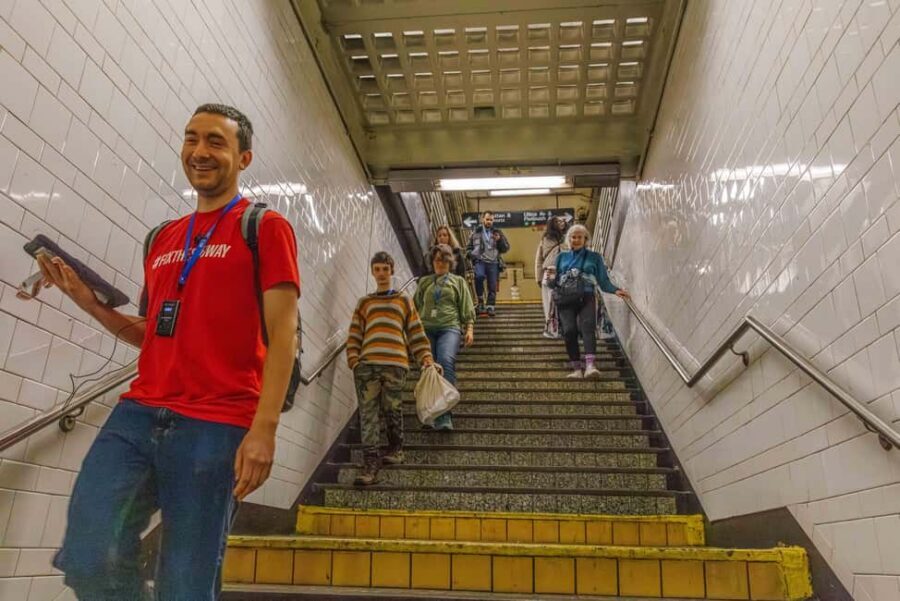
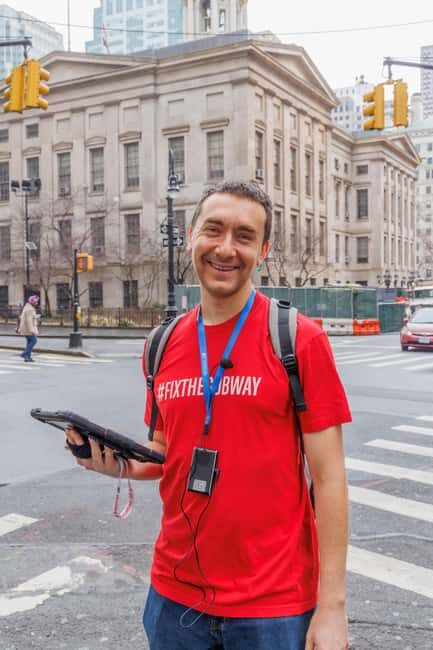
This tour runs on one big advantage: the guide isn’t just telling subway trivia. Rayn Riel is a certified urban planner and licensed NYC guide, and he also worked with the MTA. That matters because he doesn’t treat the subway like a museum. He treats it like a working system built by people making tradeoffs—cost, space, timing, engineering risk—and those tradeoffs still show up in the stations.
What you get for your time is a route that feels designed, not random. You ride multiple train lines and move through stations where the architecture and layout are clues. The result is that you start noticing small physical details instead of only thinking about where you’re going next.
And yes, it’s fun. You’re going to get chances to look, point, and react like a subway detective. One person might be focused on old stations. Another might be focused on public art. Either way, the guide keeps turning what you see into plain explanations you can carry around with you after the tour.
Meeting at 50 Court St: start where Downtown Brooklyn really begins
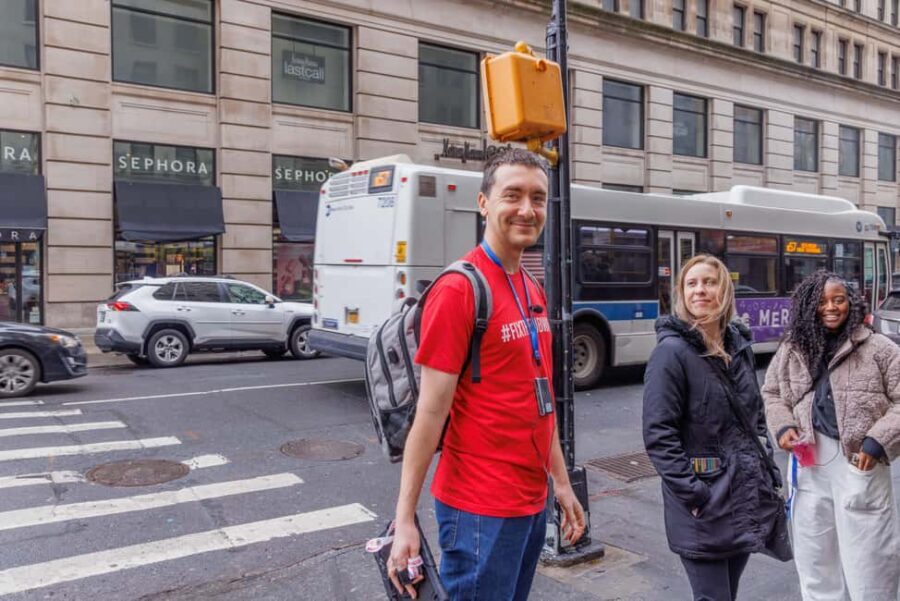
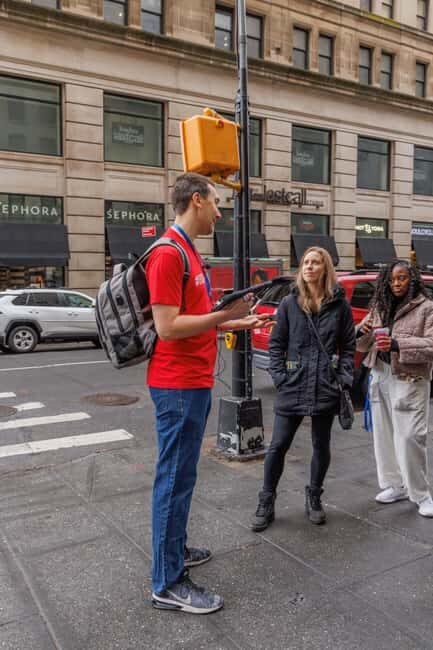
Your tour starts at 50 Court Street, outside Starbucks. That’s an easy meet point for two reasons: it’s recognizable, and it’s right where Downtown Brooklyn foot traffic converges. After you gather, you’ll quickly get oriented before the tour shifts into stair-heavy subway time.
Ear pieces are provided, which is a practical quality-of-life upgrade. In underground spaces, it’s the difference between catching 70 percent of the story and hearing it all clearly. It also helps when you’re standing in a line near moving trains or when groups naturally bunch up.
The tour is also set up as a private group, capped at up to 15 people. That size is big enough for energy, but small enough that the guide can manage pacing and keep everyone from disappearing behind somebody’s backpack.
The underground build story: why Brooklyn’s transit went below street level
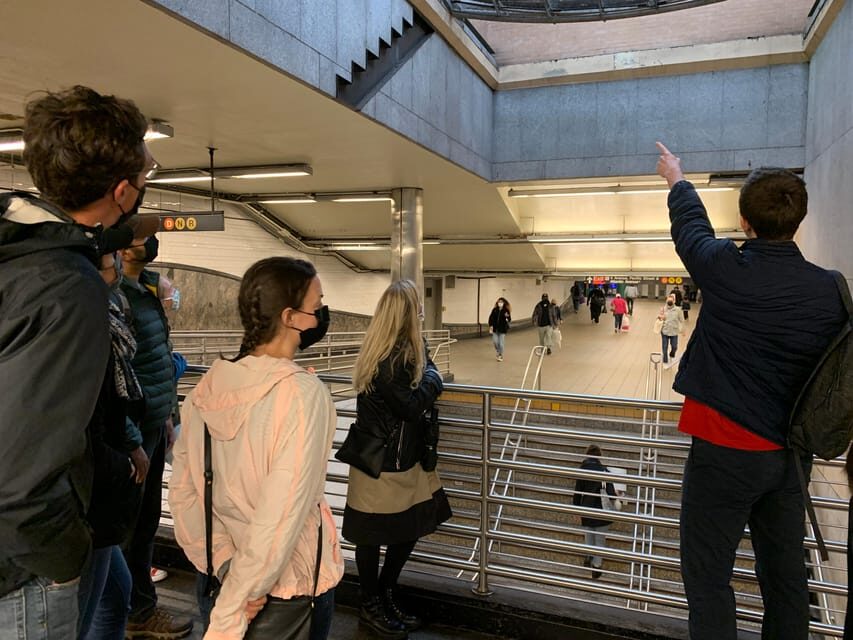
A big chunk of the experience is the “how” and “why” behind building underground in the early 20th century. You’ll get an overview of what pushed construction deeper rather than leaving it as surface transit. It’s not just romance or old maps. The explanations connect engineering decisions to what you experience now: tight station layouts, strategic connections, and where expansions did and didn’t happen.
This is the part of the tour that makes the subway feel less like a maze. If you understand the constraint, you stop being frustrated by confusing transfers and start seeing patterns. You start to realize that some design choices were “best available” back then, not because someone wanted them to be confusing.
You’ll also learn how older stations ended up surrounded by meaning—how art and architecture aren’t decoration for decoration’s sake. They’re part of how the system expresses identity, budget priorities, and the values of the people who built those early lines.
Smith-9 St and the Gowanus Canal view from above the tracks
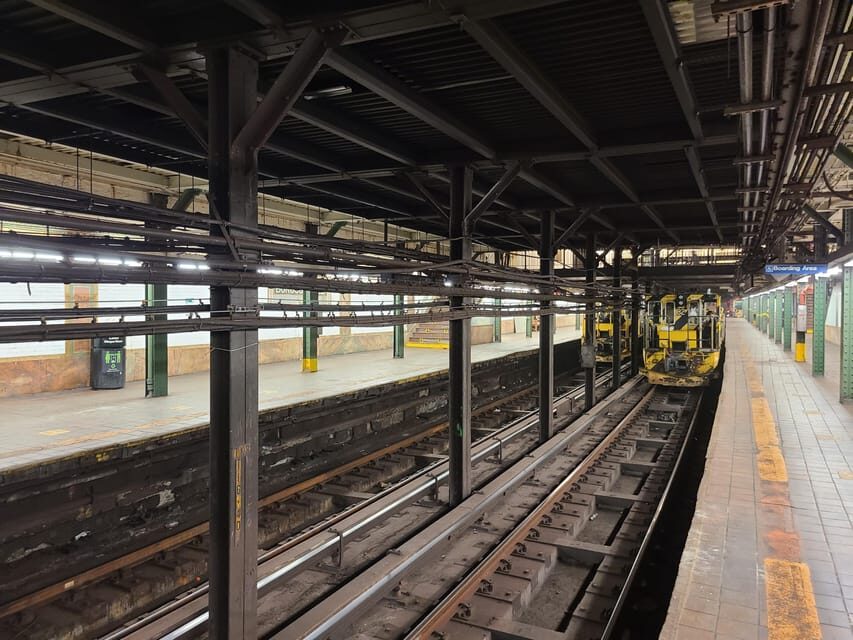
One of the most memorable moments is the perspective you get from Smith-9 St station. You can look down in a way most riders never do, including toward the Gowanus Canal area below. It’s one of those moments where the subway shifts from “transport” to “structure.” You see the depth and the geometry of the space.
This station is also tied to two major tour themes: historic design and elevation. The tour highlights it as the oldest subway station in Brooklyn, and it connects it to the idea of the highest rapid transit station in the Western hemisphere. Even if you don’t care about top-of-the-line facts, the station layout makes the point quickly. Height changes how you experience movement, sightlines, and where you expect connections to exist.
The big value here is perspective. Standing where the system is highest gives you a better mental map of how Brooklyn’s underground layers relate to the street above. You come away thinking in sections instead of individual stops.






Riding multiple lines: seeing IRT, BMT, and IND history in motion
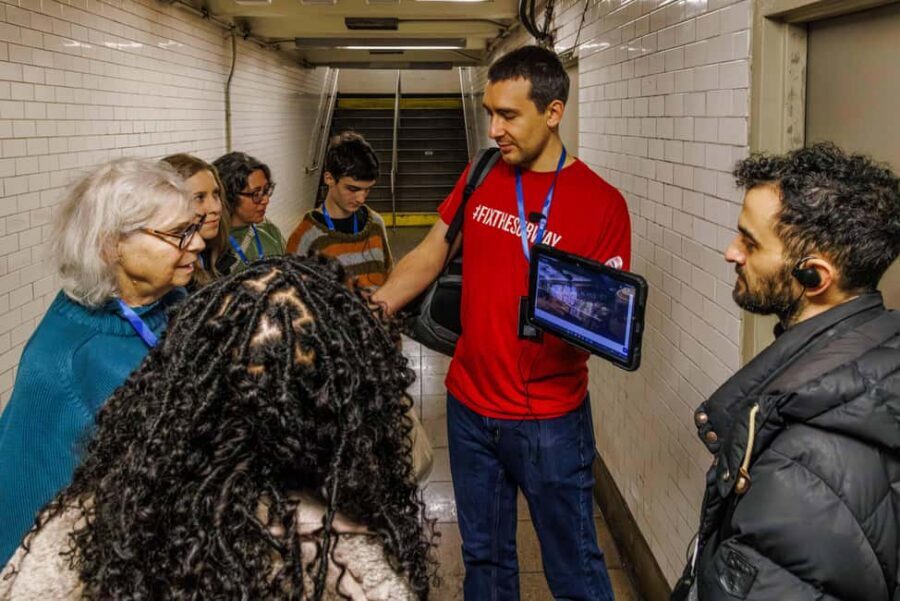
One reason this tour works well is that it doesn’t keep you stuck in one station throat. You’ll ride several train lines, including 4/5, D, G, F, and R. That’s not just a ride variety checklist. The guide links what you ride to the old transit-company legacy—IRT, BMT, and IND.
If you’ve ever wondered why different stations feel different even when they’re all “the subway,” this section answers that. You start to understand that the system grew in phases. Each phase had its own design habits, signage logic, and structural tendencies, and those choices still shape the rider experience today.
For practical travelers, it also helps your navigation skills. You’ll get a clearer sense of which lines feel connected underground and which ones feel like separate worlds. That’s useful even if you never sign up for another tour.
Abandoned stations and platforms: what you can see without going restricted
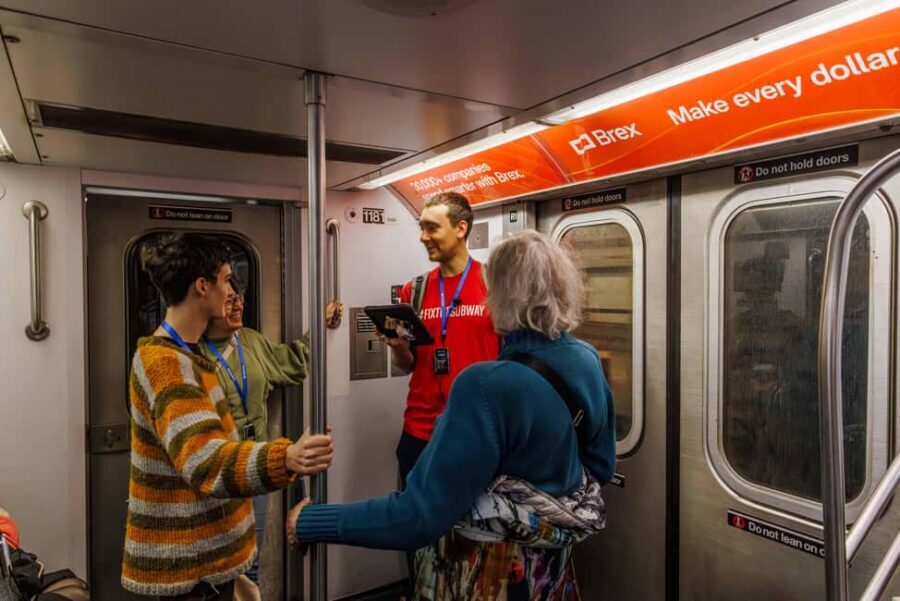
One of the tour’s standout promises is peeks at abandoned stations and tunnels that sit in plain sight. You’ll get glimpses of unused infrastructure and platforms you wouldn’t notice at normal speed. And importantly, you stay in public areas only—no restricted access, just the kind of visibility that takes a sharp guide to point out.
A specific highlight is Nevins St lower level. If you’ve passed through the station without paying attention to the layers below, this is the moment that teaches you to look for the “second story.” You’ll see how parts of the network were built, then repurposed, rerouted, or left behind when plans changed.
This is where the tour feels like urban archaeology with safety controls. You get to see why the subway has so many odd nooks and why some passageways seem to start, stop, or “thicken” unexpectedly. The guide helps you read those details like clues, not annoyances.
And because the tour is time-limited, you focus on the most visually and structurally interesting spots instead of wandering randomly and hoping something cool appears.
Art and architecture you can actually read on the move
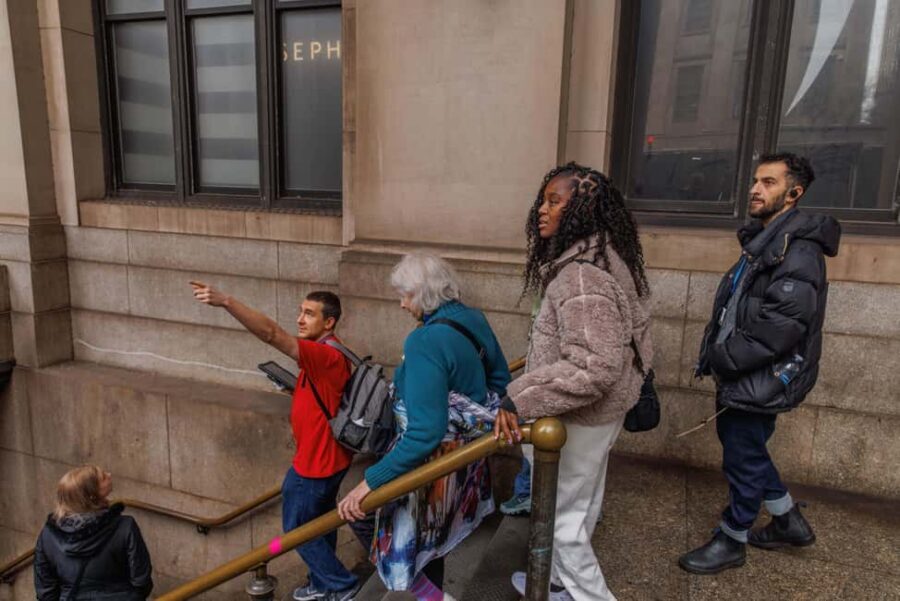
Brooklyn’s subway isn’t just steel and tile. This experience includes multiple stops where public art projects and station design show up as readable elements. You’ll learn the meaning behind the architecture around older stations, and you’ll get pointed explanations for what you’re seeing.
That’s a big deal in NYC, where lots of people speed through stations without noticing. Here, the guide slows your brain down just enough to decode the space. Why do certain areas look a particular way? Why do some sections feel more formal? Why does the artwork belong where it sits?
I like this approach because it makes art feel connected to transit function. Instead of art being a separate thing you either like or ignore, it becomes part of the station’s identity, and you understand the intentions behind it.
The Bad moonwalk spot and the joy of literal place-based pop culture
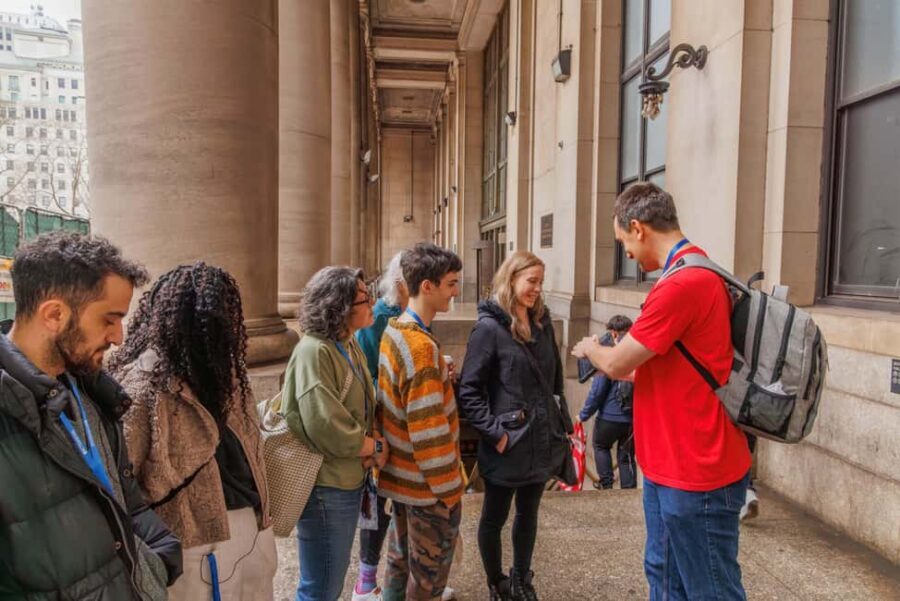
Then comes the fun, pop-culture punch. You get the opportunity to practice a moonwalk in the exact spot where Michael Jackson filmed Bad. Even if you’re not a hardcore fan, it’s a rare chance to connect celebrity history to a real physical location you can stand inside.
This kind of moment works because it’s not just a photo opportunity. It makes you aware of how film uses real public space and real architecture. You start noticing how lines, lighting, and background details create a scene.
Keep expectations grounded: you’ll be in a subway environment, so you’ll do this practically and respectfully with the group. But it’s exactly the kind of “wait, we’re doing this here?” highlight that makes the tour stick in your memory.
Small systems details: when the subway starts telling you its own story
One reason this tour earns strong word-of-mouth is that it doesn’t stay at the big-picture level. The guide also points out smaller operational design choices, and they make the system feel more human and less mysterious.
You might learn why some light bulbs appear a slightly different shade of blue, or why a vertical cable shows up between train cars. Those details can sound minor until you realize they’re part of how maintenance and electrical systems get managed in tight spaces.
The payoff is that you start seeing the subway as a designed environment built for real-world constraints. It’s not magic. It’s a set of decisions—and once you notice that, the whole network reads differently.
Ending at Barclays Center: wrap up with food and one last station look
Your tour concludes at Barclays Center subway station in Downtown Brooklyn, close to local food options. That’s a smart finish because it turns the underground effort into a normal street-level reward. After two hours of stairs and layers, you’ll appreciate stepping back into daylight and turning your curiosity into a meal plan.
It’s also a good mental close. You’ve spent the time learning how Brooklyn’s older subway world connects to today’s system. Ending in a major hub helps the story feel complete, not cut off mid-network.
Price and value: $200 per group can be a bargain if you fill it
The tour costs $200 per group up to 15 people, for a 2-hour private subway experience. If you split that cost across a full group, the per-person price can be surprisingly reasonable. Even if your group is smaller, you’re paying for a licensed guide plus a certified urban planner approach, plus the subway fare and ear pieces included.
Here’s how I think about value for this one: you’re not buying a ride. You’re buying attention—someone trained to interpret the subway’s architecture, infrastructure, and art, while keeping you safe and on pace in a complex underground setting. That’s hard to replicate on your own without either lots of planning or luck.
If you have a group that can travel together—friends, a family with older kids, or a small club—this is the kind of tour where the cost per person shrinks fast.
Who this tour is best for (and who should think twice)
This works especially well if you like any of these:
- Subway design, transit history, or architecture
- People who enjoy urban photos, but want context behind the visuals
- Families with kids who can handle stairs and a structured 2-hour walk underground
It may be less suitable if you:
- Struggle with stairs or long walking in underground spaces
- Want a mostly “sit and ride” tour (this one includes walking and step climbing)
If your group is a mix of subway fans and casual tourists, the guide’s approach can still satisfy both sides because the route keeps connecting what you see to how the system functions.
Should you book this Brooklyn subway secrets tour?
I think you should book it if you want to experience the NYC subway as a designed city layer, not just a way to get from A to B. You’ll get deep station perspective at Smith-9 St, structure-and-history explanations grounded in how the system was built underground, and a playful pop-culture moment at the Michael Jackson Bad filming spot.
You should also book it if you value comfort details that actually matter: subway fare included and ear pieces provided so the guide’s explanations land clearly.
If you’re sensitive to stairs or prefer level walking, plan around that before you commit. But if you can handle a couple of stair-heavy stretches and you want a guided route that makes Brooklyn’s underground feel readable, this is a strong use of time.
FAQ
Where does the tour start?
Meet outside the Starbucks at 50 Court Street.
How long is the tour?
The tour lasts 2 hours.
What does the price include?
The price includes a private tour with a licensed guide and a certified urban planner approach, plus your subway fare during the tour and individual ear pieces.
Is the tour only for public areas?
Yes. The tour visits areas open to the public and does not access restricted areas.
What train lines and stations might we see?
The tour includes rides on several lines, including 4/5, D, G, F, and R, and it highlights places like Smith-9 St and Nevins St lower level.
Is this a private group?
Yes. It’s a private group experience, up to 15 people.
What should I bring?
Wear comfortable shoes since the tour involves walking and walking up and down steps in an underground environment.
What’s the cancellation policy?
You can cancel up to 24 hours in advance for a full refund.