REVIEW · BROOKLYN
DUMBO Brooklyn Food and Culture Tour
Book on Viator →Operated by ExperienceFirst · Bookable on Viator
Food, views, and history in one walk. This DUMBO tour strings together Underground Railroad stops, big-skyline views, and some very real food anchors, so you’re not just sightseeing on an empty stomach. I also like that it’s built for pacing—short walks between stops, then time to actually look up at the bridges and landmarks. One more thing I love is the guide style: I found it easy to follow the stories because guides like Claire are known for being enthusiastic and funny, not lecture-y.
The main drawback to plan for: you’re paying $42 for the tour, but the tastings are optional. Food costs extra, and if you order suggested items at multiple stops, your total can climb quickly (the tour says about $30 if you do the suggested bites at three places).
In This Review
- Key points at a glance
- Why DUMBO is perfect for a food-and-culture walk
- Meeting at 101 Clark St and finishing at the Manhattan Bridge viewpoint
- Stop 1: Plymouth Church and the Underground Railroad context
- Stop 2: Fruit Street Sitting Area for harbor views and the Continental Army story
- Stop 3: L&B Spumoni Gardens for a Sicilian slice
- Stop 4: Fulton Ferry Landing and the Brooklyn Bridge building story
- Stop 5: Luke’s Lobster Brooklyn Bridge Park for a Maine-style lobster roll
- Stop 6: St. Ann’s Warehouse for the arts in old-city bones
- Stop 7: Empire Stores and the Time Out Market angle
- Stop 8: Main Street and the story behind modern consumerism
- Stop 9: Jacques Torres Chocolate for the sweet finale
- Stop 10: DUMBO Manhattan Bridge View for the money shot
- Price and value: $42 for the tour, plus food you choose
- Who should book this DUMBO tour
- Quick practical tips before you go
- Should you book?
- FAQ
- How long is the DUMBO Brooklyn Food and Culture Tour?
- What does the $42 price include?
- Where does the tour start and end?
- Is there a mobile ticket?
- How many people are in the group?
- What’s the cancellation policy?
Key points at a glance
- Small-group feel with a maximum of 15 travelers and a handy mobile ticket
- Underground Railroad + Revolutionary-era stories at landmarks you can actually stand in front of
- Food stops that match the neighborhood: L&B Spumoni Gardens, Luke’s Lobster, and Jacques Torres
- Brooklyn Bridge viewpoints built into the route, so you get the photos without detours
- You control the spending: included restaurants, but you choose what you buy
Why DUMBO is perfect for a food-and-culture walk
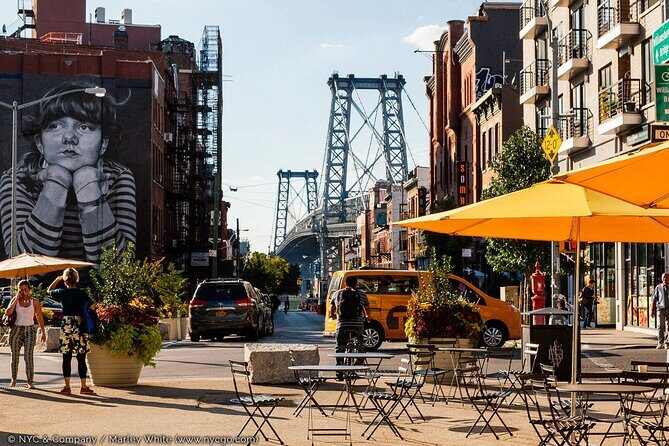
DUMBO is one of those Brooklyn areas where the scenery isn’t just backdrops. The cobblestones, warehouses, waterfront, and bridge lines all help you “read” the neighborhood. A walking tour fits this place better than a bus ride because you’re moving through the actual streets that shaped the stories.
This tour also keeps the balance right. It’s not only “eat, eat, eat.” You get the food, yes, but you also get context: how people moved through Brooklyn during major moments in U.S. history, and how the neighborhood evolved from industrial space into a major shopping and arts corridor.
And because it’s only about two hours, you’re not stuck committing your whole day to a single plan. You can still pair it with time for a longer sit-down meal afterward, or just keep wandering.
You can also read our reviews of more food & drink experiences in Brooklyn


Meeting at 101 Clark St and finishing at the Manhattan Bridge viewpoint
You start at 101 Clark St, Brooklyn, NY 11201, with a 11:00 am departure. The tour ends at the DUMBO Manhattan Bridge View on Washington Street (39-21 Washington St).
Two practical advantages here:
- You’re dropped into the most photo-friendly, easiest-to-orient part of DUMBO at the end.
- The walk is set up so viewpoints come when you’re already nearby—so you’re not zigzagging for “the one view.”
It also helps that the group stays small (up to 15). In a neighborhood like this, that makes it easier for the guide to keep everyone together and for you to stop where you want without feeling rushed.
Stop 1: Plymouth Church and the Underground Railroad context
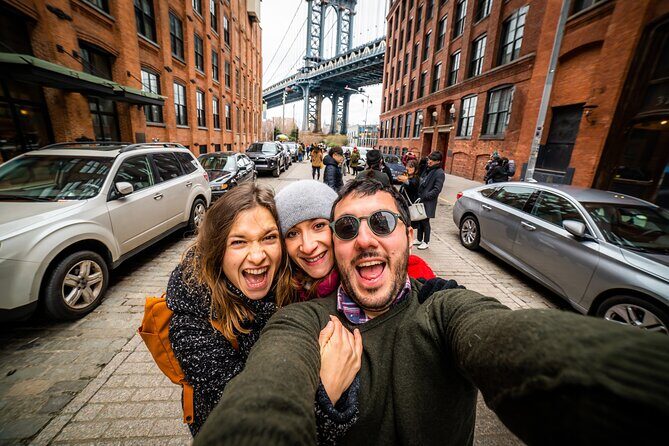
The tour kicks off at Plymouth Church, a key spot for freedom seekers. You’ll hear it described like Grand Central Station for freedom seekers—and that phrase isn’t random. The point is that this church area functioned as an important waypoint during the Underground Railroad era.
You also get a specific person attached to the story: Henry Ward Beecher, an abolitionist preacher and the church’s home minister. That name matters because it turns “Underground Railroad” from a textbook label into a real place tied to a real voice.
What I like about this start is the way it sets the tone. Instead of opening with food first, you get the neighborhood’s human stakes. That makes the later bridge-and-architecture stops feel more grounded, not just pretty.
A small consideration: churches can feel quiet and structured. So if you’re looking for a high-energy party vibe, this first leg is more reflective than loud.
Stop 2: Fruit Street Sitting Area for harbor views and the Continental Army story
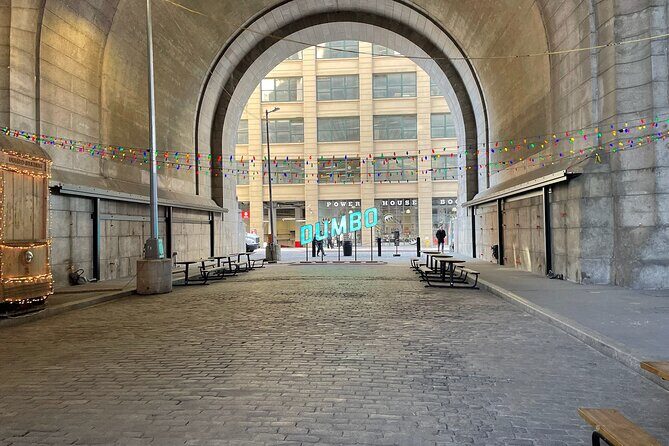
Next you head to the Fruit Street sitting area, which is basically made for looking outward. From here, you get New York Harbor and Lower Manhattan views—the kind that make you stop without thinking.
But the tour doesn’t treat it like a simple scenic stop. Your guide shares the story of a dramatic moment involving the Continental Army and the leadership of General Washington. The theme is decision-making under pressure—outnumbered, under threat, and trying to keep the fight alive.
This is one of the tour’s clever moments: you’re looking at the same skyline that thousands of photos aim for, but you’re also hearing what the landscape meant in earlier years.
If you’re prone to wanting perfect photos, note that you’ll likely want a quick pause at the railing or viewpoint area. The stop is short (about 10 minutes), so have your camera ready before you reach the best angles.
Stop 3: L&B Spumoni Gardens for a Sicilian slice

Then you’re onto the first major food anchor: L&B Spumoni Gardens, a family-owned place founded in 1938. This is a classic Brooklyn stop for a reason: it’s casual, recognizable, and it delivers something you can eat fast without losing time.
The suggested order is a Sicilian slice, and the attraction here is straightforward. You want something filling, easy to share, and strongly tied to Brooklyn’s long-running food culture.
Why this stop is worth it for the tour experience:
- You get a “Brooklyn institution” moment early, not as an afterthought near the end.
- It helps you settle into the walk—so by the time you reach the bigger waterfront and chocolate, you’re not running on empty.
You can also read our reviews of more tours and experiences in Brooklyn

Stop 4: Fulton Ferry Landing and the Brooklyn Bridge building story
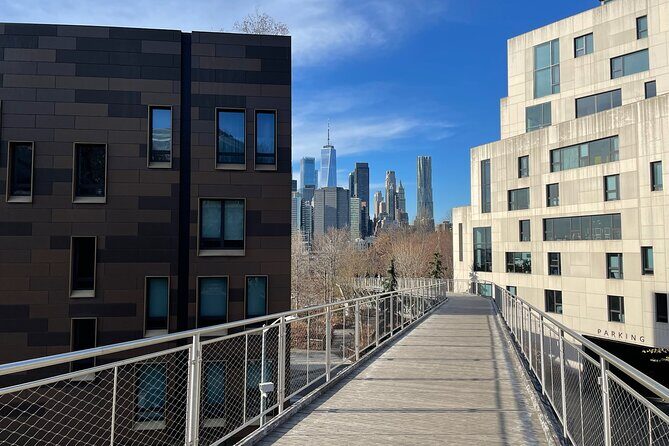
At Fulton Ferry Landing, you get another payoff stop: waterfront viewpoint energy plus a construction story. This is where the tour connects the neighborhood’s geography to the bridge itself.
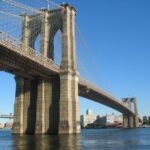
You’ll hear the dramatic account of how the Brooklyn Bridge was built. Even if you’ve read general bridge facts before, the tour approach focuses on the “human project” side—what it meant to create that link and why the bridge mattered beyond just travel time.
It also works as a visual warm-up. After this, you’re headed for a lobster roll and then toward more DUMBO landmarks where you’ll be looking up and across.
Stop length is about 10 minutes, so come ready to listen and look at the same time.
Stop 5: Luke’s Lobster Brooklyn Bridge Park for a Maine-style lobster roll
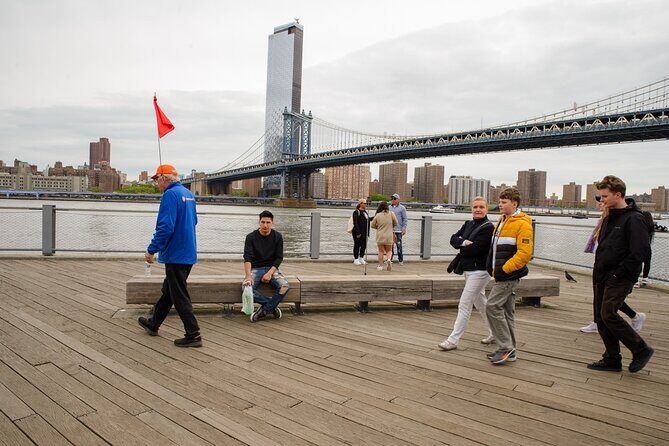
Now for the lunch-ish hit: Luke’s Lobster at Brooklyn Bridge Park. The tour frames it as homegrown NYC food that sources lobster directly from independent Maine fishermen.
The practical win here is that lobster rolls are easy to order and hard to mess up on a walking tour. You can usually get what you want quickly, eat without fuss, and keep moving.
If you’re a seafood person, this is one of the stops that feels like a real treat without forcing you into a long restaurant meal. And because it’s a neighborhood destination, it also helps you understand how DUMBO’s restaurant scene grew alongside the area’s visitor attention.
The one caution: if you’re not a lobster person, you may want to plan your order strategy. The tour includes the restaurant stop, but your food purchase is your choice, so check the menu and decide on the spot.
Stop 6: St. Ann’s Warehouse for the arts in old-city bones
Next is St. Ann’s Warehouse, a performing arts center. It’s included for a reason: DUMBO isn’t only about food and views; it’s also where old structures became places where major performers show up.
You’ll hear that it has hosted breakthrough performers from all over the world. The stop is short (about 5 minutes), so think of it as a visual “reset” and a story pause before the tour’s retail-and-sweet stretch.
Even if you don’t attend a show, this stop helps explain the neighborhood’s modern identity—warehouse spaces repurposed into culture centers.
Stop 7: Empire Stores and the Time Out Market angle
Then you arrive at Empire Stores, the contemporary core of DUMBO. This is where the tour connects the neighborhood to the idea of an indoor public market experience.
A key detail here is that Empire Stores is home to the first Time Out Market in America, described as a cultural institution on its own. For you, that means it’s not just a food court vibe. It’s designed as a destination where people come to hang out, browse, and sample.
This stop is about 10 minutes, so you’re not meant to do a full marketplace tour. Instead, it gives you context so when you walk around later on your own, you understand what you’re seeing.
Stop 8: Main Street and the story behind modern consumerism
On Main Street, the tour walks through DUMBO’s industrial heart—then flips the lens to consumerism.
You’ll hear how this area connects to the birthplace of modern consumer culture. Even if you only catch parts of the story, you’ll notice the point: the neighborhood’s physical layout and warehouse-style buildings made it ideal for new kinds of commerce as the area transformed.
This stop is about 15 minutes, giving you enough time to slow down, look at the scale of the streets, and get your bearings for the final food and photo moments.
If you like architecture and street-level details, this is one of your best pauses.
Stop 9: Jacques Torres Chocolate for the sweet finale
No DUMBO food tour would be complete without the chocolate moment. Here you’ll visit Jacques Torres Chocolate, linked to the famous chocolatier known as Mr. Chocolate.
This is a great stop on two levels:
- You’ll find the full range of what you might crave: bars, cookies, truffles, hot chocolate, and more.
- It finishes the walk with something that feels unmistakably New York, while still tied to a real neighborhood routine.
The stop lasts about 20 minutes, which is long enough to browse and make a thoughtful choice. This matters, because chocolate shops can be overwhelming—so having time to look is a real benefit.
If you have a strong preference (dark vs. milk, bars vs. truffles), check what you want quickly and don’t wait until the last five minutes.
Stop 10: DUMBO Manhattan Bridge View for the money shot
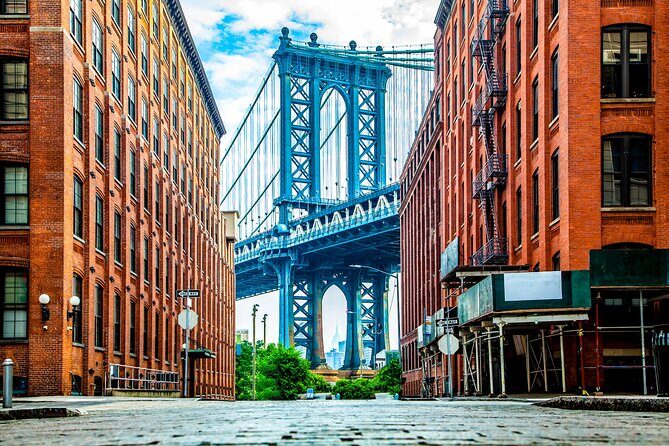
The tour ends at Washington Street, at the iconic DUMBO Manhattan Bridge View photo spot. You’ll walk down cobblestones to a viewpoint that frames the Manhattan Bridge, with the Empire State Building visible from the angle mentioned on the route.
This final stop is about 10 minutes, but it’s doing heavy lifting. You’re tying together everything you heard earlier—bridge building stories, waterfront framing, and the neighborhood’s modern photographic identity—into one final “look up and take it in” moment.
It’s also an easy landing pad for your next plan. If you want dessert, a drink, or just more walking, you’re in the right place to keep exploring.
Price and value: $42 for the tour, plus food you choose
At $42 per person, this isn’t trying to replace your entire meal plan. It’s priced like a guided experience with built-in stops and guidance, while leaving food decisions to you.
Here’s how it turns into real value:
- You get a professional guide for about 2 hours, with history and neighborhood storytelling baked in.
- You visit major food landmarks: L&B Spumoni Gardens, Luke’s Lobster, and Jacques Torres Chocolate.
- You also get viewpoints and landmark context at no extra ticket cost noted on the route.
Food is separate. The tour says if you choose the suggested item at all three restaurant stops, the total cost is about $30. That makes your full day cost feel predictable if you’re budgeting.
To me, the value comes from the structure. If you tried to build this route on your own, you’d end up doing more guesswork: where to stand, what to notice, and how to connect the history. The tour hands you that narrative, then lets you eat what you want.
Who should book this DUMBO tour
I’d aim for this tour if you:
- Want food AND stories in one outing (not two separate plans)
- Like Brooklyn neighborhoods where the streets explain the past
- Want bridge-and-skyline viewpoints without planning a route yourself
- Appreciate guides who can keep things fun, like the guide energy described for Claire
It may be less ideal if you:
- Hate walking for two hours with short stops
- Don’t want any extra spending for food (since restaurant purchases are optional but central)
- Need a long sit-down restaurant experience built into the day
Quick practical tips before you go
- Wear comfortable shoes. DUMBO’s cobblestones look charming and can also be slippery or tiring.
- Decide ahead of time how you’ll handle food spending. The tour gives a good suggested path, but you can choose less.
- Bring a phone or camera ready for the final Manhattan Bridge viewpoint. That end frame is the kind of shot you’ll want to get at your preferred angle.
Should you book?
Yes, if you want a guided way to experience DUMBO’s main story beats without spending your whole day planning. The tour hits a good rhythm: Underground Railroad and Revolutionary-era context, then a tight chain of landmarks, then food that’s actually tied to the neighborhood.
Skip it only if you’re purely food-focused and want a sit-down meal itinerary, or if you’d rather avoid added food costs. Otherwise, this is an easy, compact way to see why DUMBO feels like Brooklyn’s “now” and “then” at the same time.
FAQ
How long is the DUMBO Brooklyn Food and Culture Tour?
It’s about 2 hours.
What does the $42 price include?
The tour includes a 2-hour walking experience with a professional guide, restaurant visits, viewpoints, and the storytelling. Food is not included; you choose what to buy at the recommended stops.
Where does the tour start and end?
It starts at 101 Clark St, Brooklyn, NY 11201 and ends at the DUMBO Manhattan Bridge View on Washington Street at 39-21 Washington St.
Is there a mobile ticket?
Yes, the tour uses a mobile ticket.
How many people are in the group?
The tour has a maximum of 15 travelers.
What’s the cancellation policy?
You can cancel for a full refund up to 24 hours before the experience start time. If you cancel less than 24 hours before, the amount paid will not be refunded.