REVIEW · NEW YORK CITY
Lower Manhattan: From Financial Power to Enduring Hope
Book on Viator →Operated by CityShuffles · Bookable on Viator
Lower Manhattan can feel like a blur.
This guided 2.5-hour walk turns it into a clear story arc, from Charging Bull to the Oculus finish, with stops tied to early NYC, Wall Street’s origin, and film-famous buildings. I like that the pace is built for short visits—so you cover a lot of ground without losing context. I also like how the tour mixes big landmarks with specific details you can spot with your own eyes, like public artwork outside the National Museum of the American Indian and the old Dutch trace behind Wall Street’s name.
My favorite part is the way the guide’s storytelling makes the area feel human, not just financial. The tour is led by a licensed professional guide from CityShuffles (and the guide Jon gets standout praise), and the group size is kept to a maximum of 25—so questions don’t feel like you’re shouting into a crowd. One consideration: this is still a walking tour at a moderate fitness level, with multiple stops that are only minutes long, so it’s not ideal if you need long breaks or slow pacing.
In This Review
- Key things that make this tour worth your time
- Why Lower Manhattan feels different on foot
- Price and value: what $39 really buys
- The route in plain English: start by the bull, end at the Oculus
- Stop-by-stop: what you’ll see and why it matters
- Stop 1: Charging Bull (Wall Street Bull)
- Stop 2: Bowling Green
- Stop 3: National Museum of the American Indian (outside the building)
- Stop 4: Fraunces Tavern Museum
- Stop 5: Remnant of Lovelace Tavern, Old NY: New Amsterdam
- Stop 6: Stone Street
- Stop 7: Queen Elizabeth II Garden
- Stop 8: Delmonico’s (John Wick interior reference)
- Stop 9: Wall Street Court (Cocoa Exchange + John Wick Continental Hotel reference)
- Stop 10: Wall Street (tallest-in-the-world brief chapter + Trump purchase in the 90s)
- Stop 11: 1920 bombing site + the old Dutch wall remnants
- Stop 12: House of Morgan (JP Morgan first bank + Dark Knight Rises Gotham Stock Exchange)
- The tour vibe: how it likely feels from start to finish
- Who should book this tour (and who might skip it)
- Should you book? My practical take
- FAQ
- What is the tour duration?
- What is the starting point and where does the tour end?
- How much does the tour cost?
- Is the tour in English?
- Are admissions included?
- What kind of fitness level do I need?
- Is there a free cancellation window?
Key things that make this tour worth your time
- Short stops, smart sequencing: you see early NYC, Wall Street, and 9/11-era remembrance in one tight loop.
- Film locations meet real buildings: John Wick and Dark Knight Rises landmarks sit right on the street.
- You learn what to notice outdoors: look for specific statues, historic fences, and street-level clues.
- Wall Street origins get explained clearly: the old Dutch wall story is part of why the street exists.
- Good group size and guide energy: tours stay small, and the guide Jon is known for strong communication.
Why Lower Manhattan feels different on foot
Lower Manhattan is one of those places where you can stand in the middle of it and feel like you’re missing the plot. Skyscrapers and crowds do that. This tour fixes it by giving you a guided “reading of the street”—where to look, what happened there, and why the details matter.
You start at Charging Bull, a modern symbol with a past that helps frame everything else you’ll see. Then you move to Bowling Green, Stone Street, and the older civic corners that are easy to overlook when you’re rushing between subway exits and coffee stops. The tour keeps pulling you back to street level, where history is still visible.
And then, just when Wall Street starts to feel like a theme park, you hit the more reflective moments—especially at Queen Elizabeth II Garden, with its memorial to British individuals who died on September 11th. It’s not sensational. It’s placed as part of the same city story, which is exactly how good New York history should feel.
You can also read our reviews of more tours and experiences in New York City.



Price and value: what $39 really buys
$39 for about 2 hours 30 minutes may sound like a simple budget line item, but what makes it good value is the number of major stops you get without paying separate admissions. The tour includes a licensed professional guide, and each listed stop shows admission ticket free.
In practical terms, you’re paying for:
- a guided route through a dense part of NYC
- interpretation of what you’re seeing (not just coordinates)
- help connecting landmarks, street history, and even pop-culture references
You’re also not stuck in “only museums.” Several stops are outdoors, and a few are building exteriors or street-level features. That matters in a city where time is money. If you want a fast orientation to Lower Manhattan that also feels meaningful, this is a smart use of a morning.
The route in plain English: start by the bull, end at the Oculus
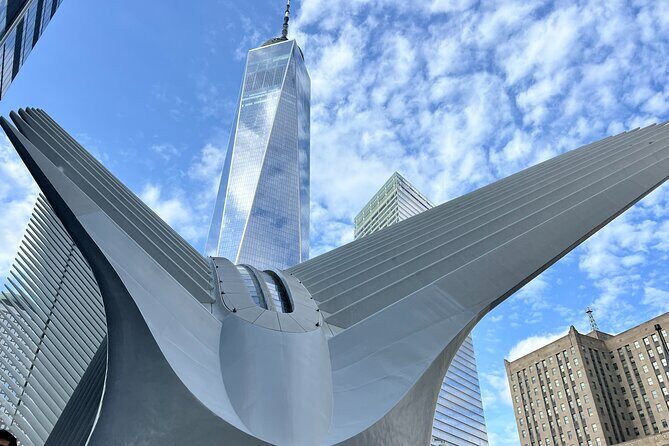
The tour starts at Charging Bull and specifically lists Bowling Green, New York, NY 10004 as the key start location. It ends at Oculus World Trade Center, at 185 Greenwich St, LL3110, finishing just outside or inside the Oculus.
The most important practical thing here is that this is a “start here, finish nearby” route, not a backtrack. You’ll end up at a major transit hub, which makes it easier to continue your day without redoing the walk. Also, the tour notes that you’re near public transportation, which helps if you need to adjust your plans on the fly.
Group size is capped at 25, and the tour runs at 10:00 am. That timing is nice because you get the Lower Manhattan core before the full afternoon surge, and you still have plenty of day left for other neighborhoods.
Stop-by-stop: what you’ll see and why it matters
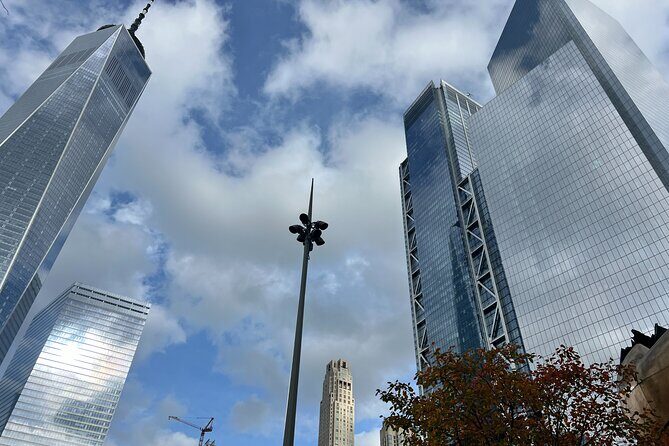
This tour is built from 12 short segments. Most stops are around five minutes, with one longer stop (10 minutes). That means you’ll get the highlight, the context, and the visual cue—then you move on. It’s an efficient way to learn, as long as you keep your attention on what’s being pointed out.
Stop 1: Charging Bull (Wall Street Bull)
You’ll see Charging Bull and learn its history. The value here isn’t just “famous photo spot.” It’s learning how a modern symbol sits inside an older financial district story. Wall Street’s image can feel too polished or too loud, so a symbol like this helps you start with something people recognize—then understand why it connects to money, power, and modern myth.
Tip: bring a steady hand for photos, but also look beyond the bull. The best photo opportunities tend to come from angles where the street grid and nearby architecture appear too.






Stop 2: Bowling Green
Next is Bowling Green, described as the oldest park and the oldest fence in NYC. That’s a rare kind of clue: when a place is that old, it’s not just a view—it’s a physical reminder of how the city began to organize itself.
Even if you don’t memorize every fact, you’ll leave with a clearer sense of the layout: where civic space sat relative to the financial district. That spatial knowledge is what makes later stops feel connected instead of random.
Stop 3: National Museum of the American Indian (outside the building)
This stop focuses on the museum and specifically points out visible outdoor art: you’ll see any statue by Samuel Chester French displayed out front of the former US Custom House (now known as the museum of the American Indian).
This is one of the “look closely” moments. You’ll learn to connect what you’re seeing—statues and building context—with how NYC used to function as a gateway for trade and settlement. It’s a nice reminder that Lower Manhattan’s story isn’t only about finance; it includes arrival, movement, and cultural presence.
Stop 4: Fraunces Tavern Museum
You’ll see the site that some consider to be the oldest tavern in NYC, and a place frequented by George Washington. A tavern stop works because it’s not abstract. Taverns were where alliances formed and rumors spread. That makes Revolutionary-era history feel more like people, less like textbook paragraphs.
Practical angle: this is also a good time to slow your pace slightly and watch how the street changes from open space into tight blocks. The architecture around old taverns helps you understand why those early civic gatherings mattered.
Stop 5: Remnant of Lovelace Tavern, Old NY: New Amsterdam
Here you’ll see a relic tied to old Dutch New Amsterdam. The tour doesn’t treat the Dutch period as a footnote; it uses physical leftovers—remnants—to show you the layering of the city.
If you love origins (and most NYC-history fans do), this stop gives you that “wait, this is still here?” feeling. It’s the kind of detail that makes your later walks more rewarding because you start noticing what’s beneath the modern street names.
Stop 6: Stone Street
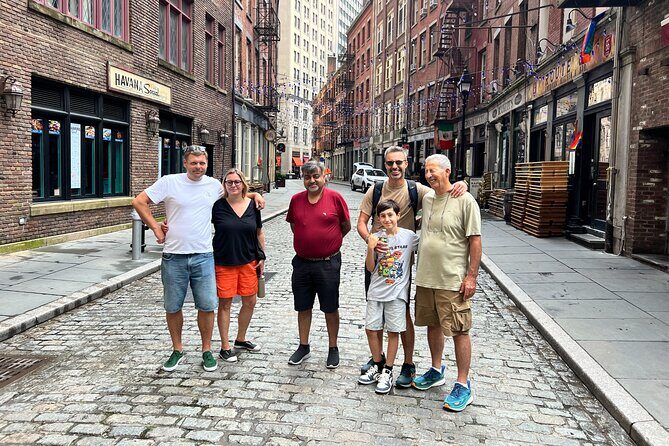
Then comes Stone Street, described as having the most historic buildings of Lower Manhattan. Stone Street is exactly the kind of place where you can either skim past or really pay attention. On this tour, you’re primed for the visual—older structures, a sense of scale, and street form that feels different from wider avenues.
This stop is short, but it helps you recalibrate. It’s a quick reset before you head deeper into Wall Street’s power core.
Stop 7: Queen Elizabeth II Garden
You’ll see Hanover Square and a memorial dedicated to British individuals who died on September 11th. This is the tour’s emotional pivot, and it’s handled through placement in the real geography of the area.
The value isn’t just the fact of remembrance. It’s seeing how memory and daily city movement coexist in Lower Manhattan. If you like your history grounded—right where people live and work—this stop lands well.
Stop 8: Delmonico’s (John Wick interior reference)
Next is Delmonico’s, with a specific film connection: the building used as the interior for the John Wick film series, and the fact that it has a storied history.
This is a smart way to make architecture approachable. You’re not just learning about a famous name; you’re learning how movie sets borrow from real, storied spaces. If you’re a film fan, this makes the architecture easier to remember. If you’re not, you still get a landmark anchored to a recognizable cultural reference.
Stop 9: Wall Street Court (Cocoa Exchange + John Wick Continental Hotel reference)
At Wall Street Court, you’ll see the New York Cocoa Exchange and another John Wick connection: the interior from the Continental Hotel film setting.
This combination works because it ties trade to storytelling. Cocoa exchange history belongs to the real economic machinery of the city. The film link helps you “place” it in your memory. Either way, you walk away with a stronger sense that Wall Street was built from a network of exchanges, not just banks and towers.
Stop 10: Wall Street (tallest-in-the-world brief chapter + Trump purchase in the 90s)
Then you’ll see a Wall Street building that briefly became the tallest in the world and was purchased by Donald Trump in the 90s. That’s a very “New York” kind of fact: power, speed, and image all in one package.
This stop also invites you to think about how status works. In New York, height is symbolism. Ownership stories add another layer—who controlled the skyline, who could reshape it, and why that mattered socially as much as financially.
Stop 11: 1920 bombing site + the old Dutch wall remnants
This is your longest stop: about 10 minutes. You’ll see the site of the 1920 bombing and remnants of the old Dutch wall that gave Wall Street its name.
This is where the tour balances power and fragility. Buildings and money can make you feel untouchable; a bombing site reminds you that cities take hits, even when they look invincible. Then the Dutch wall piece brings you back to something tangible: the street’s identity, literally built from older boundaries.
If you want the one stop that most connects the past to the street you’re standing on, this is it.
Stop 12: House of Morgan (JP Morgan first bank + Dark Knight Rises Gotham Stock Exchange)
Your final stop is the House of Morgan. You’ll see JP Morgan’s first bank, hear why it ties to The Dark Knight Rises through the Gotham Stock Exchange idea, and learn why JP Morgan made his building so tiny.
That last detail is the kind of explanation that makes a tour worth it. City architecture often has constraints—land, planning, politics, and power. When a guide spells out the reasoning, you stop viewing buildings as random facades and start seeing them as decisions.
And because you finish near the Oculus, you’re ending at a place that works as a visual and transit “bridge” out of the financial district.
The tour vibe: how it likely feels from start to finish
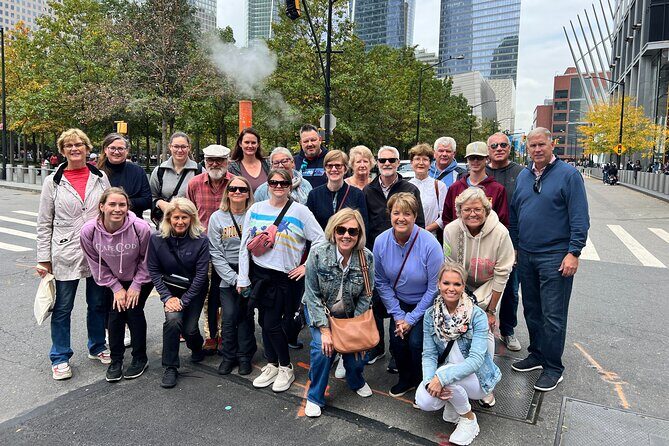
This is a “see it, learn it, move on” walk. With most stops at five minutes, you get a highlight-per-block rhythm. The good news is the tour is designed for a compact area, so you’re not spending half your time crossing Manhattan while trying to reconstruct what you missed.
Also, the guide experience really matters here. The tour’s top praise centers on guide Jon’s ability to move fast across topics without turning into a lecture, plus strong communication and presentation. You’ll likely feel like you’re getting clear story beats rather than just facts.
If your attention span is short, you’ll still manage. If your curiosity is high, you’ll probably want to ask questions—especially around the 9/11-era remembrance point and Wall Street’s early layers.
Who should book this tour (and who might skip it)
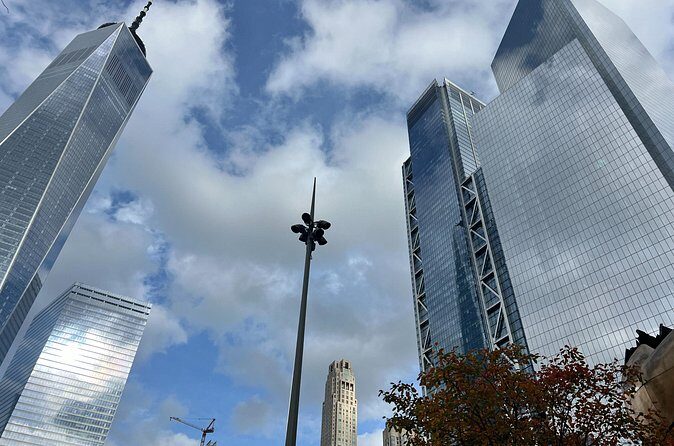
This tour is a great match if you:
- want a fast, organized introduction to Lower Manhattan
- like history tied to visible street details, not only museums
- enjoy film locations you can connect to real buildings
- want both the money story and the human story in one morning
You might skip it if you:
- need long seated breaks throughout
- dislike walking tours with multiple quick stops
- expect deep inside-the-building access at every stop (this one is mostly exterior/street-level with museum-focused viewing outside)
Should you book? My practical take
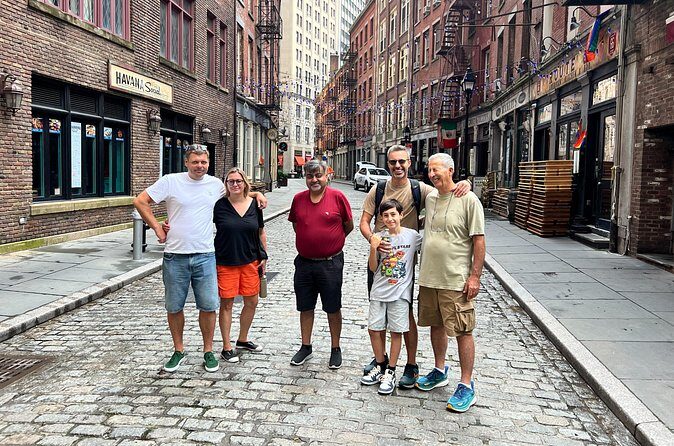
If you have only a morning (or one slot) and you want Lower Manhattan to make sense, I think this is an excellent pick for the money. The $39 price works because it includes a licensed guide and the stops are built around free, visible locations—so you’re not paying to get in, you’re paying for interpretation.
I’d book it if your goal is: get your bearings fast, understand the layers, and still feel the emotional weight where it belongs. If you’d rather spend the day in museums with longer stays, then look for a different style of tour.
FAQ
What is the tour duration?
It runs for about 2 hours 30 minutes.
What is the starting point and where does the tour end?
It starts at Charging Bull / Bowling Green area and ends near Oculus World Trade Center at 185 Greenwich St LL3110, finishing just outside or inside the Oculus.
How much does the tour cost?
The price listed is $39.00 per person.
Is the tour in English?
Yes, it’s offered in English.
Are admissions included?
The tour lists admission ticket free for the stops, and the tour includes the guide. Coffee or tea is not included.
What kind of fitness level do I need?
It notes a moderate physical fitness level. It’s a walking tour with several short stops.
Is there a free cancellation window?
Yes. It offers free cancellation up to 24 hours in advance for a full refund.
If you want, tell me your travel dates and what you care about most—9/11 remembrance, Revolutionary history, or film locations—and I’ll suggest how to pair this with the best next stop for the rest of your day.