REVIEW · NEW YORK CITY
Central Park-Bethesda Terrace, Strawberry Fields, Bow Bridge
Book on GetYourGuide →Operated by Tours by Foot · Bookable on GetYourGuide
Central Park can overwhelm fast. This 3-hour tour gives you a tight route through the southern half of the park, with Bow Bridge and Bethesda Terrace as big, visual anchors plus a guide who keeps the story moving as you walk. I love that you get 14 of the park’s most photographed spots in a small group, so you’re not just crossing the park—you’re learning how and why it all fits together.
Still, there’s one trade-off: you’re not seeing all 843 acres. You also need to be comfortable with steady walking because wheelchair access isn’t offered, and non-folding strollers aren’t allowed.
In This Review
- Key highlights you’ll feel right away
- Why a guide here beats wandering blind
- Starting at General Sherman Statue on 5th Avenue
- Bow Bridge and the Pond/Lake crossings: where architecture becomes a photo story
- Bethesda Terrace & Bethesda Fountain: the park’s dramatic centerpiece
- Alice in Wonderland Statue, the Ramble, and why walking feels different here
- Strawberry Fields and the Imagine mosaic: a moving stop in the middle of sightseeing
- The Dairy visitor center and movie-scene Central Park
- Price and pace: is $49 worth 3 hours?
- Practical tips so you enjoy every stop
- Should you book this Central Park highlights walk?
- FAQ
- How long is the Central Park-Bethesda Terrace, Strawberry Fields, Bow Bridge tour?
- How much does the tour cost?
- Where does the tour meet?
- What are the main highlights on the walk?
- Is this tour wheelchair accessible?
- Are strollers allowed?
- What language is the tour guide commentary in?
- How many stops does the tour include?
Key highlights you’ll feel right away
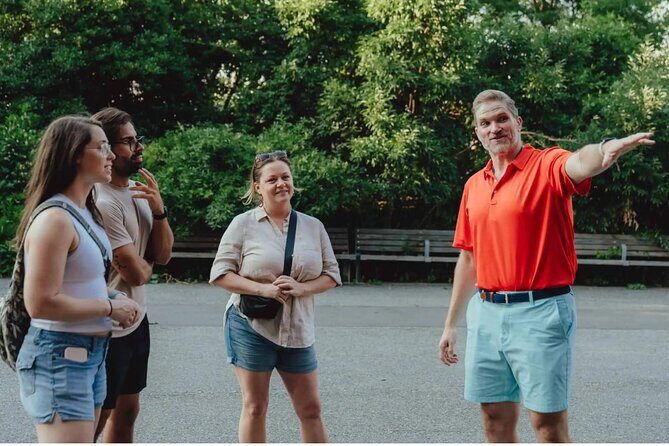
- 14 top photo stops packed into a relaxed pace, so you don’t miss the best angles
- Bow Bridge and the Pond/Lake area bridges, where no two crossings are the same
- Bethesda Terrace & Bethesda Fountain, the park’s most cinematic stonework set
- Strawberry Fields and the Imagine mosaic, a calm, respectful John Lennon tribute
- Ramble time, where a guide helps you enjoy the winding paths without getting turned around
Why a guide here beats wandering blind
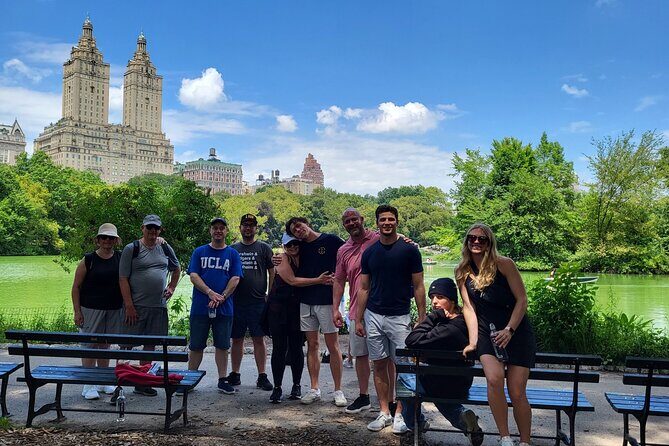
Central Park is famous, but that fame can fool you. You arrive expecting a neat loop, then realize it’s a whole world—ponds, bridges, meadows, and wooded paths that can make you wonder what direction you were even heading. A guided walk is the fastest way to make the park feel logical.
What I like about this style of tour is that it’s built for sightlines. You’re not just ticking off landmarks. You’re stopping where the views and architecture pay off, then moving along pedestrian paths so you keep momentum without feeling rushed. The guide’s live commentary matters here because it turns a pretty scene into something you can picture later—especially when you recognize Central Park from movies and TV.
Also, the group size stays small, which makes it easier to ask questions and hear answers. In my opinion, that’s a big deal in Central Park: without context, you might spend time looking at the obvious spots, but with context you start noticing the details—the way the park transitions from open fields to quiet streams, or how different bridges carry the same idea in different designs.
You can also read our reviews of more tours and experiences in New York City.



Starting at General Sherman Statue on 5th Avenue
Your tour begins at the northwest corner of 59th St. and 5th Ave, by the General Sherman Statue. That location is a smart choice because it puts you in the middle of the action: you’re close to major entrances and transit-friendly streets, and you can orient quickly.
The first stretch is about getting your bearings. You’ll be walking through the southern half of Central Park, with the route designed around connected highlights—so the walk feels like one story instead of a chain of scattered destinations. If you’ve never been, Central Park’s scale can mess with your timing. Having a guide helps you avoid that classic problem: stopping for photos, then realizing you’ve drifted away from the route and lost your plan for the next hour.
Bow Bridge and the Pond/Lake crossings: where architecture becomes a photo story
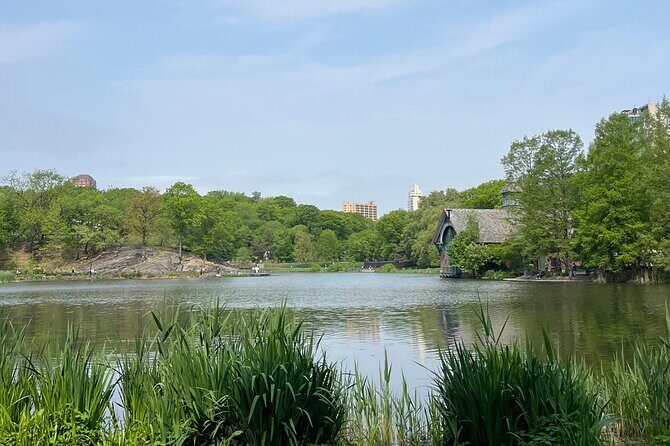
One of the best things about this tour is how it treats bridges—not as background, but as a main character. You’ll spend time around the park’s water features, including stops near The Pond and The Lake, and you’ll cross bridges where you can see the different architectural styles up close.
A fun fact I like to remember here: each bridge across the ponds in Central Park has unique architecture—no two are the same. With a guide, you’re more likely to notice how the details change: railings, forms, and the way light hits the structure from different angles. You’ll also get practical photo guidance without it turning into a photography workshop. Just enough pointing so you know where to stand and what to look for.
Bow Bridge is the headline for a reason. It’s elegant, romantic, and instantly recognizable, and it tends to frame the park scenery in a way that feels almost like a movie set. The guide will steer you toward photo-friendly moments, but you’ll still get time to simply watch the water and relax for a minute.
If you’re traveling with family or mixed ages, this section is usually a win. It’s visually rewarding, not too technical, and easy to appreciate even if you’re not the type who reads every sign.
Bethesda Terrace & Bethesda Fountain: the park’s dramatic centerpiece
Next comes Bethesda Terrace, often described as a kind of soul of Central Park, and once you’re there, you’ll get it. This is where the park feels grand and intentional—intricate stonework, dramatic layout, and the Bethesda Fountain serving as the natural focal point.
What I find valuable is that the tour doesn’t just say where to look. It helps you understand why this place feels so special: it’s built to create a central moment as people move through the park. That design thinking is what makes Central Park feel like more than a big field with trees.
A practical note: this area can feel busy in peak seasons because it’s a magnet for photos. Having a guide helps because the group moves with purpose—so you don’t spend the best photo light waiting for the perfect gap in traffic.
You’ll leave Bethesda Terrace with a clearer mental map of the park too. Even if you don’t walk it again on your own, you’ll understand where the “heart” sits relative to the rest of the route.
Alice in Wonderland Statue, the Ramble, and why walking feels different here
Central Park isn’t one vibe. This tour takes you into that shift. You’ll pass iconic spots like the Alice in Wonderland Statue, which makes the park feel playful and storybook. It’s a fun stop because it reminds you Central Park isn’t only about beauty—it’s also about cultural references and imagination.
Then you’ll move into The Ramble, a wooded area known for winding pedestrian paths and tranquil streams. This is where a guide earns their keep. Getting turned around in a maze of paths is easy, especially if you’re stopping for photos and taking in the greenery. The guide keeps the flow moving, so you actually get the calm parts without losing time.
Here’s what you’ll likely notice: the Ramble changes the soundscape. Instead of open-air bustle, you get more quiet and layered movement—leaves, water, and the gentle sense that you’re inside the park rather than just looking at it. For many people, this is the moment Central Park stops feeling like a tourist trap and starts feeling like a true escape.






Strawberry Fields and the Imagine mosaic: a moving stop in the middle of sightseeing
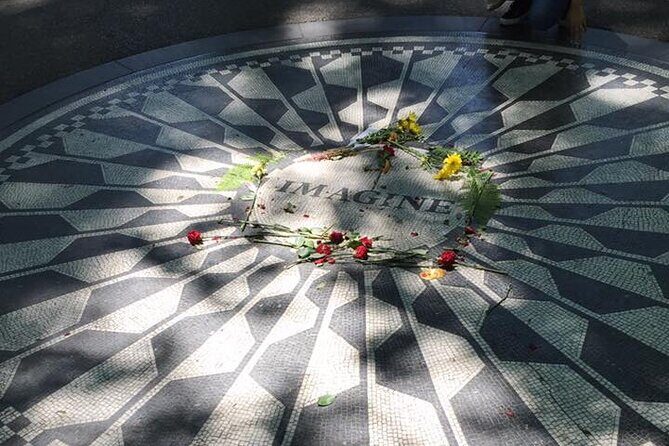
Strawberry Fields is one of those places where the atmosphere becomes more reflective. You’ll visit the John Lennon memorial area, highlighted by the famous Imagine mosaic.
What makes this stop meaningful on a walking tour is pacing. You’re not sprinting from landmark to landmark with no pause. You arrive after other scenic highlights, and the setting helps you slow down. It’s still sightseeing, but the intent here is different—more memory than postcard.
Also, if you’ve seen Lennon references in pop culture, this is where it lands in a real, physical way. The mosaic is the visual anchor, but the surrounding mood is what makes it stick.
If you’re traveling with teens or kids, this can still work. The “memorial” part can be made understandable with the right commentary, and it’s a quieter break from the most photographed areas.
The Dairy visitor center and movie-scene Central Park
Another smart piece of the route is the stop at the Dairy, now a visitor center with Gothic flair. Even if Gothic details aren’t your thing, this is a helpful pause. It adds architectural variety to your walk and gives you a sense of how Central Park’s buildings tie into the larger park design.
Central Park also shows up everywhere in film and TV. You’ll hear about recognizable scenes tied to titles like Home Alone 2, Ghostbusters, When Harry Met Sally, Breakfast at Tiffany’s, Serendipity, You’ve Got Mail, and that famous Elf moment. The guide doesn’t just list titles; you’ll often get pointed toward the kind of views or settings those productions used.
That matters because it changes how you see the park. Instead of random trees and paths, you start thinking in angles and settings—what a camera would choose, what an editor would emphasize, and why certain bridges and corners became cinematic.
One detail I especially like: in a small-group family experience, the guide—Kassie—connected monuments and even fun pop-movie moments in a way that felt like a game, not a lecture. That’s the best balance for a park tour: humor and story, with enough clarity that you still learn something.
Price and pace: is $49 worth 3 hours?
At $49 per person for about 3 hours, the value comes down to what you’d do otherwise. If you’re staying busy and don’t want to spend half a day guessing where to go for the best views, this price can feel fair fast.
Here’s the math in real-world terms:
- You’re covering the southern half efficiently, without the “turn left, oops” problem.
- You get live commentary from a professional licensed NYC tour guide.
- You hit 14 of the most photographic stops rather than a handful of random icons.
If you’re the kind of traveler who loves planning, you could DIY this walk. But DIY comes with hidden costs: time spent figuring out routes, missed photo angles, and not understanding the design logic behind the landmarks. For many people, that’s exactly what they’re paying for—confidence that the next stop is worth it.
The pace is also a practical strength. It’s described as a leisurely 3-hour stroll, and it works well for families with kids and teens. You’re walking long enough to feel like you did something meaningful, but not so fast that you’re constantly out of breath and losing photo moments.
Practical tips so you enjoy every stop
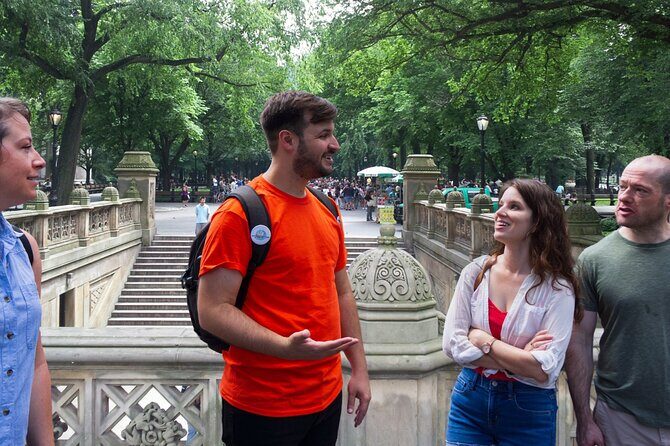
Central Park is outdoors and you’ll be on your feet for the whole tour. Do yourself a favor: wear comfortable shoes you can stand in, and bring a light layer because weather can shift quickly in a park.
A couple more practical points from the rules:
- Non-folding strollers aren’t allowed.
- The tour isn’t suitable for wheelchair users.
Also, keep your expectations aligned with the route: this focuses on the southern half. You’ll cover a lot, but you won’t see everything. Think of it as the highlight reel of one of the park’s most famous sections, with extra attention on bridges, water, and the Ramble.
Should you book this Central Park highlights walk?
Book it if you want the fastest way to see the classic scenes—Bow Bridge, Bethesda Terrace, Strawberry Fields—with enough guidance to make the park feel understandable instead of chaotic.
Skip it or consider other options if you already have a full Central Park plan and you’re comfortable wandering between points on your own, or if you need mobility accommodations beyond what the tour supports.
If your goal is to leave Central Park with a clear mental map and a stack of photos that look good for the right reasons, this is a smart use of a half-day. Three hours is a sweet spot: long enough to feel like you got the story, short enough that you still have energy for the rest of New York.
FAQ
How long is the Central Park-Bethesda Terrace, Strawberry Fields, Bow Bridge tour?
The tour lasts 3 hours.
How much does the tour cost?
It costs $49 per person.
Where does the tour meet?
It starts at the northwest corner of 59th St. and 5th Ave, by the General Sherman Statue.
What are the main highlights on the walk?
The tour focuses on iconic Central Park sights including Bow Bridge, Bethesda Terrace (and the Bethesda Fountain), Strawberry Fields (John Lennon’s memorial and the Imagine mosaic), and the Alice in Wonderland Statue.
Is this tour wheelchair accessible?
No. It is not suitable for wheelchair users.
Are strollers allowed?
Non-folding strollers are not allowed.
What language is the tour guide commentary in?
The tour is conducted in English.
How many stops does the tour include?
The tour includes stops at 14 of Central Park’s most photographic sites.