REVIEW · NEW YORK CITY
World Trade Center Area Underground Art and History Tour
Book on Viator →Operated by Ann McDermott · Bookable on Viator
Underground art changes how you see Lower Manhattan. This World Trade Center Area tour focuses on the places people rush through—PATH platforms, passageways, and church stops—so the architecture and memorial details land in your brain instead of floating past. I like that it connects public transit with 9/11-era history without turning it into a classroom lecture.
Two things I especially appreciate: first, you get a guided route through the subway-world art and design at the World Trade Center Station area, where the work is literally part of your commute. Second, the church stops add real New York layers—George Washington’s moment at Saint Paul Chapel, then the Catholic congregation story at St. Peter’s Church.
One thing to consider: the tour leans on walking in underground and station spaces, and part of the transit experience requires a separate subway fare of $2.90. Also, the experience requires good weather, so plan for potential schedule changes if conditions are rough.
In This Review
- Key highlights you’ll notice fast
- A 90-minute Lower Manhattan story told between platforms
- Price and value: what the $44 covers, plus the $2.90 subway
- World Trade Center Station and The Oculus: the art you’d miss while moving fast
- What makes the underground transit segment work (and what can trip you up)
- Saint Paul Chapel: Washington’s prayer and the workers’ rest after 9/11
- St. Peter’s Church: the oldest Catholic congregation and rebuilding memorials
- How Ann McDermott keeps the route thoughtful for different walkers
- Who this tour suits best (and who should choose another plan)
- Quick logistics you’ll want to know before you go
- Should you book this World Trade Center Underground Art and History Tour?
- FAQ
- How long is the World Trade Center Area Underground Art and History Tour?
- What does the tour cost?
- Where does the tour start and end?
- What time does the tour begin?
- How many people are in the group?
- Is the subway fare included?
- Are the church stops free to enter?
- What ticket format do I receive?
- What happens if the weather is poor?
- Is there a cancellation option if my plans change?
Key highlights you’ll notice fast
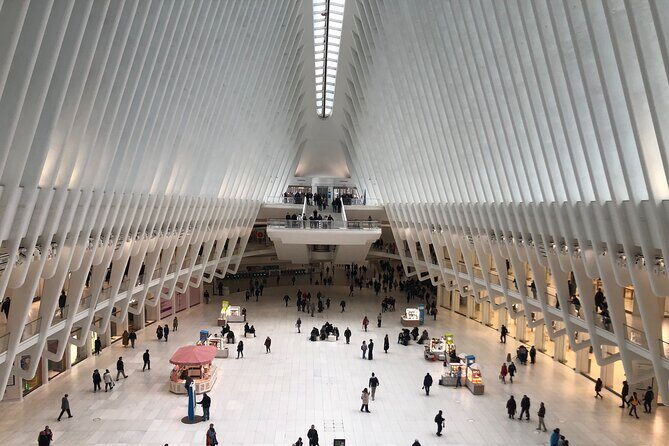
- PATH and The Oculus interior: see the transit hub’s design and how you’ll move between trains.
- 9/11 plaza memorial details: reflecting pools, the footprints of One and Two World Trade Centers, and the original plaza globe.
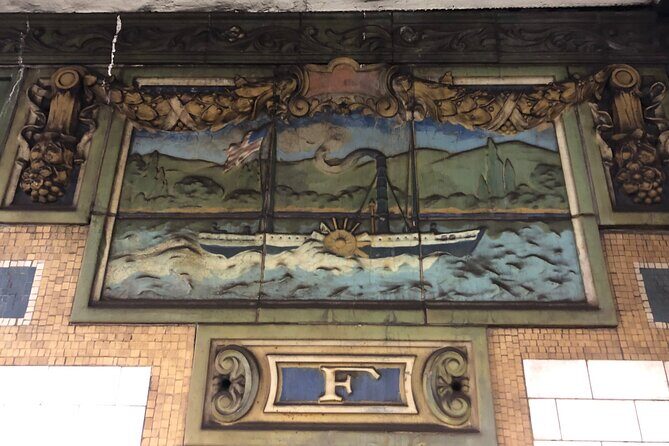
- Underground NYC Transit art installations: works built into the everyday routes you’d otherwise skip.
- Saint Paul Chapel: Washington’s prayed-after-inauguration connection plus the debris-clearing workers’ resting place.
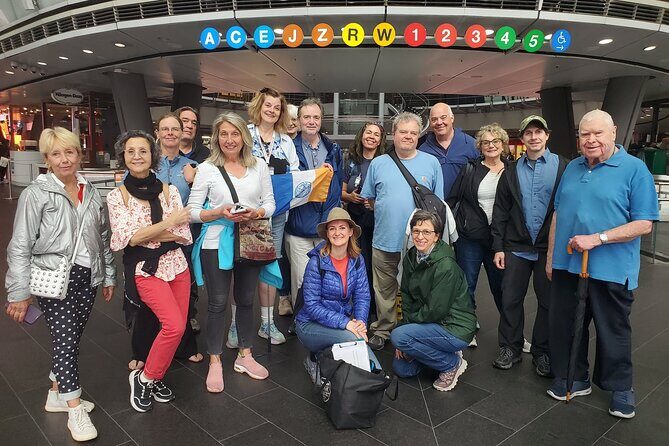
- Small group with time for questions: max 10 travelers means you can ask things as you go.
A 90-minute Lower Manhattan story told between platforms
This is a tightly timed tour (about 1 hour 30 minutes) that’s set up for one main goal: help you understand the World Trade Center area as both a transit system and a memorial landscape. You’re not just looking at famous names from the surface. You’re walking the routes and noticing the design choices that shape how the space feels.
The pacing is built around three short, meaningful chapters. You start at World Trade Center Station (PATH), then move into two church stops that tie political history to the post-9/11 rebuild. It’s a lot to fit in, but the route stays practical: transit spaces, then short indoor breaks at the churches.
Because it’s max 10 travelers, you’re not stuck in a long line where questions go unanswered. You get personalized attention and time to ask what you’re seeing—especially helpful when you run into art, symbols, or architectural details that don’t come with an obvious label.
You can also read our reviews of more historical tours in New York City



Price and value: what the $44 covers, plus the $2.90 subway
The tour costs $44.00 per person and uses a mobile ticket. On paper, the price sounds like it covers admission to the NYC transit network, and in practice it mostly does—at least for the guided transit experience.
Here’s the practical part you should plan for: much of the underground art you’re shown connects to the commute route, and that segment requires one additional subway fare of $2.90. In other words, you’re not paying extra for the tour itself—but you may still need to have a subway fare ready for the transit piece that makes the artwork part of the journey.
For value, I think the strongest case is the combination. At $44, you’re paying for more than sightseeing; you’re paying for a guide who can connect the artwork you see in stations with the building layout around it and the historical context that explains why those details matter. If you’re the type who always wants to know what you’re looking at, this is the kind of tour that actually pays you back.
World Trade Center Station and The Oculus: the art you’d miss while moving fast
Your first stop sets the tone. At World Trade Center Station (PATH), you’ll head inside The Oculus area—the sleek mall space where you can catch the PATH train to New Jersey or connect to trains that run across New York’s system. It’s a “you’re here anyway” place, which makes it perfect for a guided walkthrough because you’re already in the right context. You’re not traveling out of your day; you’re turning time you would normally spend commuting into history and design viewing.
From there, the tour focuses on landmark visual anchors you’ll otherwise pass. You’ll see the reflecting pools, and you’ll also view the original footprints of One and Two World Trade Centers. These aren’t abstract facts. They’re physical markers in a space designed for movement, which means your understanding clicks faster when you see them on site.
Across the street, you’ll also encounter the original globe that was in the center of the WTC plaza and was damaged on 9/11. That detail matters because it ties the story to an object people recognize emotionally, not just a date on a plaque.
After those memorial-touch points, you shift into the underground passageways of NYC Transit. This is where the tour becomes especially useful for first-timers and repeat New Yorkers alike: the guide walks you through historic and informative art installations that live along routes you can walk every day without ever slowing down enough to really see them.
What makes the underground transit segment work (and what can trip you up)
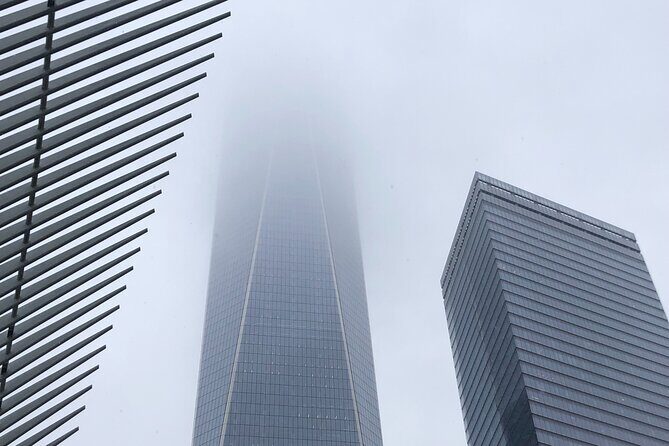
This underground portion is about seeing design choices as communication. In places like transit corridors, the art isn’t separate from function. It’s timed to your path, scaled to your walking pace, and framed by the architecture that surrounds it.
I love how the tour treats the underground system as a storyteller instead of a background. If you’re someone who normally uses stations as a shortcut, you’ll come away with a new habit: noticing materials, symbols, and spatial relationships instead of just scanning signs.
The one drawback is physical and logistical. The experience requires a moderate physical fitness level, and you should expect walking in station-like conditions. Also, the underground artwork route ties into commuting, so it includes that additional $2.90 subway fare. If you’d rather keep your day fully ticketed with zero extra costs, factor that in.
Saint Paul Chapel: Washington’s prayer and the workers’ rest after 9/11
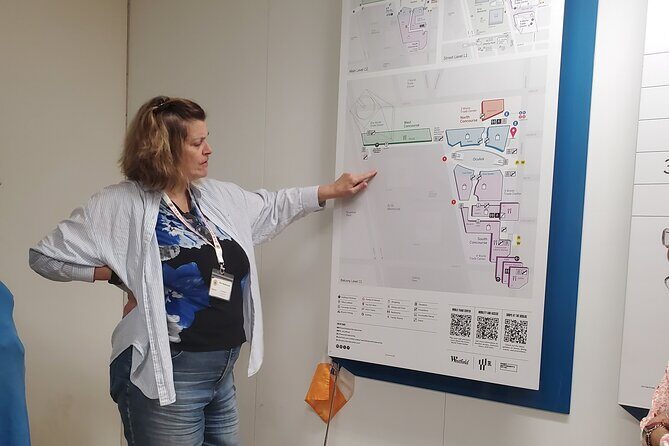
The second stop is Saint Paul Chapel, and it’s short by design—about 15 minutes. But in that time, it hits two major emotional notes.
First: George Washington prayed here after being sworn in as President. That’s the kind of detail that changes how you see the building. It’s not only tied to one era of American history; it carries the weight of a moment of national formation.
Second: after 9/11, the workers who cleared debris rested here while they toiled. That means the chapel isn’t only a historical setting. It functioned as a human refuge during a crisis—exactly the kind of context you usually miss if you only focus on memorial plaques.
The church yard also connects to the Revolutionary War era, with many Revolutionary War heroes and prominent New Yorkers buried there. Since this stop is admission free in the tour plan, it’s also one of the easiest ways to add meaning without adding cost.
The practical takeaway: treat this stop like your reset button. After the fast-moving transit spaces, you’re in a quieter setting where your attention can actually land on individuals, dates, and lived experiences.






St. Peter’s Church: the oldest Catholic congregation and rebuilding memorials
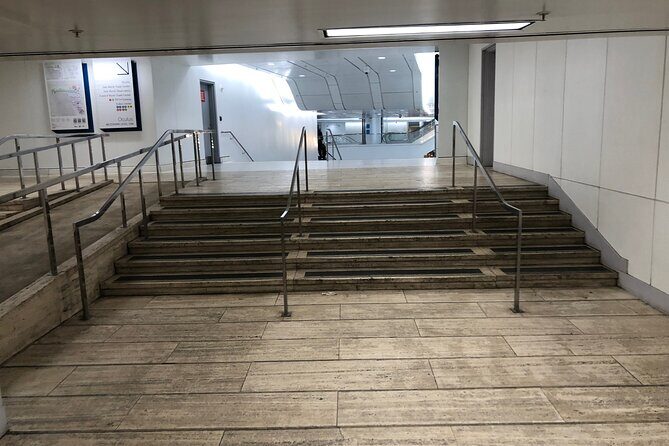
Next up is St. Peter’s Church, another short stop of about 15 minutes. This one is closely tied to religious community history and the rebuilding story after 9/11.
The tour frames St. Peter’s as the oldest Catholic congregation in New York City. That alone gives you a long timeline to hold in your head while you’re in Lower Manhattan—especially because so much of what you see there often feels locked to the 20th- and 21st-century events.
Then the focus narrows again: you’ll see memorials for people involved in the rebuilding of NYC after 9/11. This is a different emotional angle than the plaza footprints or the chapel’s debris-clearing connection. It turns the story toward the people who helped rebuild what was broken—less about what happened, more about what came next.
One practical note: the tour description indicates admission is not included for this stop. That doesn’t mean you can’t go in; it means you should plan around possible ticket needs if you’re expecting everything covered. If you want to minimize surprises, keep a little buffer in your budget and timing.
How Ann McDermott keeps the route thoughtful for different walkers
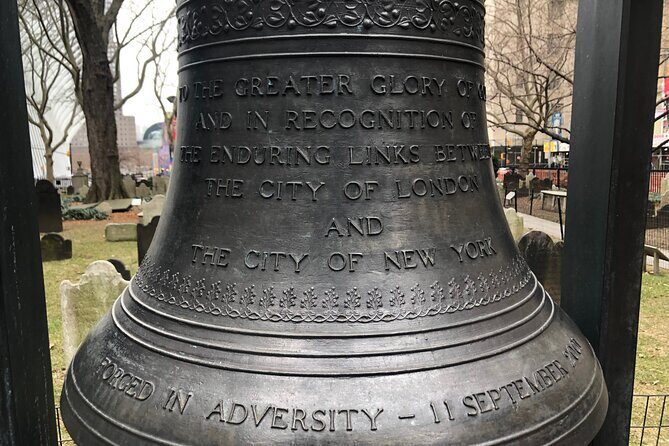
This tour is guided by Ann McDermott, and the strongest recurring theme in how the experience is delivered is clear: she connects art to architecture and then to history, so you don’t just see objects—you understand why they’re placed where they are.
It also helps that the group size is capped at 10 travelers. In a compact space like the PATH and transit passages, that matters. Crowds change everything: people speed up, attention disappears, and questions get lost. Here, you’re more likely to get answers in real time.
Another plus: Ann is noted for being patient and kind with people who need alternative ways to get around, including mobility needs and elevator options. If you’re traveling with someone who doesn’t do well with long continuous stairs or hard-to-navigate corridors, this is the kind of guided experience that can make the difference between enjoying the day and feeling stressed.
Who this tour suits best (and who should choose another plan)
I’d recommend this tour if you:
- love the “why am I seeing this?” feeling that comes from architecture and public art
- want a guided route through the WTC area that doesn’t rely only on the surface sites
- enjoy short stops that are packed with context, rather than long museum-like sessions
- are traveling with someone who appreciates history but still wants practical pacing
It may not be your best match if:
- you dislike walking in underground transit environments
- you’re hoping for a fully ticketed day with no additional subway fare (that $2.90 add-on is part of the experience)
- you need a very flexible schedule, since the tour timing is built as a tight loop
The good news: at a start time of 2:00 pm, it’s timed well for a later afternoon rhythm. You can pair it with a meal before or after and still keep your day from turning into an all-day endurance test.
Quick logistics you’ll want to know before you go
The tour starts at 209 Broadway, New York, NY 10007 and ends at 192 Broadway at John Street, at the Corbin Building. It also notes that you’ll be near public transportation, which is helpful for getting to the meeting point without a long scramble.
You’ll want comfortable footwear. Even though the stop durations are short, the transit portions take place in a real-world walking flow. And since the experience requires good weather, bring a plan for rain—because if conditions are poor, you may be offered a different date or a full refund.
Service animals are allowed, and the overall physical demand is described as moderate. If you’re on the edge, I’d err toward comfortable shoes and a steady pace—you’ll get more out of the art if you’re not fighting your legs.
Should you book this World Trade Center Underground Art and History Tour?
If you’re curious about Lower Manhattan but tired of only seeing the biggest names, I think you’ll like this. The price is reasonable for what you get: a guide-led route through transit spaces, memorial touch points, and church settings that put personal and national history in the same frame.
Book it if you want to learn what you’re looking at while walking, and if you appreciate that public art often carries its message through the path you take to reach it. Skip or consider alternatives if you don’t want any extra transit fare or you prefer attractions that stay above ground.
Overall, this tour is a smart choice for anyone who wants the WTC area to feel understandable—not just seen.
FAQ
How long is the World Trade Center Area Underground Art and History Tour?
It’s approximately 1 hour 30 minutes.
What does the tour cost?
The price is $44.00 per person.
Where does the tour start and end?
It starts at 209 Broadway, New York, NY 10007, and ends at the Corbin Building at 192 Broadway at John Street (192 Broadway, New York, NY 10038).
What time does the tour begin?
The start time listed is 2:00 pm.
How many people are in the group?
The tour has a maximum of 10 travelers.
Is the subway fare included?
The tour includes admission to the NYC transit network, but the underground/transit art portion requires one subway fare of $2.90.
Are the church stops free to enter?
Saint Paul Chapel is listed as free. St. Peter’s Church is listed as admission not included.
What ticket format do I receive?
You’ll get a mobile ticket.
What happens if the weather is poor?
The experience requires good weather. If it’s canceled due to poor weather, you’ll be offered a different date or a full refund.
Is there a cancellation option if my plans change?
Yes. You can cancel up to 24 hours in advance for a full refund.