REVIEW · NEW YORK CITY
New York: Mafia and Gangster History Tour in Little Italy
Book on GetYourGuide →Operated by Tourizee · Bookable on GetYourGuide
Little Italy doesn’t just serve pasta. It has a darker side. This 2-hour Mafia and Gangster History Tour walks you past real landmarks tied to organized crime, from early black hand gangs to the rise of Joe The Boss Masseria, and on to Lucky Luciano and Dapper Don John Gotti.
I especially liked the way the guide (Tom is named by several guests) keeps the story moving with photos, newspaper clippings, and clear stop-by-stop context. I also like the small group limit of 10, which makes it easier to ask questions and hear the details without getting lost in a crowd. One consideration: this tour isn’t suitable for people with mobility impairments, since it’s a walking route.
In This Review
- Quick Highlights
- Getting Oriented at Spring and Mulberry (44 Spring St)
- The First Act: Black Hand Gangs to Prohibition Power Struggles
- Joe “The Boss” Masseria and the Gang Networks You Can Still Sense
- Lucky Luciano and The Commission: How the City Became a Business Model
- Ravenite Social Club: Where Crime History Has a Physical Address
- Lt. Petrosino Square and the Early Crime-Fighter Thread
- The Police Building: When Enforcement Turns Risky
- Umbertos Clam House and the Street-Corner Reality Check
- Frank Serpico and Corruption: Why This Story Isn’t Just Old
- Endgame: Crazy Joey Gallo and Sally Bugs Briguglio
- Optional Movie Spots: The Godfather and The Sopranos Angle
- Price and Logistics: Is $40 Worth It?
- Who Should Book This Mafia and Gangster Tour
- Should You Book This Tour?
- FAQ
- How long is the tour?
- Where does the tour start?
- Is the tour a small group?
- What language is the tour in?
- What should I bring?
- What if bad weather cancels the tour?
Quick Highlights
- A tight 1-mile route (about 2 hours) that still covers big names and major turning points
- Ravenite Social Club stop with context for how certain places helped gangs organize and stay visible
- Police-focused chapters featuring Lt. Petrosino and Frank Serpico, not just crime-family legends
- End at the sites tied to Crazy Joey Gallo and Sally Bugs Briguglio
- Optional pop-culture sightings if your guide includes locations from The Godfather and The Sopranos
- Meet at Spring and Mulberry and look for a guide in a white cap at 44 Spring St
Getting Oriented at Spring and Mulberry (44 Spring St)
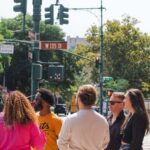
The tour starts at 44 Spring St, on the sidewalk where Spring meets Mulberry, next to the DaSalvio Playground. You’ll want to arrive about 10 minutes early and find the guide in a white cap. Once it begins, it’s prompt—so don’t treat it like a casual stroll that can wait for you.
What I like about starting here is that you’re immediately in the right neighborhood mood. Little Italy is busy in a very normal, daily way today. But your guide uses that contrast—everyday streets in front of crime-scene stories behind the buildings—to help you picture what changed across decades.
The pace is designed for walking comfort, not sightseeing buses. You’ll be on your feet, mostly in a tight area, and you should bring comfortable shoes. Think: steady, not marathon.
You can also read our reviews of more historical tours in New York City


The First Act: Black Hand Gangs to Prohibition Power Struggles
The early portion of the walk focuses on how violence and intimidation became organized business. You start with early black hand gangs and the tactics they used to control people and profit. This part matters because it’s the origin story many pop-culture versions skip. You get the logic of the era: fear was a tool, not just a side effect.
Then the story shifts into the liquor battles during Prohibition. That’s where you start seeing why the “business” side of organized crime grew so quickly. When legal supply dries up, control of distribution becomes everything. This is also the part where the tour connects early street-level gang activity to larger structures—crime doesn’t stay small when money gets bigger.
By the time you hear about the rise of Joe The Boss Masseria, the walk feels less like random trivia. You can start to see a pattern: different factions compete, alliances form, and the city becomes a map of incentives.
Joe “The Boss” Masseria and the Gang Networks You Can Still Sense
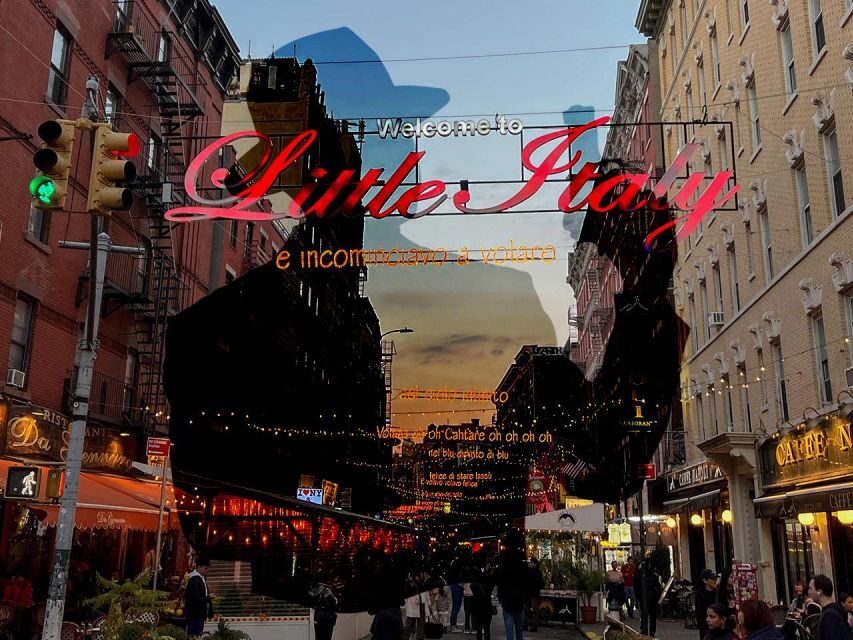
This section is about how criminal groups became networks—not just one gang with one clubhouse. Masseria is used as a turning point to explain how organized crime began to think in strategy: territory, influence, and leverage over rivals.
Even if you don’t care about the Mafia as a genre, you might care about this idea: cities produce systems. In this case, New York produced systems that criminals learned to exploit. The guide’s approach helps you treat the past like something structural, not just sensational.
A practical bonus: the guide’s use of supporting materials—several guests mention binders with images—makes the street-level details easier to hold in your head. You’ll be looking at corners and storefronts, but you won’t feel like you’re guessing.
Lucky Luciano and The Commission: How the City Became a Business Model
Then comes the “how did they organize that?” moment: Lucky Luciano and the Commission of Five Families. The tour frames this as a revolution in organized crime—an attempt to reduce constant infighting by creating a rule-based structure for major players.
The story extends into World War II with Luciano’s unlikely deal with the government. That part is useful because it shows how organized crime could negotiate with institutions when it served a purpose. It also helps explain why certain myths grow up around crime figures: when big power players make deals, the public narrative becomes easier to simplify.
On foot, you’ll start to notice how the tour uses names not just as legends, but as threads that connect different eras. The guide ties Luciano’s organizational shift to what you’re seeing later with clubs, enforcement pressure, and shifting leadership.
Ravenite Social Club: Where Crime History Has a Physical Address
One of the most pointed stops is the Ravenite Social Club. You’ll spend about 15 minutes there. This isn’t a “look at a photo and move on” stop. The idea is that this kind of location helps you understand how groups could socialize, plan, and project legitimacy—at least on the surface.
I like stops like this because they make the Mafia story less like a distant TV plot and more like something with walls, signage, and street access. Places matter. Even when the worst parts are hidden, the operating conditions are often right there in the real estate.
If you’re a visual learner, pay attention here. Guests have mentioned the tour includes photos and newspaper articles that help you see the same spaces in earlier time periods. That makes the Ravenite stop feel like a hinge in the story.






Lt. Petrosino Square and the Early Crime-Fighter Thread
Next, you hit Lt. Petrosino Square for about 10 minutes. This is where the tour balances the narrative. The Mafia story is only half the equation; the other half is law enforcement—and the people trying to stop organized crime before it became a system.
Petrosino is presented as an early crime fighter. What’s valuable for you here is the change in angle: you’re not just learning about criminals. You’re learning what it took for the city to fight back, and why “crime-control” was rarely clean or simple.
This stop also helps the tour avoid becoming one-note. When a guide includes enforcement history, you get context for why certain crime patterns were targeted and how pressure shaped leadership decisions.
The Police Building: When Enforcement Turns Risky
The tour includes a stop at the Police Building for about 10 minutes. This is another short chapter, but it’s important. The tour uses these locations to reinforce that the Mafia and police didn’t exist on separate stages.
In practical terms, you’ll learn how pressure points develop over time: investigations, public attention, and the constant cat-and-mouse dynamic. If you’re the kind of person who likes understanding motivations—why people act when they know they’re being watched—this part gives you that.
And it’s also where the guide’s pacing helps. You’re not stuck listening for an hour without a location shift. Short stops keep your attention on the present while the guide builds the timeline.
Umbertos Clam House and the Street-Corner Reality Check
You’ll also stop at Umberto’s Clam House for about 10 minutes. This is one of those “wait, what am I looking at?” moments—in the best way.
The Mafia story can feel glamorous in movies. A restaurant stop brings it back to daily life. The point isn’t to romanticize crime. It’s to show you that history lives among ordinary routines: eating, chatting, walking home.
This stop is useful for you if you’re trying to understand how Little Italy functioned as a community. Criminal activity was real, but so were neighborhoods, work, families, and culture. That contrast is what makes the tour feel grounded instead of purely sensational.
Frank Serpico and Corruption: Why This Story Isn’t Just Old
Another major thread is Frank Serpico, presented as a figure who risked his life to expose police corruption. On this part of the route, the tour shifts again—from chasing criminals to questioning the institutions meant to stop them.
This is one of the most important sections for modern readers. If you’ve ever wondered why law enforcement can fail even when the public wants results, this stop connects the dots. It’s not just about criminals being bad. It’s also about systems breaking trust, and about what it takes for reform to be possible.
Guests have highlighted that the guide covers police efforts to take down the mob, and Serpico’s story is a key piece of that. It gives you a fuller picture than the usual “gangster equals main character” approach.
Endgame: Crazy Joey Gallo and Sally Bugs Briguglio
The tour finishes at spots tied to the bloody demise of Crazy Joey Gallo and Sally Bugs Briguglio. You’ll spend time with the final locations, bringing the timeline to the end of one violent era and the start of another reshuffling.
This ending can hit harder if you’ve been picturing these stories as distant. The guide’s job is to keep it clear: what happened, why it mattered, and how it changed power. You’ll leave with the sense that organized crime leadership wasn’t just about status—it was about survival.
It’s also a good moment to ask questions. The tour structure is tight, so being near the finish makes it easier to connect earlier chapters to the “what it led to” ending.
Optional Movie Spots: The Godfather and The Sopranos Angle
If your guide includes them, you might see locations tied to The Godfather and one from The Sopranos. This is optional, so don’t count on it as a sure thing.
That said, this kind of pop-culture add-on can be useful. It gives you a shortcut into recognizing how real places become fictional settings. Just remember: movies often sharpen stories for drama. The tour’s value is that it anchors those references to real streets and real people.
Price and Logistics: Is $40 Worth It?
At $40 per person for 2 hours, this tour is priced in the “good value” zone for a guided walking experience, especially with a max group size of 10. You’re not just buying time—you’re buying structure. The guide keeps a tight timeline across multiple eras, and several guests mention that the guide brings visuals like photos and newspaper clippings. That kind of prep is hard to get from a self-guided walk.
You should also think about what you’re optimizing for. If you want maximum criminal-lore density in one afternoon, this works because it’s focused and geographically compact (about 1 mile / 1.5 km). If you want long museum-style explanations, you might find it brisk. But if you like stories told on the sidewalk, this is a solid deal.
Small group also matters here. With fewer people, you’re more likely to hear the details and not just the headline version.
Who Should Book This Mafia and Gangster Tour
This tour is a great fit if you:
- Like street-level history and can enjoy stories that connect across decades
- Want both sides of the equation: gang leadership plus crime-fighting
- Enjoy guides who bring materials (photos/clippings) and explain how events link together
- Prefer a smaller group walk over a big, noisy group tour
It’s not a great fit if:
- You need a mobility-friendly route (it’s listed as not suitable for people with mobility impairments)
- You dislike violent crime content. The subject includes shootings and street violence, even when it’s presented historically.
Also note: pets aren’t allowed (assistance dogs are allowed). So plan accordingly if you travel with an animal.
Should You Book This Tour?
I’d book it if you want a guided walk that explains the Mafia story in a way that feels connected to real places. The best part is the balance: you don’t just get gang legends. You also get Lt. Petrosino, police-building context, and Frank Serpico’s anti-corruption thread—so the tour feels like history, not just movie trivia.
If you’re on the fence, use this quick check: if a 2-hour, ~1-mile walking format works for you and you’re curious about how organized crime was organized (and challenged), this is a good use of time in New York.
FAQ
How long is the tour?
The tour lasts 2 hours.
Where does the tour start?
Meet on the sidewalk at the corner of Spring and Mulberry Streets, next to DaSalvio Playground at 44 Spring Street. The guide wears a white cap.
Is the tour a small group?
Yes. The group is limited to a maximum of 10 participants.
What language is the tour in?
The tour is guided in English.
What should I bring?
Wear comfortable shoes, since it’s a walking tour.
What if bad weather cancels the tour?
The tour may be cancelled due to inclement weather or not enough bookings, and you would receive a full refund.