REVIEW · NEW YORK CITY
New York City: Mafia History in Little Italy Walking Tour w/NYPD
Book on Viator →Operated by NYPD Police Tours · Bookable on Viator
Mafia history, plus dinner, in real locations. This walking tour ties Lower Manhattan’s Cosa Nostra past to everyday neighborhood streets, with an active or retired NYPD detective leading the story. You start at a famous East Village red-sauce spot tied to Lucky Luciano and the mafia Commission, then work your way toward today’s Little Italy.
I particularly love the insider access element at John’s of 12th Street and how the guide connects landmarks to specific eras, not just general mob vibes. I also like the built-in payoff: a full portion Italian-American dinner with mozzarella, eggplant parm, and a proper Sicilian cannoli, so you’re not scrambling for dinner after the walk.
One consideration: the tour includes strong language and can include graphic descriptions of murders, and it’s not recommended if you have walking problems.
In This Review
- Key highlights you should care about
- John’s of 12th Street: where the story and the smells start
- East Village grounding: Cosa Nostra roots and the five-family era
- Marble Cemetery and the Orpheum Theatre: the city’s hidden layers
- Lucky Luciano’s nightlife and the pull of 188 1st Ave
- Liz Christy Community Garden and Albanese Meats: mob-adjacent, life-forward
- Saint Patrick’s Old Cathedral and film history without the noise
- Mulberry Street: Gambino headquarters and the Little Italy finish line
- The included dinner: why the food is part of the value
- Price and logistics: $129 for 3.5 hours, with a meal
- Who should book, and who might want to pass
- Should you book this Mafia History in Little Italy walking tour?
- FAQ
- How long is the Mafia History in Little Italy walking tour?
- What are the start and end points?
- What food is included?
- Are vegetarian options available?
- Do I need to pay for drinks during the tour?
- What kind of guide will I have?
- Is the tour suitable for people with walking problems?
- How big is the group?
- What language is the tour offered in?
Key highlights you should care about
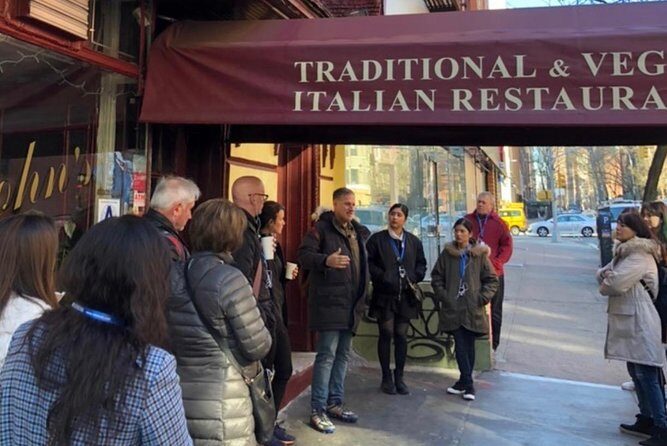
- John’s of 12th Street access at an historic red-sauce joint tied to the mafia Commission story
- NYPD detective-led storytelling that’s framed around firsthand-style neighborhood context
- Multiple Lower Manhattan stop types: cemeteries, theaters, old markets, and churches
- Full dinner included: spaghetti and meatballs plus handmade mozzarella and eggplant parm
- Big finale dessert with large Sicilian cannoli in Little Italy
- Small group size (maximum 35) for a better pace on busy streets
John’s of 12th Street: where the story and the smells start
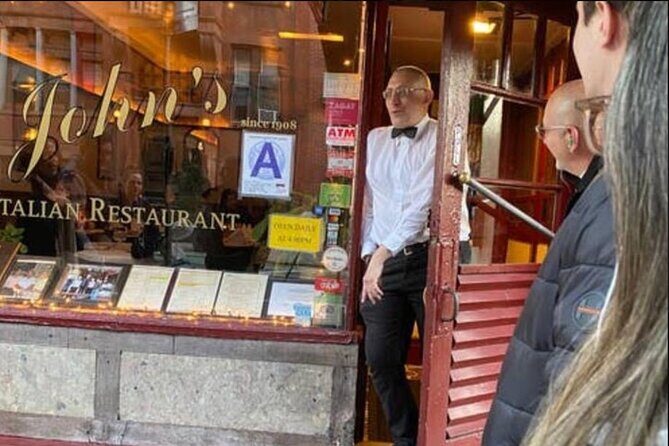
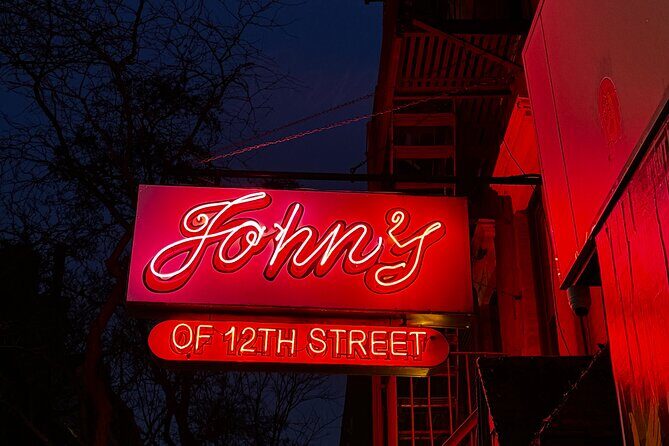
The tour begins in the East Village at 302 E 12th St, and it’s a smart move. John’s of 12th Street is an historic red-sauce joint established in March 1908 by John Pucciatti, an immigrant from Umbria who helped build a community around the neighborhood. The big hook here is that Lucky Luciano and others were known to frequent the place, and the story places the creation of the mafia Commission there in 1931.
This stop feels different from the usual outside-only photos. You’re guided into John’s of 12th Street as part of the experience, and the tour specifically notes it as the only Mafia history experience allowed to enter the restaurant. That access matters because you’re seeing an actual working room where the vibe of the era is easier to picture—wood, counters, and a “you’ve been here a while” kind of comfort that you don’t get from street corners alone.
It also helps that John’s of 12th has shown up in screen culture. The tour ties it to shows and films such as Boardwalk Empire and Sopranos, plus titles like Get Gotti and a documentary that’s referenced as coming out soon. Even if you’re not a screen junkie, the point is clear: this isn’t staged history. It’s a real business that has played a recurring role in the mob imagination.
Possible drawback at this stop: it’s still a restaurant environment, so you’ll want to be ready for the blend of storytelling and eating. Go easy on water-less hunger beforehand.
You can also read our reviews of more walking tours in New York City

East Village grounding: Cosa Nostra roots and the five-family era
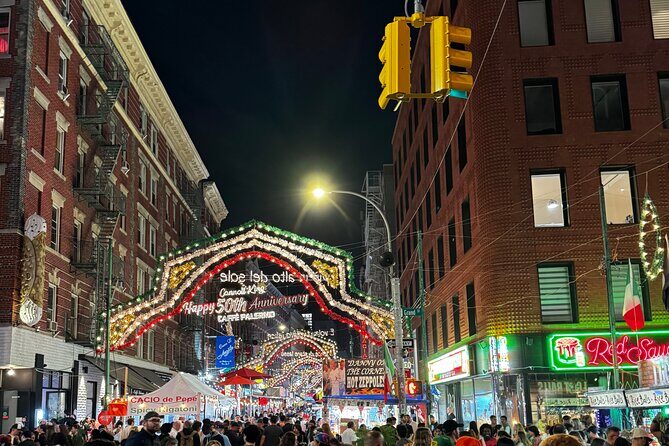
After leaving John’s of 12th, you move through the East Village with a focus on what Lower Manhattan was doing long before today’s nightlife branding. The tour frames the Village as a mafia stronghold since 1900, and you’ll visit key locations where all five crime families operated.
This is the part of the walk where I think the tour earns its keep for smart travelers. Lots of walking tours throw mob names at you. This one tries to tie the names to geography—where power clustered, where it moved, and how certain streets became “work zones.” Even brief stops are used for fast context so the story doesn’t blur into a long list.
The tour also includes an additional East Village stop focused on a burial place tied to New York political elite, plus the mention of John C. Colt, brother of Samuel Colt. That’s a reminder that crime history isn’t isolated from politics and business history. It’s all tangled together in the same few blocks.
If you like your NYC history with texture—old institutions, old communities, old power centers—this stretch gives it to you.
Marble Cemetery and the Orpheum Theatre: the city’s hidden layers
Next up is New York Marble Cemetery, described as the first public cemetery in NYC. The tour’s detail that there are below-ground vaults connects to a real-world reason for infrastructure: vaults were demanded to help protect citizens from disease. That kind of practical history is a nice change of pace from mob details, and it helps you understand how the city built itself around public health long before modern systems.
Timing matters here: the site is noted as being open to the public every first Sunday of the month. On regular days, you’ll still get the story, but you may not get the same level of access you’d have on that schedule. Either way, it’s a strong stop for travelers who like a city that keeps receipts—where even the dead reflect how a city learned to manage risk.
Then the tour shifts to performance history at the Orpheum Theatre, formerly Player’s Theatre. The key info here is the transformation across cultural eras. The venue is a 299-seat off-Broadway theater on Second Avenue near St. Marks Place, and it’s tied to the heyday of Yiddish theatre when it was part of the Jewish Rialto on Second Avenue. Later, it pivoted to films, then returned to dramatic use in 1958, and the first production after that change is referenced as Little Mary Sunshine opening in November 1959.
Why I like this stop: it shows how neighborhoods change without fully disappearing. The mob story is only one layer. The same blocks carried other major local cultures—immigrant communities, theater audiences, and entertainment economies.
Lucky Luciano’s nightlife and the pull of 188 1st Ave
You’ll then hit a marker tied directly to Lucky Luciano’s nightlife: 188 1st Ave, once the famous Club 188. The tour connects the address to the Genovese crime family’s influence over NYC nightlife, starting in the 1920s and stretching into today’s atmosphere of legend.
This stop works best if you’re willing to think like a detective for a minute. A club isn’t just a building. It’s a node: who shows up, who gets connected, which alliances form, and which rumors spread. Even if you don’t know Luciano’s entire timeline, the way the stop is framed helps you see how power can run through entertainment and social life.
I also like that the tour doesn’t only focus on the most famous names. It points you to how one family’s influence shaped nightlife patterns, which is usually what travelers miss when they only chase headline characters.
Liz Christy Community Garden and Albanese Meats: mob-adjacent, life-forward
Not every stop is crime-themed, and that’s a plus. The walk includes Liz Christy Bowery Houston Community Garden, noted as the oldest community garden in NYC, established in 1973. The tour ties it to activism: the Green Guerillas cleared the lot, and Liz Christy is named as one of the energized members involved. It also states that the city agreed in late April 1974 to rent the land for $1 a month, turning a neglected space into something people could actually shape.
That context changes how you see the neighborhood. You’re not only walking through an archive of wrongdoing. You’re seeing how communities respond, rebuild, and plant something that outlasts a single bad actor.
Next comes Albanese Meats & Poultry, described as NYC’s oldest butcher shop welcoming Sicilian immigrants since the 1800s. The tour adds a pop-culture tie-in: it’s referenced as a frequent destination for Martin Scorsese and Robert De Niro, and specifically as where Scorsese filmed his first film. Whether you’re a film fan or not, this stop brings you back to the real machinery of immigrant life: food, work, and everyday routines that made families strong.
A practical tip for these kinds of stops: wear comfortable shoes. Even short pauses add up when you’re walking for about 3 hours 30 minutes.
You can also read our reviews of more city tours in New York City





Saint Patrick’s Old Cathedral and film history without the noise
The tour includes Basilica of Saint Patrick’s Old Cathedral at Mott and Prince Streets. This one matters because the church is framed as both a religious anchor and an American story about religious freedom. The tour notes it opened over 200 years ago, and that it originally served a largely impoverished Irish community, later expanding to meet the needs of a diverse Catholic population that included Italian, African American, Chinese, and Vietnamese Catholics.
Then comes the film tie-in: the tour says The Godfather was filmed inside. That detail is useful, but the better point is how the church functioned as a community institution for multiple immigrant groups over time. When you connect that to mob history nearby, you get a fuller picture of how people actually lived—mass schedules and Sunday dinners, not just crime scenes.
Mulberry Street: Gambino headquarters and the Little Italy finish line
As the walk approaches Little Italy, you shift to Mulberry Street, framed as the headquarters of the Gambino crime family and connected to John Gotti. The tour notes you’ll visit the place where a powerful “family” operated an elusive and often deadly business.
This part also includes a key tone-setting message: the guide positions themselves as a local kid from Little Italy offering inside details tour companies sometimes get wrong. Even if you don’t take every word as gospel, the approach matters. It signals that the walk aims to correct generic assumptions with neighborhood-specific nuance.
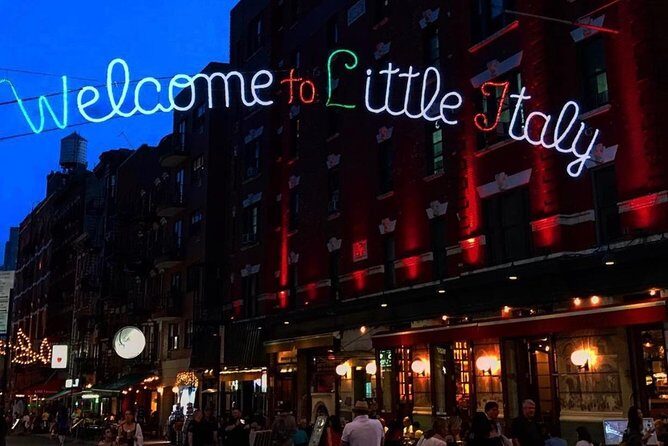
Finally, you end with a 45-minute Little Italy walk. The tour explains how Italian immigration began shaping the area in the 1840s, with Dutch settlers and the Lenape tribe earlier in the 1600s. It notes the neighborhood’s early appeal to immigrants due to Italian speakers and traditional culture. It also gives you the geographic evolution: originally larger, but today roughly a three-block stretch on Mulberry Street.
What you’ll enjoy here is the contrast: historic story beats layered over a modern neighborhood that still feels like a destination even as it changes. You’re finishing where the names on the maps meet where people still eat, shop, and gather.
The tour ends at 108 Mulberry St.
The included dinner: why the food is part of the value
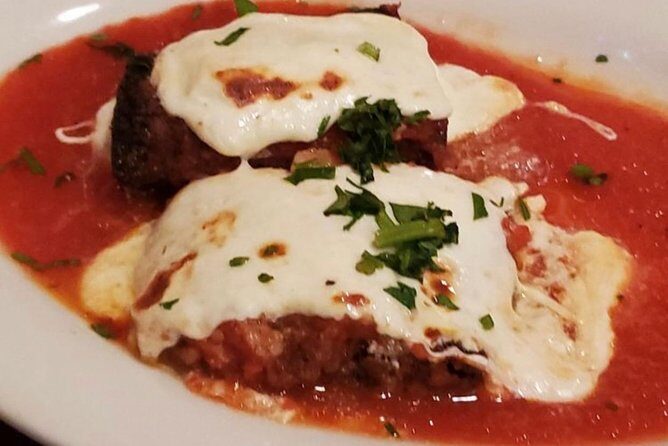
Let’s talk about the part you can taste. The experience includes a dinner with a full portion setup, described on the sample menu as:
- Spaghetti & Meatball with fresh bread at the historic red-sauce joint
- A starter: handmade mozzarella, described as coming from NY’s oldest cheese shop
- Main: eggplant parm served rollatini style, with two pieces
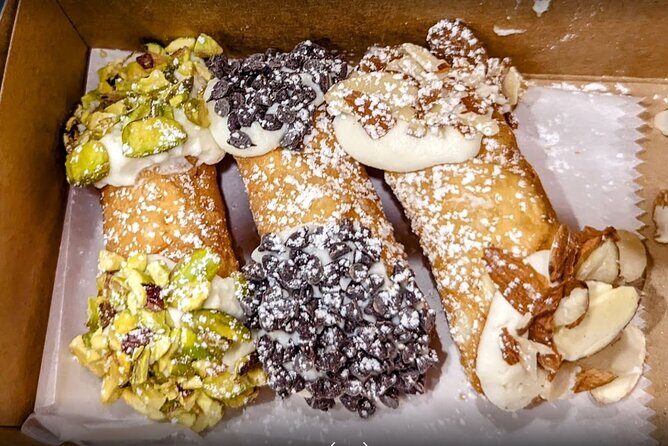
- Dessert: large Sicilian cannoli described as full-sized, not the small tour portions
This is one reason the price can make sense. At $129 per person, you’re paying for a guided, story-focused walk plus a real meal that hits multiple classic items. If you’ve ever done a walking tour that includes a tiny “snack stop” and then sends you hunting for dinner afterward, you’ll understand why this structure feels practical.
Also, one recurring theme from the experience is that the cannoli is treated seriously. You’re not just getting a dessert token. You’re getting the full-size payoff, and it caps the evening at the right emotional moment—right when your legs finally stop wanting more pavement.
One more practical note: drinks are not included, but you can buy them on the day. So plan on either water or a beverage purchase budget.
Vegetarian options are available with advanced request, which is helpful if your group has dietary needs.
Price and logistics: $129 for 3.5 hours, with a meal
At $129, you should judge value by what you actually get, not by how exciting the theme sounds. This tour bundles together:
- A 3.5-hour walking experience
- Multiple Lower Manhattan stops tied to mafia history and related cultural landmarks
- Dinner with multiple courses (not just a single bite)
- A guide who’s an active or retired NYPD detective plus mafia-history expertise
- A max group size of 35, which keeps things from turning into a shuffle through crowds
In other words, you’re buying both story and sustenance. That matters in NYC, where a decent sit-down dinner can quickly eat a big chunk of your budget.
The trade-off is that you’re committing to walking. The tour asks for moderate physical fitness and says it’s not recommended for travelers with walking problems. So make sure your body agrees with the plan.
Also expect strong language and sometimes graphic descriptions of murders. If that’s a dealbreaker for you or for someone in your party, skip it.
Who should book, and who might want to pass
This tour is a strong match if you like a mix of true-crime context and real neighborhood history, and you prefer guided stops that aren’t just standing in front of generic plaques. It’s also a great fit for adults who want an evening meal built into the experience, instead of trying to make dinner work around your itinerary.
It’s less ideal if:
- You’re sensitive to strong language or graphic murder descriptions
- You need a low-walking pace
- You’re hoping for drinks included in the package (they’re not)
If you’re going with friends, it can also be a fun group format because the pace is designed for walking, and a larger group can still hear the guide thanks to an audio setup mentioned by past participants.
Should you book this Mafia History in Little Italy walking tour?
I’d book it if you want your NYC mafia history grounded in place, food, and a guide with NYPD experience. The mix of John’s of 12th Street access, the East Village stops tied to the five-family era, and the finish through Little Italy gives you a full arc for an evening out.
I wouldn’t book it if you dislike true-crime content presented with strong language and murder detail, or if your mobility limits a walking itinerary. And if you want an alcohol-inclusive party-style tour, you’ll be disappointed since drinks aren’t included.
If you’re a history-and-food person with decent stamina and the comfort level for adult stories, this one looks like a solid value.
FAQ
How long is the Mafia History in Little Italy walking tour?
It runs about 3 hours 30 minutes.
What are the start and end points?
The tour starts at 302 E 12th St, New York, NY 10003 and ends at 108 Mulberry St, New York, NY 10013.
What food is included?
The dinner includes spaghetti and meatballs, fresh bread, a handmade mozzarella starter, eggplant parm, and large Sicilian cannoli for dessert.
Are vegetarian options available?
Yes. Vegetarian options are available with advanced request.
Do I need to pay for drinks during the tour?
Drinks are not included, but you can purchase them on the day.
What kind of guide will I have?
You’ll have an active or retired NYPD detective as your guide, plus insider mafia-history storytelling.
Is the tour suitable for people with walking problems?
It’s marked as not recommended for travelers with walking problems, and it asks for moderate physical fitness.
How big is the group?
The tour has a maximum group size of 35 travelers.
What language is the tour offered in?
It’s offered in English.