REVIEW · NEW YORK CITY
Fan Tribute: Taylor Swift in New York Walking Tour
Book on GetYourGuide →Operated by Skyscrapers and Stories · Bookable on GetYourGuide
Follow the eras on Taylor’s Manhattan streets.
This fan-created Taylor Swift in New York Walking Tour turns public streets into story clues, with stops tied to where she has lived and where she creates. I especially like two things: the small group (max 10) that keeps things personal, and the guide’s use of iPad + speaker visuals that make each location feel more specific instead of just sightseeing. One drawback to plan for: it stays outdoors and in public businesses, so you won’t see Taylor Swift in person.
Starting from NYU’s Lipton Hall, the walk moves through key Manhattan areas and connects them to the way Taylor’s life and music evolved. If you’re a real Swiftie, it’s an easy win. If you’re not, you’ll still get plenty of New York context from a guide who clearly knows how to read a neighborhood like a book, with extra touches like warmers on cold days.
In This Review
- Key highlights worth centering your trip on
- Getting your bearings at NYU’s Lipton Hall
- The small-group size that actually changes the tour
- Taylor’s NYC homes: why these streets feel personal
- The studio stop that makes music feel physical
- Bakery and bookstore stops: the fun, sensory side
- The TV show connections: more than trivia
- A human-rights themed riot stop: pop culture with a point
- “First university to offer a Taylor Swift class” and why that’s cool
- Walking through Greenwich, East Village, SoHo, and Tribeca
- Visual aids and storytelling that keep it fun
- Price: what $40 buys you in New York time
- Who should book this Swiftie walking tour
- Should you book: my decision guide
- FAQ
- Where is the meeting point?
- How long is the tour?
- How much does it cost?
- How big is the group?
- What language is the tour guide?
- Is the tour wheelchair accessible?
- Can I get a refund if my plans change?
- Is there an option to pay later?
Key highlights worth centering your trip on

- NYC “eras” approach that links neighborhoods to Taylor’s timeline, not just random photo stops
- Cornelia Street and other home-adjacent locations tied to her real life in the city
- A favorite recording studio stop that helps you connect songs to place
- Bakery and bookstore stops where the guide spotlights her shopping habits and pop-culture connections
- TV show location tie-ins shown via specific apartment and site references
- Extra storytelling stops, including a human-rights themed riot connection and a campus connected to a Taylor Swift class
Getting your bearings at NYU’s Lipton Hall

You’ll meet your guide at NYU’s Lipton Hall, right as you’re starting to get your legs under you in Manhattan. From the beginning, the tone is friendly and organized: this is a walking tour where the guide keeps the group together, which matters on crowded sidewalks.
Bring a good pair of walking shoes and dress for New York weather. Reviews mention cold-weather extras like hand warmers, which is a nice reminder that this is still a real two-hour walk through real streets.
You can also read our reviews of more walking tours in New York City



The small-group size that actually changes the tour
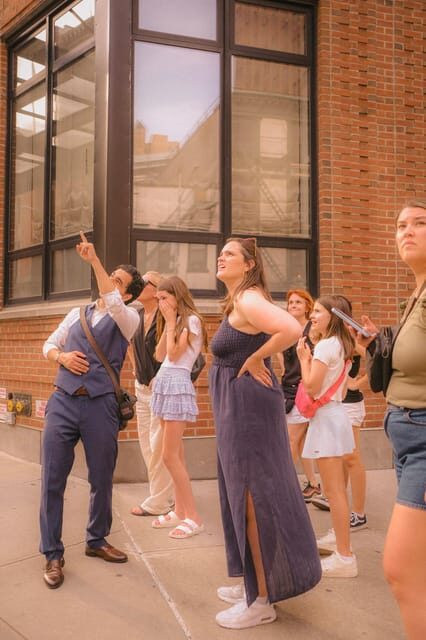
With a max of 10 participants, the tour doesn’t feel like you’re being dragged past stops like a checklist. You get a bit more time to ask questions, and the guide can adjust the pace if someone’s behind or if the street is busier than expected.
This group size also helps the guide do what matters most on this kind of tour: make the details land. When the stops are connected to Taylor’s timeline, you need more than a quick street-corner fact. A smaller group makes it easier to tell the story clearly and keep everyone oriented.
Taylor’s NYC homes: why these streets feel personal
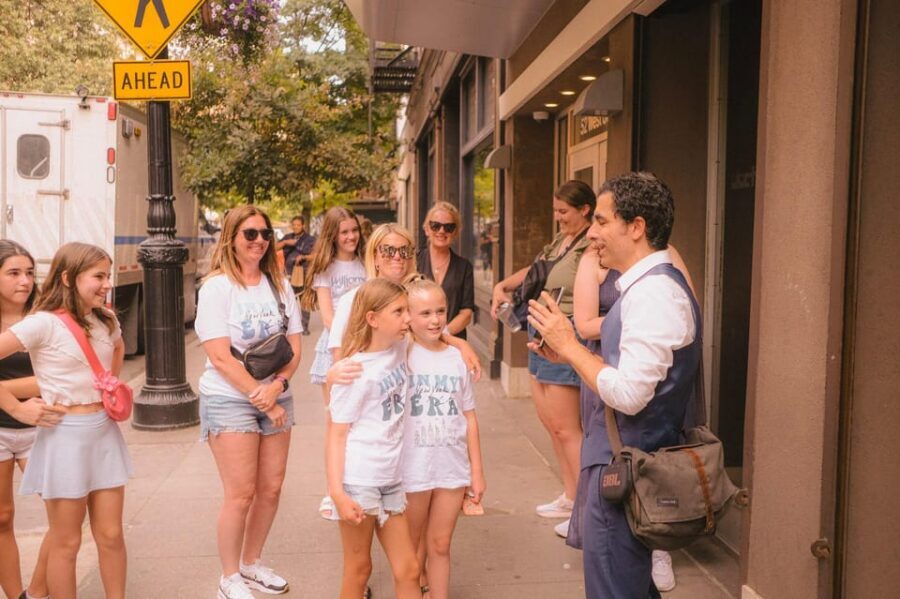
One of the big attractions is seeing the parts of Manhattan tied to her home life, including Cornelia Street. The tour approach is smart here: instead of treating these locations like sacred relics, the guide frames them within the surrounding neighborhood vibe—so you understand why the setting matters.
Even if you’re not from New York, you’ll quickly learn how city blocks work like memory triggers. The guide’s photos and video clips help too, especially at stops where you can only view the exterior. That’s when the iPad visuals become useful, because they help you picture what the location represents without pretending you can tour private interiors.
Practical note: residential streets mean you’ll want to keep your voice down, respect sidewalks, and stay aware of foot traffic. You’re visiting recognizable places, but you’re still sharing the city with regular people.
The studio stop that makes music feel physical

A major highlight is the visit to Taylor’s favorite recording studio. This is where the tour stops being only about where she lived and turns into how she worked.
I like this part because it gives you a grounded sense of what a creative process location means. Songs aren’t just lyrics and melodies; they’re made by people in specific rooms with specific rhythms. Seeing the area tied to that work makes it easier to connect the Taylor era you know to a place you can stand in.
The guide’s approach helps here: the iPad visuals and audio cues (when included) help you connect the site to the songs or moments discussed. It’s a good reminder that on a good walking tour, the best payoff isn’t just the photo—it’s understanding why the photo exists.
Bakery and bookstore stops: the fun, sensory side

Two of the stops are built around everyday places: a bakery and a bookstore where she has shopped. The bakery connection is especially memorable because it’s not just a random shopfront. The tour highlights the place where she has gotten her birthday cake, and yes—you get that bakery smell right there, which is rare for tours that only point and talk.
Then there’s the bookstore stop. This kind of location is perfect for Swiftie storytelling because it’s the kind of place fans can imagine: quiet corners, reading time, browsing the shelves. The guide tends to connect the stop to why it fits Taylor’s life—again, not only what she did, but what it suggests about taste and routine.
For you, the practical benefit is simple: these stops break up the walk. Even a short two-hour tour feels long if every stop is street-side and windy. Here, the tour uses real-world places to slow things down naturally.






The TV show connections: more than trivia

Taylor’s NYC also gets tied to her favorite TV show, including an apartment building related to it and other key locations that relate to the show. This is clever fan-service, but it also works as a travel lesson: New York is full of settings that pop up in TV and film, and streets become part of how audiences imagine stories.
What you’ll likely appreciate is how the guide uses these references to interpret the neighborhood. Instead of saying, This is where it was filmed, the tour uses the reference to help you understand how that part of Manhattan fits into media—and how Taylor’s life intersects with that same urban energy.
Just keep your expectations realistic. You’re seeing public exterior locations, not an on-set walk-through. Still, if you like spotting story connections, this portion delivers.
A human-rights themed riot stop: pop culture with a point

One of the more interesting sidesteps is a bar connected to a riot, tied to Taylor’s desire to stand up for human rights. This stop matters because it nudges the tour beyond celebrity geography and toward civic context.
New York has layers: music careers, yes, but also activism, public debate, and street-level history. The guide uses the riot connection to frame why certain places matter, even when they don’t look like tourist attractions.
If you like your pop culture with some substance, this is a good moment. It’s also a reminder that the city’s story is bigger than any single artist, which makes the whole walk feel less like cosplay and more like interpretation.
“First university to offer a Taylor Swift class” and why that’s cool

Another standout is a campus connected to the first university to offer a Taylor Swift class. Even if you don’t care about academia, the concept is fun: it shows how widely Taylor’s work has been read and studied, not just listened to.
For you, the value is twofold. First, it makes the tour feel current and forward-looking. Second, it places her in the same conversation as art, literature, and teaching—something New York does well.
This kind of stop also helps non-Swifties. It gives context for why the city hosts so many different kinds of learning, performance, and culture at once.
Walking through Greenwich, East Village, SoHo, and Tribeca

The route moves through different parts of Manhattan that fans often associate with various Taylor eras, including Greenwich, the East Village, SoHo, and Tribeca. The “eras” idea works because it keeps you from getting lost in a pile of isolated stops. You’re learning a pattern: how neighborhood energy changes across the city and across Taylor’s timeline.
I like how this makes New York feel bigger and smaller at the same time. Bigger because you’re covering multiple districts in a short window. Smaller because each district gets a theme, so you remember what you saw.
Photo tip: plan to take pictures quickly at each stop. The guide typically allows enough time for photos, but sidewalks and crosswalks don’t pause for your camera. If you’re traveling with kids or a group, you’ll also appreciate the guide keeping everyone together so no one gets separated at the busiest corners.
Visual aids and storytelling that keep it fun
A repeated strength across the experience is the guide’s presentation style: an iPad and external speaker for audio/visual support, plus extra photos and video clips to explain what you’re seeing. That turns the tour into something closer to a guided timeline with physical landmarks.
You’ll also notice how the guide answers questions beyond Taylor, including questions about New York itself. That’s a big part of why this works even when not everyone in your group is equally invested in Taylor’s discography.
And yes, the personal touches show up. Warmers in cold weather, for example, are small, but they signal care. It’s hard to feel cared for on a two-hour city walk, so it lands.
Price: what $40 buys you in New York time
At $40 per person for a two-hour walking tour, the value depends on what you want out of your time. If you’re the kind of traveler who likes piecing together locations on your own, $40 might feel unnecessary. If you want the story and the route logic without the hassle, it’s a fair deal.
Here’s what you’re buying: an organized path to multiple Taylor-connected places, plus interpretation that connects those places to eras and to wider NYC context. You’re not just getting facts; you’re getting help turning a neighborhood into a narrative.
Also, small-group tours in Manhattan cost more when they focus only on one thing. This one spreads the attention across homes, studio context, shops, and neighborhood history, with the guide keeping the pace appropriate for a walking format.
It’s worth noting the tour carries a very strong track record: a 4.9 rating from 147 reviews signals consistent quality and repeat satisfaction.
Who should book this Swiftie walking tour
This is ideal if:
- You’re a Taylor Swift fan who wants specific places tied to her NYC life
- You like guided walking tours where the guide tells a story, not just reads a list
- You’re traveling with teens and want a shared activity that still feels cool
- You want a New York introduction that includes music-pop culture context
It can also work if you’re not a heavy Swiftie. The strongest version of the tour isn’t only Taylor trivia; it’s the neighborhood reading, the city history framing, and the sense of why these blocks matter.
One word of realism: if you’re hoping for a meet-and-greet with Taylor, this isn’t that. It’s about locations and stories, not celebrity encounters.
Should you book: my decision guide
Book it if you want a tight two-hour, organized tour that helps you see Taylor-connected Manhattan without doing homework or mapping. Book it if you like facts that feel placed into real streets, especially when the guide uses photos, video clips, and audio to connect dots.
Skip it if you only want the biggest mainstream landmarks, or if you hate walking. Also skip it if you’re not into Taylor Swift at all, because the tour is built around her NYC timeline and themes.
If you’re somewhere in the middle—curious but not obsessed—this tour can still click thanks to the neighborhood context and the human-rights and university-related stops. For many people, that mix is exactly what makes it worth your time.
FAQ
Where is the meeting point?
Meet your guide at NYU’s Lipton Hall.
How long is the tour?
The tour duration is 2 hours.
How much does it cost?
The price is $40 per person.
How big is the group?
This is a small group limited to 10 participants.
What language is the tour guide?
The live tour guide speaks English.
Is the tour wheelchair accessible?
Yes, the tour is wheelchair accessible.
Can I get a refund if my plans change?
You can cancel up to 24 hours in advance for a full refund.
Is there an option to pay later?
Yes, you can reserve now & pay later.