REVIEW · NEW YORK CITY
NYC: Grand Central Terminal and/or Penn Station – Private
Book on GetYourGuide →Operated by Region NYC · Bookable on GetYourGuide
New York hides in plain sight. On this private tour with Rayn (an AICP-certified urban planner and NYC guide), I love how you compare today’s Penn Station to what stood there in the original 1910 mega-structure, using your exact location as the anchor point. You also get a guided scavenger hunt through Grand Central’s quieter, surprising layers, including the secret bar and other tucked-away surprises.
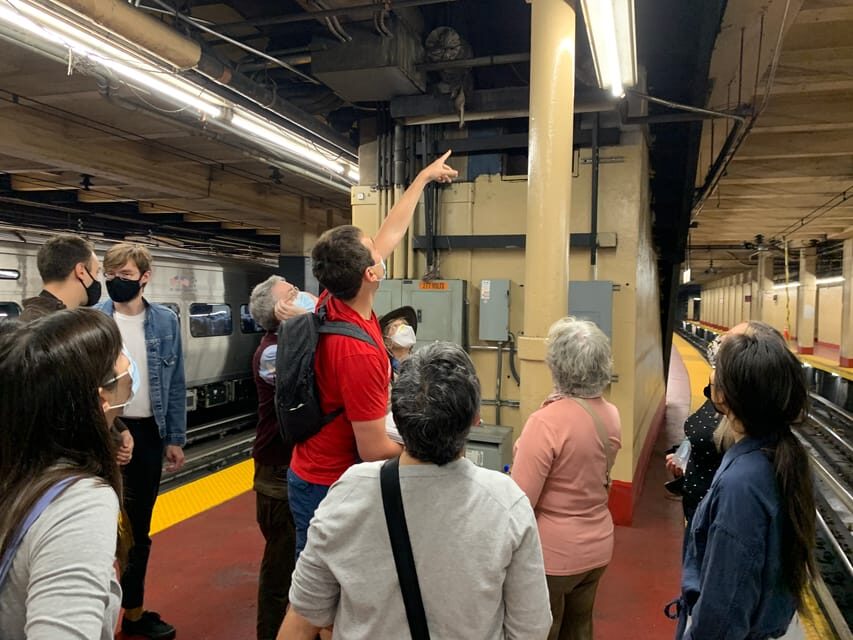
I also like the part most people rush through: the subway ride. You move between Penn Station and Grand Central while Rayn explains how the network operates and what all those platform devices do in real life. One consideration: this is a walk with steps and underground stretches, so it’s not a great match if you have mobility limits, or you hate stairs.
In This Review
- Key things you’ll notice on this Penn-to-Grand Central route
- Penn Station vs Grand Central: two giants, one story
- The subway ride that turns stations into a system
- Penn Station relics and the Moynihan Train Hall story
- Grand Central’s secret bar, tennis court, old theater, and whispering walls
- What Rayn, the NYC urban planner guide, does best
- How to plan your 2–3 hours so it feels easy, not exhausting
- Price and value for a private group
- Who should book this tour, and who might skip it
- Should you book this Penn Station and Grand Central Terminal private secrets tour?
- FAQ
- How long is the tour?
- Where do we meet?
- Is this a private tour, and how large is the group?
- Does the tour include subway fare and audio equipment?
- Are we allowed to enter restricted areas?
- Is this tour suitable for mobility impairments?
- Can I cancel, and is there a pay-later option?
Key things you’ll notice on this Penn-to-Grand Central route
- Penn Station, then and now, tied to the demolished original’s footprint
- Moynihan Train Hall as a modern update to the old Penn story
- A subway ride with real-world metro tech explanations
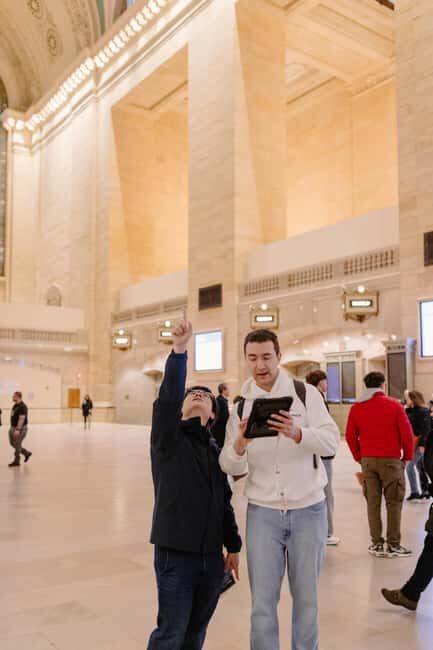
- Grand Central secret spaces like a secret bar, hidden tennis court, and old theater
- Whispering walls and glass walkways you’ll understand better after the guide’s context
Penn Station vs Grand Central: two giants, one story
If you think you already know New York’s train stations, this tour is a reality check—in a good way. You’re not just looking up at marble and clocks. You’re using the stations like maps, then time-traveling by comparing where key elements were and what got replaced.
Penn Station is the emotional hook. Rayn points out how the station you see today relates to the earlier Penn that was famously demolished. That comparison works because you’re standing in the same general area and the guide keeps tying details back to the site’s original purpose and layout. It’s the kind of history that clicks, because you’re linking past decisions to present spaces, rather than treating history like museum glass.
Then Grand Central brings the contrast. It’s not only about beauty—though you’ll see plenty of it, including glass walkways. It’s about design choices: what got built for passenger flow, what became symbolic, and what later generations reused or protected. When you finish, you’ll feel like you understand the “why” behind what can look like pure spectacle from a distance.
And because this is a private experience, Rayn can tailor pacing. If your group is into engineering, station politics, or just how people actually move through crowds, you’ll get more of that.
You can also read our reviews of more private tours in New York City



The subway ride that turns stations into a system
The subway segment is one of the smartest parts of the route because it changes how you view the stations. Instead of thinking of Penn Station and Grand Central as separate attractions, you experience them as linked nodes in the same city machine.
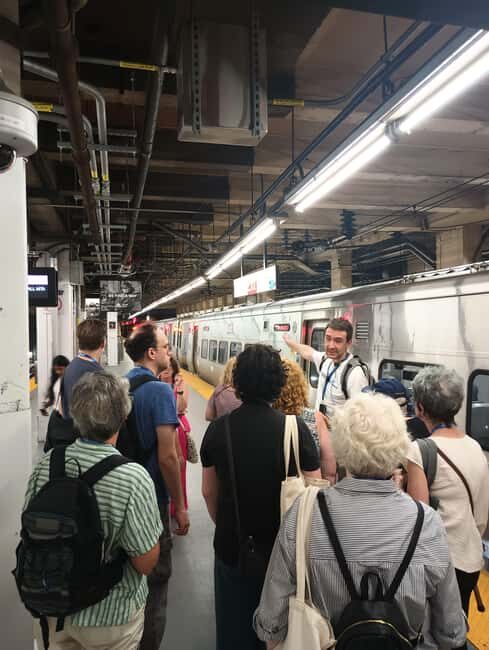
Rayn uses the ride to explain how the network operates—how connections work, what you’re seeing at platforms, and why certain things exist where they exist. Even if you’ve ridden the subway a hundred times, you’ll likely notice details you’ve never had to interpret before. Think of it as reading the station’s “manual” while you’re standing in it.
Two small things make this section feel comfortable. First, you’re given ear pieces so everyone can hear the guide clearly. Second, the guide keeps the explanations grounded in what you can physically spot: platform design, operational logic, and the technology you notice without necessarily understanding.
If your ideal day in New York is fast and furious sightseeing, this part might feel like a detour. But it’s the detour that makes the rest of the walk smarter. After the ride, Grand Central and Penn won’t just be places you pass through. They’ll feel like living infrastructure with decisions behind them.
Penn Station relics and the Moynihan Train Hall story
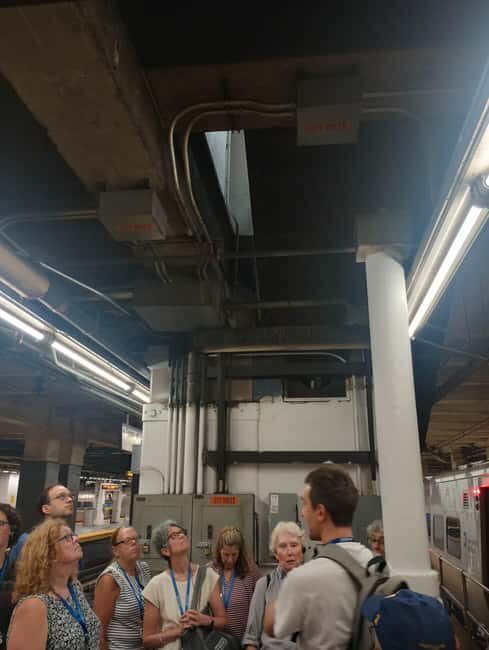
Penn Station today is a mix of modern function and swallowed history. The tour helps you “read” that mixture instead of letting it blur into generic terminal motion.
You’ll focus on the remnants and artifacts connected to the original Penn Station layout. Rayn helps you locate what used to be there, and he keeps you comparing your exact surroundings to the earlier 1910 structure. The result is surprisingly emotional: you can see how much was built to handle crowds, and you can also see how different priorities shaped what remains.
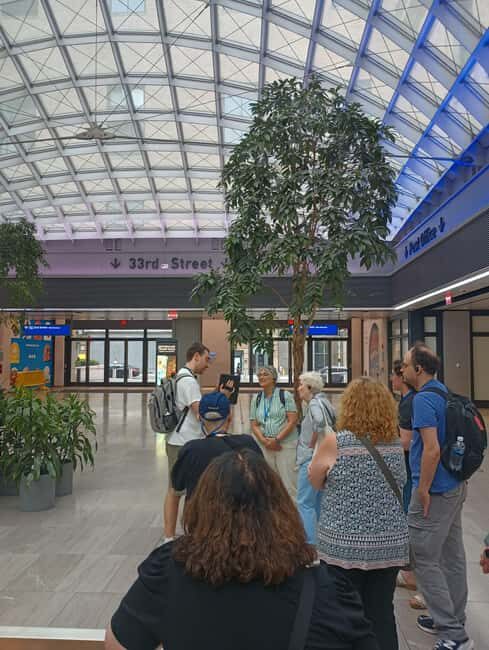
Then comes the modern counterpoint: Moynihan Train Hall. You’ll walk through the new hall as part of the broader Penn evolution. The point isn’t just that Moynihan is newer and cleaner. It’s that the station’s future plans connect to the current passenger reality—crowds, transfers, and the city’s transportation needs.
This is also where the urban-planning brain shows up. Rayn doesn’t treat the terminal like a static landmark. He connects station design to land use, policy choices, and long-term thinking about the busiest train station in the Americas. That framing helps you understand why upgrades matter, even if you think you’re only there for a couple photos.
Practical note: this portion still involves walking and navigating indoor spaces. Wear shoes you trust on stone, tile, and stair steps.
Grand Central’s secret bar, tennis court, old theater, and whispering walls
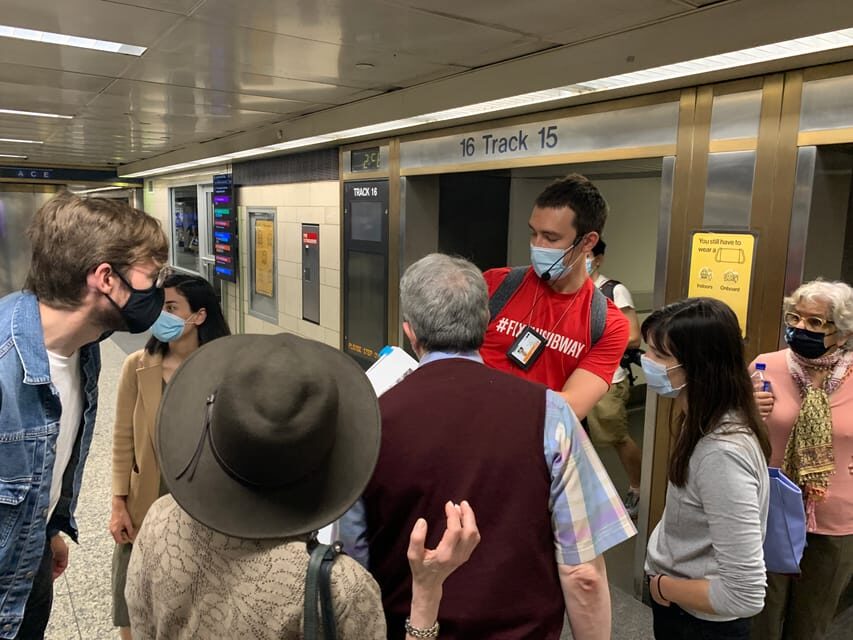
Grand Central is often treated like a single photo stop. Here, you get multiple layers—some visible, some secret-ish, and some only make sense once you understand the station’s design.
Rayn leads you past classic highlights, but he goes beyond the postcard stuff. You’ll look for details tied to Grand Central’s hidden and unusual spaces, including:
- a secret bar
- a hidden tennis court
- an old theater
- whispering walls
- glass walkways and underground entrances
The secret spaces are fun, but the better value is how Rayn explains what they were for. A hidden room isn’t just a cool fact. It’s a clue about the station’s different purposes over time—social space, passenger flow, and how the building has been used and reshaped.
Whispering walls are the obvious crowd-pleaser, but the tour makes them more than a quick trick. You’ll understand why sound behaves differently in that environment and how the building’s geometry affects what you hear.
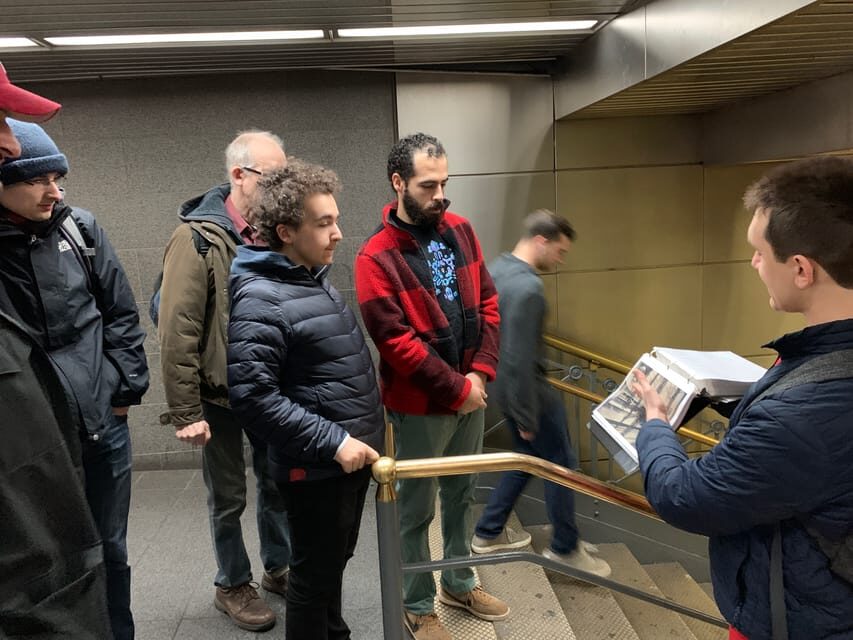
And yes, the stair and underground bits matter here too. Grand Central has its own “level changes,” and the tour involves moving up and down steps while keeping the route inside public areas only. That means you can focus on the architecture without worrying about restricted zones.
If you love places with layers—old meets new, official meets hidden—you’ll get a lot out of this section. If you only want the top-level view and zero detours, you may wish the stops were shorter.
What Rayn, the NYC urban planner guide, does best
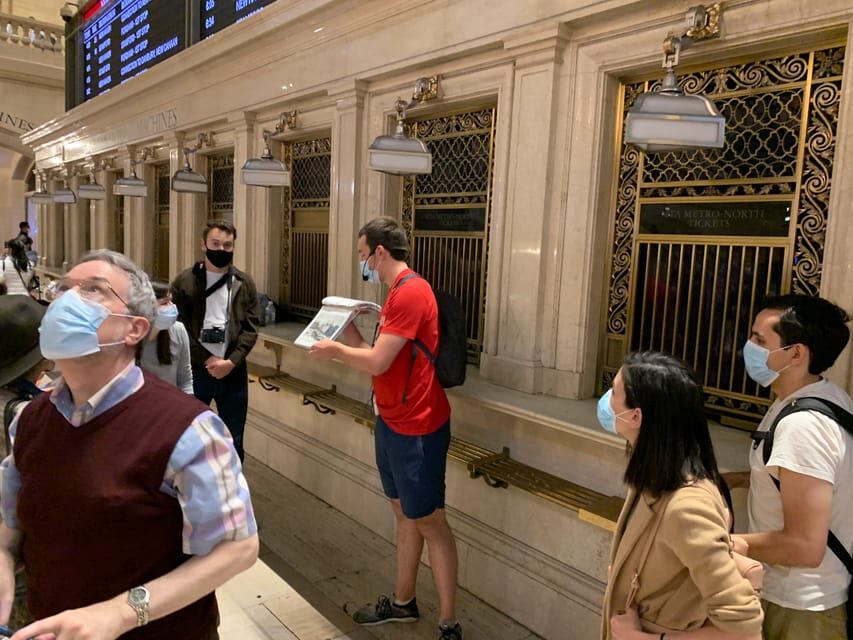
The guide is a big part of why this tour earns a high rating. Rayn doesn’t just throw facts at you. He organizes them in a way that feels like you’re building a mental model of how stations work.
Rayn’s background shows up in two ways:
1) He connects design to decisions. Instead of only listing what’s pretty, he explains why something ended up that way—especially in the Penn vs. Grand Central comparison.
2) He explains the metro as a system. During the subway ride, he talks about operational logic and the technology you see on platforms, which makes the city’s movement feel less mysterious.
You’ll also notice his style is active and question-friendly. This is the kind of tour where it helps if you ask things, because Rayn can answer from both a storytelling angle and a planning/engineering perspective.
One more practical detail that really matters: because you get ear pieces, Rayn can keep talking even when the stations get noisy. That means you don’t have to stop every two minutes to re-position for hearing. It makes the whole experience smoother, especially in crowded indoor spaces.
Also, the pace works for a range of ages and interests. The tour hits history and hidden architectural oddities, but it also respects people who just want the practical picture of transit.






How to plan your 2–3 hours so it feels easy, not exhausting

This route is well-suited for people who like walking and curiosity. It is not suited for people who need step-free access, because the experience involves traversing an underground environment and walking up and down steps.
What I’d do to make the day easier:
- Wear comfortable shoes you’ve already tested. You’ll be on floors and stairs for stretches.
- Bring water. Indoor terminals can be cool, but you’re still moving.
- Plan to take photos, but don’t let your camera slow you down. The value here is in where you stand, not just what you shoot.
Starting points give you options. You’ll either begin at Grand Central Terminal (104 W 32nd St) or at Penn Station, depending on the option you book. The tour also ends with drop-offs around Grand Central Terminal and Moynihan Hall at Penn Station, so you’re not stuck backtracking.
Timing-wise, the 2–3 hours window matters. If your schedule is tight—like you’re trying to make a specific train departure—you’ll want buffer time. The good news is that the route is efficient: it’s focused on key interior spaces and the subway connection, not endless wandering.
Price and value for a private group
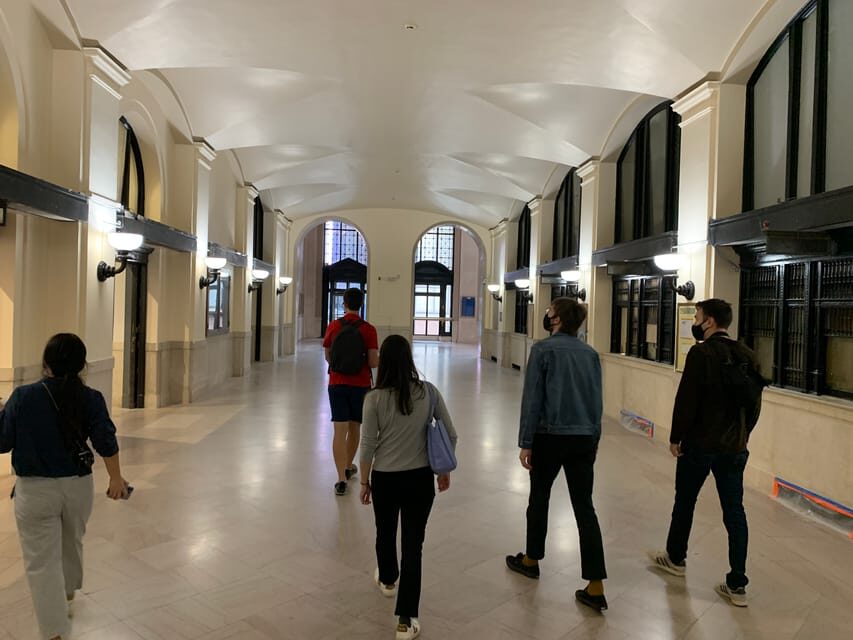
The price is listed as $200 per group up to 15 people, for a duration of 2–3 hours. That pricing can be a great value if you’re traveling as a family, a small group of friends, or a mixed group with different interests (architecture plus transit tech plus history).
Here’s the practical way to think about it:
- If you’re just two people, the cost per person will feel higher than a standard walking tour.
- If you’re a fuller group, it can feel unusually reasonable because you’re paying for a licensed guide experience rather than a seat-by-seat attraction.
The best “value” isn’t only the price. It’s that you get guided access to public areas plus a subway segment plus structured explanations you’d struggle to assemble on your own. Trying to do the Penn vs. Grand Central comparison without a guide usually turns into random sightseeing. With Rayn, it becomes a coherent story tied to what you’re standing near.
Also, the ear pieces are a real quality upgrade. That’s not a gimmick. It means you can actually understand the guide’s explanations without constantly leaning in or losing parts of the talk.
Who should book this tour, and who might skip it
Book it if you:
- love transit and design, including how stations function
- enjoy comparisons across time, not just one famous building
- want hidden Grand Central surprises like the secret bar and whispering walls
- like learning the practical side of the subway, including how the network operates
You might skip it if you:
- need step-free access (this involves stairs and underground walking)
- want purely outdoor or mostly low-walking sightseeing
- prefer to “self-tour” with no structured explanations
If you’re the type who naturally looks up at details, then this will reward you. The tour turns station navigation into an exploration, not a chore.
Should you book this Penn Station and Grand Central Terminal private secrets tour?
Yes, if your trip includes a few hours when you can slow down and look closely. This is the kind of private tour that makes New York feel built on purpose, not coincidence. You’ll come away with a clearer understanding of Penn Station’s past and Grand Central’s hidden side, plus a subway ride that connects the two terminals into one working system.
If stairs are a problem, skip it. Otherwise, grab the comfy shoes, bring water, and let Rayn guide you through the places most people speed past. For transit nerds, architecture fans, and curious first-timers alike, it’s a smart use of time.
FAQ
How long is the tour?
The tour lasts about 2–3 hours.
Where do we meet?
The meeting point can vary depending on the option booked. Common starting locations include Grand Central Terminal at 104 W 32nd St or Pennsylvania Station.
Is this a private tour, and how large is the group?
It’s a private group experience. The price is set per group up to 15 people.
Does the tour include subway fare and audio equipment?
Yes. Subway fare during the tour is included, and ear pieces are provided so everyone can hear clearly.
Are we allowed to enter restricted areas?
No. The tour only visits areas open to the public and does not access restricted areas.
Is this tour suitable for mobility impairments?
No. It is not suitable for people with mobility impairments, since the experience involves walking up and down steps and traversing an underground environment.
Can I cancel, and is there a pay-later option?
You can cancel up to 24 hours in advance for a full refund, and there’s also a reserve now & pay later option listed.