REVIEW · BOSTON
Relive 1776: Interactive AR Experience on The Freedom Trail
Book on GetYourGuide →Operated by See Reality · Bookable on GetYourGuide
Step into 1776.
Relive 1776 is an interactive AR experience that turns the Freedom Trail into a live story you can control with your choices. Instead of just stopping for photos, you’ll wear provided AR headsets (and use mobile AR for part of it) while historically accurate British soldiers and colonists appear in the real streets and landmarks around you.
The experience is built around a clear time window, roughly 1765–1775, so it feels focused rather than random. It also has a guide with you the whole way, and the format is flexible: you can move at your own pace and even skip stops if you’re trying to keep your day moving.
Two things I really like are the historically accurate characters that react in the real world, and the fact that it’s AR, not VR, so you keep seeing your surroundings and don’t get the same motion-sickness worry. One thing to consider: there are moments involving guns and staged combat (no gore), which can genuinely be scary for some people, but there is a kids version without guns.
In This Review
- Quick hits worth knowing
- What this is really like on the Freedom Trail
- Price and what you’re actually paying for ($30 for 30 minutes)
- Where you start: the booth by the Old State House marker
- Boston Common: meeting the leaders under the Great Elm Tree
- Granary Burying Ground: history with a more personal mood
- Old State House: where the story gets sharper
- Paul Revere House: a calmer stop that still moves the story
- Bunker Hill: the finale with the biggest “wow” energy
- AR vs VR here: why you might prefer it
- How the guide and group size change the experience
- Things to know before you go (so you enjoy it more)
- Who should book Relive 1776, and who should skip it
- Should you book Relive 1776 on the Freedom Trail?
- FAQ
- How long is Relive 1776?
- How much does it cost?
- What do I use during the experience: a headset, my phone, or both?
- Is there gore in the simulations?
- Is there a kids version?
- What group size should I expect?
- Is the tour wheelchair accessible?
Quick hits worth knowing
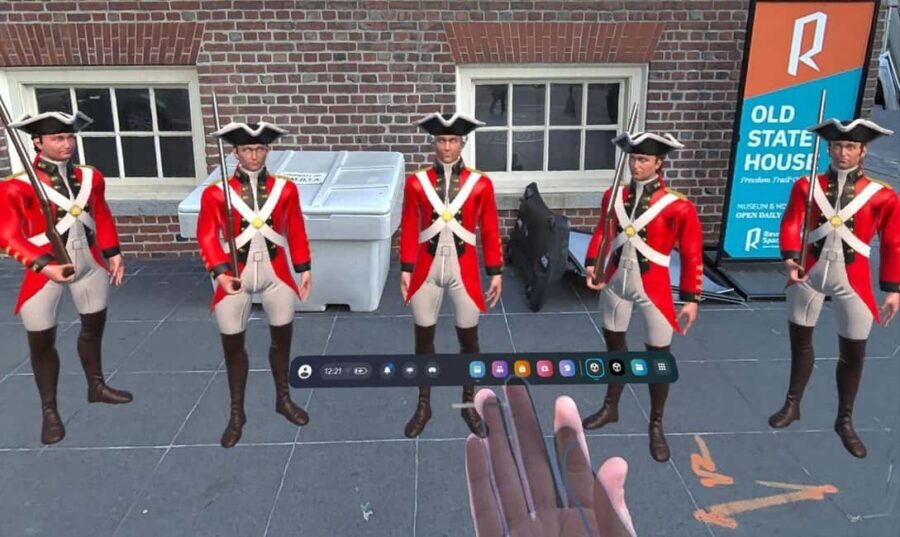
- AR on real Freedom Trail stops: you’re not in a bubble; the city stays visible around you.
- Character interaction matters: your choices can change what happens with soldiers and colonists.
- No gore, and a kids option exists: the violence is implied/staged, not graphic.
- Small group format (up to 8): you’re not fighting a crowd just to hear the story.
- Five short experiences, 30 minutes total: it’s fast, focused, and efficient for a busy itinerary.
- Includes a souvenir: you get an Illegal Tea reusable tea bag plus a discount card.
What this is really like on the Freedom Trail
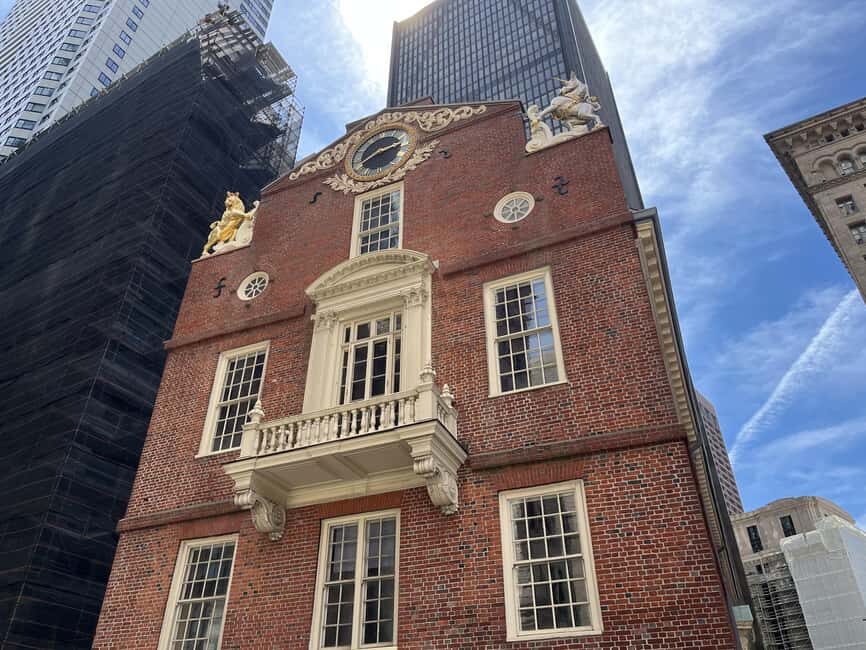
If your ideal Freedom Trail day is walking, learning, and snapping a few photos, this gives you a new “mode” of doing the same landmarks. Relive 1776 takes the key stops that often feel like a checklist and makes them feel like scenes. It’s set up as a 5-part experience with multiple segments, each one short enough to avoid that tired, why-am-I-still-waiting feeling.
The big practical difference is how the tech is used. Since it’s AR instead of VR, the headset overlays characters, props, and action onto your view of the street, the monument, and the buildings you’d otherwise just read about. That means you can keep your bearings and still watch where you’re stepping. A few people worry about VR nausea; this approach is designed to avoid that kind of problem because you’re not cut off from reality.
Also, this isn’t just a passive video. You’re given choices during the story, and the soldiers/colonists respond. That makes the history feel more personal, even if you’re only there for about half an hour.
Finally, there’s a guide. It’s not “put on the headset and figure it out.” You get an English-only guide who helps you through the segments and keeps the pacing sane.
You can also read our reviews of more tours and experiences in Boston.



Price and what you’re actually paying for ($30 for 30 minutes)
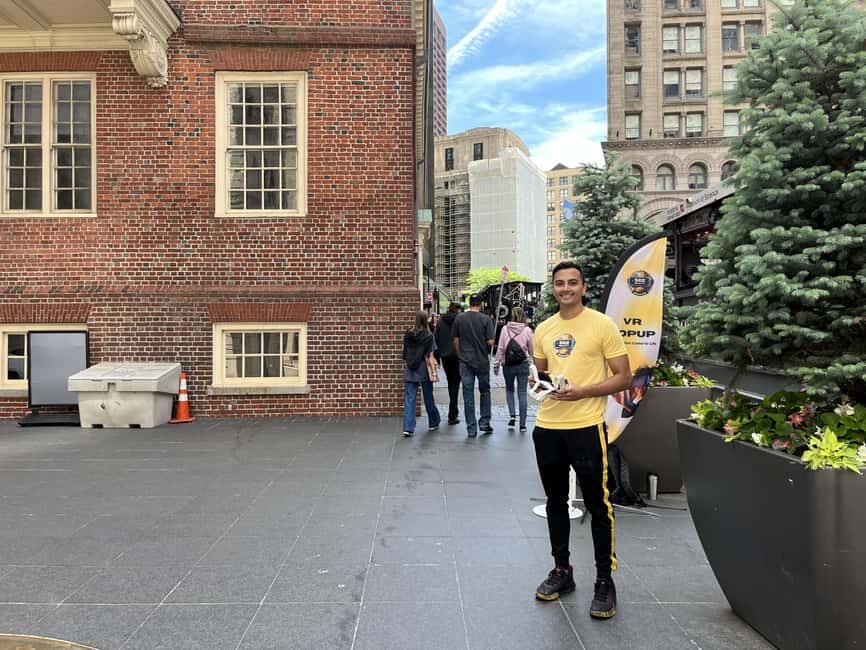
At $30 per person for about 30 minutes, the price can feel slightly surprising if you’re comparing it to a free walking tour or a couple of museum tickets. But the value is in three areas that add up:
- Five guided AR moments across major Freedom Trail stops. You’re not paying just for one effect.
- A guide and small-group experience (up to 8). That matters when you’re trying to hear instructions while dealing with hardware.
- Transport support between key points (from the Paul Revere House area to Bunker Hill), so the experience stays tight.
You’re also getting a souvenir at the end: an Illegal Tea reusable tea bag and a discount card. It’s not a life-changing add-on, but it’s a nice bonus for something you’ll remember.
In plain terms, this is for people who want their Freedom Trail experience to include action and interaction, not only explanation.
Where you start: the booth by the Old State House marker

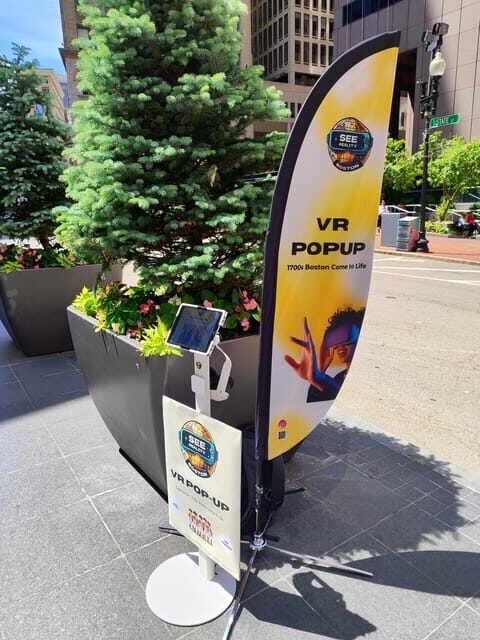
You’ll meet at a Relive 1776 booth outside the Old State House area, between the plants, next to the Boston Massacre marker in the ground. That’s your orientation point.
There are also two possible starting location options listed for beginning the overall story: the Boston Massacre site or the Commodore John Barry Memorial. In practice, you’ll want to arrive with enough time to find the booth, get the kit (headset or phone AR setup), and get your bearings before the first segment kicks in.
A small but important detail: the tour format is designed so you can skip stops if you’re in a hurry. So you’re not trapped in a strict route like some sightseeing trains.
Boston Common: meeting the leaders under the Great Elm Tree
Your route brings you to Boston Common early, where you’ll do a guided segment designed to set the tone of 1765–1775. This is where the story starts to feel like people, not dates.
One of the key moments here is meeting Paul Revere, John Hancock, and Samuel Adams under the Great Elm Tree in Boston Common. You’re not just hearing names; the AR layer helps you see how the “players” fit into the growing tension.
Why this stop is worth it: Boston Common is one of the most recognizable places on the Freedom Trail, and it can feel broad if you’re only sightseeing. The AR segment gives it a specific storyline and a reason to look up, listen closely, and pay attention to how characters respond.
Potential drawback: Boston Common can be busy with daytime foot traffic. Relive 1776 keeps you in sync with the guide, but if you’re sensitive to crowds or noise, plan to keep your group close.
Granary Burying Ground: history with a more personal mood
Next comes Granary Burying Ground. This is the part where the Freedom Trail tour vibe can shift from “events happening” to “the people and consequences still here.”
In the AR experience, you’ll do another short guided segment (about 10 minutes). The value here isn’t that you suddenly learn new facts that change your world; it’s that the simulation helps you connect what you’re seeing on the street to what those events meant.
What makes this stop interesting in the Relive 1776 format: it helps you slow down mentally. A normal walking tour tends to push forward quickly. Here, the AR prompts you to react and follow along, which makes the cemetery feel less like a quick stop and more like a scene in the bigger story.






Old State House: where the story gets sharper
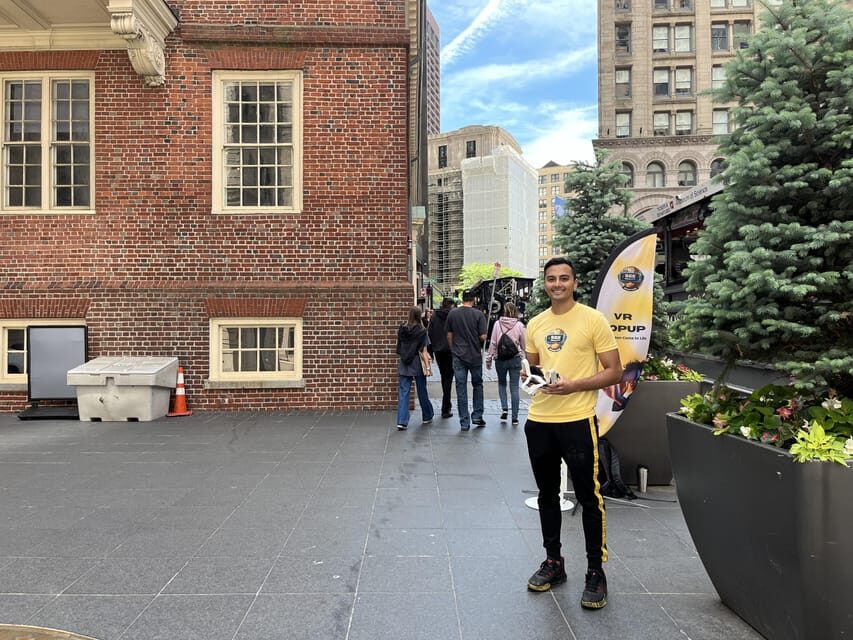
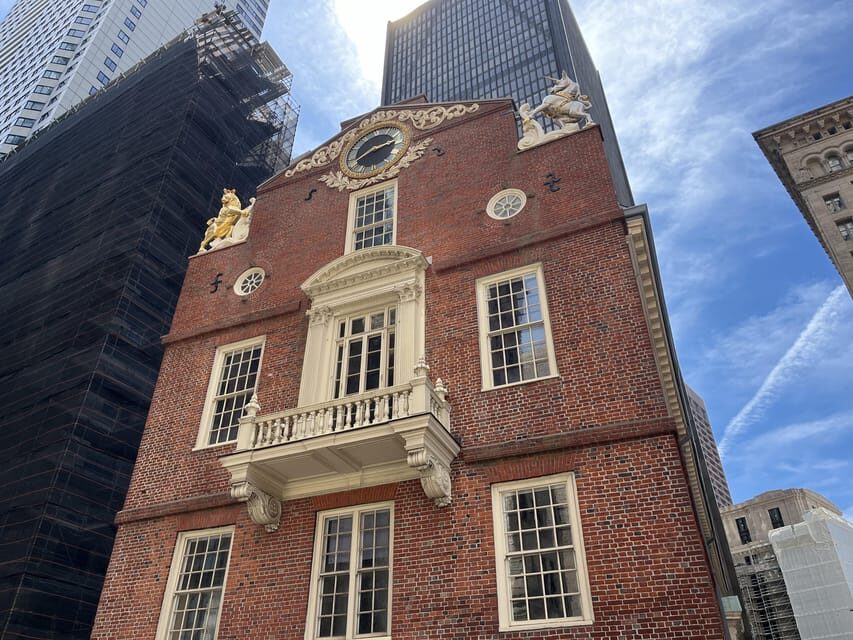
Then you move to the Old State House for a guided segment (around 20 minutes). This is a good choice because the building is already a focal point in Boston’s colonial-era narrative. In Relive 1776, it becomes more than a backdrop.
You’ll see additional AR activity as part of the story progression. Think of this as the moment the tour starts feeling more like “a series of scenes” than “a list of locations.”
Practical consideration: because Old State House is a high-interest stop on the Freedom Trail, you may be sharing space with other tour groups. Keeping your small group together matters, especially if you’re using phone-based AR in one of the segments. The guide helps, but your job is to stand where they tell you so the AR placement lines up.
Paul Revere House: a calmer stop that still moves the story
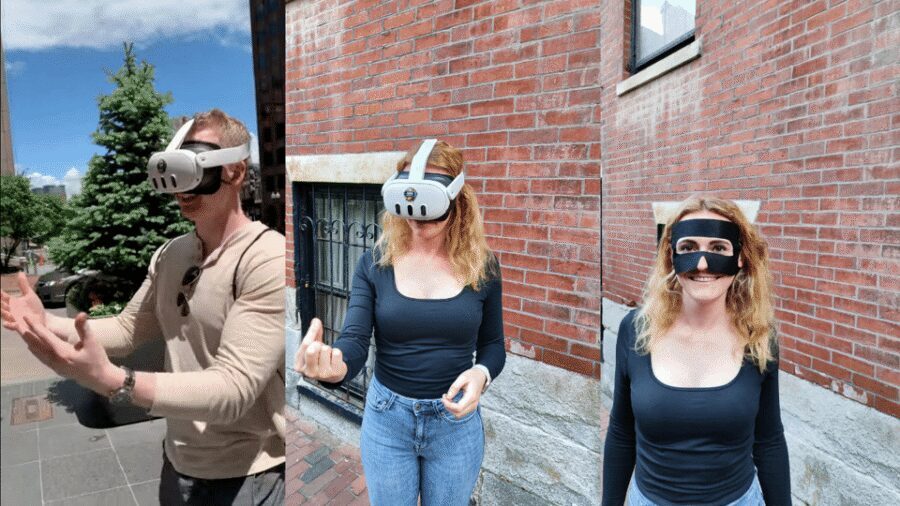
At the Paul Revere House, you get another guided AR moment (about 10 minutes). This is a nice pacing break. After the heavier atmosphere of earlier stops, this segment is designed to keep the narrative moving while you catch your breath.
In the overall flow, this segment also connects to the logistical support provided later: there’s transportation from the Paul Revere House area to Bunker Hill. That’s genuinely helpful. One of the frustrations with the Freedom Trail is how much time walking between far-apart sections can eat, especially if you’re doing multiple experiences in one day.
If you’re trying to make a tight itinerary, this transport piece is one of the reasons the full experience stays around a 30-minute window.
Bunker Hill: the finale with the biggest “wow” energy
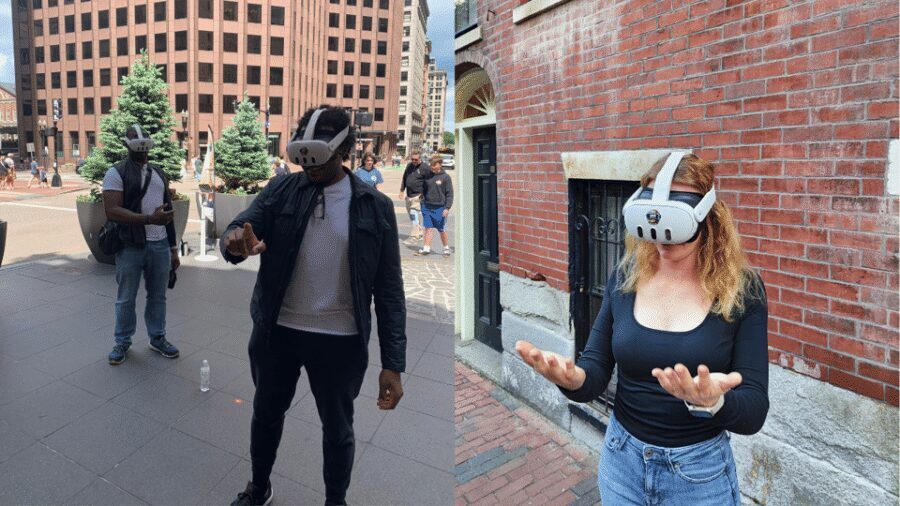
Bunker Hill is where the experience ends. The guided tour segment there runs about 20 minutes, and it’s the kind of location that naturally supports dramatic storytelling.
This is also where you get one of the most action-oriented AR experiences in the set: historically accurate field-cannon style operation appears as part of what you experience. There’s no gore, but the sense of urgency comes through, which is why some people find it intense even though it’s only a short sequence.
For families: there’s a kids version without guns. That’s the key detail if your child might startle easily. The AR is designed to be fun and educational, but the adult version does have frightening moments for some people.
For anyone with health concerns: the activity notes that it’s not suitable for people with heart problems or epilepsy. If either applies, skip it.
AR vs VR here: why you might prefer it
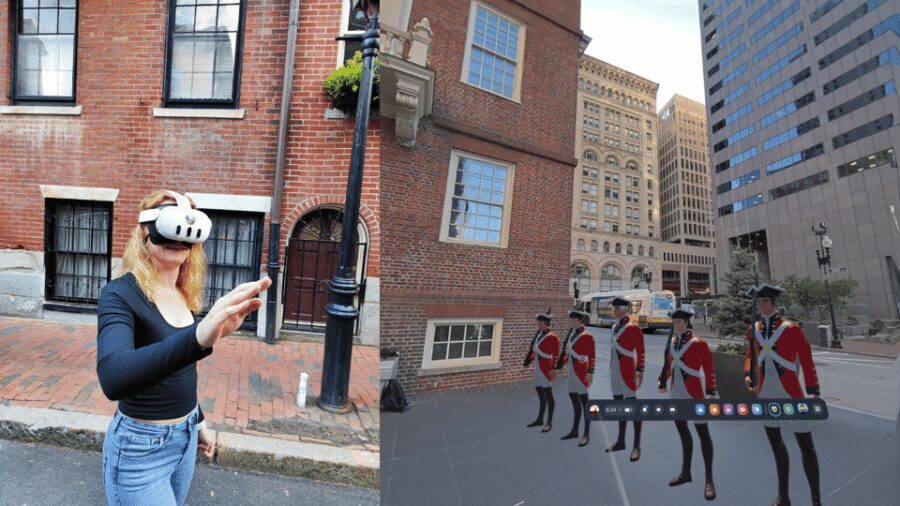
I like how Relive 1776 uses AR in a practical way. With VR, you’re sealed off, which can trigger motion discomfort for some people. With AR, you see your surroundings the whole time, so you’re not relying only on a headset world for orientation.
Also, AR tends to work well for a city setting because the real landmark is part of what makes the scene believable. Standing by the Boston Common location where the story begins, then watching AR characters interact nearby, feels like the past steps into your present rather than replacing it.
One more practical point: headsets are sanitized for each participant using a method claimed to kill 99.99% of bacteria and viruses, and there’s an optional fresh facial cover. If you’re the type who thinks about hygiene when sharing equipment, this kind of detail helps.
How the guide and group size change the experience
This is capped at 8 participants, which is a sweet spot. It’s small enough that you can hear the guide’s instructions and get help if you need it. It also keeps you from being lost in a crowd while you’re trying to use AR.
The format also includes both guided explanation and “do it now” moments. That’s important because technology can be a distraction if no one coaches you through it. The good news: the experience includes a live English-only guide, and one guide named Dylan is specifically praised for technical knowledge and for explaining how everything worked.
Even if you’re comfortable with tech, a guide makes the difference between AR as gimmick and AR as storytelling tool.
Things to know before you go (so you enjoy it more)
A few practical notes based on what the experience is set up to do:
- No gore: the story has conflict, but it’s not graphic.
- Kids version exists: if guns are a concern, the kids version removes them.
- You can skip stops: if your legs or your schedule are limited, you can still get the main point.
- You’ll use phone AR and headset AR: some segments use mobile AR, others use headsets provided for you.
- No littering: standard site etiquette, but worth mentioning because some participants treat outdoor experiences more casually.
Also, keep in mind that the entire experience is about 30 minutes, not an all-day re-enactment. It’s built to fit into a busy Boston visit.
Who should book Relive 1776, and who should skip it
This is a strong match if you want:
- a Freedom Trail experience that’s interactive, not just observational
- a short activity that fits between museum stops and walking
- a way to make the Boston Massacre era feel immediate without committing to a full-length tour
- families who can choose the kids version if they want to avoid gun content
You might want to skip it if:
- you have epilepsy or heart problems (it’s listed as not suitable)
- you strongly dislike any staged weapon/cannon scenes, even without gore
- you only want quiet, museum-style history and prefer no character interaction
Should you book Relive 1776 on the Freedom Trail?
If you’re doing Boston for the first time and you want one experience to make the Freedom Trail memorable, I think yes, it’s worth booking. For $30, you get a guided, small-group, city-based AR story that hits multiple major stops and ends at Bunker Hill, with action sequences designed to feel real without being graphic.
If you’re on the fence because you worry about scares or guns, choose the kids version if you can, and go in knowing there are tense moments in the adult version. If health concerns apply, skip it and pick a standard walking guide instead.
Bottom line: this isn’t replacing the Freedom Trail walk. It’s giving you a different way to experience it, with characters that react and a story that moves scene by scene through 1765–1775.
FAQ
How long is Relive 1776?
The full experience takes about 30 minutes. Each of the five AR segments lasts roughly 5–15 minutes.
How much does it cost?
It’s listed at $30 per person.
What do I use during the experience: a headset, my phone, or both?
You’ll use a mix. Three experiences use mobile phone AR, and two use AR headsets that the provider provides.
Is there gore in the simulations?
No. The experience notes that there is no gore.
Is there a kids version?
Yes. A kids version is available that removes guns.
What group size should I expect?
It’s a small group limited to 8 participants.
Is the tour wheelchair accessible?
Yes, the experience is listed as wheelchair accessible.