REVIEW · BOSTON
Boston: City History and Highlights Audio App Walking Tour
Book on GetYourGuide →Operated by Knockabout Travel · Bookable on GetYourGuide
Founding Boston, one street at a time. This self-guided audio walk threads together neighborhood life and big American moments, from Copp’s Hill Burying Ground to the George Washington Statue in the Boston Public Garden. I like the GPS turn-by-turn audio, which guides you spot to spot, and I like how the story keeps bouncing between people and places, from the North End back to the early 1700s.
One thing to keep in mind: it’s smartphone-powered and there’s no live guide. If your phone runs low on battery or you hit a tech hiccup, you’ll be doing more manual navigating than you expected.
In This Review
- Key things I’d zero in on
- How the GPS audio walking tour actually guides you
- Entering the story at Copp’s Hill and the North End
- Cotton Mather to the Old North Church: seeing the Revolution as a plan
- From Paul Revere’s route to the Paul Revere House area
- Rose Kennedy Greenway and the Big Dig: Boston in layers
- Quincy Market, street performers, and Samuel Adams at Faneuil Hall
- Old State House: John Adams, the Boston Massacre, and moral nuance
- Boston Irish Famine Memorial: choices that shaped communities
- Granary Burying Ground and the founders you can actually stand by
- North End 1919 molasses and the weird facts that stick
- Price and value: what $7 buys you in Boston
- The audio style: helpful pacing and a named narrator
- Who this tour suits best (and who should reconsider)
- Quick tips so the walk feels effortless
- Should you book this Boston city history audio walk?
- FAQ
- How long is the audio walking tour?
- Where does the tour start?
- Where does the tour end?
- Is there a live guide on this tour?
- Does the tour use GPS turn-by-turn directions?
- What language is the audio guide in?
- What should I bring?
- Is the Old North Church available every day?
- Is the tour suitable for people with mobility impairments?
Key things I’d zero in on
- GPS audio that triggers by location, so you’re not constantly checking your screen
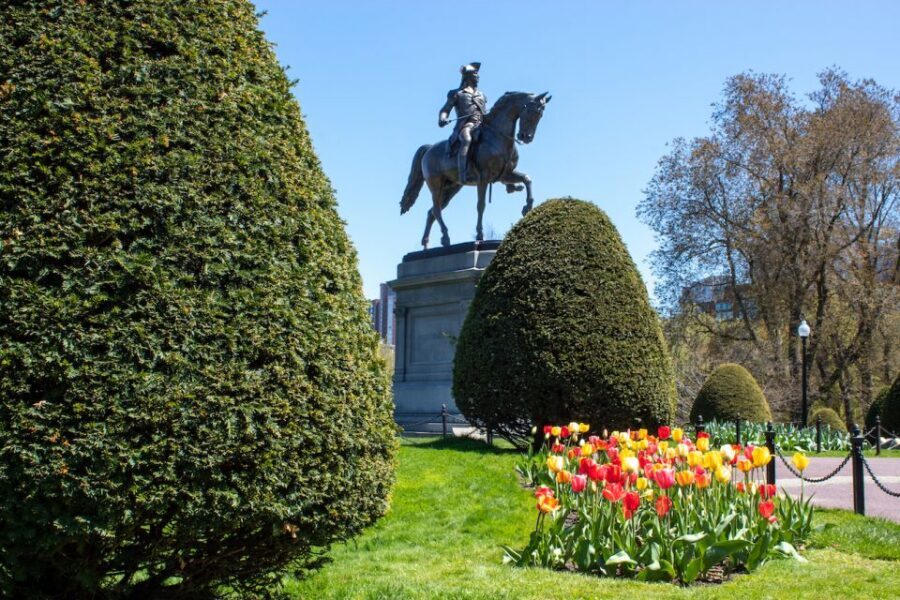
- A mostly downhill-feeling historic core route, starting at Copp’s Hill and ending at the Public Garden
- Revolution set pieces like the Old North Church and Paul Revere’s midnight riders
- Neighborhood change over centuries, from Cotton Mather’s era to Irish famine-era choices
- Small-but-memorable Boston facts, including the 1919 molasses story and Boston Common origins
- A true self-pace format, with the ability to pause and resume when you want
How the GPS audio walking tour actually guides you
This tour runs through an app called Voice Map. You start at the entrance of Copp’s Hill Burying Ground, open the app, and the audio begins automatically once you’re at the starting point. The big practical win is the GPS-enabled turn-by-turn setup, meaning the track is timed to your location, not to your guesswork or your scrolling map.
You’ll want to plan for the basics: headphones and a charged smartphone. Bring both, because the audio is the experience. And since there’s no live guide meeting you, think of yourself as the conductor: you’re listening, walking, and checking your surroundings as the route unfolds.
The format also gives you freedom. You can pause and resume, which matters in Boston because you’ll inevitably stop for photos, a coffee, or to figure out which side of a street you’re on.
You can also read our reviews of more walking tours in Boston



Entering the story at Copp’s Hill and the North End
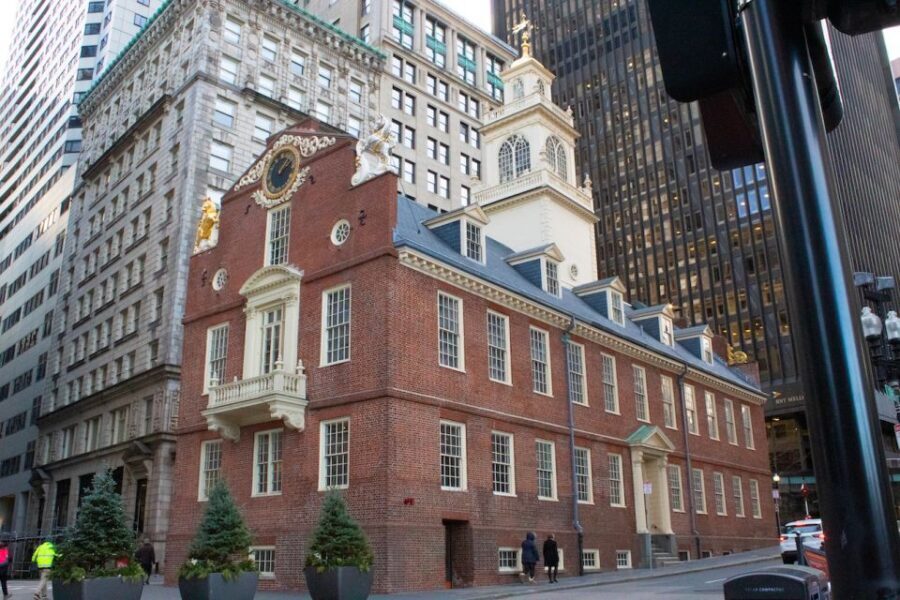
You begin in one of Boston’s older pockets of the city, right by Copp’s Hill Burying Ground. Even before you hit the first big names, the graveyard setting does something useful: it anchors the whole tour in physical places, not just dates on a page. From there, the route leans hard into early Boston and the religious and civic world that shaped the Revolution.
One of the tour’s strengths is how it doesn’t treat the North End as a single era. It moves backward and forward. You’ll pick up colonial and Revolutionary-era context as you walk, then go as far back as 1692 with a stop connected to Cotton Mather, the minister associated with the Salem Witch Trials era.
I like that the tour uses an attention-grabbing hook like Mather and then broadens the lens. It’s not just name-dropping. It helps you understand why people took faith, fear, and community seriously in those years, and how that mindset fed into the larger political story later.
Cotton Mather to the Old North Church: seeing the Revolution as a plan
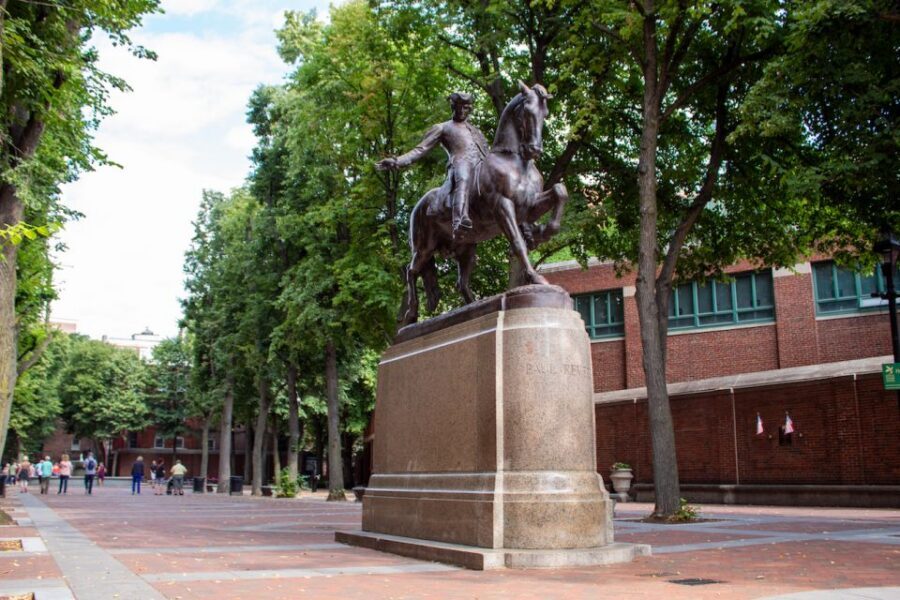
As you continue, the route heads you toward the Old North Church, where the pre-Revolution years come into focus. This is where the tour shifts from background context into something closer to a scene.
You’ll hear about Paul Revere organizing the midnight riders, and the role of the signal system so the Minutemen would be alerted to the arrival of the British. It’s the kind of moment that’s already famous, but the tour’s value is in connecting the legend to the geography you can stand in.
A practical note: the Old North Church is closed on Mondays, so on that day you’ll only get the exterior experience. That doesn’t kill the tour, but it does change what you can do on-site, so plan accordingly.
If you enjoy learning through listening while you walk, this section is one of the best stretches. You’re not just memorizing a timeline. You’re matching the story to the streets around you.
From Paul Revere’s route to the Paul Revere House area
Next, the tour moves you toward Little Italy and the Paul Revere House area. You’ll feel the shift from purely historic markers to a neighborhood vibe where food and everyday life are right in your path. That matters because Boston’s Revolutionary story isn’t stuck in the past. It lives alongside current streets, kitchens, bakeries, and casual foot traffic.
You’ll also hear part of the Revere story that comes after the famous ride. The tour includes the question of who sent the signal from the Old North Church steeple to Paul Revere, and what Revere did after the revolution. That’s helpful if you’ve only ever heard the midnight-rider version and want a fuller picture of the man and the consequences.
This section is where I’d suggest you go a little slower. The pacing is your friend here. The audio is carrying the heavy narrative load, but your eyes and nose are carrying the Boston texture.
Rose Kennedy Greenway and the Big Dig: Boston in layers
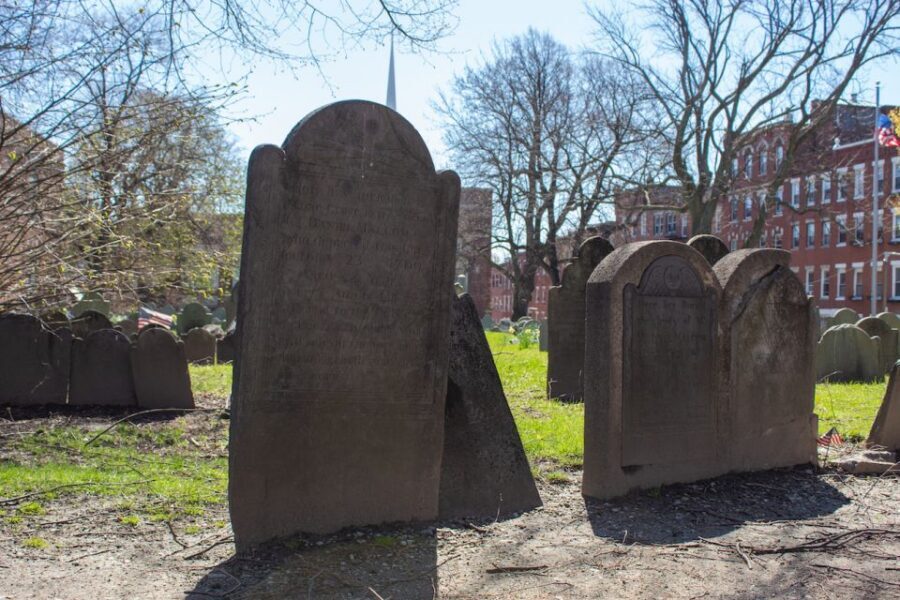
After the Paul Revere House area, the route brings you to the Rose Kennedy Greenway, and this is a smart pivot point. The tour doesn’t only stay in 1700s-to-1800s history. It also touches modern Boston transformation with the story of Boston’s Big Dig.
Why this is valuable: the Big Dig didn’t happen in a vacuum. It’s part of how Boston keeps reshaping what’s above and below street level. Hearing that while you’re walking the greenway gives you a sense of how the city constantly rearranges itself around older paths.
If you like connecting history to what you can physically see today, this stop keeps the tour from feeling like a museum playlist. It reminds you you’re walking in a place that’s been rebuilt and reworked, not just preserved.
You can also read our reviews of more city tours in Boston




Quincy Market, street performers, and Samuel Adams at Faneuil Hall
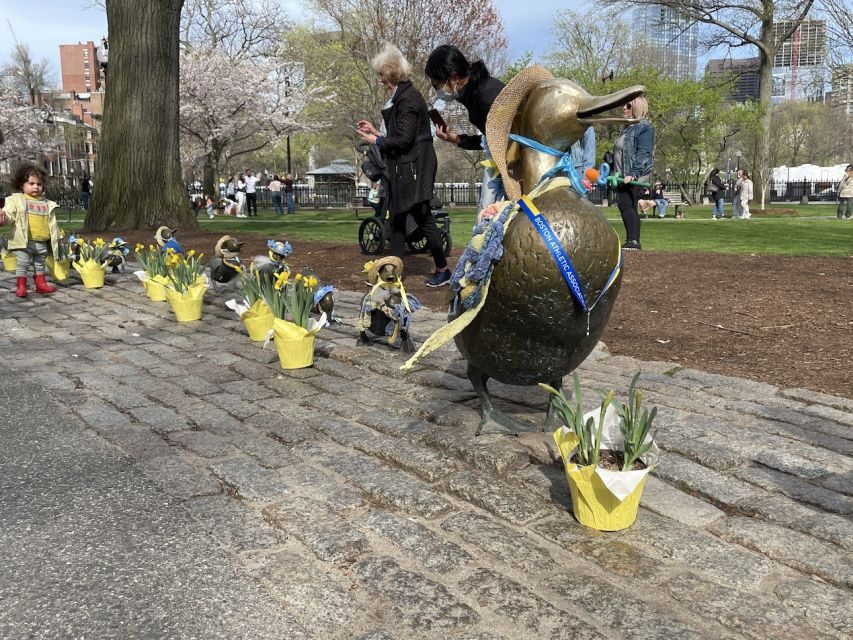
As you head toward Quincy Market, you’ll have an easy time filling pauses with real-life Boston energy. You’ll also hear about Faneuil Hall and Samuel Adams, including the tour’s fun fact mode.
I like this part because it balances two things you need when walking: a story that keeps moving, and enough “human scale” time to stand around. Quincy Market is where you can slow down for a snack, watch street performers, and let the audio keep you oriented to what matters.
Samuel Adams comes up as a fierce proponent of liberty, and the tour’s framing helps you understand him not just as a name on a plaque. You’ll also get a fact-check style question you might enjoy: did Samuel Adams really brew beer? The tour includes that kind of Boston myth-versus-actuality angle, which is the best way to make the past feel real instead of stiff.
Old State House: John Adams, the Boston Massacre, and moral nuance
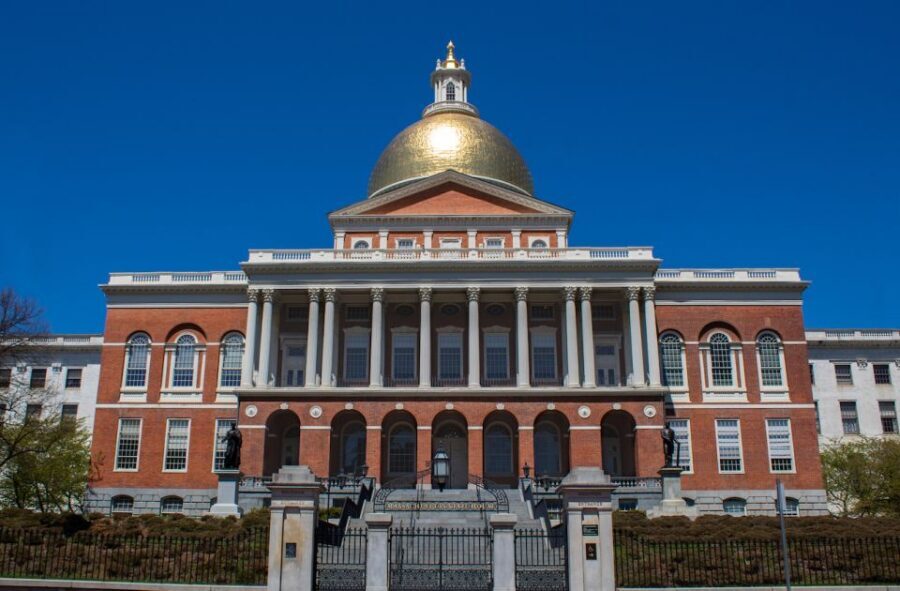
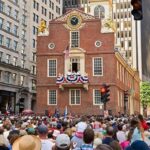
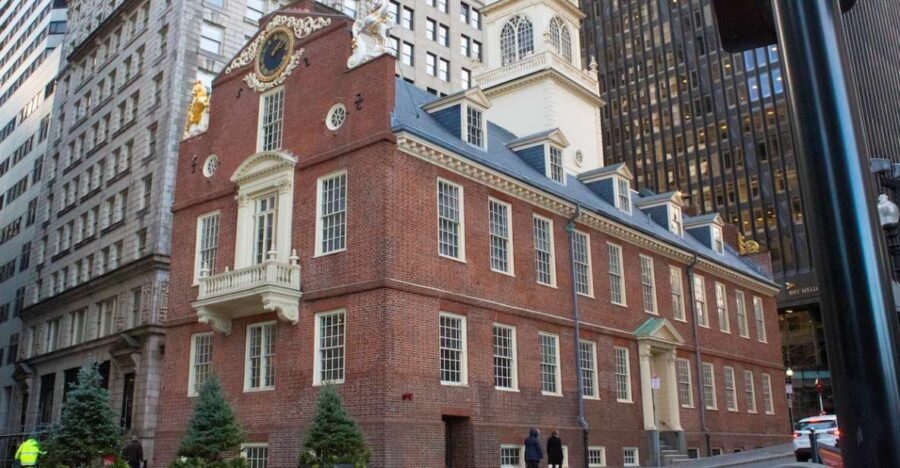
The Old State House stop is one of the more thoughtful segments. You’ll hear about future president John Adams and how he defended perpetrators of the Boston Massacre. That’s a big idea for a walking tour, and it’s also a tough one—because it’s not the simplest patriotic story.
This section works well if you’re the type of traveler who likes nuance. The Revolution wasn’t just heroes and villains. It was also legal arguments, public perception, and messy civic conflict. Hearing that while standing where events unfolded gives the story a different weight than a book or video.
If you’re short on time, this is still worth your attention. It’s the tour’s built-in reminder that law and politics were entangled from the beginning.
Boston Irish Famine Memorial: choices that shaped communities
Next comes a stop connected to Irish families facing two choices in the 1800s, presented through the Boston Irish Famine Memorial. If you only associate Boston with the Revolution, this is a useful correction. The city’s identity didn’t just come from independence-era politics. It also came from immigration, hardship, and the decisions families had to make to survive.
You’ll be walking through history in a way that feels tied to real immigration patterns, not just a single dramatic event. The tour also makes the larger point that Boston neighborhoods were shaped by multiple waves of newcomers, and those waves left lasting marks.
Granary Burying Ground and the founders you can actually stand by
The route continues to the Granary Burying Ground, where you’ll see where prominent figures including John Adams, John Hancock, and Paul Revere are laid to rest. Graveyards can turn into quiet chores if a tour doesn’t offer context. Here, the audio helps you look at the names as part of a bigger chain of events.
You’ll also circle back to the signal story from the Old North Church and connect it to what Revere did after the revolution, tying the beginning and middle of the narrative together. That makes it easier to remember the tour’s main threads by the time you’re nearing the finish.
It’s also a nice moment to stop and do nothing for a minute. You’re in Boston. You’re surrounded by people who shaped it. Even without going deep into theories, the setting prompts respect.
North End 1919 molasses and the weird facts that stick
One of the most Boston-feeling parts of this tour is the inclusion of the story about 2 million gallons of molasses congealing in the North End in 1919. That’s not Revolutionary-era, but it’s exactly the kind of city detail that helps you build a mental map of Boston.
Why it works: you remember it because it’s odd, vivid, and local. And because it’s local, it makes Boston feel less like a concept and more like a place with specific events you couldn’t get from a generic history summary.
The tour also tosses in other factoids, including the beer question tied to Samuel Adams and the origin story for Boston Common as America’s first public park. Those little extras are the difference between a walk that ends at your phone and a walk that stays with you.
Price and value: what $7 buys you in Boston
At $7 per person for about two hours of GPS-led audio, this tour is priced like a “grab and go” history option. You’re not paying for a professional guide’s hours, which is why it can be such good value if you enjoy self-guided walking.
Here’s the value math I’d use: if you want to see multiple major stops—Copp’s Hill, Old North Church area, Paul Revere House surroundings, Faneuil Hall/Quincy Market area, Old State House, Granary Burying Ground, and the Public Garden—then a low-cost, location-triggered audio guide can act like a flexible substitute for a larger tour.
Where the value can drop is when your phone or headphones become unreliable. Because there’s no live guide, the experience depends on technology staying available.
The audio style: helpful pacing and a named narrator
The audio guide is in English, and it’s designed to work hands-free with the GPS setup. I also took note of the tour’s tone: one highlighted narration voice is named Big Al, described as entertaining and informative. That kind of personality matters on a walk tour, because it keeps you listening through the in-between moments rather than tuning out.
Still, be realistic about language needs. The tour data only lists English, so if you rely on other languages, you may find it tough to follow for long stretches.
Who this tour suits best (and who should reconsider)
This tour is a great fit if you want to walk Boston at your pace and you like history that’s anchored in locations. It’s also a good match if you enjoy walking and want your stories delivered through narration instead of reading plaques one by one.
It may not be a great fit if you have mobility impairments, since it isn’t suitable for people with mobility impairments. It also might not be your best choice if you prefer a live conversation with a guide who can adjust to questions in real time.
If you’re traveling with family, it can work well, but plan for variability. The walking pace can end up longer than the ideal time, especially if you pause for food around Quincy Market or linger near the major sites.
Quick tips so the walk feels effortless
- Charge your phone fully before you start. Audio + GPS can drain batteries.
- Bring headphones with a decent cord length so you can walk naturally, especially around busy crossings.
- When you arrive at a stop, give the audio a few seconds before you decide where you’re standing. The GPS cue matters.
- If you’re on a Monday, remember the Old North Church is closed, so you’ll be doing exterior viewing there.
- Expect the route to mix story-heavy stretches with neighborhood-life sections, so you’ll likely want to pause once or twice for snacks or photos.
Should you book this Boston city history audio walk?
Yes, if you want a low-cost way to connect Boston’s founding-era story to real streets and buildings, and you’re comfortable relying on GPS-triggered audio instead of a live guide. At $7, it’s a practical option for travelers who like to control the pace and enjoy a mix of big names and local details, including the weird, memorable ones like the molasses incident.
I’d think twice if you need multiple languages beyond English or if you’re worried about phone reliability. This tour works best when your tech stays ready and your headphones stay plugged in.
If you want a walking route that turns Boston into an ongoing story from Copp’s Hill through the North End and onward to the Public Garden, this is the kind of plan that makes the city feel personal fast.
FAQ
How long is the audio walking tour?
The tour duration is listed as 2 hours.
Where does the tour start?
It starts at the entrance of Copp’s Hill Burying Ground.
Where does the tour end?
The route runs to the George Washington Statue in the Boston Public Garden.
Is there a live guide on this tour?
No. It’s a self-guided audio tour with no live guide to meet you at the starting point.
Does the tour use GPS turn-by-turn directions?
Yes. The tour is GPS enabled with turn-by-turn directions, and the audio tracks are designed to begin at the right time and place.
What language is the audio guide in?
The audio guide is included in English.
What should I bring?
You should bring headphones and a charged smartphone.
Is the Old North Church available every day?
No. The Old North Church is closed on Mondays, so only the exterior is available on Mondays.
Is the tour suitable for people with mobility impairments?
No. It is not suitable for people with mobility impairments.