REVIEW · BOSTON
Haunted Boston’s Historic Streets Walking Guided Tour
Book on Viator →Operated by ExperienceFirst · Bookable on Viator
Ghost stories, but with real streets.
This walking tour hits Boston’s big landmarks fast, mixing famous locations with eerie tales tied to executions, folklore, and literature. I like the small-group feel and that it uses a mobile ticket, so you can get moving without fuss. I also appreciate the guide-led pace that keeps the storyfront and the sidewalkfront pretty balanced. One thing to consider: the route is all walking and includes lots of street crossings, so if you prefer long talks over constant movement, you might find it tiring.
You’ll also finish with the tour ending near one of Boston’s most central historic areas, which makes it easy to roll into dinner or another stop afterward. The stop sequence is built around emotion and place—graves, public buildings, and the kind of sites where the past still feels loud.
In This Review
- Key highlights worth your attention
- A 90-minute “haunted history” walk in central Boston
- Where you start, where you end, and how movement works
- Boston Common and the hanging tree: opening with the darkest local detail
- The Massachusetts State House stop: Mary Dyer and public martyrdom
- The Nathaniel Hawthorne reverend ghost moment: literature meets legend
- Granary Burying Ground: Declaration signers and the weight of names
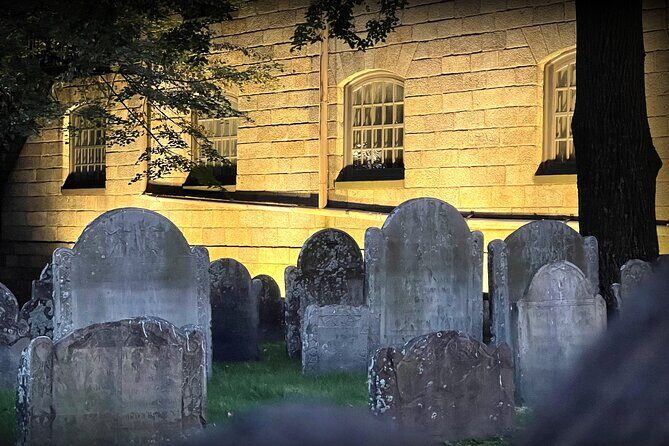
- King’s Chapel Burying Ground: Boston’s oldest cemetery atmosphere
- The guide experience: why storytelling quality changes everything
- Price and value: is $34 a good deal for this kind of tour?
- How to get the most out of it (and avoid the common annoyances)
- Who should book Haunted Boston’s Historic Streets walk?
- Should you book it?
- FAQ
- How long is the Haunted Boston historic streets walking guided tour?
- How much does the tour cost?
- Is the tour offered in English?
- Where does the tour start and where does it end?
- Is a ticket required, and is it mobile?
- What’s included in the tour price?
- Are there admission fees at the stops?
- Is the group small?
Key highlights worth your attention
- A focused 90-minute format that’s long enough for stories, short enough to stay flexible
- Small group size (max 20 people), which helps questions and keeps the mood lively
- Historic stops with free admission listed at each main site on the route
- Boston Common’s hanging tree story as the kickoff topic
- Granary Burying Ground tied to Declaration of Independence signers
- King’s Chapel Burying Ground as Boston’s oldest cemetery on the itinerary
A 90-minute “haunted history” walk in central Boston
Think of this as a compact, story-driven route through Boston’s oldest downtown corridors. You’re not bouncing across neighborhoods for hours. Instead, you’re moving through iconic places where the city’s real history and the legend-layer sit side by side.
With a duration of about 1 hour 30 minutes, you’re getting a full experience without eating up half a day. That matters in Boston, where weather changes fast and your best plans often depend on having time buffers.
The tour is also capped at a maximum of 20 people. In practice, that usually means the guide can keep the group together and still handle questions without turning it into a noisy stampede.
You can also read our reviews of more walking tours in Boston



Where you start, where you end, and how movement works
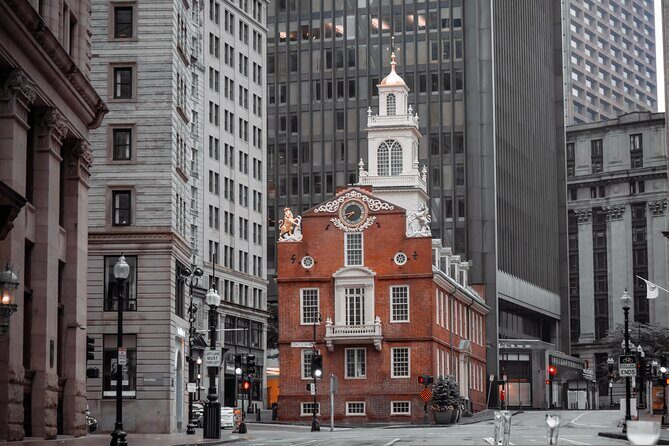
You meet at 26 Beacon St, Boston, MA 02108 at the Robert Gould Shaw and the 54th Regiment Memorial. The walk ends at Old State House, 206 Washington St, Boston, MA 02109. That start-to-finish line is very “get your bearings fast” for downtown Boston.
This is a walking tour, and it’s not a sit-on-a-bench-and-listen kind of experience. One review flagged that the pacing can feel like more walking than talking, with frequent street crossings. So wear shoes you trust, and plan to stay present—this one is about watching the city unfold as the stories land.
Also, since the tour is near public transportation, you can usually build it into your day without needing a car. If you’re coming from elsewhere in the city, you can treat this as an easy anchor activity.
Boston Common and the hanging tree: opening with the darkest local detail
The tour begins at Boston Common, home to the famous early-execution connection sometimes referred to as the hanging tree. This isn’t a vague “spooky woods” start. It’s a real civic space where the city’s early justice system left a mark on the public imagination.
What I like about starting here is how it sets the tone without pretending Boston is purely haunted-for-entertainment. The guide has a chance to frame how people lived, how punishment was public, and why eerie stories survive when the landscape is remembered.
The stop is about 20 minutes, so you’ll get enough time to hear the core story and look around, but not so long that the group stalls. If you’re the type who needs a moment before the next story, this is a good place to take that breath.
Possible drawback to note: Boston Common can be busy, depending on the time of day and season. You may feel a bit more “in the middle of normal life” here than in the more enclosed cemetery stops that come later.
The Massachusetts State House stop: Mary Dyer and public martyrdom
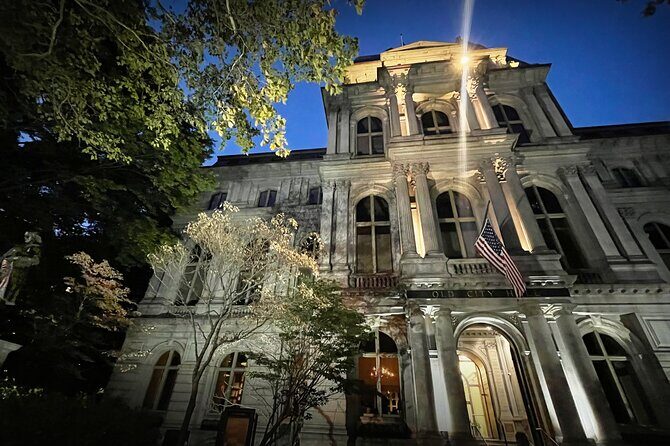
Next up is the Massachusetts State House, with a stop centered on the statue of martyr Mary Dyer. This is where the tour shifts from civic punishment into civic conviction—how belief, law, and public pressure collided.
A 15-minute stop gives you time to connect the statue to the story the guide tells. And because this is a major landmark building, it’s easier to orient yourself visually: you can see the scale of the place that once loomed large over public debates.
If you care about how early Boston handled moral and religious conflicts in public view, this stop is one of the most meaningful on the route. Even if you’re only half into ghost lore, this part can still deliver a clear “this actually happened here” feeling.
The Nathaniel Hawthorne reverend ghost moment: literature meets legend
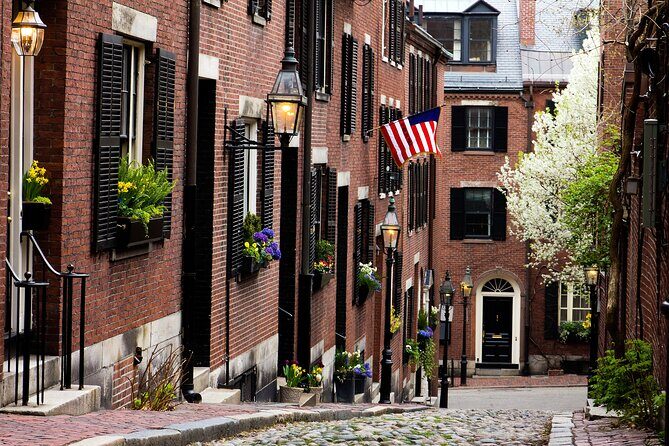
There’s a middle stop tied to Nathaniel Hawthorne, specifically where he first saw a reverend ghost. The itinerary doesn’t give a separate museum-style feel here. Instead, it works like a narrative bridge: from public monuments and graves to the kind of haunting that lives in writing and storytelling.
This is valuable because it broadens the tour’s idea of haunting. It’s not just about scaring you. It’s about why certain stories stick—how a ghost tale becomes part of a city’s identity.
I also like that this stop keeps the tour from turning into a straight line of “sad history, next sad history.” It gives you a different flavor of supernatural: the literary sort, the rumor sort, the one that gets passed along because it feels plausible in the right streetscape.
One practical note: if you’re sensitive to heavy themes, this is still a tour about death and belief. The Hawthorne moment may feel lighter than execution stories, but it’s still part of the overall haunted framing.
You can also read our reviews of more guided tours in Boston




Granary Burying Ground: Declaration signers and the weight of names
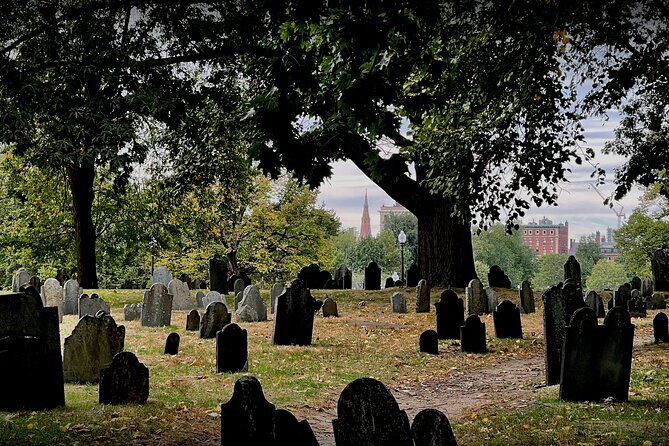
At Granary Burying Ground, the tour focuses on the final resting place of three signers of the Declaration of Independence. This is one of those stops where the “spooky” element tends to become the mood: the old stones, the curated remembrance, and the fact that history is literally mapped through names.
The stop is about 15 minutes, which is enough time to hear what matters and to pick out a few standout details the guide points to. You’re not expected to read every marker; the guide’s job is to help you connect the “why this person matters” dots quickly.
Why this stop is a smart value add: it gives you American history anchors without turning the walk into a textbook lecture. You can keep the ghost lens without losing the human facts.
Consideration: cemeteries can feel cold and damp even when the rest of the city feels fine. If you’re touring in shoulder season, a light layer helps.
King’s Chapel Burying Ground: Boston’s oldest cemetery atmosphere
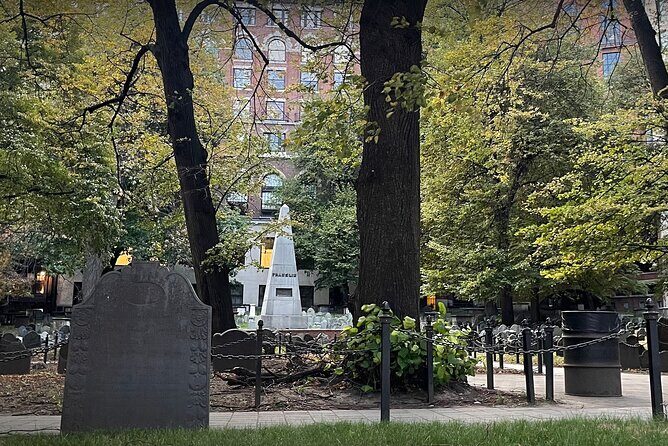
Then you head to King’s Chapel Burying Ground, described as the oldest cemetery in Boston. This is the tour’s mood-setter for people who want the eerie feeling to be grounded in stone age and time depth.
Like the previous major stops, the planned time is 15 minutes. That’s long enough for the guide to explain why this cemetery is important and how the haunting stories connect to the place, without turning it into a long wander where people get lost.
I find this stop particularly effective for first-timers because it answers a hidden question: What kind of city was Boston back then? The cemetery helps you feel that. It’s less about jump scares and more about atmosphere.
If you like photos, this stop will likely reward you. Just keep your pace respectful and watch where you step, especially if the ground is uneven.
The guide experience: why storytelling quality changes everything

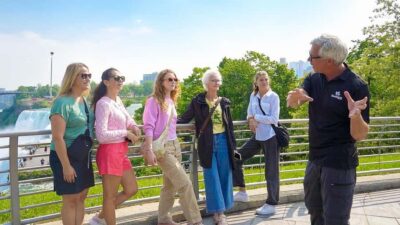
A big part of the tour’s reputation comes down to guide performance. In the provided feedback, the guide Charlie gets called out as fun, easy to chat with, and strong at keeping stories engaging and interesting.
That’s not just “nice to have.” On a short 90-minute route, a guide who can pace well and explain clearly makes the difference between a charming walk and a confused scramble. You’re only stopping briefly at each site, so the quality of the story delivery is what ties it all together.
There’s also a practical sound note. One review said the guide was a bit tough to hear and that the company planned to order a microphone for future tours. That suggests audio clarity may vary by conditions and by where you stand. If you can, position yourself where you can see the guide and listen directly.
Price and value: is $34 a good deal for this kind of tour?
At $34 per person for about 1 hour 30 minutes, the value depends on what you want most: guided storytelling at historic sites, or a self-guided wander with no narration.
Here’s why it can be a good deal:
- You’re paying for a professional, entertaining, local English-speaking guide.
- You’re getting a route through multiple major landmarks instead of spending time choosing where to go.
- The tour lists free admission tickets at the main stops, so you’re not forced into extra ticket costs just to enter the sites.
The small-group cap (max 20 people) also supports the value. Even if you don’t ask questions, you benefit from a group that stays together and a guide who can keep momentum.
The main “value risk” is what you’d expect from any haunted walking tour: if you dislike heavy themes or you want lots of sit-down explanation with minimal walking, this format might feel like too much motion. One unhappy experience also highlighted an issue with a guide not showing, along with a refund dispute. That’s rare, but it’s a reminder: on the day of your tour, arrive a few minutes early and keep your confirmation handy.
How to get the most out of it (and avoid the common annoyances)
If you book this, I’d plan your day around it like this:
- Give yourself time to reach the start point without rushing.
- Wear comfortable shoes for constant movement and street crossings.
- Bring a layer. Boston can go from okay to chilly fast, and the outdoor stops do most of the work.
- If you’re hard of hearing, choose a spot where you can face the guide. In short tours, that matters.
For the “story style,” go in ready to treat Boston like a living story map. These stops work best when you look up and around, not just when you listen with your head down.
And if you’re a fan of ghost lore, the route has enough variety to keep your interest: executions, civic martyrdom, literary haunting, and cemetery mood.
Who should book Haunted Boston’s Historic Streets walk?
This tour fits best if you want:
- a guided history-and-ghost experience without overplanning,
- a short downtown activity that connects multiple landmark areas,
- a story-focused walk where the guide does the linking for you.
It might be less ideal if you:
- hate walking or struggle with frequent street crossings,
- want long explanations at fewer stops,
- prefer purely light entertainment with no themes tied to punishment and death.
It’s also a good choice for families if the idea of spooky storytelling at historical sites appeals to the kids. One review specifically noted that kids enjoyed it.
Should you book it?
Yes, if you like your Boston history with an eerie edge and you’re comfortable walking through cemeteries and civic landmarks in one tight loop. The $34 price makes sense when you want a guided route through multiple famous places with free admission listed at the stops.
I’d book with extra confidence if you’re drawn to strong storytelling and you’re flexible about pacing. And if you’re the type who needs perfect clarity, arrive early and position yourself well so you can hear.
FAQ
How long is the Haunted Boston historic streets walking guided tour?
It runs for approximately 1 hour 30 minutes.
How much does the tour cost?
The price is $34.00 per person.
Is the tour offered in English?
Yes, the tour is offered in English.
Where does the tour start and where does it end?
It starts at the Robert Gould Shaw and the 54th Regiment Memorial, 26 Beacon St, Boston, MA 02108, and ends at Old State House, 206 Washington St, Boston, MA 02109.
Is a ticket required, and is it mobile?
You’ll receive a mobile ticket.
What’s included in the tour price?
The tour includes a professional, entertaining, local English-speaking guide.
Are there admission fees at the stops?
The itinerary lists free admission tickets for the main stops.
Is the group small?
Yes. The tour has a maximum of 20 people.
If you want, tell me what month you’re going and whether you’ll be with kids or someone who needs quieter pacing, and I’ll help you decide the best time of day to do it.