REVIEW · BOSTON
Boston: Full Revolution Story Epic Small Group Walking Tour
Book on GetYourGuide →Operated by The Revolutionary Story Tour · Bookable on GetYourGuide
Revolutionary Boston clicks into place fast on this 3.5-hour, citywide walking story. What makes it different is the story-first route that connects people, motives, and landmarks in order, instead of doing a stop-and-go Freedom Trail highlight reel.
I particularly love how the guide turns the “why” of the Revolution into something you can actually picture on the street. You’ll also get a small-group feel (around 16 people) with interactive tools like maps, visuals, and even Lego models to help ideas stick.
One drawback to weigh: you’ll walk a good bit and the route includes a hill and stair sections, so it’s not ideal if you have mobility limits. Also, this tour is primarily adult-focused and works best if you’re comfortable following spoken English at a steady pace.
In This Review
- Quick Reasons This Tour Gets Such High Marks
- Meeting at City Hall Plaza: Where Boston’s Story Gets Organized
- The Early Stops That Set Up the Revolution (Not Just the Usual Names)
- Franklin’s Boston and the “Why” Behind Resistance
- Faneuil Hall to Quincy Market: When Public Life Turns Loud
- Paul Revere’s Stops and the North End Finale Setup
- USS Constitution, Bunker Hill, and the Hard Turn to War
- Harborwalk and the Final Stretch to Lewis Wharf
- What the Small-Group Format Actually Changes
- The Guide Style: Humor, Maps, and Character-Based Storytelling
- How the Route Goes Beyond the Freedom Trail
- Price and Value: Why $57 Can Be a Bargain
- Who Should Book This Tour
- Should You Book This Boston Revolutionary Story Tour?
- FAQ
- Where do I meet, and where does the tour end?
- How long is the tour?
- Is hotel pickup or drop-off included?
- What’s the group size?
- What language is the tour offered in?
- How physically demanding is it?
- Is the tour suitable for mobility impairments?
- Does it cover more than just the Freedom Trail?
Quick Reasons This Tour Gets Such High Marks

- Small group size (~16) keeps the story personal and easy to follow.
- No costumes or reenacting means you get history talk with real context, not a show.
- Story-first, chronological approach explains motives and cause-and-effect, not just dates.
- Citywide route beyond the Freedom Trail shows Revolutionary Boston in a fuller geographic map.
- Maps, visuals, and props help you visualize what you’re seeing, especially transitions between stops.
- A built-in break at Quincy Market plus North End finishing tips for food and wandering.
Meeting at City Hall Plaza: Where Boston’s Story Gets Organized
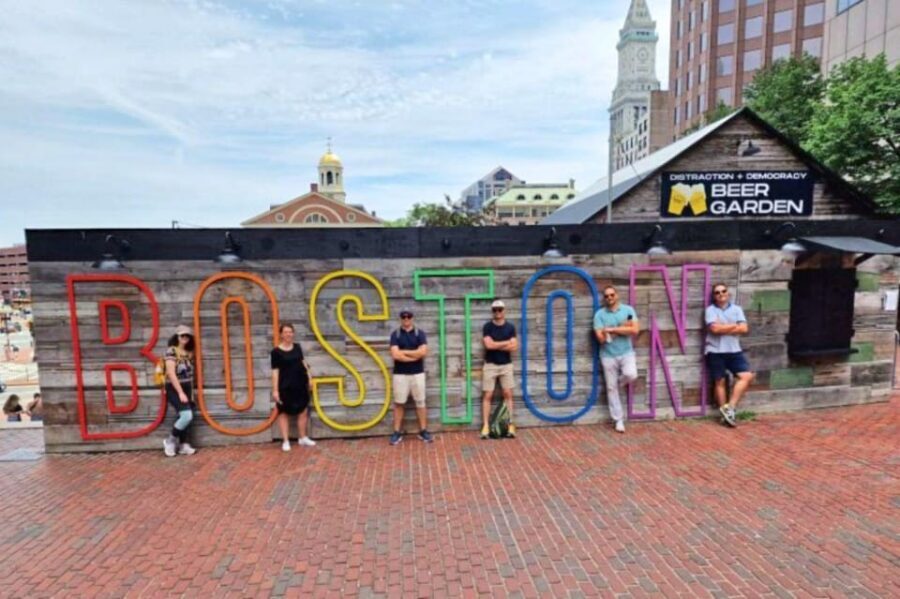
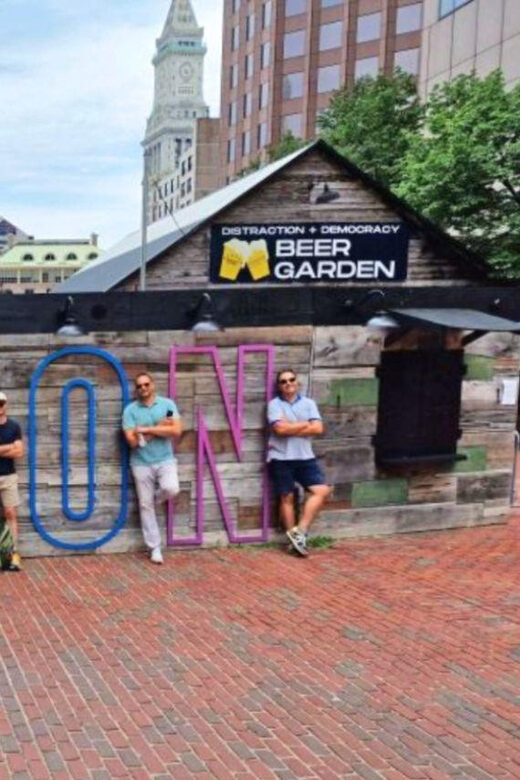
You start at City Hall Plaza, a big pedestrian space across from Faneuil Hall. The location matters. This part of downtown gives you the modern layout of Boston before you start mentally rewinding to the 1700s, so the rest of the walk feels like moving through layers of the same city.
Look for your guide standing near a statue of Bill Russell in front of a seasonal beer garden, and meet by the well-marked area near the Five Iron Golf. From the start, the group stays together because the tour is structured as one connected narrative, not a random “see this, then that” stroll.
You can also read our reviews of more walking tours in Boston



The Early Stops That Set Up the Revolution (Not Just the Usual Names)
You’ll begin with a short Freedom Trail segment—not as the whole point, but as a quick orientation. It’s an early reminder that the trail is famous for a reason, yet it doesn’t always follow how the events unfolded. That’s exactly what this tour fixes with its story order.
Then the tour heads to quieter, older ground: King’s Chapel Burying Ground. This stop is a strong “tone setter.” It helps you understand how Boston’s religious and civic life formed the backdrop for political conflict—because the Revolution didn’t appear out of thin air.
Next is Granary Burying Ground, one of the city’s most emotionally loaded historic cemeteries. Even without getting lost in architecture trivia, you’ll learn how people remembered each other and how public memory fed into politics. It’s the kind of place where names feel connected, not random.
A quick pass by Park Street Church, Boston helps bridge the gap between earlier colonial Boston and the later “how did we get here” energy. You’re not meant to just glance—your guide uses these transitions to keep the story moving forward.
At Old City Hall, you’ll stop and look at a building that signals Boston’s civic evolution. It’s a reminder that Revolution-era conflict wasn’t only about battles and ships. It was also about how power looked, who ran the show, and what authority meant.
Franklin’s Boston and the “Why” Behind Resistance
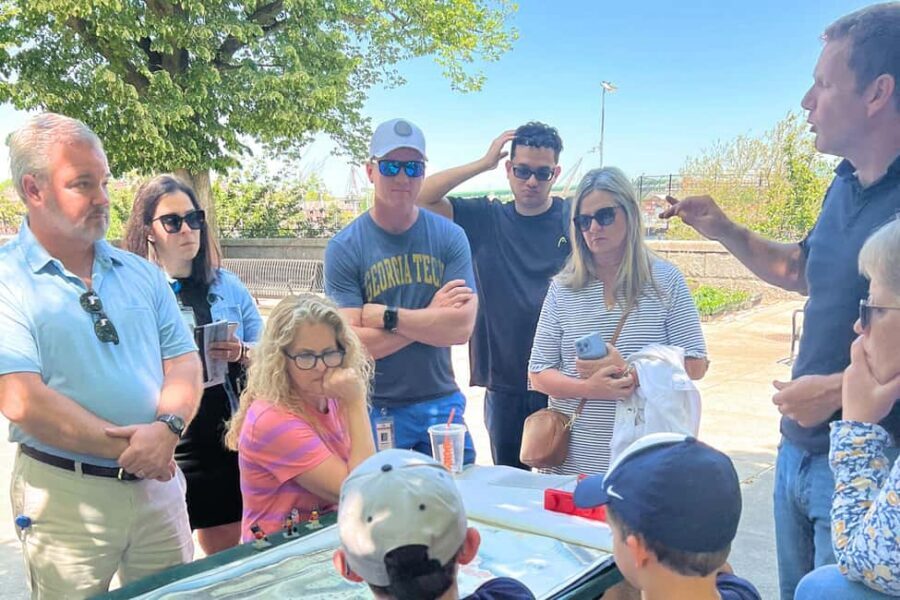
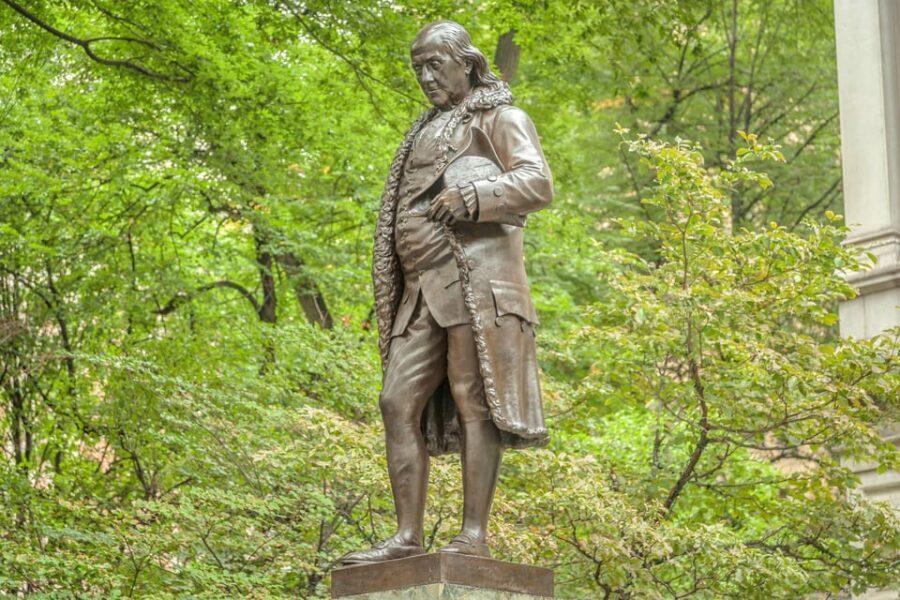
One of the most useful parts of the tour is how it ties ideas to specific people. You’ll visit Boston Latin School and the Benjamin Franklin statue, a natural pairing because Franklin represents more than a famous face. He’s a window into how information, public persuasion, and practical thinking mattered.
Then you go to Old State House, a major anchor for the Revolutionary story. This is where politics turns from debate into confrontation, and you’ll hear how public spaces shaped what people felt they could say—and what they were willing to risk.
From there, you reach the Boston Massacre site. This stop is especially valuable if your usual Boston history is mostly slogans and dates. The guide frames it as a moment that rapidly escalated tensions. The point isn’t just what happened; it’s how events created momentum.
You’ll also pass by the Old Corner Book Store, and even a brief stop here can add context. Bookshops, newspapers, and print culture were part of the Revolution’s engine, not just side notes.
Faneuil Hall to Quincy Market: When Public Life Turns Loud
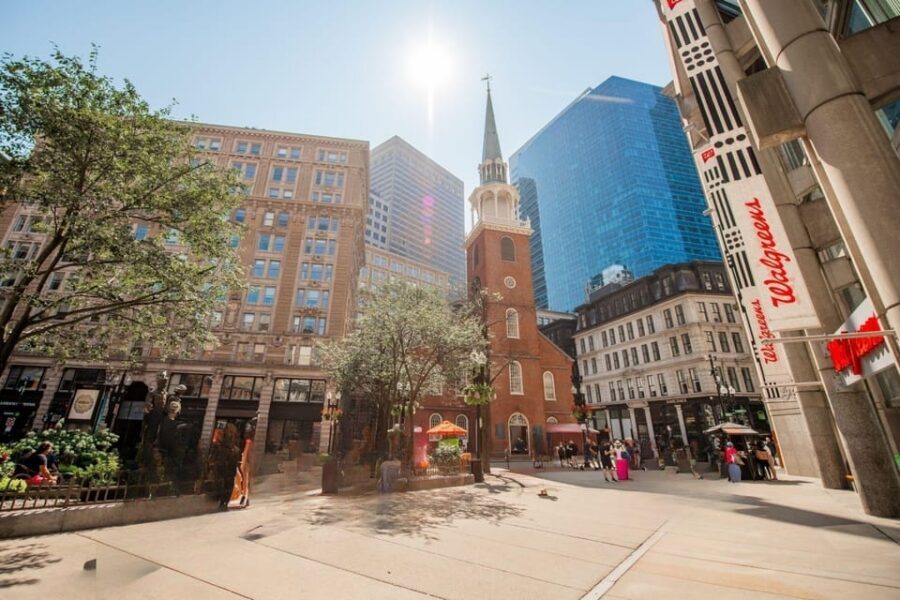
The tour then spends time on Old South Meeting House. This is one of those places where the building’s purpose helps you understand why gatherings mattered. Public meetings weren’t only for announcements. They were where people formed arguments, organized, and decided what to do next.
Next comes Post Office Square and nearby Liberty Square for more “layout and intent” thinking. The route uses these pauses to connect what you see in modern downtown to what shaped decisions back then. It’s a smart way to stop history from feeling like a list of postcards.
Then you hit Faneuil Hall, with an actual visit when it’s open. This is where the Revolution story starts to feel communal—less about a few famous men and more about how ordinary Bostonians pressured leaders and public institutions.
At Quincy Market, you get a built-in 15-minute restroom break and a chance to reset. You’ll also have time for shopping, but the bigger benefit is that you can re-center your brain before the narrative starts pushing into the “military escalation” phase.
The tour also passes through Rose Kennedy Greenway, useful for two reasons. First, it keeps the pace moving. Second, it reminds you that Boston’s historic waterfront and downtown geography is still readable—you just have to know where to look.
Paul Revere’s Stops and the North End Finale Setup
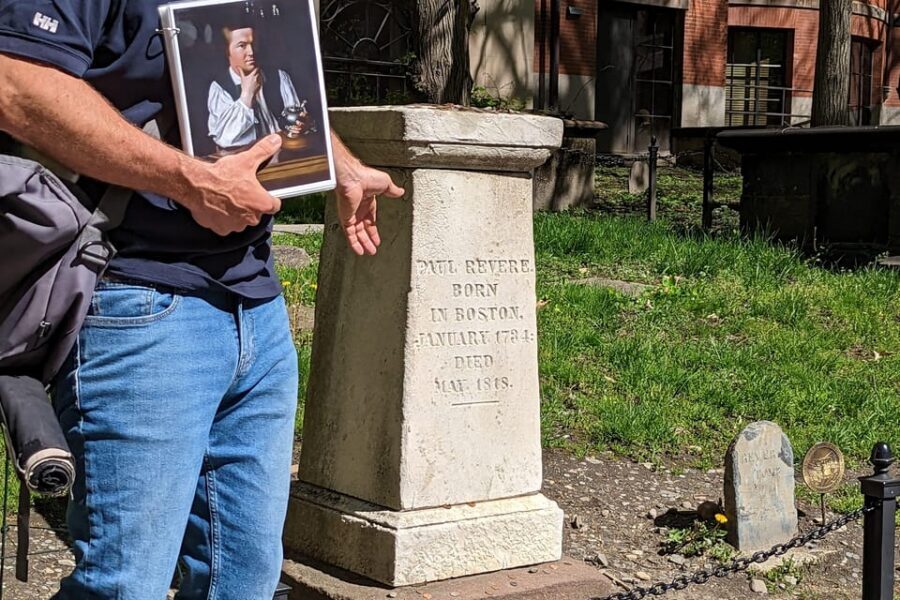
You’ll visit the Paul Revere House, where the story shifts from slogans toward the lived reality of urgency. This stop works well because it grounds the Revolution in daily life: communication mattered, timing mattered, and even ordinary routines could become part of a larger plan.
Then the tour pushes into the North End, finishing the day in this famous Italian neighborhood area at Lewis Wharf. But before you get to the finish, you’ll walk through key viewpoints tied to the Revolution story, including a Paul Revere Mall photo stop.
Next is Old North Church. This is a famous name, but the tour’s advantage is how it uses your earlier stops to make this moment feel earned, not automatic. By the time you’re here, you’ve already learned why messages and logistics mattered—so the story lands more clearly.
From there, you’ll head up toward Copps Hill for scenic views. It’s not just a lookout. It gives context for what people could see and where danger or movement might have been suspected.





USS Constitution, Bunker Hill, and the Hard Turn to War
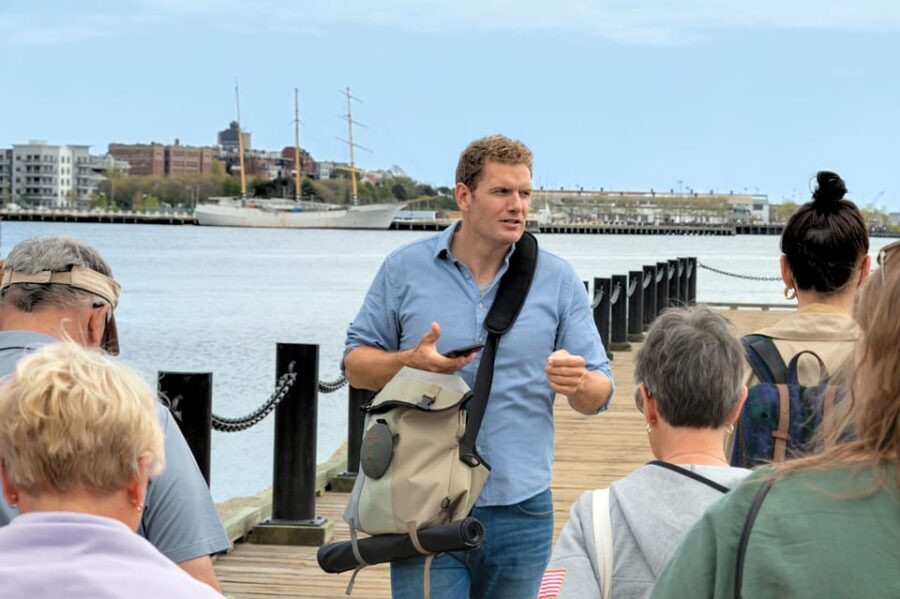
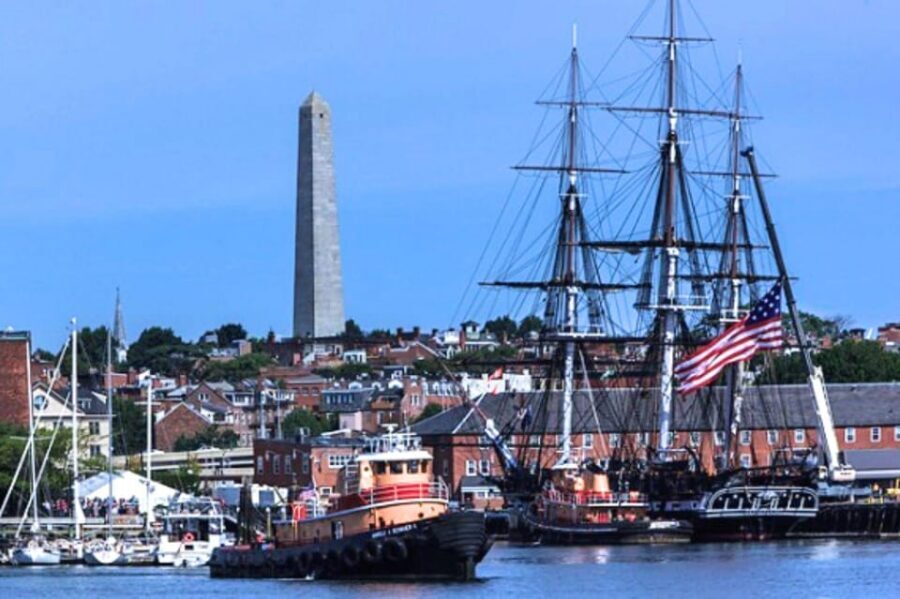
The route includes a pass by USS Constitution. Even though the stop is short, it’s a useful bridge between the Revolution-era fight and the later cultural memory of that fight. It helps you see why the legacy is still tied to Boston’s identity.
Next is Bunker Hill Monument, where you get both the guided visit and a “look at the shape of things” feeling. You’ll talk about the battle and, more importantly, what it meant as the conflict heated up. This stop is where the Revolution story changes tone from argument to consequence.
Then you’ll visit Charter Street Park, which acts like a breather between the big landmark moments and the final waterfront stretch.
Harborwalk and the Final Stretch to Lewis Wharf
After Bunker Hill, you finish with time near the water: Harborwalk and Pilot House Park, plus a final destination at Lewis Wharf. These stops help you understand why Boston’s geography mattered. Ships weren’t just scenery; they were part of how Britain controlled trade and how colonists tried to resist.
The best practical part of ending at Lewis Wharf is that you’re in a lively area where you can keep exploring right away—without needing a separate “how do we get back?” plan.
What the Small-Group Format Actually Changes
A group around 16 people sounds like a simple number, but it changes the experience. It’s easier for the guide to keep you together, check that everyone’s following along, and use props without the whole process turning into a chaotic classroom.
It also affects pacing. The tour is packed with stops and story content, and at times it can feel quick. One caution: if you’re on the slower end of walking pace, bring comfortable shoes and expect you may not linger at every photo spot.
The Guide Style: Humor, Maps, and Character-Based Storytelling
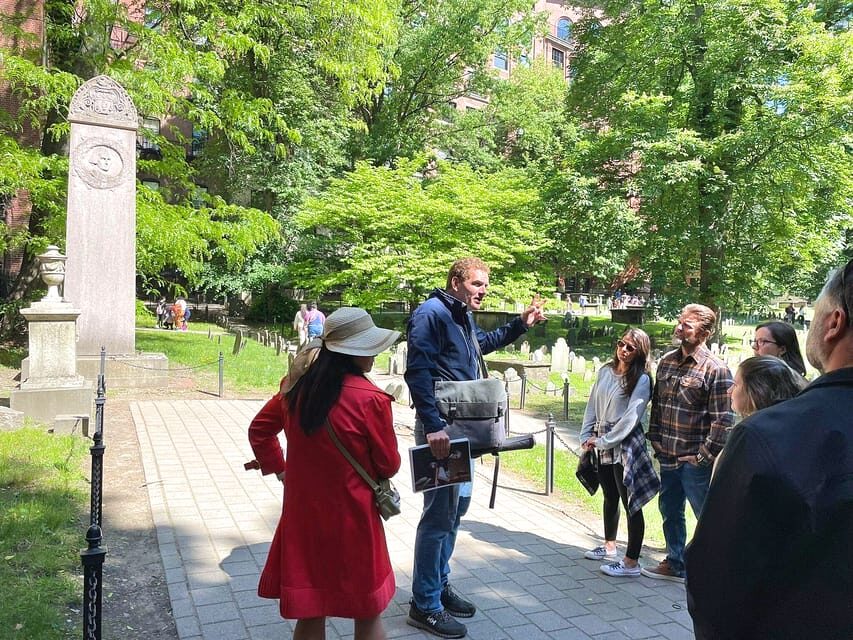
The tour’s strongest “ingredient” is the guide’s delivery. Names that show up frequently in recent groups include Tyler, Mike, Rob, Chris, and Tom—and across those guides, the common theme is clear storytelling with humor plus a lot of visuals.
You’ll see tools like maps, clip-on name tags, and other props to make historical characters easier to keep straight. That matters for adults because the Revolution has lots of factions and overlapping roles. It’s easy to remember events and still miss the relationships. The format is built to fix that.
How the Route Goes Beyond the Freedom Trail
Plenty of Boston tours use the Freedom Trail as the default spine. This one uses it as part of the opening, then spreads across Boston so the Revolution story doesn’t feel artificially narrowed.
That citywide approach is the value for you if you already know the “poster version” of Boston history. You’ll see why people acted where they acted—how downtown civic spaces, meeting houses, printing culture, and waterfront geography connected into one chain of events.
It’s also better for visitors who want more than a checklist. The “story first” order helps you understand why the Boston Massacre, the Boston Tea Party, Lexington & Concord, and Bunker Hill aren’t just separate chapters—they’re connected links in escalation.
Price and Value: Why $57 Can Be a Bargain
At $57 per person for about 210 minutes, the value depends on what you want from a tour.
If you want a quick highlights circuit, you can likely find cheaper. But if you want a guided narrative that actually explains motives, builds connections between stops, and uses visuals to keep the story coherent, this is priced like a true education experience with lots of walking included.
The small group also helps justify the cost. When the guide can slow down just enough to keep the plot straight, the extra detail becomes worth it. And with a restroom break and a focused finish at Lewis Wharf, it’s not just “walk until you’re tired.”
Who Should Book This Tour
This tour is best for:
- Adults and history-minded teens who want the reason behind the Revolution, not only dates.
- People who like walking tours but want more structure than a typical Freedom Trail route.
- Visitors who appreciate maps, visuals, and character-based storytelling.
It’s less ideal if:
- You need step-free access or have mobility limitations. This one isn’t designed for that.
- You want a relaxed, slow sightseeing day. Expect walking and a brisk tempo with frequent “next stop” moments.
Should You Book This Boston Revolutionary Story Tour?
I think it’s a smart booking if you want your Boston day to feel like one connected story. The tour’s biggest strength is how it organizes Revolutionary events in a way that makes sense chronologically, while also showing you parts of Boston that most visitors never reach.
If you’re ready for about 3.5 hours of walking and you’re comfortable following English at a steady pace, you’ll likely come away with a clearer picture of how everything snowballed—from public meetings to street conflict to open war.
If that sounds like your kind of day, book it early in your trip. You’ll get a mental map you can use for the rest of your stay.
FAQ
Where do I meet, and where does the tour end?
You meet at City Hall Plaza, across from Faneuil Hall, near the Five Iron Golf area by the Bill Russell statue. The tour finishes at Lewis Wharf.
How long is the tour?
The tour runs for about 210 minutes (around 3.5 hours).
Is hotel pickup or drop-off included?
No. Hotel pickup and drop-off are not included.
What’s the group size?
It’s a small group of about 16 participants.
What language is the tour offered in?
The tour is guided in English.
How physically demanding is it?
It requires a moderate level of physical activity. Boston is mostly flat, but there is one hill and stair sections, especially later in the tour.
Is the tour suitable for mobility impairments?
No. It is not suitable for people with mobility impairments.
Does it cover more than just the Freedom Trail?
Yes. You’ll cover Revolutionary sites across the city, including places like Faneuil Hall, Old South Meeting House, Paul Revere House, Old North Church, USS Constitution, and Bunker Hill Monument, plus other downtown and waterfront stops.