REVIEW · BOSTON
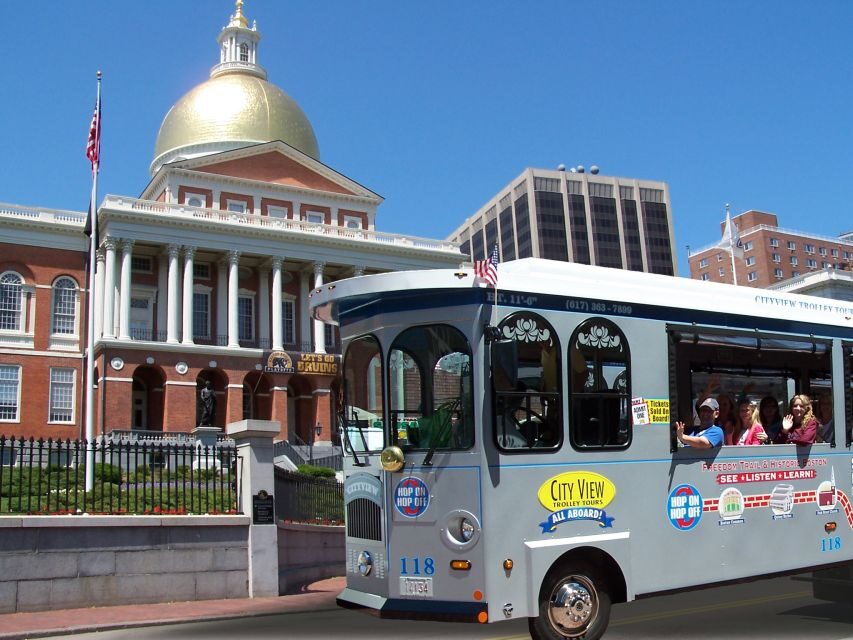
Boston: Hop-On, Hop-Off 20+ Stops Trolley Ticket
Book on GetYourGuide →Operated by CityView Trolley Tours - Boston · Bookable on GetYourGuide
Boston feels big until you get a simple way to move.
This hop-on hop-off trolley gives you a guided orientation of downtown while still letting you control the pace—so you can linger at Freedom Trail sites or zip ahead when your schedule is tight. I especially like the on-board commentary and the way you can hop off to explore at your own pace instead of being stuck in one long walking slog. The one thing to keep in mind is that value depends on how smartly you use the route—if you get off and then don’t return, you can end up paying for just a small slice.
You start by rolling past Boston’s big “start here” landmarks—Boston Common, Beacon Hill, Faneuil Hall, and the North End—then you can build your day around the stops you care about most. The narration can be funny and very practical, with guides turning serious moments into stories you actually remember. Still, there’s a tradeoff: seats can feel close together on some trolleys, and some site hours (like the Constitution) don’t always match what you assume, so you should plan to double-check opening times before you commit to a stop.
In This Review
- Key points at a glance
- How the hop-on hop-off trolley ticket really plays in 1 or 2 days
- Start point near the Aquarium: a smooth entry to downtown
- The Freedom Trail highlights you can build your day around
- Downtown anchors: Quincy Market to Faneuil Hall, then the Old State House
- Boston Common and Public Garden: where your walking tour can start
- Beacon Hill and the State House area: for narrow streets and big views
- Paul Revere House, Old North Church, and the North End: a classic story route
- Paul Revere House and Little Italy: smart hopping, quick connections
- North End and Old North Church: the Freedom Trail’s strongest neighborhood feel
- USS Constitution stop: a high-impact hop-off even if you only have a short window
- Moving through sports, stations, and modern Boston without feeling lost
- Comfort, seating, and the practical stuff you’ll care about mid-day
- Price and value: is $50 fair for what you actually get?
- Who should book this trolley, and who might want another plan
- Top pick: make it a two-step day, not a random hop-off
- Should you book this Boston hop-on hop-off trolley?
- FAQ
- How long is the trolley circuit?
- How often do the trolleys depart?
- Where do I board the trolley?
- Can I hop on and off at any stop?
- Is the tour wheelchair accessible?
- Does the ticket include a Boston Harbor Cruise?
Key points at a glance
- Freedom Trail-focused hop-offs so you can pair trolley time with on-foot exploring
- 1-hour circuit for orientation, then you can ride again or jump off as you please
- GPS self-guided walking tours designed for trolley stops near major attractions
- Frequent departures (every 10–30 minutes) which helps if you’re hopping around on a schedule
- Classic Boston neighborhoods like the North End and Paul Revere House area, plus downtown anchors
- USS Constitution and Boston Common/Public Garden are right on the main route
How the hop-on hop-off trolley ticket really plays in 1 or 2 days
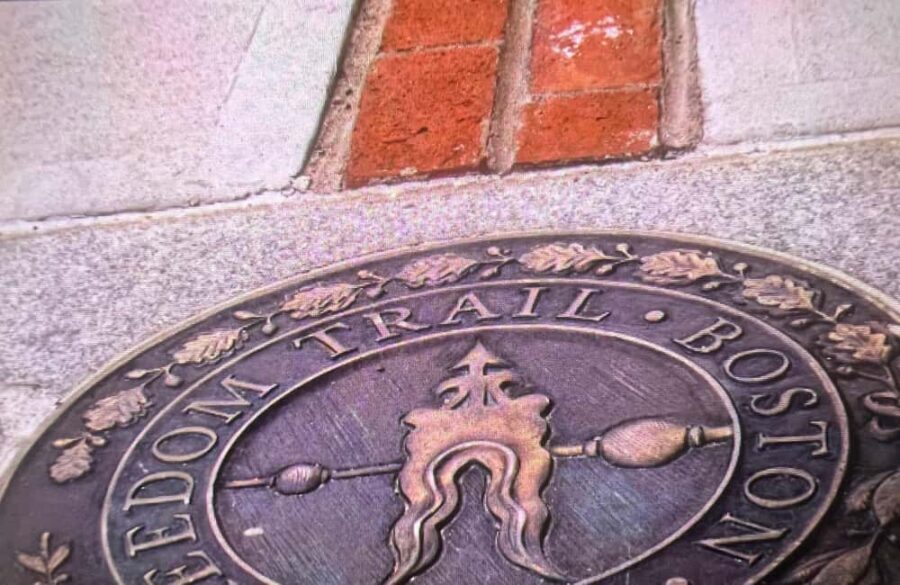
This ticket is built for flexible touring. You can choose a 1-day or 2-day pass, and both give you access to a loop with 20+ stops around historic downtown. The big benefit is that you’re not locked into a rigid route timing. You can get on, get off, and then re-board later at stops along the way.
If you’re only in town for a day, I’d treat the trolley as your “get oriented” move. One complete circuit runs for about 1 hour non-stop, which is ideal for first-timers who want to understand where things sit relative to each other before committing to a long walk. If you have two days, the second day becomes your chance to tighten your plan—ride the line again, but this time hop off where you actually want time on the ground.
Two details make this work better than many hop-on hop-offs. First, the stops are set up close to major attractions, so hopping off doesn’t instantly turn into a long trek. Second, the trolley supports GPS self-guided walking tours made specifically for the trolley stops. That matters because Boston can be confusing on foot; the GPS walk gives you a clearer route when you leave the trolley and want to follow a loop.
One caution: hop-on hop-off value depends on rhythm. If you hop off and then don’t return to the trolley line later, you’re basically paying for a ride you didn’t fully use. Also, the trolleys can run frequently (every 10–30 minutes), but late-afternoon traffic can still affect how smooth your timeline feels.
You can also read our reviews of more tours and experiences in Boston


Start point near the Aquarium: a smooth entry to downtown
Your first stop is in front of the Boston Marriott Long Wharf near the Boston Aquarium. If you’re using public transit, the Aquarium stop on the Blue Line puts you in the right zone to start without a long taxi shuffle.
This matters because the trolley’s route is dense with historic anchors. Starting near the Aquarium means you’re not beginning in some far-flung suburb where you’ll spend half the day commuting. Instead, you’re positioned to stack stops efficiently—especially if you’re also trying to fit in the Freedom Trail area without wasting time.
One practical note: the aquarium side can have a bit of a line at entry points at busier times. If your goal is maximum touring with minimal waiting, aim for an earlier start so you can catch the first set of departures comfortably.
The Freedom Trail highlights you can build your day around
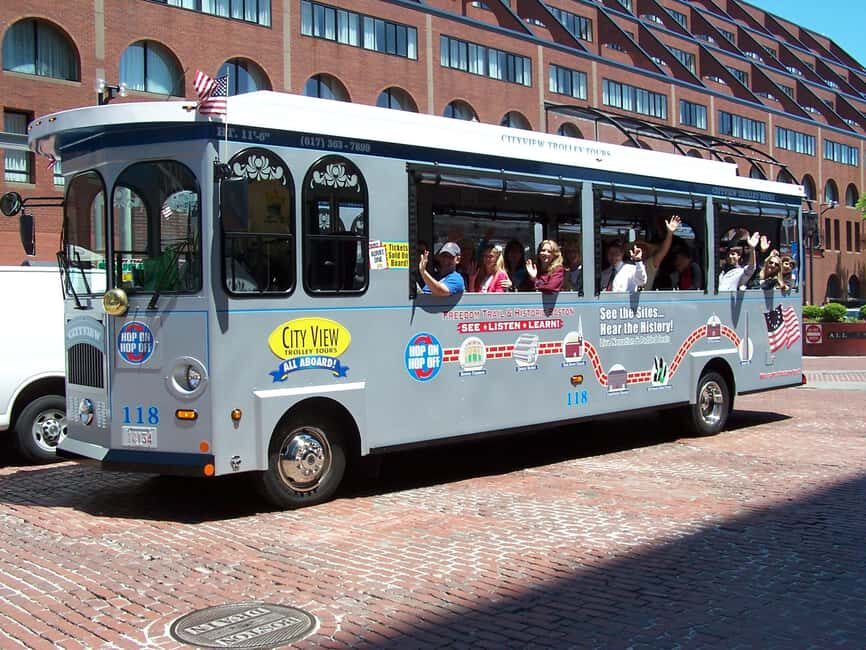
The trolley is organized around the downtown historic circuit, with hop-offs that map nicely to a Freedom Trail-style day. The idea is simple: you ride for orientation and context, then you hop off for concentrated time at the places that matter to you most.
Downtown anchors: Quincy Market to Faneuil Hall, then the Old State House
If you want to connect Boston’s public-life landmarks in one flow, the stops around Quincy Market and Faneuil Hall are where you’ll feel it. This is the kind of area that works for both quick browsing and longer wandering, depending on your energy.
From there, you can keep walking the historic thread by using the Old State House and the Government Center area as your next hop-off moments. The trolley groups these into a single reachable corridor, which is helpful if you don’t want to piece together transit or parking every time you change neighborhoods. One stop name explicitly calls out the Boston Massacre, which is a reminder that the trolley isn’t just scenic—it’s trying to route you through major historical waypoints.
The practical drawback is also obvious: these core stops can be busy. If you’re the type who likes quiet photo time, you’ll get more breathing room by timing your hop-offs earlier in the day, then returning later only if you want to be in the heart of the action.
Boston Common and Public Garden: where your walking tour can start
Two classic icons—Boston Common and the Public Garden—appear on the route. Even if you don’t plan to spend hours here, this is an easy “reset” point. It’s the kind of stop where you can get off, take your bearings, and decide what your next hop-off should be based on what you’ve already seen.
If your legs are tired, this stop helps you avoid the trap of walking too far too soon. You can get back on the trolley when you need a break, then continue to the next historic cluster.



Beacon Hill and the State House area: for narrow streets and big views
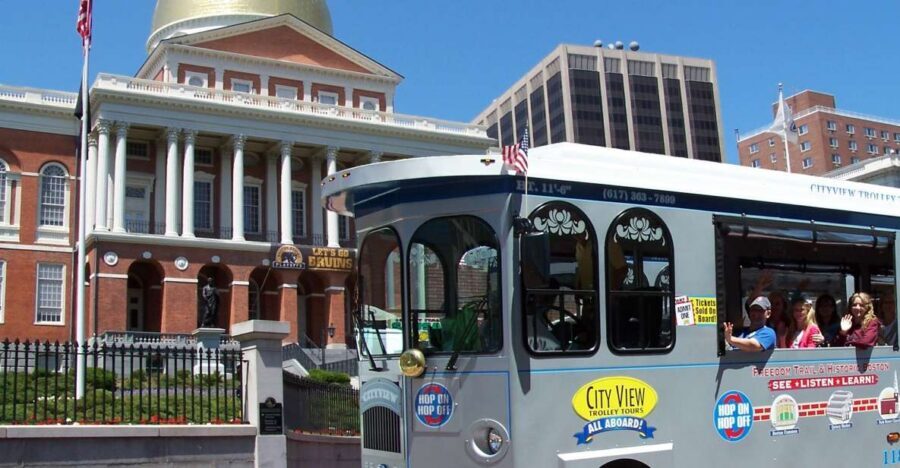
The route includes State House and Beacon Hill. Beacon Hill is the kind of neighborhood where hopping off the trolley can save you time—because you’re dropped near where you’d actually want to stroll. The State House stop also gives you a clean anchor point if you’re building a day around Boston’s civic architecture.
Here’s the tradeoff: Beacon Hill-style streets often reward wandering slowly. If you only have 20–30 minutes, you might feel rushed. I’d plan a slightly longer window if you like to browse streets and not just check boxes.
Paul Revere House, Old North Church, and the North End: a classic story route
This is where the trolley becomes more than transport—it becomes a story map. The itinerary includes the Paul Revere House area, plus Little Italy nearby, then continues into the North End and Old North Church.
Paul Revere House and Little Italy: smart hopping, quick connections
The trolley lists Paul Revere House paired with Little Italy. That pairing is practical: you can combine a serious historic stop with a neighborhood feel without needing to plan separate transit moves. It’s a good setup if you want to keep your day feeling human—history, then a casual stroll.
The GPS walking tour support helps here. When you hop off, you’re not stuck figuring out how to connect smaller points. You get a prepared route meant to fit the trolley stop.
North End and Old North Church: the Freedom Trail’s strongest neighborhood feel
You’ll also find North End and Old North Church on the route. This is a big deal for many first-timers because it ties together two things Boston does well: historic storytelling and neighborhood texture. The North End portion is a standout because it’s described as Boston’s oldest residential area, which hints at why hopping off here feels different from just riding past.
If you care about the Freedom Trail vibe, I’d spend more time in this cluster than you think. The trolley can’t replace being on the street, looking around, and absorbing the atmosphere. It can, however, get you there efficiently so you don’t lose half your day to getting lost.
USS Constitution stop: a high-impact hop-off even if you only have a short window
The trolley includes a dedicated stop for USS Constitution (Old Ironsides). This is one of the most headline-making stops on the route, so if you’re visiting Boston for classic American history, you’ll probably want to build time around this one.
The key thing: your day should be flexible enough to handle site access realities. One visitor noted that the Constitution can be closed on certain days, and they were disappointed after walking over only to find it wasn’t accessible. You don’t need to panic, but you should treat top-site opening hours like a must-check, especially if you’re deciding between two competing hop-offs.
Also, this stop is valuable even for people who just want a quick look. If you have limited time, you can hop off, take in what you want, and re-board without losing the rest of the route.
Moving through sports, stations, and modern Boston without feeling lost
The trolley doesn’t only hit the old-school monuments. It also connects you to places that can break up a heavy history day.
Stops include North Station and the TD Bank Garden Sports Museum, plus the area around South Station, the Convention Center, and the Children’s Museum. If you’re traveling with kids, or if your group has mixed interests, these stops help prevent the day from turning into only plaques and monuments.
This is also useful for practical pacing. When you need a break from walking, you can hop off near these hubs, regroup, and then decide whether to return to the historic core later.
Comfort, seating, and the practical stuff you’ll care about mid-day
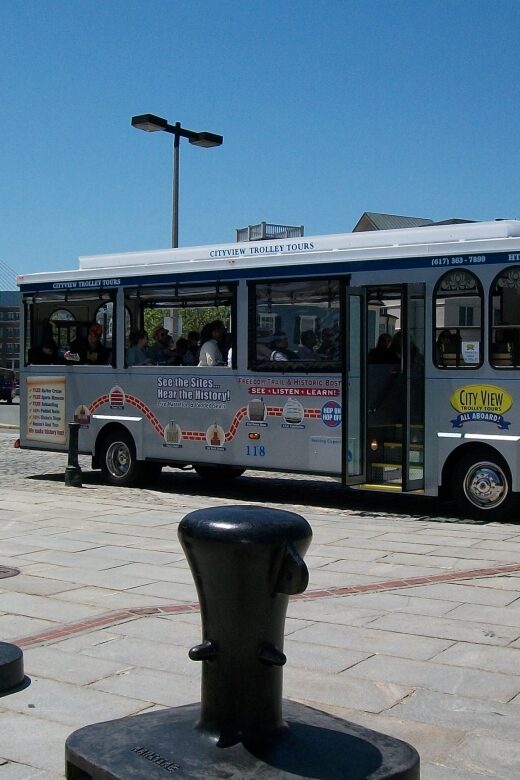
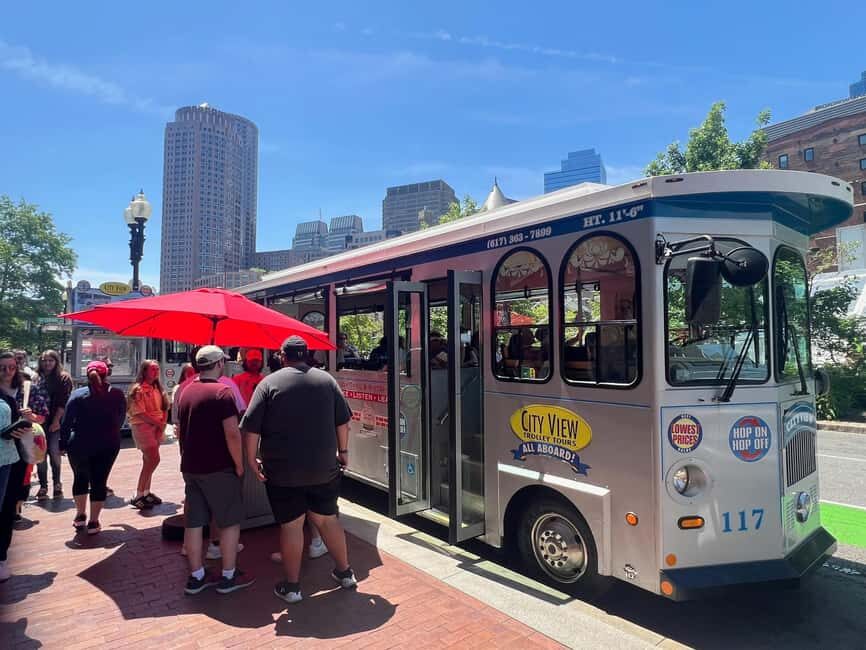
This is an open-air trolley experience, and that usually means good sightlines and less “trapped in traffic” frustration. The trolleys have padded seats, which helps when you’re riding through heat or long stretches.
One real-world drawback to plan for: the seats can be close together, and on some trolleys you may end up bumping your knees when other passengers shift. If you’re tall or traveling with someone who gets bothered by tight seating, consider that comfort could be merely okay, not luxurious.
Another practical element: the price doesn’t include tips. That doesn’t mean you must tip, but in practice, many people feel it’s part of the deal when a driver or guide is narrating and answering questions. If you tend to tip, budget for it so there are no surprises at the end.
Finally, timing helps. One visitor noted the service stops running around 4:30pm, so if you’re trying to cover a lot, you’ll want to start earlier rather than later. Boston days get busy, and that early start can be the difference between seeing everything and missing one key hop-off.
Price and value: is $50 fair for what you actually get?
At about $50 per person for a 1- or 2-day option, this ticket works best when you use it like a planning tool, not just a casual ride. The reason the price can feel fair is that you’re paying for multiple layers at once: trolley transport, live English commentary, a map, and built-in GPS self-guided walking tours designed for the stops.
If you’re only planning to hop off once or twice, the cost per attraction goes up fast. If you’re willing to structure a day around several stops—especially if you ride the full loop first, then come back to the areas you liked most—the math starts to look better.
One more value limiter: a Boston Harbor Cruise is not included. That’s important because some people assume a “Boston tour” automatically includes the water. If harbor views are part of your must-do list, you’ll need to book that separately.
Who should book this trolley, and who might want another plan
This works especially well if:
- You want a low-effort way to connect Boston’s core historic sites
- You don’t want to rely on taxis or rideshares for every hop
- Your group likes both guided context and freedom to wander
- You’re visiting for the first time and want a fast orientation
It may be less ideal if:
- You hate tight seating and you’re sensitive to cramped spaces
- You only have a tiny window and you can’t start early
- Your plan depends on one single site without checking hours (top sites can close on specific days)
The trolley also fits mixed-interest trips: one person can focus on places like Paul Revere House or Old North Church, while another can spend more time near Quincy Market/Faneuil Hall, Boston Common/Public Garden, or the station-area stops.
Top pick: make it a two-step day, not a random hop-off
Here’s how I’d maximize your day using the way this ticket is designed.
First, ride the full 1-hour circuit non-stop so you know where everything sits. Then, only after that orientation, decide where you want your longer time on the ground: North End, Beacon Hill, Paul Revere House, USS Constitution, or the downtown civic cluster around Faneuil Hall and the Old State House area.
This approach reduces wasted backtracking and helps you avoid the common problem of getting off in the wrong spot because it looked good from the curb. The trolley gives you the big picture first, then you turn it into a personal day plan.
Should you book this Boston hop-on hop-off trolley?
Yes, if you want an efficient way to see the historic backbone of Boston without committing to a full-day walking plan. The strongest reason to book is the combo of live narration, Freedom Trail-focused stop clusters, and GPS walking tours that help you use hop-offs intelligently. For many visitors, it’s the simplest path to understanding Boston’s layout fast.
If you’re the type who prefers one deep, slow neighborhood over hopping around all day, you might still book—but you should plan to pick just 2–3 target clusters and spend longer there (North End/Old North, Paul Revere House/Little Italy, and either the downtown civic area or USS Constitution).
Either way, start earlier in the day, check key site hours, and budget a little mental space for traffic. Done well, this ticket turns Boston from a confusing maze into a clear, walkable story.
FAQ
How long is the trolley circuit?
The full loop runs for about 1 hour non-stop. Your ticket is valid for 1–2 days depending on the option you choose.
How often do the trolleys depart?
Trolleys depart every 10–30 minutes.
Where do I board the trolley?
Stop 1 is in front of the Boston Marriott Long Wharf near the Boston Aquarium. You can also use the Aquarium stop on the Blue Line.
Can I hop on and off at any stop?
Yes. You can join and end the tour at any of the stops along the route, and you can hop off to explore then re-board later.
Is the tour wheelchair accessible?
Yes, the tour is wheelchair accessible.
Does the ticket include a Boston Harbor Cruise?
No. The voucher is for the hop-on hop-off trolley ticket only and does not include a Boston Harbor Cruise.