REVIEW · BOSTON
Boston: Freedom Trail, Bunker Hill, & USS Constitution Tour
Book on GetYourGuide →Operated by Walk & Talk Boston Walking Tours · Bookable on GetYourGuide
A Revolution you can walk. This 4-hour Boston tour strings together the full Freedom Trail story with expert-led stops, and you also get Bunker Hill and USS Constitution in the same outing. It’s focused on people and cause-and-effect, not just dates.
Two things I really like: the way the guide connects each location into one running narrative, and the fact that you don’t just point at sites—you actually visit key places like Bunker Hill and end at the ship at USS Constitution. One possible drawback: plan on a solid 3 miles of walking, and it’s not suitable for wheelchair users.
In This Review
- Key things to love on this Boston Revolution walk
- A Freedom Trail tour that feels like a story, not a checklist
- Where the tour starts: Massachusetts State House meetup details that matter
- Boston Common and Park Street Church: setting the stage before the slogans
- Granary Burying Ground and King’s Chapel Burying Ground: remember the Revolution’s cast
- Old South Meeting House and the Boston Massacre site: when protest turns dangerous
- Faneuil Hall, Paul Revere House, and Old North Church: communication and urgency
- Copps Hill and the road to Bunker Hill: a darker mood shift
- Visiting Bunker Hill and ending at USS Constitution: the two biggest payoffs
- Pace, breaks, and small-group energy with Mark
- Price and value: is $79 worth 4 hours plus two big visits?
- Who should book this Freedom Trail + Bunker Hill + USS Constitution tour
- Should you book this tour?
- FAQ
- How long is the Boston Freedom Trail, Bunker Hill, and USS Constitution tour?
- Where do I meet the tour guide?
- Do I need to bring my confirmation email?
- Is the tour wheelchair accessible?
- How much walking is required?
- Which major stops are included?
- What language is the tour guide?
- What is the price?
- Can I cancel for a full refund?
- Does the tour accept tips?
Key things to love on this Boston Revolution walk
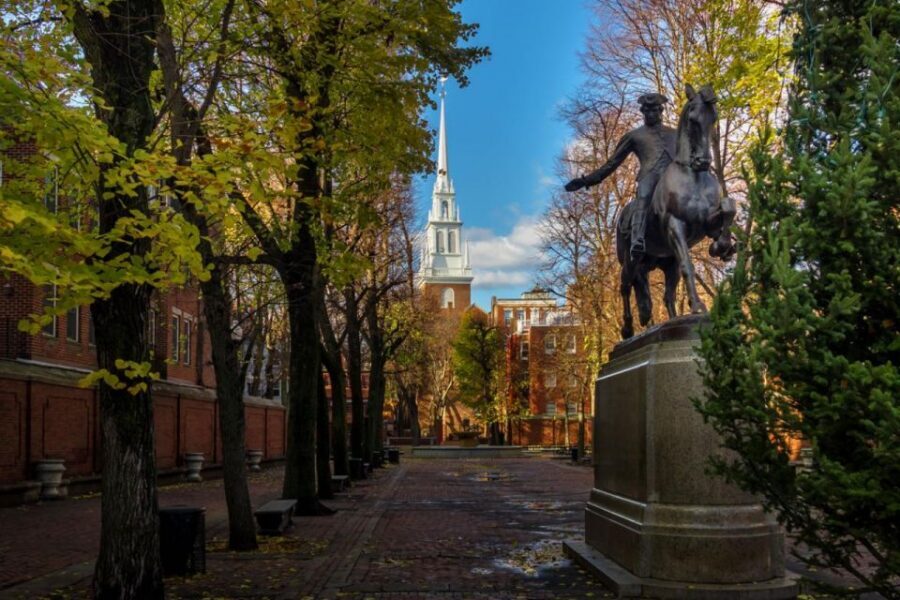
- Full Freedom Trail coverage with all the main stops in one go
- Bunker Hill in person, not a photo stop
- Finish at USS Constitution, so the day has a strong ending
- Small group pace that leaves room for questions
- Helpful extras beyond the standard trail markers
A Freedom Trail tour that feels like a story, not a checklist

If you’ve ever done the Freedom Trail on your own, you know how easy it is for the places to blur together. This tour keeps things sharp by treating Boston’s Revolutionary-era sites like chapters in one story. You’ll spend your time on the people who pushed events forward, the decisions that mattered, and the outcomes that followed.
I like that the guide keeps the focus on what caused what. The route is famous, but it’s the connections that make it click: protest turns political; politics turns confrontational; confrontations turn into open conflict. And instead of only repeating the well-worn names, you’ll also hear about lesser-known figures who shaped the mood, the arguments, and the risks people took.
There’s also a practical upside to the format: the group stays small, so you can ask questions without shouting over other tour groups. And with an active guide, you’re not left to guess what you should notice at each stop—you get the context right when you need it.
You can also read our reviews of more tours and experiences in Boston.



Where the tour starts: Massachusetts State House meetup details that matter

Start at the Massachusetts State House, 24 Beacon Street. Meet about ten minutes early in front of the main steps, but the key detail is where the guide stands: across the street from the steps at the Robert Gould Shaw Memorial, wearing a white baseball cap with the Walk & Talk Boston logo and holding a green sign.
That meeting-point clarity is more than trivia. On a busy Boston day, it helps you avoid that awkward ten minutes of wandering while everyone else is already walking. If you like clean logistics, you’ll appreciate how straightforward this is.
Plan to bring comfy walking shoes. You’ll be moving at a pace that works for a historic-city walk, and you’ll want to stay comfortable for the full 4 hours. A little planning also helps you enjoy the deeper stops—because when you’re tired, it’s harder to catch the “why this matters” parts of the story.
Boston Common and Park Street Church: setting the stage before the slogans
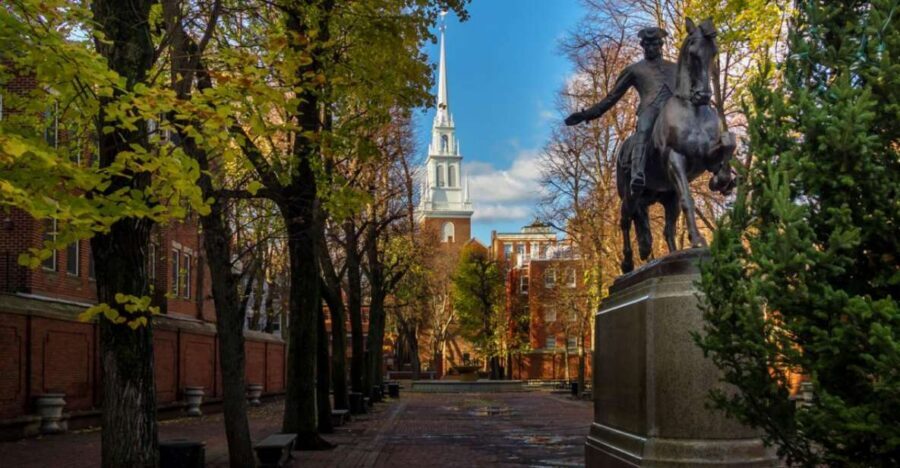
Boston Common is where many people begin the Freedom Trail on their own, but on a guided walk it becomes more than a pretty open space. You’ll get the bigger picture of why Boston mattered in the first place, and how the city’s public life set the conditions for conflict. This is a good moment to reset your brain: before you hit the heavier turning points, you’ll understand the political temperature of the town.
From there, you’ll move to Park Street Church. This stop works well because the guide uses it to connect space to events—how people gathered, how ideas spread, and how Boston’s public stage shaped the Revolution. Even if you think you know the basics, you’ll likely pick up a new angle on how “everyday” public places became part of the revolutionary story.
The tour keeps a steady rhythm here. You’ll get guided explanation along the way and short pauses so you’re not just marching through history. It’s an efficient start without feeling rushed.
Granary Burying Ground and King’s Chapel Burying Ground: remember the Revolution’s cast

The cemetery stops on the Freedom Trail can feel repetitive if you’re only hunting for names. Here, they’re used to explain how memory works—and how communities mark heroes, controversy, and consequences. Granary Burying Ground is a strong early stop because it grounds the Revolution in real people you can actually picture.
King’s Chapel Burying Ground continues that idea. You’re not just walking past old stone; you’re learning how Boston’s story is preserved in its burial grounds. The guide’s approach helps you read the place like a clue: who is remembered, what gets highlighted, and what it suggests about public opinion and political legacy.
If you like history that goes beyond the textbook cast list, these cemetery stops are where that “extra” feeling starts to show. You’ll hear about figures you may not have encountered in school, and the tour keeps them connected to the events you’re going to see next.
Old South Meeting House and the Boston Massacre site: when protest turns dangerous
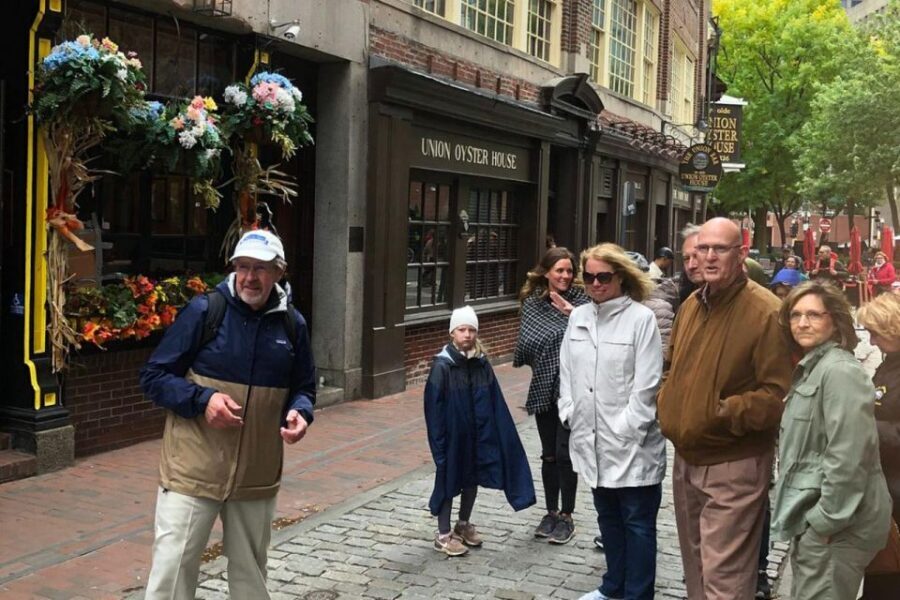
Old South Meeting House is one of the Revolution’s loudest sounding names, but the guide helps it feel real. You’ll connect the idea of assemblies and public messaging to the larger political conflict building in Boston. It’s not just about what happened; it’s about why people felt they had to do it, and what they expected to happen.
Then you’ll move to the Boston Massacre site. This is a critical transition point in the narrative. The tour’s focus on key events shines here because the story shifts from political pressure to physical confrontation. You’ll learn how tensions escalated, and how the aftermath fed the larger push toward rebellion.
What I like about the way these stops are handled: they don’t treat the Massacre as a standalone tragedy. The guide ties it back to the conditions that made it likely and the outcomes it fueled. That cause-and-effect is what makes the walk feel like one connected arc instead of separate attractions.





Faneuil Hall, Paul Revere House, and Old North Church: communication and urgency
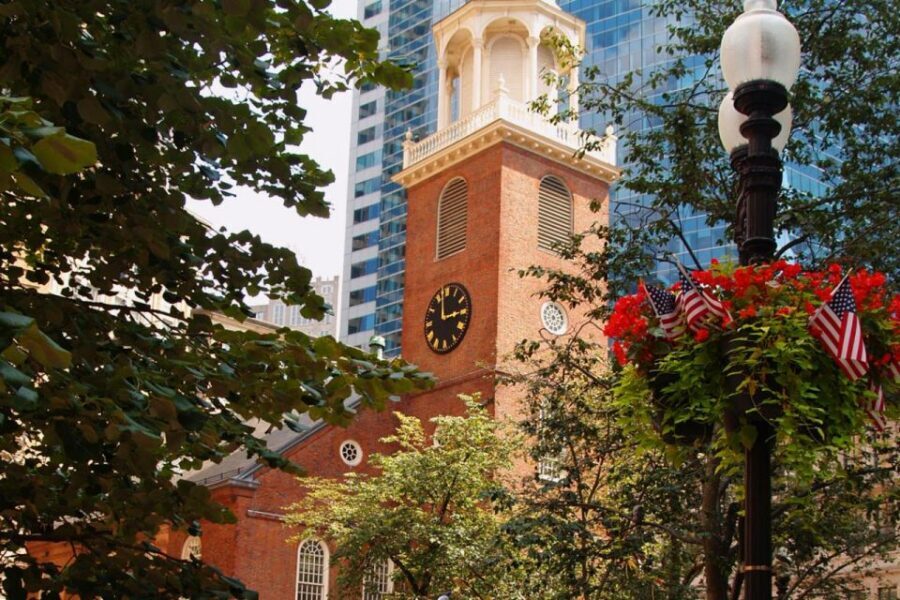
Faneuil Hall is the kind of place you’d recognize instantly from photos. On this tour, it becomes a hub in the story, not just a landmark. You’ll connect public debate and political organizing to the growing urgency behind the Revolution.
Next comes the Paul Revere House. This stop is especially good if you want a clearer picture of how messages moved through Boston and the surrounding areas. You’ll hear about the roles people played and how information—and misinformation—mattered. It’s one of those moments where the tour’s character focus makes a famous name feel less like a slogan and more like a person doing a job under pressure.
Old North Church is where the story tightens. You’ll get the context for why that moment became famous, and how it fit into the larger pattern of the early war. The guide’s map-based explanations (when used) help you keep track of what’s happening where, which makes this section much easier to follow.
This part of the tour is also a great reminder: the Revolution wasn’t only fought with muskets. It was fought with urgency, planning, persuasion, and speed.
Copps Hill and the road to Bunker Hill: a darker mood shift
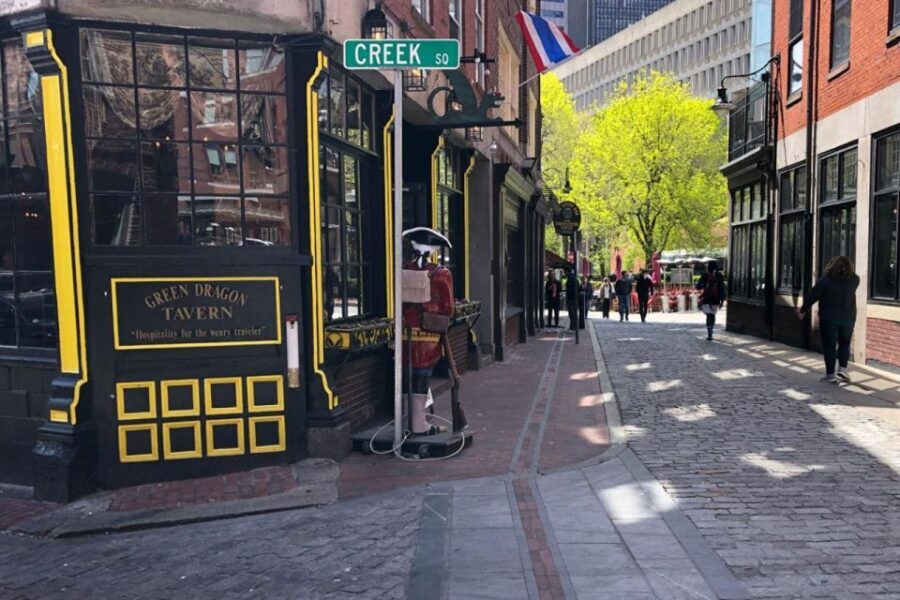
Copps Hill Burying Ground adds a different tone to the walk. It’s still part of the same Revolutionary-era story, but the mood shifts as you approach Bunker Hill. The guide uses the cemetery stop to reinforce that history here isn’t distant. People lived, suffered, and were buried in the same city spaces you’re standing in now.
After that, you’ll reach the Bunker Hill Monument. This is where you start seeing the walk become more physical in your brain. The guide builds anticipation by explaining why Bunker Hill mattered, not just that it happened. It helps you understand what the British response meant for the next phase of the conflict and why departure from Boston became a turning point.
You’re not just looking at a monument; you’re looking at a pivotal moment with real consequences. That’s why the next stop is so satisfying.
Visiting Bunker Hill and ending at USS Constitution: the two biggest payoffs
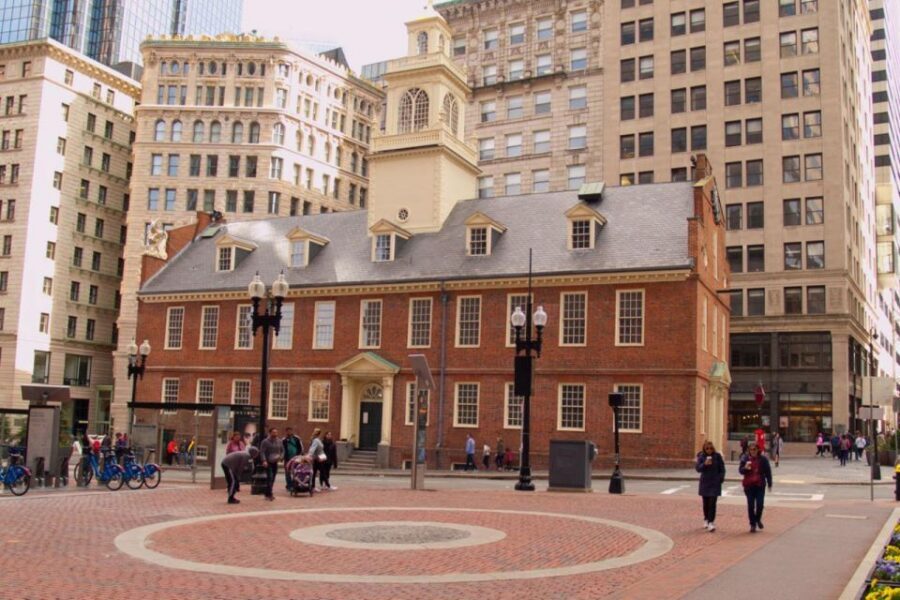
Most Freedom Trail tours either stop short of Bunker Hill or treat it as a quick sightline. Here, you actually visit Bunker Hill. That changes the experience. Seeing the battlefield area and connecting it back to the story helps the conflict feel grounded instead of abstract.
This is also where you’ll notice the guide’s pacing choices. In many guided walks, the tough part is that you’re always standing. On this one, the guide is clearly thinking about keeping people comfortable enough to absorb what’s being said. That matters most on Bunker Hill, where you’ll want to stay mentally present even if the physical effort is climbing.
Then the tour ends at USS Constitution. This final stop gives you an arc you can feel. You go from revolutionary streets and assembly houses to the naval side of the American cause—ending the day with a tangible link to the conflict beyond Boston’s streets.
One practical note: ending at USS Constitution means you should plan for a longer return walk or use local transit. If you want an easier get-back, a ferry option back toward South Station is a smart after-tour trick some people use to avoid the long slog.
Pace, breaks, and small-group energy with Mark

A lot of “walking tours” sound good on paper, then wear you out. This one is designed to work in real life. The guide keeps groups small (often around the 16-person mark), which changes everything: you can hear the explanations in busy areas, and you don’t feel lost when you ask a question.
The pace is another big deal. You’ll still walk, and the tour doesn’t pretend otherwise, but it doesn’t feel like nonstop trudging. The guide plans stops where it makes sense to sit, asks about comfort, and adjusts for what the group needs.
From the experience, I also like the real-world preparation details. People have mentioned shade stops, hydration help, and even practical extras like water and ponchos if the day needs it. And since the guide can reach out the day-of with a meetup reminder, you start the tour feeling organized instead of scrambling.
Finally, Mark is the kind of guide who invites questions rather than shutting them down. If you’re the kind of person who asks why a specific event mattered, you’ll feel at ease doing it here. That’s a big part of why the tour earns such strong ratings.
Price and value: is $79 worth 4 hours plus two big visits?
At $79 per person for a 4-hour walking tour, the value depends on what you want from Boston history. If you only want a quick overview, you can find cheaper options. But if you want the full Freedom Trail story with the two major “not every tour includes this” wins—Bunker Hill and USS Constitution—then $79 starts to look reasonable.
You’re paying for three things that matter in your experience:
- Time savings: one guided outing replaces multiple separate plans.
- In-person access: the tour isn’t only marker-to-marker viewing.
- A guided narrative: the guide connects the Revolution’s key moments into a clearer whole.
Also, the tour’s structure includes a guide tip in what you book, and the guide is known for not pushing gratuities. That’s a relief if you dislike being pressured into extra spending while traveling.
If you’re visiting Boston for the first time and you want to get your bearings fast, this is a strong use of a half day. And if you’re returning, it’s a great way to add depth without needing to build a research plan yourself.
Who should book this Freedom Trail + Bunker Hill + USS Constitution tour
This tour fits best if you want:
- a story-driven Revolution walk, with cause-and-effect
- the full Freedom Trail in one go
- the two extra anchor visits: Bunker Hill and USS Constitution
- a small group where questions are normal
It’s less ideal if:
- you can’t handle about 3 miles of walking
- you need wheelchair access (this tour isn’t suitable for wheelchair users)
- you only want a short, laid-back stroll with minimal explanation
If you’re traveling with teens or a friend who thinks history will be boring, this type of guide-led, character-focused approach often works because it keeps the narrative moving.
Should you book this tour?
Yes, if your goal is a guided Freedom Trail day that actually connects the Revolution’s pieces. I’d book it if you want Bunker Hill and USS Constitution included without extra planning, and if you like asking questions instead of following silently.
Book it especially if you care about the “who made it happen” side of history. The guide’s focus on people, key events, and outcomes is exactly what turns Boston’s famous markers into something you can remember.
FAQ
How long is the Boston Freedom Trail, Bunker Hill, and USS Constitution tour?
It lasts about 4 hours.
Where do I meet the tour guide?
Meet at the Massachusetts State House, 24 Beacon Street, Boston. The guide will be across the street from the main steps at the Robert Gould Shaw Memorial, wearing a white baseball cap with the Walk & Talk Boston logo and holding a green sign.
Do I need to bring my confirmation email?
No. The guide will have your name(s) and be expecting you.
Is the tour wheelchair accessible?
No, it is not suitable for wheelchair users.
How much walking is required?
You need to be able to walk about 3 miles.
Which major stops are included?
The tour covers the Freedom Trail sites and includes visits to Bunker Hill and the USS Constitution.
What language is the tour guide?
The tour is guided in English.
What is the price?
The price is $79 per person.
Can I cancel for a full refund?
Yes. You can cancel up to 24 hours in advance for a full refund.
Does the tour accept tips?
The tour includes a guide tip, and the guide has been noted for not accepting gratuity.
If you want, tell me your travel month and your walking comfort level. I’ll suggest the best time of day to do this route so you waste less energy and catch the best light.