REVIEW · NEW YORK CITY
New York City: Multicultural Contrasts Tour
Book on GetYourGuide →Operated by Ilmioviaggio Inc · Bookable on GetYourGuide
City contrasts, on a single ride.
This 5-hour bus tour strings together the Bronx, Queens, and Brooklyn in one easy plan, so you get big-neighborhood variety without constant subway switching. I especially like the Yankee Stadium stop paired with real local context, and I like that the route ends in Dumbo where you can line up photos of the Brooklyn Bridge and Manhattan skyline. One thing to weigh: there’s no hotel pickup, and the tour concludes where you choose (Dumbo or Little Italy), so you’ll want your timing and next transport ready.
You meet at the corner of 47th Street and 9th Avenue by Kiehl’s (there are several). The tour uses a live guide in Italian, with guaranteed seating, and it runs on schedule even in rain or snow—just be ready for a solid amount of time in the vehicle.
In This Review
- Key takeaways before you go
- Why this Bronx–Queens–Brooklyn route is worth $75
- Meeting point: Kiehl’s at 47th and 9th (and why it matters)
- The bus ride pace: how 5 hours really feels
- West Side passing: the intro you’ll appreciate later
- Yankee Stadium in the Bronx: photos plus context in 15 minutes
- I Love the Bronx mural by Tats Cru: street art with local meaning
- Arthur Avenue: your 30 minutes of Little Italy energy
- Queens pass-by and why it’s more than a drive
- Flushing Meadows Corona Park: Unisphere stop, or Pepsi Cola Sign during US Open
- Williamsburg by bus and Dumbo by foot-friendly photos
- Manhattan Bridge pass-by and the Little Italy finish
- What I’d pack (and what I’d skip)
- Who this tour suits best
- Should you book the Multicultural Contrasts bus tour?
- FAQ
- How long is the New York City Multicultural Contrasts Tour?
- Where do I meet, and when should I arrive?
- Does this tour include hotel pickup or drop-off?
- Where does the tour end?
- Is the tour wheelchair accessible?
- What happens during the US Open regarding the Queens park stop?
Key takeaways before you go
- One bus, three boroughs: Bronx, Queens, Brooklyn, all in about 5 hours
- Yankee Stadium photo stop + guided context in a short, efficient window
- Tats Cru I Love the Bronx mural stop built for photos and explanations
- Arthur Avenue free time for your own pace at the real Little Italy vibe
- Flushing Meadows timing swaps during US Open (Unisphere to the Pepsi Cola Sign)
- Dumbo finish with skyline and Brooklyn Bridge views you can actually linger over
Why this Bronx–Queens–Brooklyn route is worth $75
At $75 per person for 5 hours, you’re paying mostly for two things: bus transportation across borough lines and guided stops where time matters. If you tried to stitch this together on your own, you’d spend extra money (and stress) on transit and you’d still likely miss the quick “what you’re seeing and why it matters” layer.
This is also a good format if you’re in New York for a first visit, or you just want a high-impact overview without planning every turn. You’ll get short pass-by segments to move you along, then a few tighter stops where the guide can point out the story behind the sights—rather than making you hunt for details on your own.
The tour is guided live, and that helps most when you’re jumping between neighborhoods that can feel very different block-to-block. Your payoff is clarity: you’ll come away with a better sense of how the city’s neighborhoods evolved and how different communities shape daily life.
You can also read our reviews of more city tours in New York City



Meeting point: Kiehl’s at 47th and 9th (and why it matters)
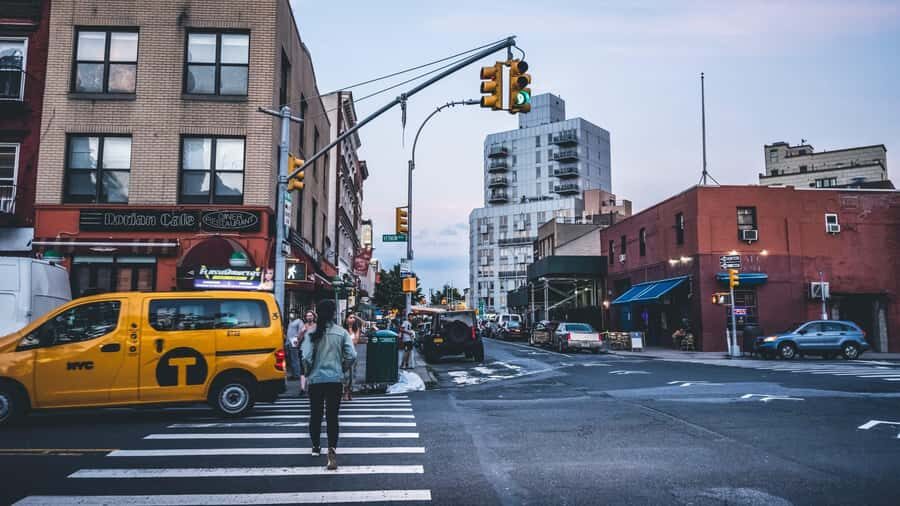
You’ll meet at the corner of 47th Street and 9th Avenue near Kiehl’s. Because there are many Kiehl’s locations in NYC, this is one of those details that can waste time fast if you show up at the wrong storefront.
Arrive 15 minutes early. That buffer is useful because you’ll need a moment to find your meeting spot, get oriented, and get on the bus without rushing. Also, since the tour begins in Manhattan, this meeting setup makes sense—you’ll start close to major transit lines and hotel clusters.
If you hate last-minute scrambling, do yourself a favor and check your route in advance (especially if you’re using a ride share or walking from a museum). Once you’re on the bus, everything else is handled.
The bus ride pace: how 5 hours really feels
This is a guided “drive-and-stop” style tour, not an all-walking neighborhood day. You’ll spend a chunk of time moving between boroughs—passing areas by bus—then you’ll get focused photo stops and a couple of short guided segments.
In practice, that means:
- You’ll see more places than you could on foot in one day.
- You won’t have hours to wander slowly.
- Your best results come from being ready to step out quickly, grab your photos, and listen during the guided moments.
The upside is efficiency. The trade-off is that you’ll likely want to return later if a neighborhood really grabs you. For example, you’ll get enough time at Arthur Avenue to taste the vibe, but not enough time to do a full food crawl. That’s not a flaw—it’s the structure. The tour is built to help you choose where to go next.
And yes, the tour runs in rain or snow. So pack practical stuff: comfortable shoes and a water bottle, because you’ll be on the move and you might be standing while you shoot photos.
West Side passing: the intro you’ll appreciate later
Before the Bronx portion really begins, you’ll pass through the West Side area by bus. This is the “get bearings fast” stage. It helps you understand the layout before the tour starts changing neighborhoods.
Even though it’s mostly time in transit, the pass-by segment matters because it sets the geography. You’ll be oriented for what comes next—Yankee Stadium in the Bronx, then the Bronx mural stop, then Queens and Brooklyn.
It also gives you time to settle in: this tour includes guaranteed seating, so you can focus on watching the route map in your head instead of hunting for a good spot on crowded public transit.
Yankee Stadium in the Bronx: photos plus context in 15 minutes
You’ll make a dedicated stop at Yankee Stadium. Expect a photo stop plus a short guided tour segment, around 15 minutes total.
This is one of those stops where the value is partly emotional and partly educational. On the emotional side, it’s Yankee Stadium—instantly recognizable, and a big landmark for the city. On the educational side, you’ll hear about the history of the Bronx and how the area has changed over the years. That’s what turns a simple photo stop into something you’ll actually remember.
A quick note on your expectations: 15 minutes is not enough to tour the whole complex in detail. Instead, think of this as a window. You’ll get the main sight and the “why it matters” angle so you’re not just looking at a stadium—you’re placing it inside a larger story.
Practical tip: wear comfortable shoes anyway. You might stand for photos, and you’ll be happier if you’re not already tired from the walk to view points.





I Love the Bronx mural by Tats Cru: street art with local meaning
After Yankee Stadium, you’ll head to the I Love the Bronx mural by Tats Cru. Again, you’ll have a photo stop plus a guided explanation, also around 15 minutes.
This stop is one of the best “neighborhood character” moments on the route. Murals like this aren’t just decoration; they’re community messages—identity, pride, and the kind of visuals that tell you a place has a strong voice.
Tats Cru is tied to the Bronx street art scene, so the guide’s job here is to connect the artwork to the area and its people. That’s what makes it more than a quick selfie spot.
If you’re the type who likes to photograph street art, bring your camera ready. The layout is good for pictures, but you’ll still want to be quick—this is a scheduled stop, not open-ended time.
Arthur Avenue: your 30 minutes of Little Italy energy
Then comes your one real free-time window: Arthur Avenue, with about 30 minutes on your own.
This part is built for you to choose how you want to experience it. Arthur Avenue is often described as a true Little Italy feel in New York, and in a short time frame, that’s exactly what you can use: walk a little, look at storefronts, grab a snack if you find something that catches your eye, and absorb the vibe.
The guide can set you up with context, but the main point is that you get breathing room. Unlike the strictly timed photo stops, this is a chance to slow down for a bit and do something at your own pace.
Small consideration: 30 minutes goes fast. If you want a sit-down meal, that probably won’t happen here. Think snack and stroll instead, and if you fall in love with the area, plan to return.
Queens pass-by and why it’s more than a drive
Queens enters next, with time spent passing by neighborhoods before the main park stop. Queens is the city’s largest borough, and the tour’s structure reflects that. You won’t get every street corner—but you’ll get enough to feel the scale and cultural variety.
This is a good segment for two reasons:
- It helps you see how different boroughs connect.
- It primes you for the big Queens stop at Flushing Meadows Corona Park.
If you’re curious about how New York changes as you travel eastward, this is where you’ll feel it. Even from a bus, the neighborhoods have different textures—different storefront styles, different rhythms, different hints of who calls the area home.
Just don’t expect this pass-by to answer all your questions. Think of it as the warm-up before the more specific sights.
Flushing Meadows Corona Park: Unisphere stop, or Pepsi Cola Sign during US Open
In Queens, you’ll stop at Flushing Meadows Corona Park for a photo stop plus guided context—about 20 minutes.
Normally, the focus here is the Unisphere. It’s an iconic piece of public art that’s easy to recognize and a strong “this is Queens” visual anchor. The guide explains what you’re looking at and ties it back to the area’s role in city life.
During the US Open—end of August and beginning of September—the Corona Park stop isn’t possible. Instead, the tour swaps to the Pepsi Cola Sign in Long Island City. That change is important to know ahead of time so you don’t show up expecting one exact viewpoint.
Either way, your lesson stays the same: New York landmarks often come with schedules and real-world constraints, and good tours adapt without leaving you with nothing.
Photo tip: the best shots usually require patience. If it’s busy around the park area, give yourself a moment to find a calmer angle.
Williamsburg by bus and Dumbo by foot-friendly photos
After Queens, the tour passes through Williamsburg on the way to Brooklyn. This is a “you’re here” transit segment—useful for seeing the borough transition and learning the general shape of where you’re heading.
Then you’ll reach Dumbo. This is where the tour turns from “look and learn” into “photo and admire,” with a photo stop plus a guided segment of about 30 minutes.
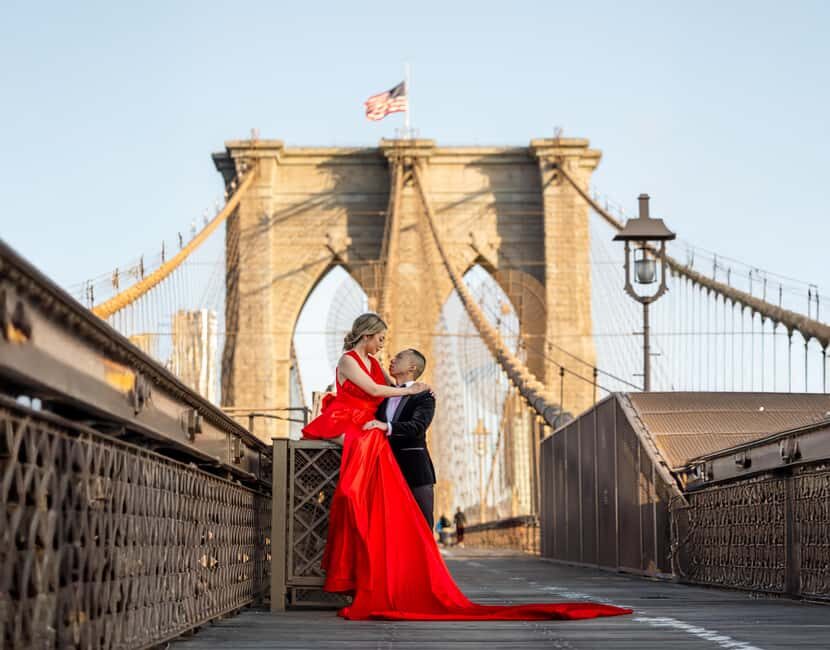
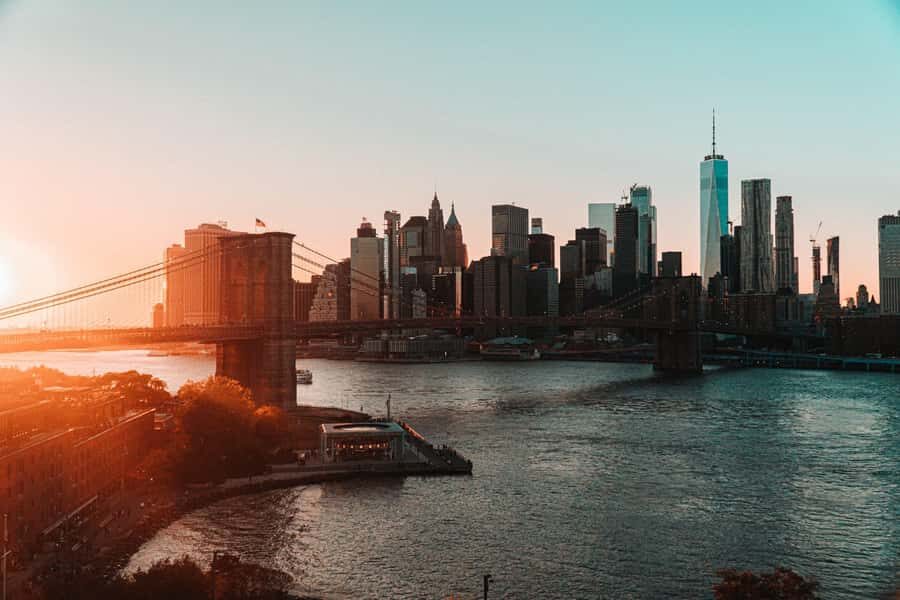
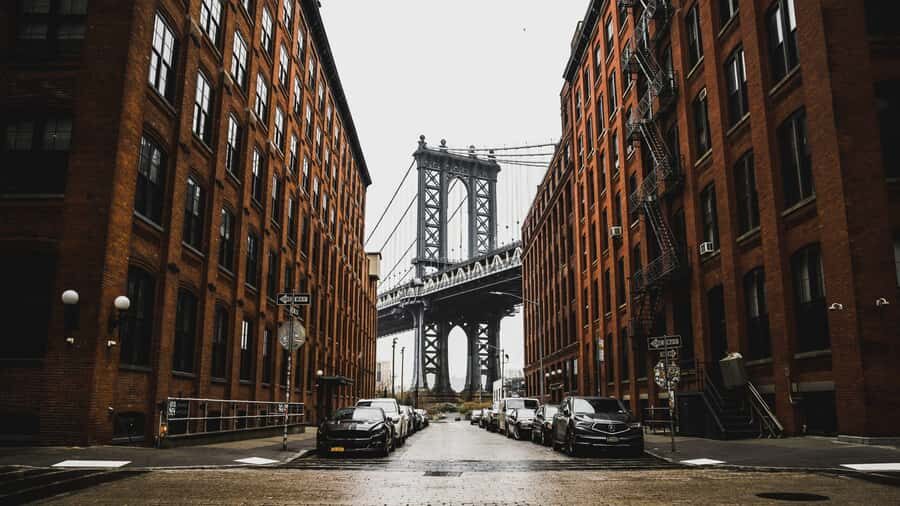
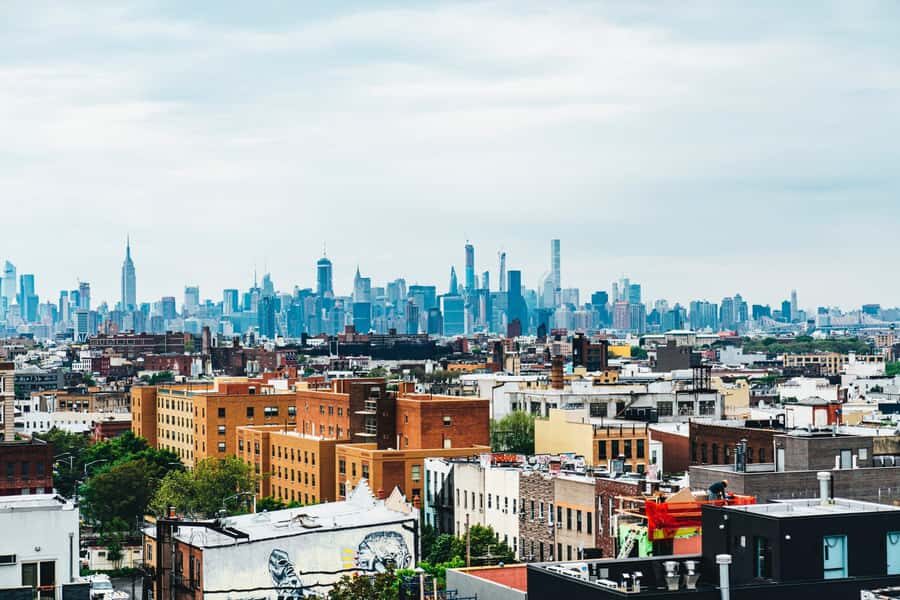
Dumbo is famous for views, and this stop gives you a planned window to take them in. You’ll look toward the Brooklyn Bridge and the wider New York skyline. The guide also provides context so you’re not only photographing a pretty angle—you’re connecting it to the city’s layout and borough relationship.
You’ll also have time here to decide how you want to end. The tour can conclude in Dumbo or continue to Little Italy in Manhattan, and you choose at the moment. That flexibility is handy if you’d rather stay with the river/bridge energy or head back toward Manhattan food streets.
Manhattan Bridge pass-by and the Little Italy finish
On the way to the end point, you’ll pass the Manhattan Bridge. This is a quick view from the bus—good for one last “oh right, this city has bridges everywhere” moment.
Then the tour ends at Little Italy. And to be clear: the tour does not return you to the starting point. So once you finish, you’re on your own for the rest of your day.
Little Italy is a practical ending. It’s close to areas where you can find a meal or keep moving to another attraction without a complicated reverse journey. If you’re choosing Dumbo as your finish point instead, keep in mind that you’ll still be in Brooklyn, so plan your transit accordingly.
Either way, the key is to treat this as a half-day tour with a clean “end your route here” philosophy.
What I’d pack (and what I’d skip)
This tour is simple, but New York is not a place for sloppy planning.
Bring:
- Comfortable shoes (you’ll stand for photos and guided stops)
- Camera (you’ll use it more than you think)
- Water (you’re moving for hours)
Skip:
- Anything that slows you down when you need to step out quickly
Also remember: smoking isn’t allowed in the vehicle. If you need a break, you’ll handle it outside as the tour schedule allows.
Who this tour suits best
This is a strong match if:
- You want a first-timer overview of Bronx, Queens, and Brooklyn
- You prefer guided context rather than building a DIY route
- You want recognizable landmarks without spending all day walking
- You like photo stops but still want explanations tied to each area
It’s also a good option if you’re traveling with kids, as the idea of “see a lot in a short time” works well when attention spans are limited.
It’s not a good match if:
- You need wheelchair accessibility (the tour isn’t suitable for wheelchair users)
- You want long free-time in each neighborhood (only Arthur Avenue has a meaningful on-your-own window)
Should you book the Multicultural Contrasts bus tour?
If your goal is a fast, guided overview of three major boroughs—plus a few high-impact landmark moments—this tour earns its place. The best part is how the stops are structured: quick photo access paired with explanations that help you understand what you’re actually seeing. On a practical level, the bus, guaranteed seating, and schedule make it low-friction.
I’d book it if you’re okay with a half-day format and you like the idea of ending wherever you choose. I wouldn’t book it if you need hotel pickup, wheelchair access, or long walking time in each neighborhood.
If you’re deciding, choose this tour when you want direction. Use it to learn the city’s shape, then pick your next neighborhoods based on what hooked you most—Arthur Avenue, Dumbo, or whichever stop makes you say, I want to come back.
FAQ
How long is the New York City Multicultural Contrasts Tour?
The tour lasts 5 hours.
Where do I meet, and when should I arrive?
Meet at the corner of 47th Street and 9th Avenue near Kiehl’s. Arrive 15 minutes prior to departure, since there are multiple Kiehl’s locations.
Does this tour include hotel pickup or drop-off?
No. Pick up and drop-off in a hotel are not included, and the tour does not return to the starting point.
Where does the tour end?
The tour can end in Dumbo or Little Italy in Manhattan, and you can decide at the moment. In general, it finishes near Little Italy.
Is the tour wheelchair accessible?
No. It is not suitable for wheelchair users.
What happens during the US Open regarding the Queens park stop?
During the US Open (end of August and beginning of September), the Corona Park stop is not possible. The tour stops at the Pepsi Cola Sign in Long Island City instead.