REVIEW · NEW YORK CITY
New York City: Museum at Eldridge Street Docent-Led Tour
Book on GetYourGuide →Operated by Museum at Eldridge Street · Bookable on GetYourGuide
A grand synagogue holds a lot of secrets. This $7, 1-hour docent tour at the Museum at Eldridge Street lets you see the building up close and connect it to the Jewish immigrant story of the Lower East Side. I love the mix of Moorish architecture and stained-glass artwork that makes the past feel physical, not just explained. One thing to consider: it’s only an hour, so the tour moves at a steady pace.
What really makes this tour work is the way the docent turns a pile of historical facts into human scale. You’ll learn how Eastern European Jewish immigrants shaped a community, why the synagogue nearly disappeared during the 1920s, and how the restoration brought the landmark back for public life. You might also hear a guide like Bonnie, praised for making the geography of Eastern Europe, including the Pale, click into place with clear storytelling. If you want a slower museum browse, plan time after the tour for the exhibits.
In This Review
- Key Highlights You’ll Notice Right Away
- Walking In: The Eldridge Street Synagogue Starts Before You Even See the Rooms
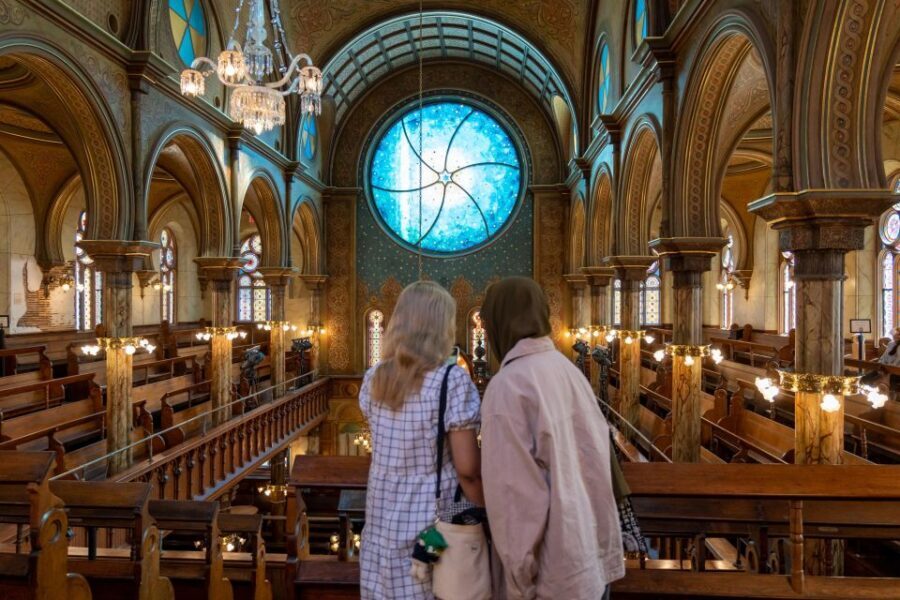
- Moorish Details and Stained Glass: What 60 Windows Tell You
- The Immigration Story: From 1887 Dreams to 1920s Near-Loss to Restoration
- How the Tour Connects to the Museum Exhibits (So You Know What to Do After)
- Photo Rules and What to Bring: Small Constraints, Clear Expectations
- Price and Value: How $7 Gets You More Than It Sounds Like
- Who This Tour Suits Best (And Who Might Want Something Different)
- Should You Book the Museum at Eldridge Street Docent-Led Tour?
- FAQ
- How long is the docent-led tour?
- What’s included in the $7 ticket price?
- Where do I meet for the tour?
- Is the museum wheelchair accessible?
- Can I take photos inside?
- Are there restrictions on what I can bring?
- Is there free cancellation?
Key Highlights You’ll Notice Right Away
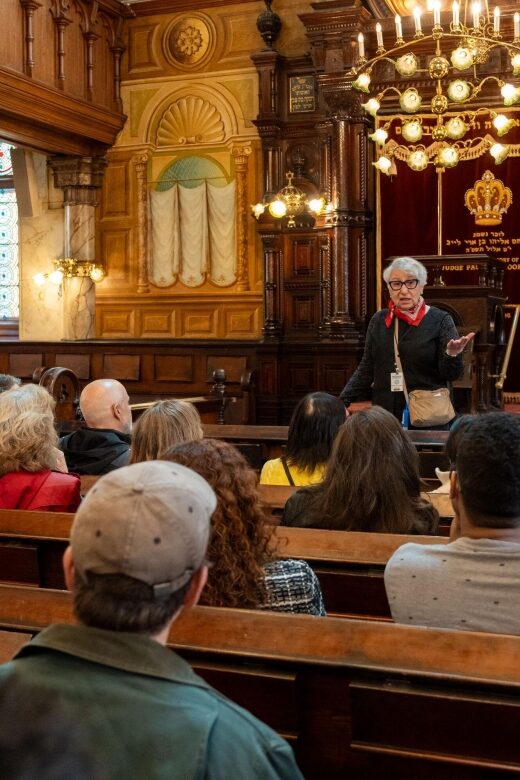
- Moorish architecture in a synagogue: the design is eye-catching and intentional, not random decoration
- 60 historic stained-glass windows: you’ll see why light is part of the message
- Modern stained glass by Kiki Smith and Deborah Gans: old meets new without erasing the original feeling
- A full immigrant-life narrative: from aspirations to hardship to preservation
- A 1-hour docent-led format: focused and efficient, with built-in context
- Museum admission included: you get the tour and access to the permanent and temporary exhibits
Walking In: The Eldridge Street Synagogue Starts Before You Even See the Rooms
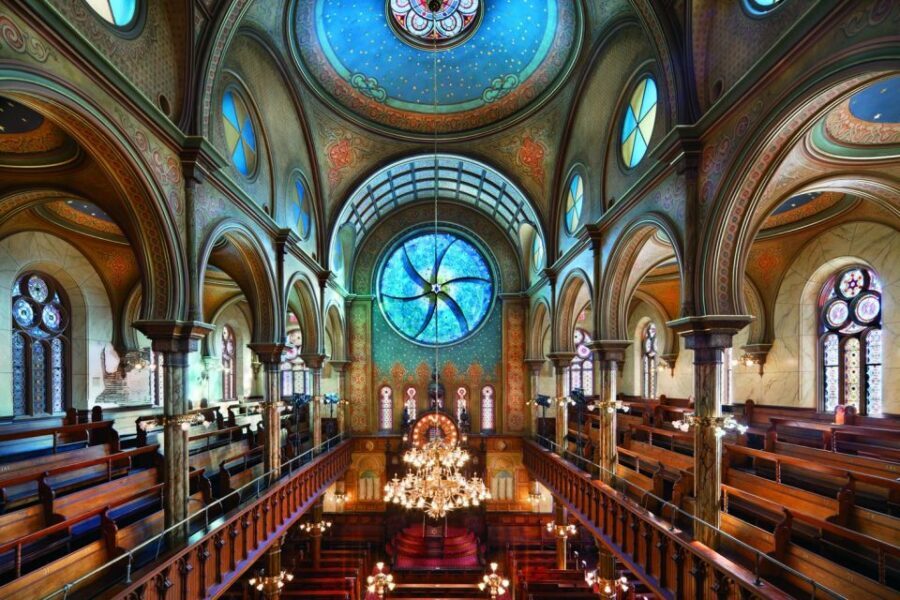
The tour begins inside the Museum at Eldridge Street, and it starts with a small detail that helps set the mood. You walk down the stairs to enter the museum space, and that descent feels like the first step into the Lower East Side story. From there, your docent-led group stays together and moves through the building.
This matters because the Eldridge Street Synagogue is not laid out like a typical, modern museum where everything is equally visible from one spot. You’ll follow the docent’s pacing and look at specific architectural features and artwork at the right moment. If you’re the type who likes to see one thing properly rather than running through five things at speed, this format is a good fit.
Also, do yourself a favor and arrive ready to listen. The tour is in English and lasts about an hour. It’s long enough for a real narrative, but short enough that the docent can’t linger on every question.
You can also read our reviews of more city tours in New York City



Moorish Details and Stained Glass: What 60 Windows Tell You
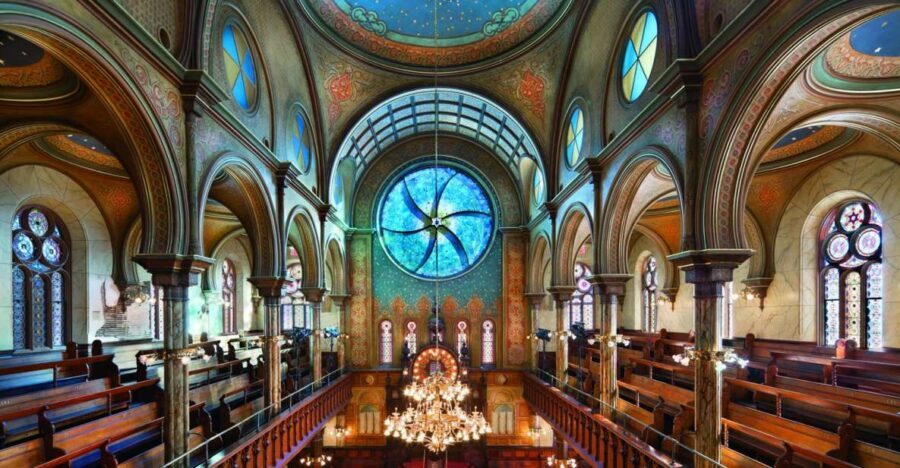
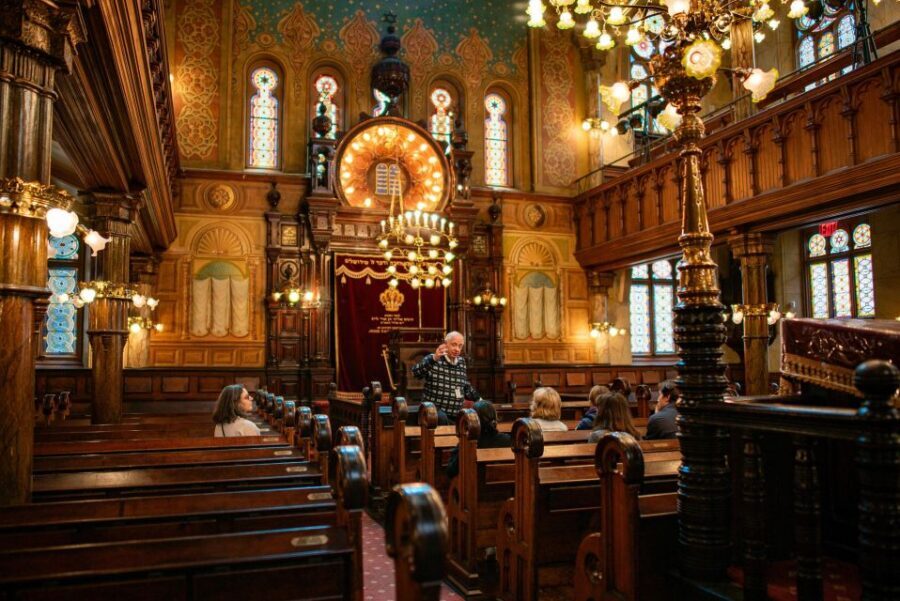
If stained glass is your thing, you’ll get a serious payoff here. One of the headline features of this building is the Moorish architecture combined with 60 historic stained-glass windows. These windows aren’t just pretty. They help explain how immigrant communities expressed identity through art, craft, and public faith.
As you look around, pay attention to how the windows shape the light inside the sanctuary. Stained glass changes the mood of a space. It turns worship into an atmosphere. It also signals something important about the synagogue’s role: it wasn’t meant to feel temporary. The building was built with pride, for real community life.
Then there’s the modern layer that keeps the building from becoming a frozen-in-time relic. The Museum also includes a modern window by artists Kiki Smith and Deborah Gans. That matters because it tells you the Eldridge Street Synagogue is still part of contemporary cultural conversation. Preservation here isn’t only about saving the old. It’s also about letting the site stay relevant.
If you’re coming in expecting a dry lecture, don’t. The architecture and windows do a lot of the talking for you, and the docent connects your eye to the story behind what you’re seeing.
The Immigration Story: From 1887 Dreams to 1920s Near-Loss to Restoration
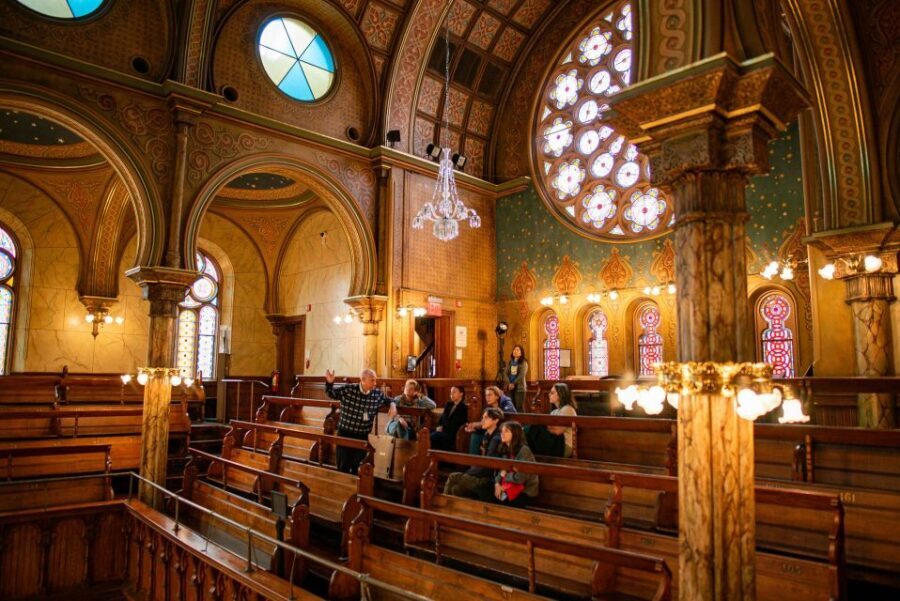
The Eldridge Street Synagogue was built in 1887, and it carries weight because it was the first grand synagogue purpose-built by Eastern European Jewish immigrants in the United States. That single sentence is the heart of what you’re going to hear on the tour: this wasn’t a synagogue that got adapted later. It was built as an immigrant milestone, inside a neighborhood that was packed, crowded, and changing fast.
Your docent will walk you through the rise, decline, and restoration of this National Historic Landmark. Here’s the key context to hold onto as you move through the rooms:
- The synagogue served multiple purposes. Yes, it was a house of worship. But it also helped people build community and reinforce permanent roots in a new country.
- At the turn of the 20th century, immigration transformed the neighborhood dramatically. The story included the fact that about one third of Europe’s Jewish population crossed the Atlantic in that era.
- The building was later affected by strict 1920s immigration quotas, which contributed to a decline and neglect.
- The synagogue was nearly lost until a major restoration effort returned it to public use, supported by a 20-year, $20 million project.
That arc makes the tour feel more grounded than a typical architecture visit. You’re not only looking at craftsmanship. You’re learning why the craftsmanship was worth protecting. And you’re seeing how a community can lose momentum and still deserve preservation.
I especially like how the docents explain what the neighborhood meant to newcomers. The Lower East Side wasn’t an abstract setting. It was the reality of arriving, learning the rules, finding work, and trying to stay connected to tradition while building something new.
How the Tour Connects to the Museum Exhibits (So You Know What to Do After)
Your ticket includes admission to the Museum at Eldridge Street, including access to the temporary exhibit and the permanent collection. The docent-led tour is the main event for about an hour, but you’ll get more out of the experience if you plan a follow-up browse afterward.
Here’s a practical way to do it without feeling lost:
- Use the docent tour to get your bearings: architecture first, then the immigrant-life story, then preservation.
- After the tour, go back for a slower look at areas that match what the docent emphasized.
If you’re the type who likes to read and compare objects, the permanent collection is where you’ll probably want extra time. If you like something more current or thematic, the temporary exhibit can be a nice contrast to the older material connected to the building itself.
Because you’re paying a low price for both the guided component and museum access, this is one of those tours where the value isn’t just in the hour with the docent. It’s in what you can do once the tour ends.
Photo Rules and What to Bring: Small Constraints, Clear Expectations
The Museum keeps things simple, but it does have rules. Flash photography isn’t allowed, and you can’t bring professional cameras. You can take personal, non commercial photography, though, which is a good balance for people who want to save details of the windows and interior design.
You also need to think about what you bring in day-of. Food and drinks are restricted (water is allowed). Strollers and backpacks will be searched and checked in on arrival. That’s not unusual for museums in busy areas, but it can be annoying if you’re traveling with kids or you like to carry a daypack.
So the practical approach:
- Travel light for this stop.
- Expect checks on entry.
- Bring whatever you need for water.
And remember: since the meeting involves walking down stairs to enter the museum, it’s worth wearing shoes you feel stable in.
You can also read our reviews of more museum experiences in New York City





Price and Value: How $7 Gets You More Than It Sounds Like
At $7 per person for a 1-hour docent-led tour plus museum admission, the value is hard to ignore. In New York, that price usually buys you a quick look at something or a smaller slice of access. Here, you’re getting:
- admission to the synagogue museum experience
- access to both temporary and permanent exhibits
- a live docent guide to explain what you’re seeing
The best part of the value isn’t only the math. It’s what the docent does for your understanding. Without guidance, historic sites can feel like pretty rooms with captions. With a docent, you start connecting design choices, community needs, immigration pressures, and preservation decisions into one story.
So if you’re watching your budget but still want substance, this is a strong option. It’s also a smart add-on if you’re spending time in Lower Manhattan and want a meaningful cultural stop that doesn’t require a full afternoon.
Who This Tour Suits Best (And Who Might Want Something Different)
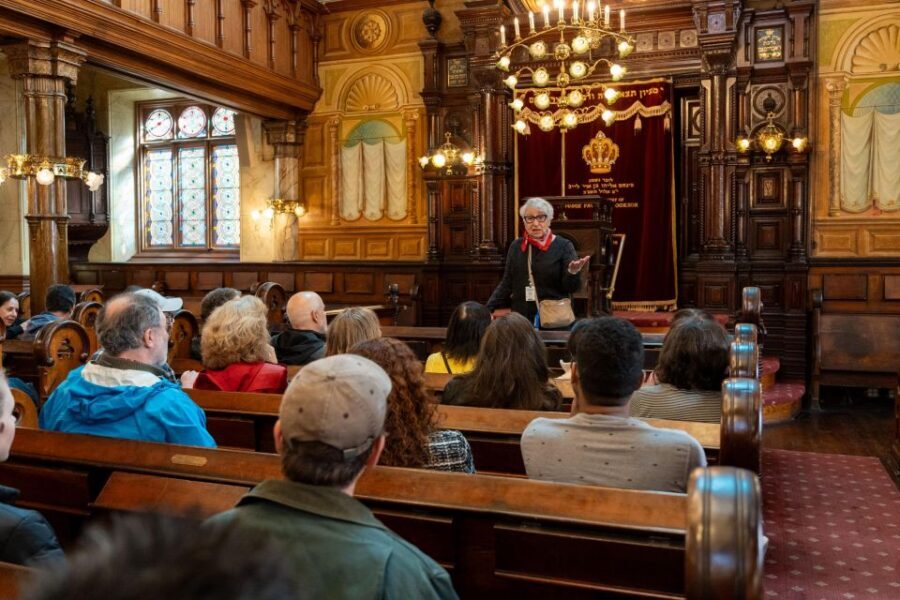
This docent-led tour is ideal if you want:
- a focused, high-context introduction to Jewish immigrant life in the Lower East Side
- architecture and stained glass, explained in plain language
- a clear narrative arc from 1887 to decline to restoration
- a shorter commitment that still feels complete
It also makes sense for couples, small groups, and solo visitors who like museums but don’t want to spend half a day figuring out what matters.
On the other hand, if you prefer long, independent pacing and you love sitting with one exhibit for a long time, the 1-hour format could feel a bit tight. In that case, you’ll likely get the best result by using the tour as your starting point, then giving yourself extra time in the museum galleries afterward.
Should You Book the Museum at Eldridge Street Docent-Led Tour?
If you want a meaningful New York stop that’s affordable and story-driven, I’d book it. The Eldridge Street Synagogue is a real National Historic Landmark, and the docent-led format helps you understand why it mattered to immigrant families and why it was worth saving.
I’d especially recommend it if stained glass and historic architecture are your interests, because the combination of 60 historic windows and the modern work by Kiki Smith and Deborah Gans gives you two different ways of seeing the building’s ongoing life.
The only real caution is timing. Since it’s a 1-hour tour, don’t plan to treat it like a casual walk-through. Go with a listening mindset, then add museum time afterward if you want to slow down.
FAQ
How long is the docent-led tour?
The tour duration is 1 hour.
What’s included in the $7 ticket price?
Your admission includes access to the Museum at Eldridge Street/Eldridge Street Synagogue, the temporary exhibit, the permanent collection, and the English docent-led tour.
Where do I meet for the tour?
Walk down the stairs and enter the Museum. The tour begins inside.
Is the museum wheelchair accessible?
Yes. The Museum is fully accessible, and an elevator reaches all 4 floors.
Can I take photos inside?
Flash photography isn’t allowed. Professional cameras aren’t allowed. Personal, non commercial photography is welcomed.
Are there restrictions on what I can bring?
Food and drinks other than water aren’t allowed. Strollers and backpacks will be searched and checked in on arrival.
Is there free cancellation?
Yes. You can cancel up to 24 hours in advance for a full refund.
If you want, tell me what else you’re doing that day in NYC (neighborhoods and timing), and I’ll suggest a smart way to fit this into your route.