REVIEW · NEW YORK CITY
The Met Museum Guided Tour with Skip-the-Line Entry
Book on GetYourGuide →Operated by City Wonders Ltd. USA · Bookable on GetYourGuide
The Met can swallow your day. This skip-the-line tour keeps you moving through the museum’s big hits, and an expert guide turns famous works into stories you can actually remember. The trade-off is that it’s quick and you’ll do a fair amount of walking.
For $59 per person, you get a focused 2-hour overview that’s perfect if you’re short on time or worried the Met will overwhelm you. On summer dates, the tour also caps with the Met’s panoramic roof garden, where the views of Central Park and the Manhattan skyline make the whole visit feel like New York in miniature.
In This Review
- Key points to know before you go
- Entering the Met fast at the Great Hall steps
- The 2-hour plan: what you’ll see and what you won’t
- Temple of Dendur: the Egyptian Wing stop that anchors the whole visit
- American Wing hits: early American art with real context
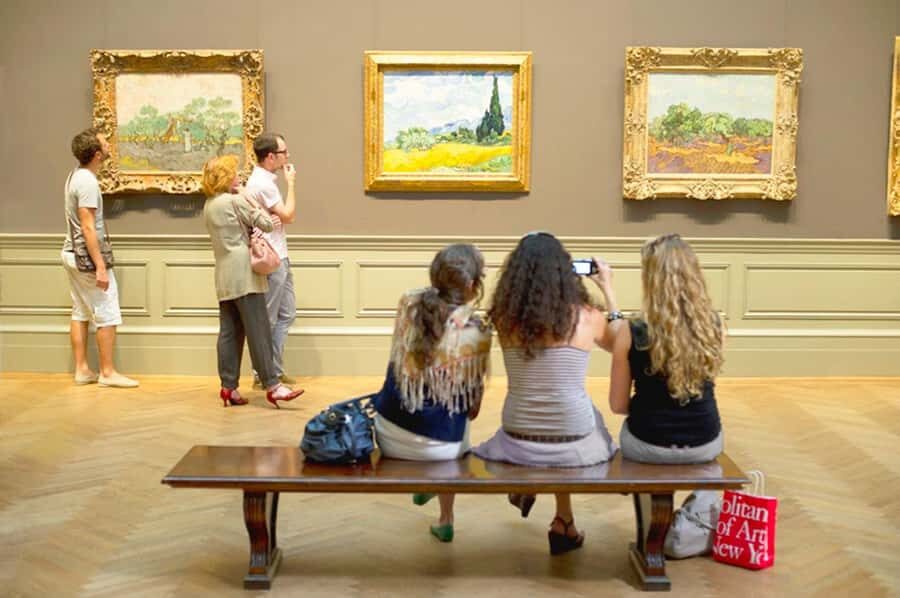
- European masterworks: Velazquez, Rembrandt, and Van Gogh in a storyline
- Modern art section: Pollock, Warhol, and Picasso without the confusion spiral
- The rooftop garden: panoramic views, but only in season
- Practical logistics: walking, bags, and the rules that can slow you down
- Price and value: is $59 worth it for 2 hours?
- Who should book this Met guided highlights tour
- Should you book this tour?
- FAQ
- How long is the guided tour?
- What does it cost?
- Where do I meet the guide?
- Do I skip security lines?
- Which major artworks will we see?
- Is the roof garden included year-round?
- What should I bring and what is not allowed?
Key points to know before you go
- Skip-the-ticket line time: you’ll spend less time waiting and more time looking.
- Temple of Dendur: you’ll see it in the Egyptian Wing and get the context that makes it click.
- American-to-European-to-Modern flow: the route builds an art-history storyline instead of random roaming.
- Big-name artists in one sweep: you’ll encounter works tied to Velazquez, Rembrandt, Van Gogh, Pollock, Warhol, and Picasso.
- Summer roof garden access: seasonal only, but it’s a great way to land softly after museum intensity.
- Rules matter: no flash photography, no baby strollers, and backpack rules are strict.
Entering the Met fast at the Great Hall steps
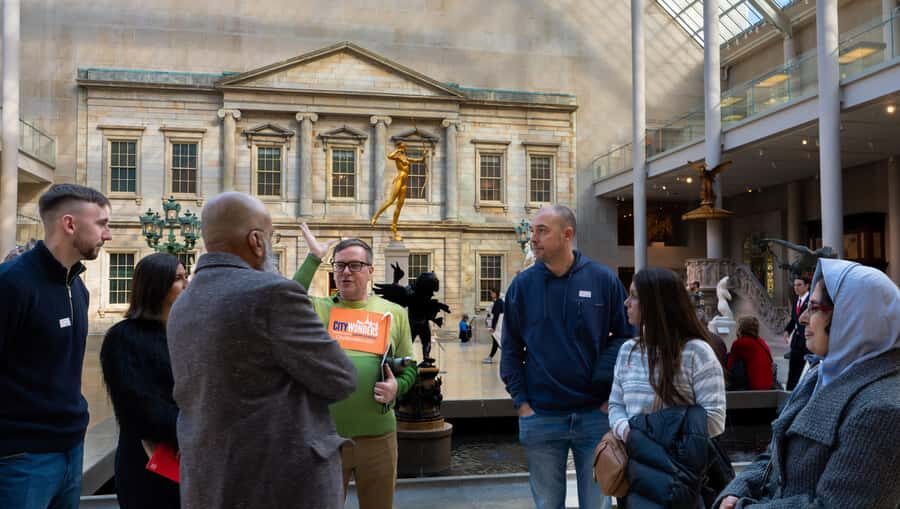
If you’ve ever tried to do the Met on your own, you know the first problem is simple: the building is huge. This tour starts by getting you through the museum’s busy entry moment, with skip-the-ticket line access helping you start sooner rather than later.
Meet your guide at the front entrance area, inside the Met, at the Egyptian Sculpture in the Great Hall on the front entrance steps on the far right side. Your City Wonders guide will be holding a flag, and you’ll want to plan time for the museum’s security line no matter what.
Getting there is straightforward. The museum address is 1000 Fifth Avenue, and subway options include the 4, 5, or 6 to 86th Street. Once you’re inside, the tour moves on quickly, so I’d treat the meeting time like it’s earlier than you think.
You can also read our reviews of more guided tours in New York City



The 2-hour plan: what you’ll see and what you won’t
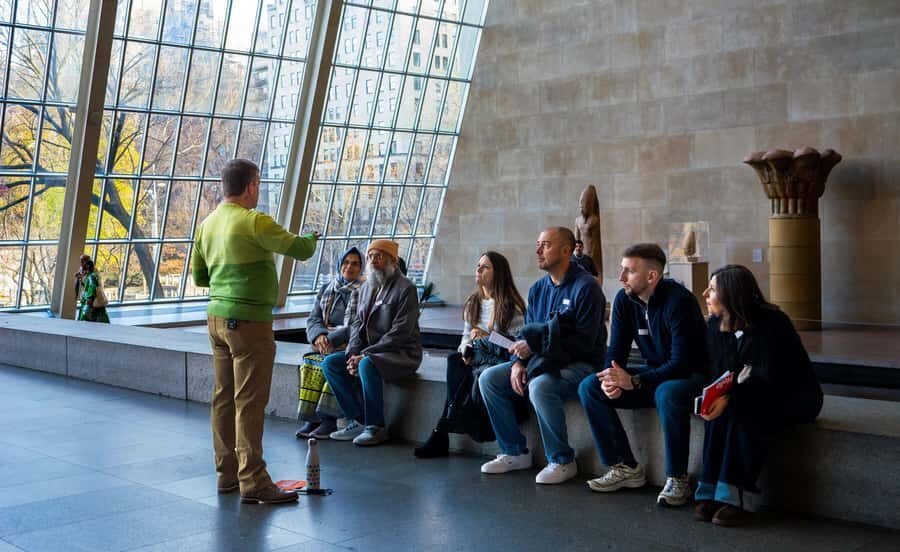
This is a highlights tour, not an everything-tour. In about 2 hours, you’ll cover a curated arc across major collections: Egyptian art, American art, European masters, and Modern art—plus roof-garden views when in season.
That matters because the Met can tempt you into “just one more gallery” mode. Here, you’re guided through key rooms so you leave with a clear sense of what the museum is famous for, even if you never get to your personal wish list items.
The biggest practical consideration is pace. The tour involves a lot of walking, and it’s not suitable for wheelchair users or people with mobility impairments, so be honest with yourself about how far you can go comfortably.
Temple of Dendur: the Egyptian Wing stop that anchors the whole visit
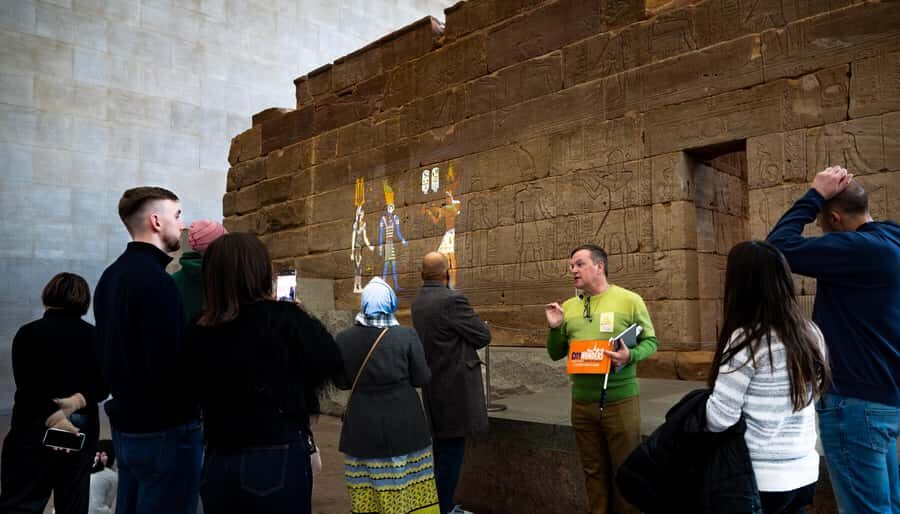
The first big wow is the Egyptian Wing, where you’ll see the Temple of Dendur. It’s not just a pretty artifact-wall moment; it’s a monumental work that pulls you into ancient history in a very physical way.
Your guide will explain the temple’s backstory and how it was transported block by block, which gives the structure a “how did they even do that” layer on top of the artistic one. It’s the kind of stop where you stop thinking about ticking boxes and start noticing details—stone scale, placement, and how the museum frames the work.
One reason this stop is such strong value is timing. Getting Temple of Dendur early means you’re fresh, alert, and not already worn down by museum fatigue.
American Wing hits: early American art with real context
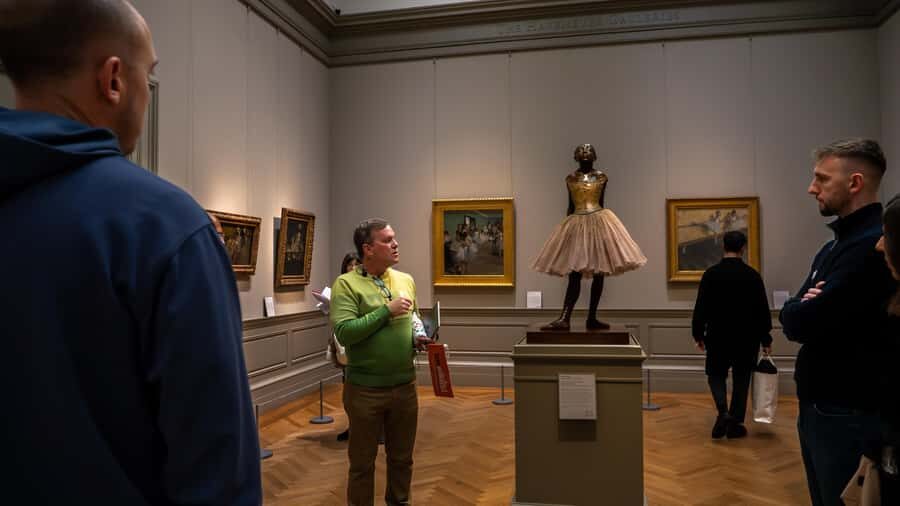
After Egypt, the tour shifts to the American Wing, where you’ll encounter iconic works such as Washington Crossing the Delaware. This is a smart move for first-time Met visitors, because it grounds the museum in the story of how American culture pictured itself.
You’ll also see American landscapes and artworks that shaped early American art’s vision. The point isn’t just the paintings themselves; it’s the guide tying them to how artists looked at nationhood, power, and identity.
A quick heads-up: American galleries can feel more familiar than European ones, so without context it’s easy to glaze over. With a guide, you get the “why this mattered then” part, which is what makes a 2-hour tour feel longer than it is.
European masterworks: Velazquez, Rembrandt, and Van Gogh in a storyline
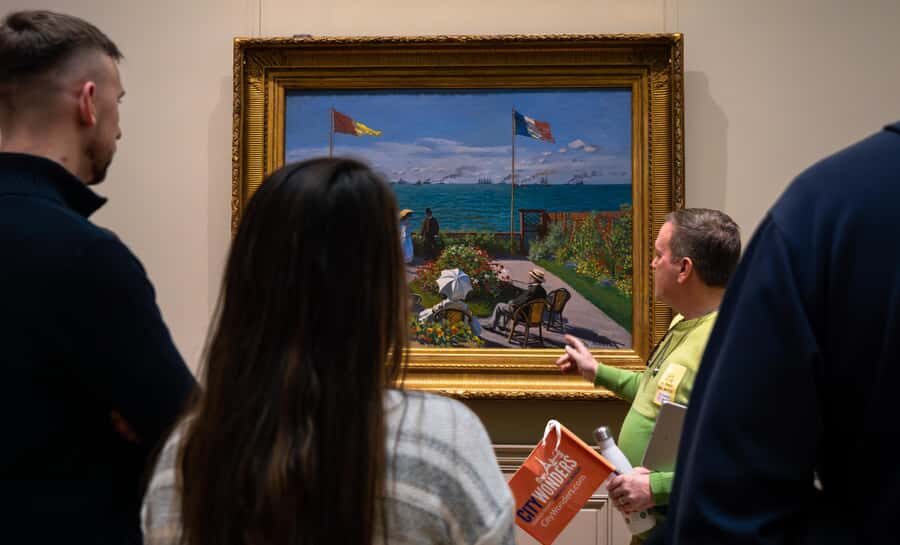
Next comes the European Art galleries, where the Met’s reputation really earns its keep. You’ll see major names like Velazquez, Rembrandt, and Van Gogh, and the tour approach matters here because these artists aren’t shown as isolated trophies.
A good guide will help you connect what came before and what changed across centuries. You’ll likely hear how technique, subject matter, and artistic goals evolved—so the experience feels like progression rather than a list of famous painters.
This is also where the tour helps you avoid a common first-timer mistake: trying to look at every painting for the same length of time. You’ll get direction on what to focus on, which keeps you from spending 10 minutes admiring backgrounds while missing the work that actually matters.
You can also read our reviews of more museum experiences in New York City






Modern art section: Pollock, Warhol, and Picasso without the confusion spiral
Then the route turns to Modern art, bringing you to works associated with Jackson Pollock, Andy Warhol, and Pablo Picasso. Modern art can feel like a “taste test” when you’re alone, especially when you’re moving fast and trying to interpret everything at once.
With a live guide, you get the translation layer: what the artists were doing, why their choices were revolutionary, and how to look past the surface. This is where you can get stuck on your own less easily, because the Met isn’t handing you a simple key for every Modern work.
One of the strongest reported benefits from guides is that they bring energy and clear explanations. I’ve learned to look for that quality in this kind of short tour, because Modern art rewards understanding, and this is exactly the moment where it can turn confusion into curiosity.
The rooftop garden: panoramic views, but only in season
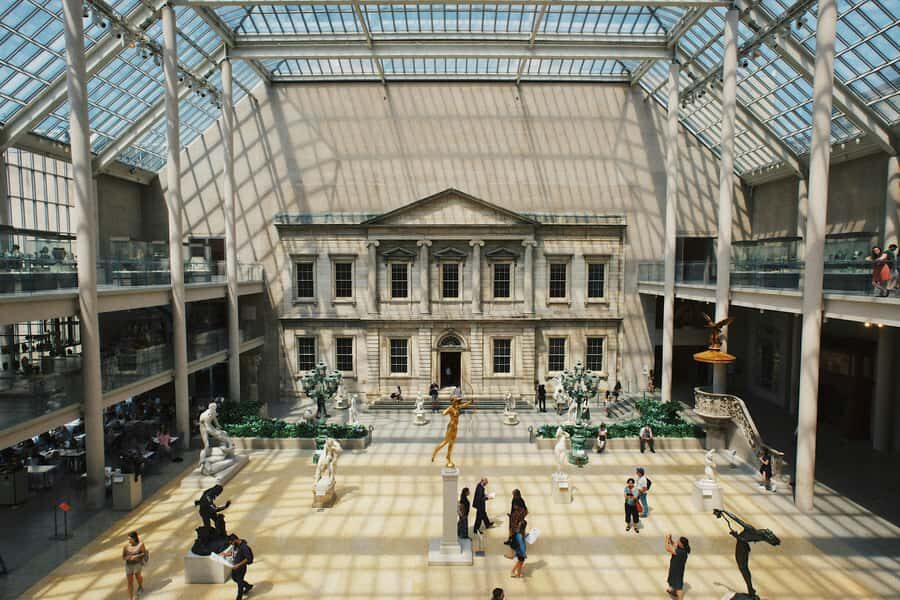
If you’re visiting during the summer season, the tour culminates with access to the Met’s panoramic roof garden. This is seasonal, so if your dates are outside the summer window, you may want to treat the garden as a bonus rather than a guarantee.
What you gain here is breathing room. You step outside the museum rhythm and end with Central Park and the Manhattan skyline—views that instantly make the whole trip feel more grounded in New York, not just art-history time.
Also, it’s a great “compression release.” Two hours inside can feel dense; the rooftop lets you reset your eyes and senses before you continue exploring on your own.
Practical logistics: walking, bags, and the rules that can slow you down
This tour is simple on paper, but the Met has rules, and ignoring them can make you lose time. Bring comfortable shoes, because the route covers multiple major areas in a short window.
Big bag rules are strict. The Met doesn’t allow bags bigger than a bag pack. If you bring a backpack, you’ll be required to hold it in your hands. That’s not just annoying; it can affect how fast you can move during a tight 2-hour schedule.
A few more important restrictions: no baby strollers, no flash photography, and backpacks are not a great idea given the holding requirement. And food and drinks are not included, so plan to either snack before you go or plan a meal after.
Finally, note the accessibility limitation. Because the tour isn’t suitable for wheelchair users and people with mobility impairments, I’d pick another Met plan if that’s relevant for you.
Price and value: is $59 worth it for 2 hours?
At $59 per person, the price isn’t cheap, but it’s also not trying to sell you an all-day museum ownership experience. The value here is in two places:
First, skip-the-ticket line access. If you hate waiting, this is the difference between starting your visit on your feet and starting it stressed.
Second, the guided route. The Met is too big to “optimize” without help. In 2 hours, you’re getting concentrated exposure to famous works across several major wings: Temple of Dendur, American icons, European masters, and Modern art headline names.
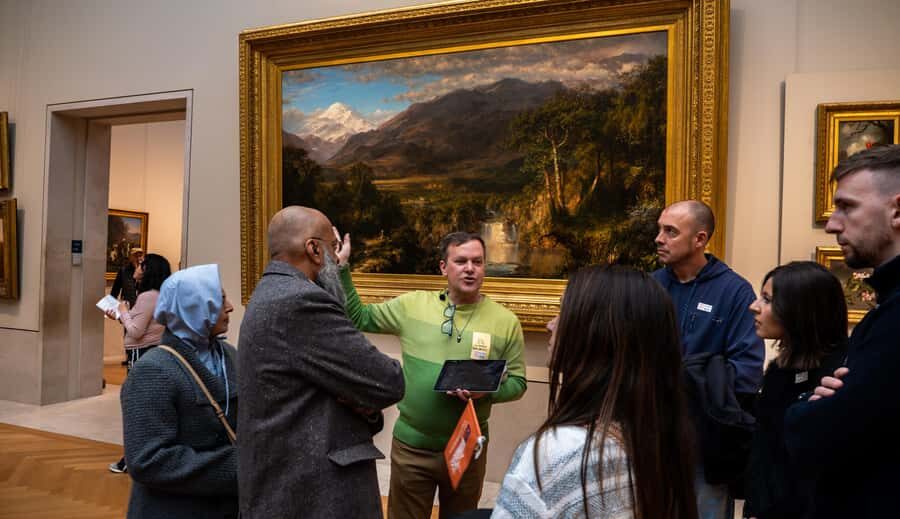
You’re also buying someone else’s judgment about pacing. A good guide helps you choose what to notice, what to photograph (without flash), and what to remember later. That’s exactly what short tours can do best.
If you’re the type who likes to wander at your own pace, you might skip this and make your own Met map. But if you want a tight, structured overview that leaves you knowing what to seek on a return visit, this is a strong use of money.
Also, if you’re the flexible type, there’s free cancellation up to 24 hours in advance for a full refund, which reduces the risk of booking when your schedule might shift.
Who should book this Met guided highlights tour
This tour fits best if you:
- Are visiting the Met for the first time and want a clear “greatest hits” foundation.
- Have only a couple of hours and don’t want to waste them fighting your way around galleries.
- Want an art-history connection, not just a photo spree.
- Enjoy Modern art more when someone explains the thinking behind it.
It’s not a great fit if you:
- Need wheelchair-friendly access or have mobility limitations that make longer walking difficult.
- Want an unhurried museum day with lots of deep study.
- Plan to bring a large backpack and don’t want to deal with holding it.
Should you book this tour?
I think it’s a solid choice if your main goal is to leave the Met feeling oriented and impressed, not stressed and scattered. The expert-led flow from Egyptian highlights to American works, then into European masters and Modern icons is a smart use of a short visit.
If you’re coming for one museum block, this guide route is the fastest path to a satisfying Met experience. If you can manage longer, slower time on your own—and you already know what you want—then you might prefer self-guided exploring. But for most people trying to see the Met’s biggest anchors without losing the day, this is a very practical way to do it.
FAQ
How long is the guided tour?
The tour lasts 2 hours.
What does it cost?
It costs $59 per person.
Where do I meet the guide?
Meet your City Wonders guide inside the Met at the Egyptian Sculpture in the Great Hall, on the front entrance steps at the far right side. The guide will be carrying a flag.
Do I skip security lines?
The tour includes skip-the-ticket line access, but you still need to go through the Met’s security line when you enter.
Which major artworks will we see?
You’ll see highlights including the Temple of Dendur, Washington Crossing the Delaware, and works by artists such as Velazquez, Rembrandt, Van Gogh, Jackson Pollock, Andy Warhol, and Pablo Picasso.
Is the roof garden included year-round?
No. Access to the Met’s panoramic roof garden is included only seasonally.
What should I bring and what is not allowed?
Bring comfortable shoes. The Met does not allow baby strollers, flash photography, and it has strict rules about bags; backpacks may need to be held in your hands. This tour also isn’t suitable for wheelchair users or people with mobility impairments.