REVIEW · NEW YORK CITY
Best of Central Park Tours by Pedicab – Stories & Photos
Book on Viator →Operated by CENTRAL PARK TRAVEL ™ · Bookable on Viator
A pedicab makes Central Park feel effortless.
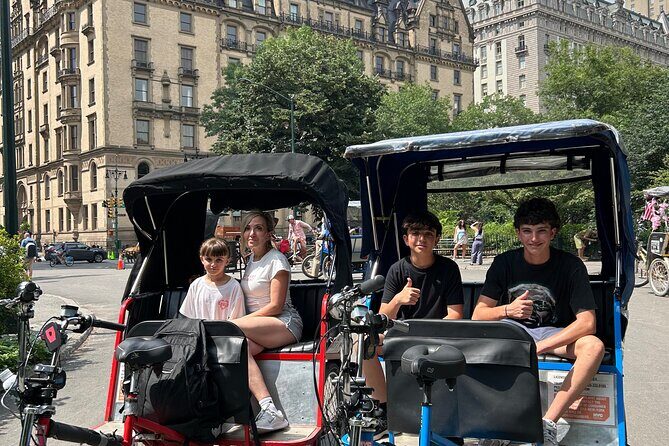
This private ride is built for people who want the park’s big-name sights without the long walking marathon. I like that you’re not just getting driven—you’re getting stories, photo stops, and a guide who knows where to turn for the best angles (and where the park’s movie scenes are waiting).
I especially like two things. First, the private format keeps the pace comfortable, and you can actually enjoy the views instead of speed-walking between landmarks. Second, the guide helps with photo stops so you get better pictures than the typical grab-and-go shots.
One thing to consider: this is a weather-dependent experience. If it’s really cold or rainy, you’ll still go (you get blankets and rain cover), but you may want a flexible plan.
In This Review
- Key highlights you’ll care about
- Why a private pedicab beats the Central Park walk
- The ride experience: blankets, rain cover, and help getting great photos
- Central Park’s design story starts at the fountain-and-terrace zone
- Bethesda Fountain and Bethesda Terrace: those Minton tiles are a big deal
- Cherry Hill and the nearby lake views: built for detail, not speed
- Bow Bridge and Gapstow Bridge: the romantic photo stops that stay iconic
- The Mall, Literary Walk, and writer statues: Central Park’s straight-line twist
- Strawberry Fields and the calm side of Central Park
- Sheep Meadow and the Central Park lawn moment
- Central Park Zoo, carousel, and gamehouse stops for a break from “big sights”
- Central Park Zoo: from old enclosures to more natural habitats
- The Central Park Carousel: old-school charm with hand-carved horses
- Chess & Checkers House and the Dairy House: two stops that feel like local routines
- Wollman Rink, The Pond, and season-changing Central Park energy
- Movie-famous corners: conservatory water, Rumsey Playfield, and classic statues
- Conservatory Water: model boat culture and the literature statues
- Rumsey Playfield: SummerStage, older structures, and performance energy
- Balto statue and other monuments: emotion and public memory
- If your timing allows: Met area, Cleopatra’s Needle, Reservoir, and Belvedere Castle
- Cleopatra’s Needle and the Metropolitan Museum area
- The Metropolitan Museum of Art: a museum designed with park vision
- Jacqueline Kennedy Onassis Reservoir and Belvedere Castle views
- Price and value: what $38.40 gets you in real terms
- Who this tour suits best (and who should skip it)
- Should you book this Central Park pedicab tour?
- FAQ
- How long is the Central Park pedicab tour?
- Is this tour private or shared with other groups?
- Where does the tour start and end?
- What’s included in the tour price?
- Are any attractions free during the tour?
- Do I need hotel pickup?
- What’s the minimum number of people needed to book?
- Final note
Key highlights you’ll care about
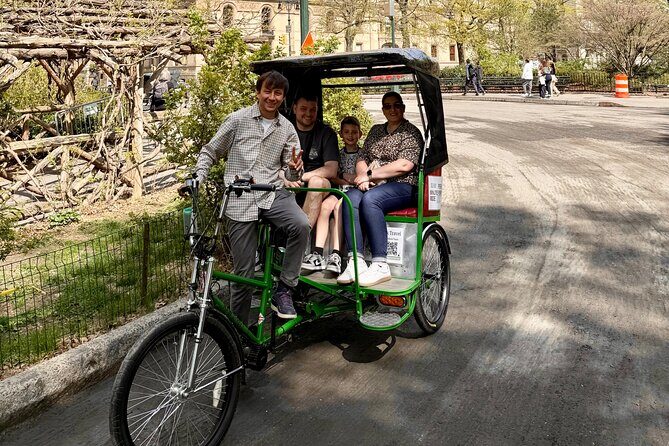
- Private pedicab ride: only your group, so the route feels tailored to your pace
- Photo-stop guidance: the guide sets up stops for pictures so you don’t waste time
- Licensed NYC guide: stories connect the park’s design, statues, and film spots
- Lots of iconic Central Park hits: Bethesda, Bow Bridge, Strawberry Fields, and more
- Season-friendly stops: Wollman Rink and classic viewpoints work in different months
- Comfort extras: blankets in cold weather and rain cover if needed
Why a private pedicab beats the Central Park walk
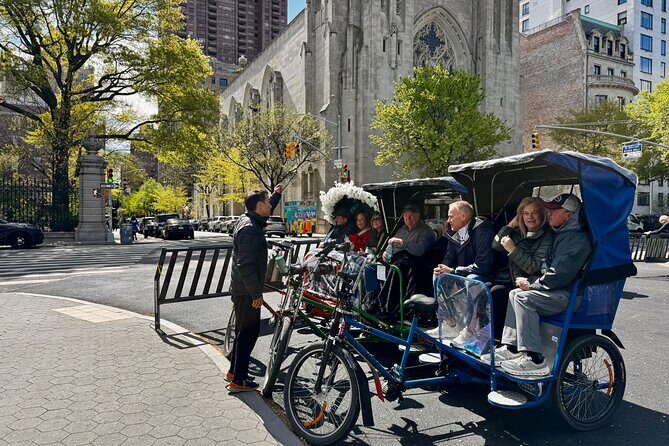
Central Park is huge. That sounds obvious, but it hits you the moment you’re on foot and the next “quick stop” becomes a 20-minute detour. A pedicab changes the math. You still see the park up close, but you spend your energy on enjoying it—views, photos, and the kind of details you’d miss while hustling.
This ride is also private, which matters more than it sounds. You’re not stuck with a crowd that has its own timing and energy. Your group can linger at the moments that click, then roll on when you’re ready. If you’re traveling with a mix of ages or just want a slower pace, this format is a practical win.
And yes, I’m drawn to the way the guide makes it easy to look like you planned the perfect route. The tour isn’t just transport; it’s built around photo pauses and clear storytelling.
You can also read our reviews of more photography tours in New York City


The ride experience: blankets, rain cover, and help getting great photos
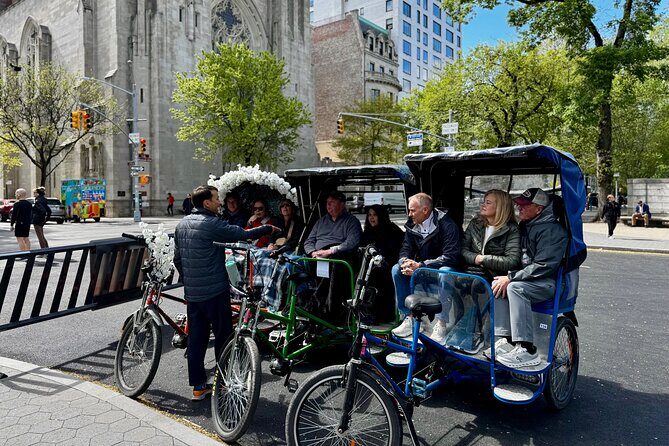
The included touches are small but useful. You get blankets in cold weather and cover if it rains. That means you’re not forced into a “we’ll quit if it gets uncomfortable” mindset. Central Park weather can shift fast, and being prepared keeps the experience pleasant.
You’ll also notice how the guide handles your camera stops. Instead of you trying to flag someone down or guessing where to stand, you get help with getting the angle right. The tour is designed so you look good in photos—meaning you’ll spend less time figuring out where the light is and more time just enjoying the moment.
One more practical note: the ride is a pedicab, not a car. There’s no hotel pickup or drop-off. You start at 1415 6th Ave (right near the center of the action) and you end back there.
Central Park’s design story starts at the fountain-and-terrace zone
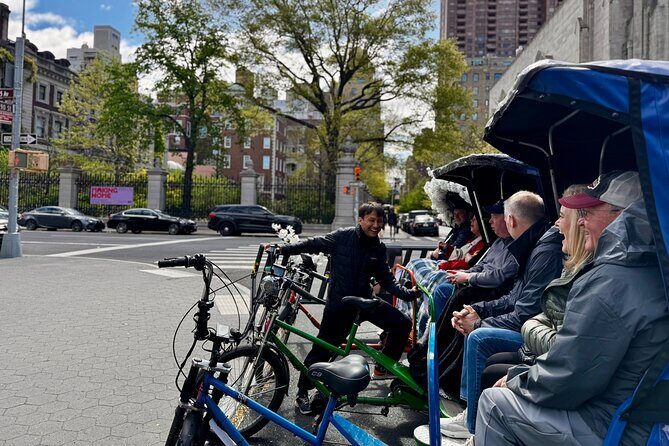
Most Central Park tours start with the postcard spots. This one starts with the logic behind them, which makes the visuals land harder.
Central Park was created in 1858 by Frederick Law Olmsted and Calvert Vaux, transforming more than 800 acres of rough land into a planned refuge inside Manhattan. Your guide’s stories connect the “why” to the “what you see”: lakes, bridges, winding paths, and those carefully placed views that make the park feel bigger than it really is.
A key early cluster is the Bethesda area. If you only know Bethesda Fountain from movies and photos, you’ll be glad you get the design context—because the fountain is the centerpiece of a larger architectural picture, not just a pretty statue.
Bethesda Fountain and Bethesda Terrace: those Minton tiles are a big deal
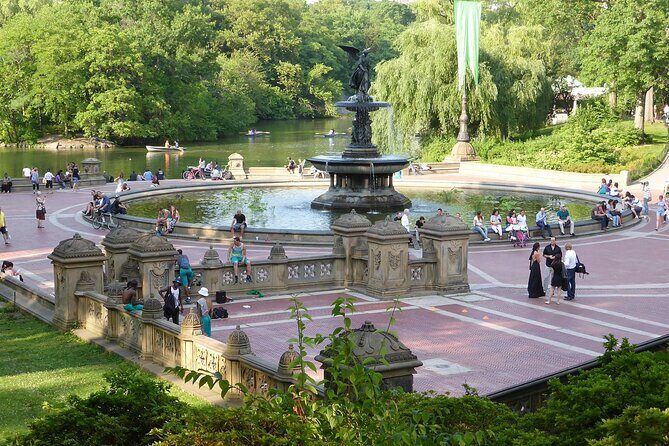
Bethesda Fountain is iconic for a reason. At the center is The Angel of the Waters by Emma Stebbins (designed in 1868 and unveiled in 1873). The symbolism matters: it’s tied to the biblical Pool of Bethesda story from the Gospel of John, which is why the fountain is associated with healing.
Then comes the terrace above, where the details get architectural-fast. Bethesda Terrace’s arcade ceiling features 14,000 handcrafted Minton encaustic tiles. They were removed during a renovation in the 1980s and sat in storage for more than 20 years before the Central Park Conservancy restored them starting in 2004, with them reinstalled in 2007.
If you like photos, this stop is a gift. Even when you’re not taking a picture, you’ll want to look up. Those tiles are the kind of feature people rush past on foot, but on a pedicab you get a proper pause.
Cherry Hill and the nearby lake views: built for detail, not speed
Cherry Hill Fountain is another “wait, that’s beautiful” moment. Built in the 1860s, it started as a watering trough for horses—so yes, the park had practical needs even when it was designing something ornamental. Its granite dome, bluestone basin, and Minton-style tile work add that classic Central Park craft feeling.
From here, the route threads toward The Lake, one of Central Park’s defining features. It covers about 20 acres and connects several key areas you’ll recognize from photos. You’ll see shaded paths and scenic overlooks, plus the option to explore by rowboat through Loeb Boathouse.
This is where Central Park starts to feel like a place you could actually spend time—without needing to plan a full hiking day.



Bow Bridge and Gapstow Bridge: the romantic photo stops that stay iconic
Bow Bridge is a must for anyone chasing Central Park imagery. Completed in 1862 and designed by Calvert Vaux and Jacob Wrey Mould, it’s a cast-iron bridge with that graceful bow curve. It also had a major restoration in 1974, and it was temporarily closed in late 2023 for a renovation period.
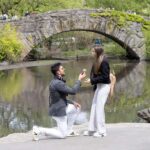
Then you’ll hit Gapstow Bridge, which is famous for its views over The Pond and the Midtown skyline. It began as wood and cast iron in the 1870s, but the current stone version dates to 1896. The ivy-covered exterior and rustic arches make it feel like the park’s quieter side, even when the skyline is right there.
Both bridges are popular because they blend two worlds: engineered structure and natural calm. The photos work because the composition is already done for you.
The Mall, Literary Walk, and writer statues: Central Park’s straight-line twist
Central Park’s roads and paths usually snake and curve. The Mall is different. It’s the park’s only intentionally straight line, designed as a grand promenade where you can do the slow “look and breathe” thing.
This is also where you’ll find the “Literary Walk” nickname—because of statues honoring writers like William Shakespeare, Robert Burns, and Sir Walter Scott. There’s also a statue of Christopher Columbus at the southern end.
If you’ve only ever seen the Mall from far away, you’ll appreciate how it changes your pacing. You’re not dodging foot traffic to find a spot. You get a clean stretch where you can take a breath, line up a photo, and notice the tree canopy overhead.
Strawberry Fields and the calm side of Central Park
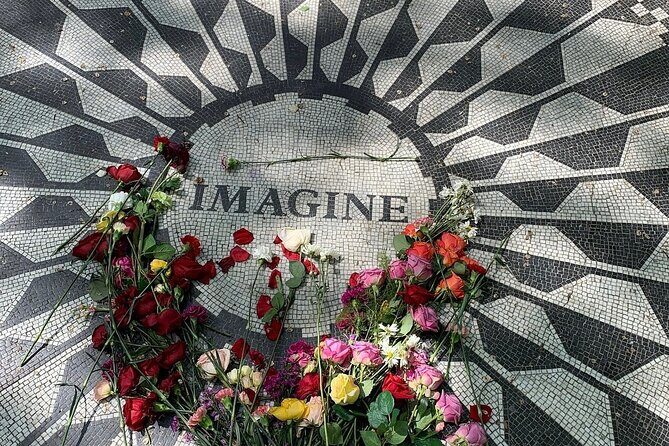
Strawberry Fields is a 2.5-acre memorial dedicated to John Lennon. It was designed by landscape architect Bruce Kelly as a living tribute after Lennon’s death in 1980. The centerpiece is the Imagine mosaic, inspired by Lennon’s vision of peace. The site is named after Strawberry Fields Forever, which ties back to a children’s home in Liverpool.
This stop hits differently than the typical sightseeing spots. It’s quieter, and it invites a slower kind of looking—flowers, music, tributes. If you’re a Beatles fan, it’ll feel personal. If you’re not, it still works as a meaningful pause inside the middle of a busy city.
Sheep Meadow and the Central Park lawn moment
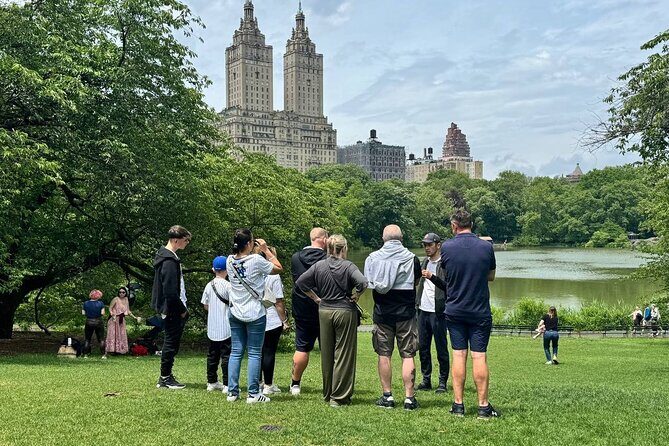
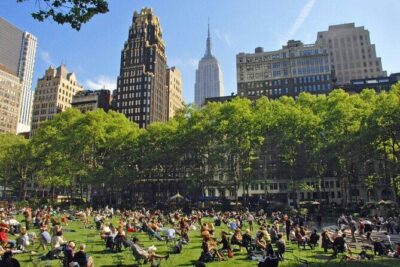
Sheep Meadow is one of Central Park’s most-used open lawn areas, with a long history starting when it served as sheep grazing land in the early 20th century. Today, it’s the place for picnics, reading, sunbathing, and just hanging out with the city around you.
The contrast is part of the appeal: you get a wide expanse of green while tall buildings frame the view. It’s the kind of stop where a pedicab makes sense, because you can see the edges and angles without turning it into a trek.
If you love film spots, this area has a strong one. Scenes have appeared in Ghostbusters, Wall Street, and The Fisher King.
Central Park Zoo, carousel, and gamehouse stops for a break from “big sights”
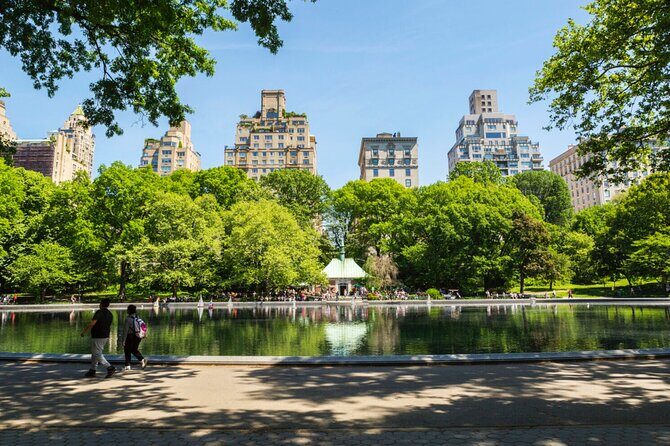
Central Park isn’t only grand views. It’s also packed with playful stops that feel local, old-school, and fun.
Central Park Zoo: from old enclosures to more natural habitats
The Central Park Zoo began in 1864 as a small menagerie and became the first official zoo in 1934. A major shift came in 1988, when it moved away from traditional cages toward enclosures designed to feel closer to animals’ natural environments.
Today it’s managed by the Wildlife Conservation Society and includes areas such as Temperate Territory, Tropic Zone, and Polar Circle. Depending on your timing, you might spot penguins, sea lions, snow leopards, and more.
If you’re traveling with kids—or you’re the type who always stops for animals—this is a good way to add variety to a day of bridges and fountains.
The Central Park Carousel: old-school charm with hand-carved horses
Central Park Carousel history runs deep. The carousel line dates back to an earlier version, but the current carousel was installed in 1951 as the park’s fourth. The vintage ride features 57 hand-carved and painted horses, built by Stein and Goldstein.
It’s one of those spots where you can watch others ride and still enjoy it even if you skip mounting the horse. It’s also the kind of “period New York” detail you usually have to hunt for.
Chess & Checkers House and the Dairy House: two stops that feel like local routines
Chess & Checkers House is an octagonal brick building built in 1952. It’s surrounded by 24 game tables under a trellis, so it’s made for casual play. It also appeared in the film Searching for Bobby Fischer, which gives you an extra layer to watch for when you’re standing there.
The Dairy House (built 1870) is another charming pause. It originally served fresh dairy refreshments for families and children. It later fell into neglect, then got restored in the 1980s and now serves as a visitor center with maps and brochures. It has also appeared in movies like Enchanted.
Together, these stops give you Central Park as more than a photo backdrop. You see how people actually spend time here.
Wollman Rink, The Pond, and season-changing Central Park energy
Wollman Rink is one of Central Park’s standout winter icons, opening in 1950 and named after Kate Wollman, who donated $600,000 in honor of her family. The rink sits with the Manhattan skyline in view and has hosted everything from casual skating to figure skating events.
If you’re visiting outside winter, you may not get the skating experience, but it’s still useful as a design and location stop. The key value is how it frames the city against the park.
The Pond is another signature moment. It covers 3.8 acres and was shaped as part of Olmsted and Vaux’s original 1858 plan on a site that once held rock formations and a natural brook. It’s the kind of place where the park feels like it’s breathing. You’ll often see turtles and ducks, and the cinematic charm is part of why it appears in film—Home Alone 2 is one example.
This section is a reminder that Central Park isn’t just monuments. It’s wildlife, water, and the slow shift from “city mode” to “park mode.”
Movie-famous corners: conservatory water, Rumsey Playfield, and classic statues
Central Park has a strong film identity, and the tour leans into that without making it feel like trivia dumps. You’ll hear local stories tied to specific spots and statues.
Conservatory Water: model boat culture and the literature statues
Conservatory Water is a tranquil pond area associated with model boat sailing. The structure was once planned as a reflecting pool around a glass conservatory that never got built, but the pond became popular in the early 1900s for miniature sailboats and tradition continues.
It’s also near statues of literary icons, including Alice in Wonderland and Hans Christian Andersen. If your group enjoys books, this is a smart place to pause.
Rumsey Playfield: SummerStage, older structures, and performance energy
Rumsey Playfield is known for SummerStage and outdoor performances. It sits on a hill overlooking the Concert Ground. Earlier on, the site had a restaurant created by Calvert Vaux called the Casino, described as meaning little house in Italian, with no relation to gambling. Later, the space shifted into a sports field for older children, and SummerStage moved there by 1990.
So even if you don’t catch a show, it’s a meaningful place to understand how Central Park uses its spaces.
Balto statue and other monuments: emotion and public memory
The Balto statue commemorates the 1925 Serum Run to Nome, honoring a sled dog who helped deliver diphtheria antitoxin in a brutal journey. It’s set up as a public memorial, unveiled in 1925, so it carries that “people rallied for this” feeling.
You’ll also see other monuments like The Falconer, a bronze falconer statue donated in 1875, and The Daniel Webster Monument, unveiled in 1876, tied to his role as a statesman and orator.
If your timing allows: Met area, Cleopatra’s Needle, Reservoir, and Belvedere Castle
Some items are marked as included in a 2-hour option, which is useful if you want the “big culture landmarks” layer on top of the park.
Cleopatra’s Needle and the Metropolitan Museum area
Cleopatra’s Needle is the oldest outdoor monument in New York City. It’s an obelisk carved in Egypt over 3,500 years ago, later moved across the Atlantic, and dedicated in Central Park in 1881. It stands near the Great Lawn and the Met area, with hieroglyphs recording historical achievements and dedications.
If you like history, this is a major contrast stop. You go from 19th-century park design and American public memory to ancient Egypt, all within Central Park’s boundaries.
The Metropolitan Museum of Art: a museum designed with park vision
The tour also includes the Metropolitan Museum of Art as part of the 2-hour plan. The original museum building opened in 1880 and was designed by Calvert Vaux. Over time, expansions added major features, including the Fifth Avenue entrance and grand façade work by Richard Morris Hunt.
You’re not going to leave the park with “museum fatigue.” This stop is best for visitors who want a quick introduction to the Met’s scale and placement right along Central Park.
Jacqueline Kennedy Onassis Reservoir and Belvedere Castle views
The Jacqueline Kennedy Onassis Reservoir (included in the 2-hour option) is about 106 acres with a depth around 40 feet, holding more than one billion gallons. It was built between 1858 and 1862 and designed with a footprint meant to harmonize with the park.
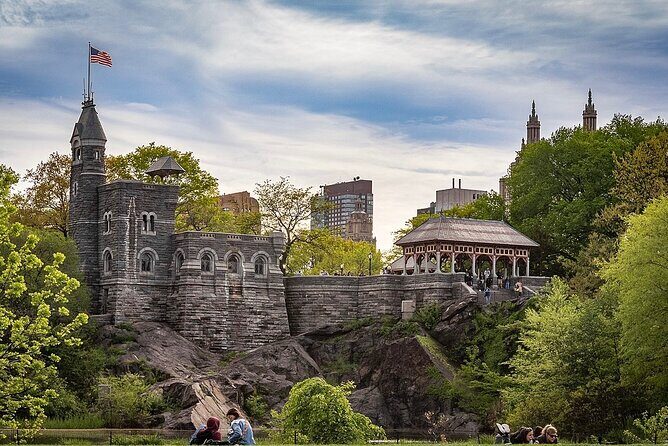
Belvedere Castle, also included in the 2-hour option, is a decorative folly designed in 1867 by Calvert Vaux and Jacob Wrey Mould. It offers panoramic observation from Vista Rock, and it has served as the location for Central Park’s official weather station since 1919.
These stops are where you get height and wide views without hiking.
Price and value: what $38.40 gets you in real terms
At $38.40 per person, the value comes from bundling three things you’d otherwise piece together: a private ride, a licensed guide, and a structured set of photo stops.
If you’re visiting with at least two people, this makes even more sense because the tour needs 2 persons minimum and is private for your group. The cost per person stays reasonable, and you’re not paying for a “take-a-walk-yourself” experience.
Also, the pedicab is the anti-slog factor. Central Park sightseeing often turns into a walking contest. Here, you save your legs for the moments you want to linger, like fountains, memorials, and bridge photos.
Who this tour suits best (and who should skip it)
This is a strong fit if you want:
- a slower, guided way to see major Central Park landmarks
- help with photos without overthinking routes
- stories tied to design, statues, and film locations
- comfort extras like blankets and rain cover
It might be less ideal if:
- you prefer long, self-guided walking and want every path on your own schedule
- your group needs a car seat (pedicabs here cannot have one)
Also, you’ll want decent weather. If it’s canceled due to poor weather, you should expect a different date or a full refund.
Should you book this Central Park pedicab tour?
Yes, I’d book it if your priority is effortless sightseeing with standout photo stops and you want a guide who ties Central Park’s design to what you’re seeing. The private format and the comfort touches make it feel less like a “tour bus day” and more like a curated ride through the park’s best-known corners.
If you’re on a tight schedule, this helps you pack in major sights without turning the day into leg day. If you’re traveling with kids or anyone who gets tired on long walks, the pedicab pacing is exactly what makes this kind of Central Park day enjoyable.
FAQ
How long is the Central Park pedicab tour?
It runs for about 1 to 3 hours, depending on the option you choose.
Is this tour private or shared with other groups?
It’s private. Only your group participates.
Where does the tour start and end?
It starts at 1415 6th Ave, New York, NY 10019, and it ends back at the same meeting point.
What’s included in the tour price?
Included: the private pedicab ride, a friendly licensed NYC guide, photo stops at iconic spots, fun facts and local stories, and blankets in cold weather plus cover if it rains.
Are any attractions free during the tour?
Yes. The tour lists several stops as free, including Wollman Rink, Gapstow Bridge, The Mall, Central Park Carousel is described, and more. Some other stops are listed as included in the 2-hour option.
Do I need hotel pickup?
No. Hotel pickup and drop-off are not included.
What’s the minimum number of people needed to book?
The tour needs 2 persons minimum for booking.
Final note
This is one of the easier ways to see Central Park like a local: quick, guided, and focused on the sights you’ll actually want to remember. If you want the highlights with less walking stress, it’s a solid choice.