REVIEW · NEW YORK CITY
Central Park Guided Tours Pedicab
Book on Viator →Operated by NYC Central Park Pedicab Tours · Bookable on Viator
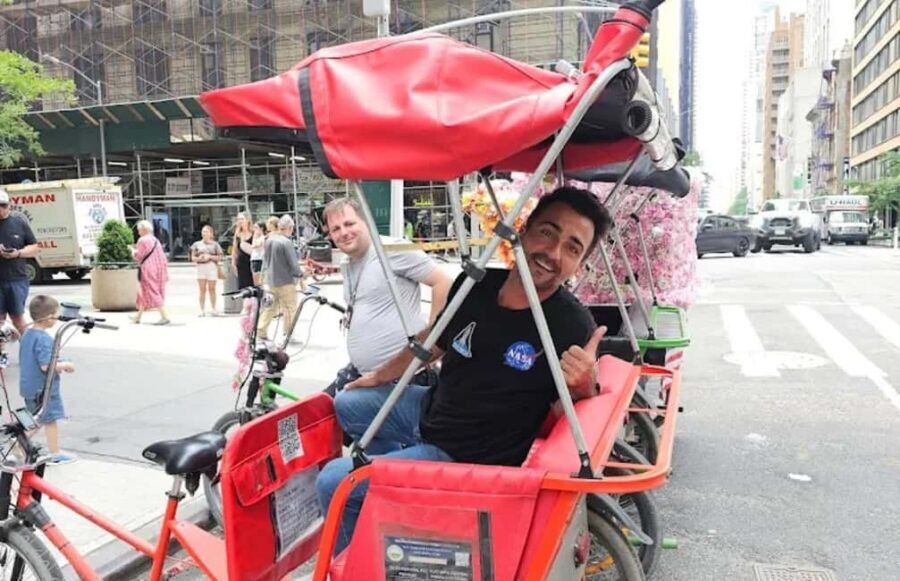
Central Park is easier when you ride. This private guided pedicab tour lets you cover real distance without the stop-start pain of foot travel, while your guide points out the park’s famous corners and the little stuff you’d miss on your own. You get that rare mix: gentle ride plus story, with built-in photo stops.
I like two things a lot. First, the pacing is relaxed, so you can enjoy views instead of just checking boxes. Second, you get your guide’s full attention on a private experience, with thoughtful explanations and photo help.
One thing to think about: a pedicab is weather-dependent and this runs best with good conditions. If you’re going on a rain-soaked day or in extreme heat/cold, you may want to plan extra flexibility.
In This Review
- Key highlights worth caring about
- Why a pedicab through Central Park beats walking
- What the $40 price buys you (and why the value can be real)
- Where you meet and how the route feels
- Bethesda Terrace and the Arcade: fountain views and Minton tile ceiling
- Chess, carousel rides, The Dairy, and Wollman Rink fun stops
- The Chess and Checkers House
- Central Park Carousel
- The Dairy visitor center
- Wollman Rink
- Balto, Bow Bridge, and Strawberry Fields: the Central Park story loop
- Balto statue
- Bow Bridge
- Strawberry Fields
- Cherry Hill, Sheep Meadow, Tavern on the Green, and Pinebank Arch
- Cherry Hill
- Sheep Meadow
- Tavern on the Green
- Pinebank Arch
- Guides, pace, and what to watch for during photo stops
- Should you book this Central Park pedicab tour?
- FAQ
- How much does the Central Park guided pedicab tour cost?
- How long is the tour?
- Is this tour private?
- What language is the tour offered in?
- What attractions have admission included or marked free during the tour?
- What happens if the weather is bad?
- Where does the tour start?
Key highlights worth caring about
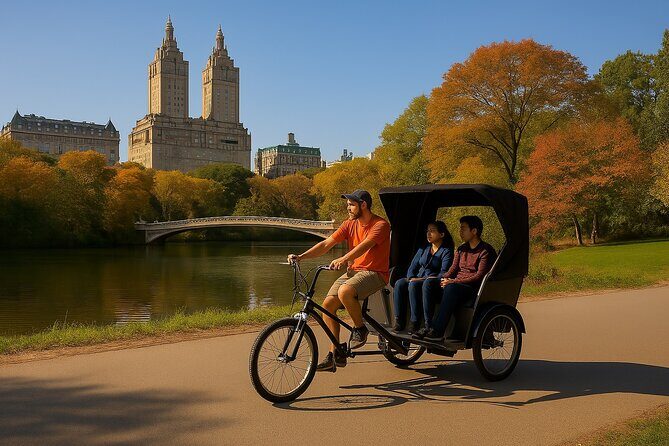
- Private guided pedicab: only your group, so you’re not squeezed into someone else’s itinerary
- Photo-friendly timing: multiple quick stops like Bow Bridge and Strawberry Fields for clean shots
- Bethesda Terrace + Minton tiles: the Angel of the Waters fountain area plus the world’s only Minton tile ceiling
- Classic Central Park detours: Chess and Checkers House, the carousel, and The Dairy visitor center
- Ice-skating sightline: a short stop at Wollman Rink, used in famous films
- Memorable sculpted history: Balto’s bronze statue with its plaque story
Why a pedicab through Central Park beats walking
Central Park is huge. Walking is great when you want a workout and a wandering mood. But if you want to see the famous places in the time you have, a pedicab is a smart shortcut.
This tour’s biggest value is that it helps you escape the crowds on the sidewalks while still reaching high-demand spots. You’re not stuck in the “stop-and-go” flow of foot traffic. Instead, you glide through calmer paths, and your guide’s narration keeps you from just staring at landmarks without context.
The other big reason I like this format is control. On foot, you can easily overshoot what you wanted to see, then scramble to catch up. On a pedicab loop, you move with a plan, so you can spend your energy on enjoying the view—especially around the water and terraces where Central Park looks cinematic.
You can also read our reviews of more guided tours in New York City



What the $40 price buys you (and why the value can be real)

At $40 per person for about 46 minutes to 1 hour 16 minutes, the cost sounds simple. The value is less about “how many stops” and more about how efficiently the tour turns your time into real Central Park moments.
Here’s how the price can work in your favor:
- You’re paying for guided interpretation, not just transport. That’s what turns Bethesda Terrace from a pretty scene into an architecture-and-film reference worth noticing.
- You’re paying for pace management. Quick stops like the Mall and Literary Walk (about 1 minute) and Minton tiles (about 2 minutes) are enough to experience what matters without losing half your day.
- You get a private setup, which often feels more worth it when you’re traveling as a couple, with friends, or with anyone who hates group tours.
Ticket-wise, the experience includes admission for part of the tour and marks several attractions as admission free during stops like the carousel and the Wollman Rink short visit (as listed). Even if you skip rides inside the park features, you’re still getting the guided “there’s the reason this matters” effect around those places.
Where you meet and how the route feels
The tour starts at 1421 6th Ave, New York, NY 10019 and ends back at the meeting point. Having an end point that returns to where you began is surprisingly helpful in a place like Manhattan, where directions can get stressful once you’re deep inside the park.
It’s also listed as near public transportation, which matters because Central Park can be hard to time if you’re relying on taxis only. A mobile ticket is provided, which is a practical win on a phone—no paper fiddling, no hunting through backpacks.
One more practical thing: since this is private, you’ll want your group to be easy to spot at the start. Confirm you’re at the right spot before you approach, and keep an eye out for anyone offering “similar tours” around the area. A quick double-check with the operator at the start is worth the minute it takes.
Bethesda Terrace and the Arcade: fountain views and Minton tile ceiling
If Central Park has a “main character,” it’s the Bethesda Terrace area. This is where the park starts acting like an actual landmark instead of a scenic break from the city.
At Bethesda Terrace, you’ll see the Angel of the Waters fountain. It’s been used in films including The Avengers and Home Alone 2: Lost in New York, so you’ll recognize the look even if you don’t know the name. The value of a guided stop here is that you don’t just see a famous structure—you learn where to stand for the best perspective and how the space is designed to make the fountain feel grand.
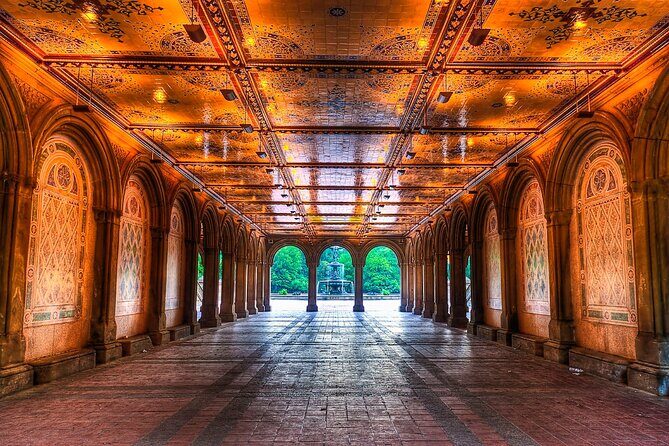
Beneath the terrace is the Arcade, and this is one of the tour’s most memorable special stops: the Minton tiles at Bethesda Arcade. The listing notes it’s the world’s only Minton tile ceiling—nearly 16,000 colorful encaustic tiles arranged into 49 panels. That’s the kind of fact that makes you slow down, because up close it’s not just decoration. It’s a whole visual program underfoot level.
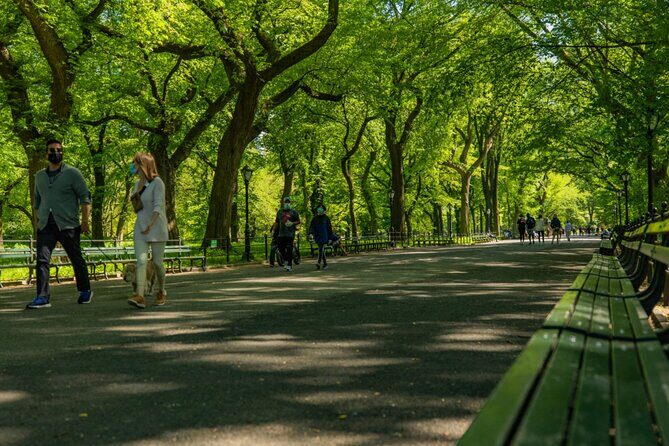
Then you’ll move along the Mall and Literary Walk, where the tour gives you a quick but meaningful route: towering American elms overhead, plus statues of literary figures such as Shakespeare and Robert Burns. The Mall and Literary Walk have appeared in movies like Maid in Manhattan and Kramer vs. Kramer, which gives you a fun way to “read” the park like a set used by filmmakers for a reason—symmetry, sightlines, and storybook scenery.
Times here are short on purpose (about 4 minutes for Bethesda Terrace and about 2 minutes for Minton tiles), but these are exactly the right lengths for a first-time or time-limited visit. You’ll get the emotional wow without getting stuck in the crowd.
Chess, carousel rides, The Dairy, and Wollman Rink fun stops
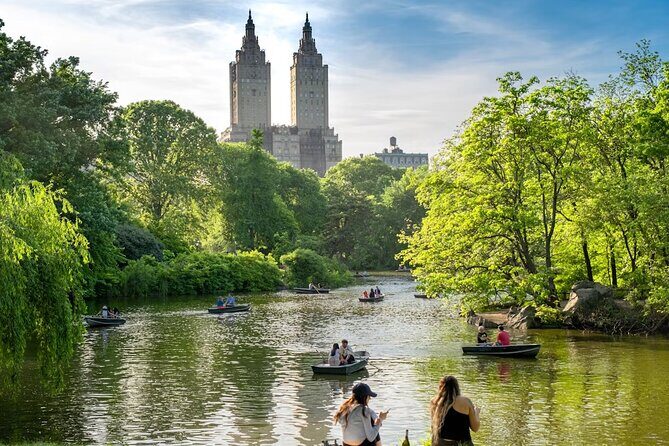
Not every Central Park moment needs to be dramatic. Some of the best memories are the classic diversions.





The Chess and Checkers House
The tour includes the Chess and Checkers House, built in 1952. It’s a brick pavilion where people gather to play chess, checkers, and other board games. It’s mid-park near 64th Street, and the listing notes free game rentals. This stop is great because it slows everything down for a minute. You get a slice of everyday park life—people resting, thinking, and enjoying a game.
Central Park Carousel
Next is the Central Park Carousel, with roots going back to 1908 (the current version installed in 1951). The carousel features 57 hand-carved horses and plays calliope music. It’s located mid-park at 65th Street, and yes, it’s fun for adults too, especially if you like the feeling of old-school New York amusements.
If your group includes kids, this stop can be a sanity saver. If you’re an adult-only group, it’s still worth it as a break from photos of fountains and bridges.
The Dairy visitor center
Then you’ll visit The Dairy at 65th Street. It’s a Victorian Gothic-style building completed in 1871, designed by Calvert Vaux. Originally, it served as a refreshment spot for children in the park’s Children’s District. The important part today is that it reopened in 1979 as Central Park’s first visitor center and now houses a gift shop managed by the Central Park Conservancy.
I like The Dairy because it gives you something practical: the conservancy connection, plus a chance to orient yourself about the park’s care and mission. It’s also a nice indoor option if weather shifts.
Wollman Rink
The tour makes a short stop at Wollman Rink in the southeast corner. It’s been a cherished ice-skating destination since 1950 and appears in films like Love Story and Serendipity. Even with only a few minutes, the skyline view from there tends to stick with people—especially if you’re pairing Central Park with a broader Manhattan sightseeing plan.
Balto, Bow Bridge, and Strawberry Fields: the Central Park story loop
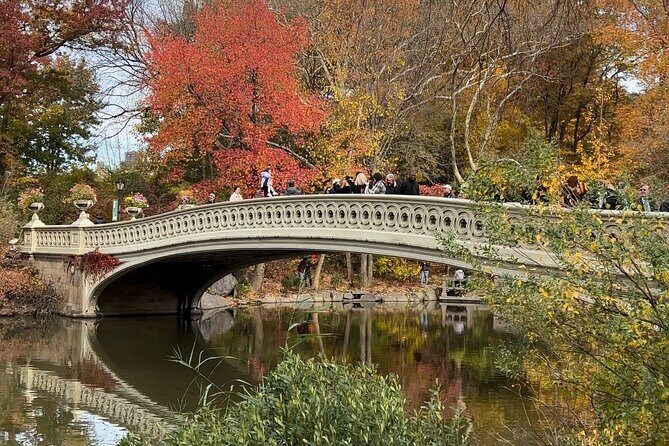
This is where the tour feels like a greatest-hits route, but with enough guidance that it doesn’t feel random.
Balto statue
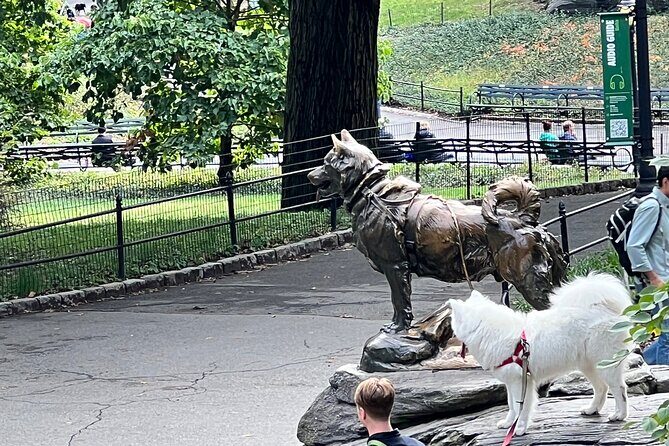
First up is the Balto statue. This bronze statue honors the Siberian husky who led the final leg of the 1925 serum run to Nome, Alaska, delivering diphtheria antitoxin through brutal conditions. The listing adds details you’ll want to know as you approach: sculpted by Frederick G. Roth and unveiled December 17, 1925, near East Drive and 67th Street. It even notes Balto attended the dedication ceremony.
This stop works because it’s not just a statue. It’s a reminder that Central Park isn’t only about leisure—it’s about memory, courage, and public commemoration.
Bow Bridge
Next is Bow Bridge, an elegant cast-iron span with panoramic Lake views. It’s a major photo spot and has been used in films like Spider-Man 3, Enchanted, and Manhattan. The benefit of stopping here on a pedicab is that you can pause where you need to for a good shot without trying to fight your way into the densest pedestrian moment.
Strawberry Fields
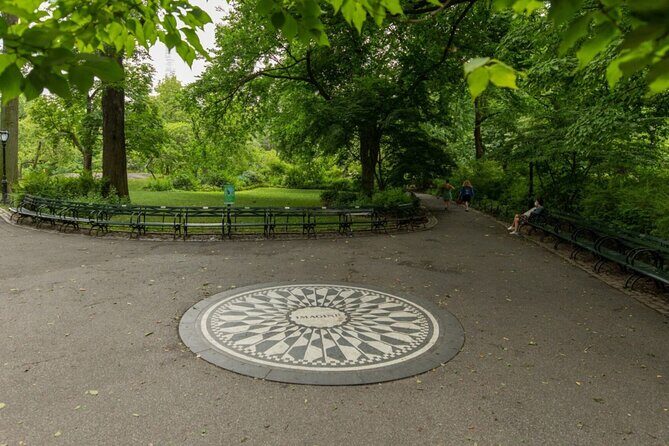
Then comes Strawberry Fields, a 2.5-acre sanctuary near West 72nd Street honoring John Lennon. You’ll see the iconic Imagine mosaic, a symbol of peace. It’s also noted for appearing in films like Little Manhattan.
This stop is special because it’s quieter in feel than the bridges and fountains. It’s a place where you can look up at the city framing and then down at the message—peace—without feeling rushed. The tour time here is brief (about 2 minutes), but the location does a lot of the work for you.
Cherry Hill, Sheep Meadow, Tavern on the Green, and Pinebank Arch
After the big-name icons, the tour continues with a set of places that show Central Park in different moods—soft, pastoral, and a little theatrical.
Cherry Hill
Cherry Hill is the calm break in the middle of the action. It’s named for its cherry blossoms in spring and offers views over the Lake and the Cherry Hill Fountain. The fountain was designed by Jacob Wrey Mould in the 1860s and once served as a watering trough for horses. Even if it’s not cherry-blossom season, the slope and viewpoint still feel like a reset button.
Sheep Meadow
Next is Sheep Meadow, a 15-acre area known for sunbathing, picnicking, and those skyline views. It used to have grazing sheep until 1934, which is a fun historical contrast to how people use it now. The listing also notes films like Wall Street and Barefoot in the Park, so if you like movies, you’ll start recognizing the “Central Park look” beyond the bridges.
Tavern on the Green
Then the tour touches Tavern on the Green, a Central Park restaurant that dates to 1934. It originally started as a 19th-century sheepfold. This is one of those places where history and the modern experience overlap just enough to make you curious.
Even if you don’t eat there, seeing the building in context helps you understand how Central Park evolved from pastoral space into a full-on city landmark.
Pinebank Arch
The final scenery stop is Pinebank Arch, near West 62nd Street. It’s an elegant cast-iron bridge built in 1861 and noted as one of the few remaining original cast-iron bridges. It also appeared in the film Elf, where Buddy throws snowballs to show off.
This is a great stop for anyone who likes the older, quieter details in Central Park. It’s the kind of structure you can overlook if you only focus on the super-famous bridges.
Guides, pace, and what to watch for during photo stops
One reason this tour often rates so well is the “human part.” You’ll see guides like Jamil, Saeed, and Noah in the mix, and the pattern is consistent: friendly storytelling, lots of points you can actually use, and photo help without turning it into a lecture.
A good guide also protects your time. They’ll point out what’s worth your attention, then give you a moment to step into position. That matters around places like Bethesda Terrace and Bow Bridge, where the best photos depend on where you stand—not just what you see.
One small real-world caution: around popular park entrances and attractions, you may notice people trying to solicit business. If someone is pushing you to switch plans, don’t rush. Stick with your pre-arranged tour setup, and confirm you’re at the correct spot before you roll. It keeps your day smooth.
Should you book this Central Park pedicab tour?
If your goal is to see the big Central Park icons—Bethesda Terrace, Bow Bridge, Strawberry Fields—without turning your trip into a long walking grind, I think this is a strong choice. The private setup also helps if you want your questions answered and your photos handled at the right moments.
Book it if:
- you’re on a tight schedule and want maximum return per minute
- you care about film-famous spots but still want real context
- you want a relaxed pace with clear stops, rather than aimless wandering
Skip or rethink it if:
- you’re traveling during very poor weather, since it’s listed as requiring good weather
- you prefer independent exploration with zero structure and longer roaming time
FAQ
How much does the Central Park guided pedicab tour cost?
It costs $40.00 per person.
How long is the tour?
The tour runs approximately 46 minutes to 1 hour 16 minutes.
Is this tour private?
Yes. It’s a private tour/activity, so only your group participates.
What language is the tour offered in?
The tour is offered in English.
What attractions have admission included or marked free during the tour?
The information provided notes admission ticket included for the Central Park portion, and admission ticket free for stops including the Central Park Carousel and Wollman Rink. It also lists free access for several sightseeing points.
What happens if the weather is bad?
The experience requires good weather. If it’s canceled due to poor weather, you’ll be offered a different date or a full refund.
Where does the tour start?
The tour starts at 1421 6th Ave, New York, NY 10019, and it ends back at the meeting point.