REVIEW · NEW YORK CITY
Central Park Pedicab Tour with local Guide
Book on Viator →Operated by Central Park pedicab tours · Bookable on Viator
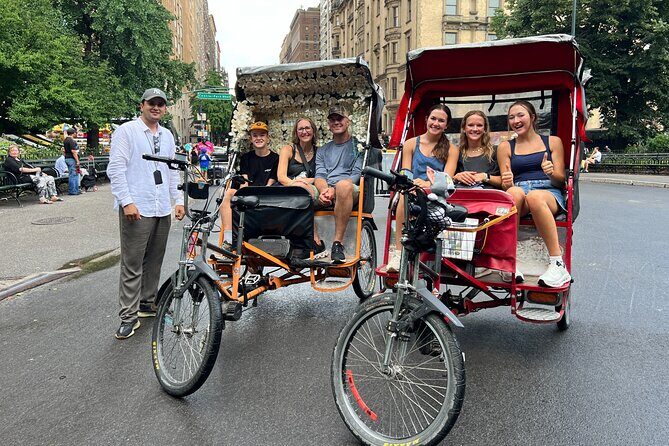
Central Park feels endless, but this tour makes it feel manageable. A private pedicab lets you cover major sights fast while still stopping often for photos and stories. I especially like the way your guide ties the park’s design to what you’re seeing in front of you, from Olmsted and Vaux’s original vision to today’s film-famous corners.
Two things I like a lot: the photo help (you’ll get posed shots and quick tips) and the pace control (you can slow down for viewpoints or speed up if your group is itching to move). One thing to plan for: on cold or rainy days, you’ll want layers and be ready to spend short stretches riding slowly through park paths—even though blankets and rain cover help a lot.
- Frequent photo stops with hands-on guidance so you actually come away with great pictures
- Cinematic Central Park pointers: movie locations, plus views that hint at celebrity-home backdrops
- Local guide energy (I’ve heard names like Roman and MJ) with warm, patient handling for families
- Nostalgia hits like the Carousel since 1871 and playful spots for kids and grown-ups
- Classic architecture moments: Bethesda Terrace, bridges like Bow Bridge and Gapstow Bridge, plus Cleopatra’s Needle
- Extra sights on longer versions: the Met area, Belvedere Castle, and the Jacqueline Kennedy Onassis Reservoir views
In This Review
- Why This Private Pedicab Works So Well in Central Park
- Getting Started at the Sherman Monument and How the Tour Ends
- Central Park at Speed: From Olmsted’s Original Plan to Bethesda Terrace
- Bethesda Fountain and Bethesda Terrace: the park’s cinematic centerpiece
- The quiet charm stops: Carousel, chess/checkers, and the old milk cottage
- Umpire Rock, Wollman Rink, Gapstow Bridge: Big Views With Small Time
- Umpire Rock: quick climb, big outlook
- Wollman Rink: winter energy, skyline framing
- Gapstow Bridge: romance in cast iron
- The Park’s Characters: Balto, Literary Walk, and a Few “Pause Here” Moments
- The zoo viewing and Balto’s statue
- Literary Walk: the straight path with the references built in
- Cherry Hill, Strawberry Fields, and Sheep Meadow: Where the Park Turns Personal
- Cherry Hill: lake views and spring vibes
- Strawberry Fields: a memorial that pulls you out of cruise mode
- Sheep Meadow: picnic energy with skyline contrast
- Bow Bridge and the Dakota: Romance Meets Real NYC Stories
- Pinebank Arch and the Met Side: When the Tour Grows Beyond the Basics
- Pinebank Arch: the cast-iron bridge that looks like it belongs
- Metropolitan Museum area: art-world scale right next to the park
- Cleopatra’s Needle: ancient Egypt in the middle of Manhattan
- Belvedere Castle and the Reservoir: Views That Feel Like a Break From the City
- What to Expect With the Guide, the Photos, and Your Comfort
- Price and Value: Is $55 Worth It?
- Who This Tour Suits Best (and Who Might Want a Different Plan)
- Should You Book This Central Park Pedicab Tour?
- FAQ
- How long is the Central Park pedicab tour?
- What does the tour cost?
- What language is the tour offered in?
- Is this tour private?
- What’s included during the tour?
- Are hotel pickup and drop-off included?
- Where do I meet the guide?
- Are there admissions or tickets for the sights?
Why This Private Pedicab Works So Well in Central Park
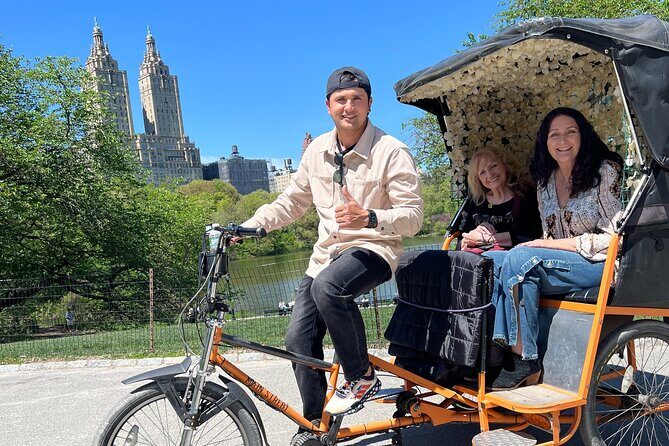
Central Park can be a trap. It’s big, it’s beautiful, and it can swallow an entire day if you’re trying to walk everything. This pedicab format solves that by getting you from point to point efficiently, then letting you stop at the good stuff without turning your trip into a forced march.
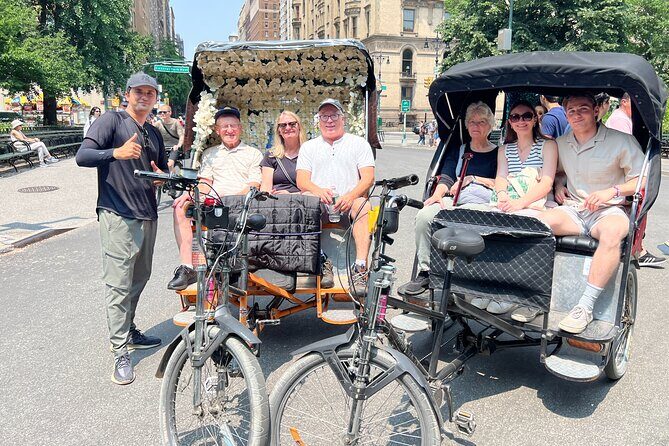
The “private” part matters more than you might expect. Instead of following a packed group, you set the rhythm. Want a longer look at a bridge? Do it. Want to skip a quieter spot and go straight to a viewpoint? Your guide can usually shift the plan. That flexibility is a big value add in a park where conditions change fast—light, crowds, and even how long you’ll want to linger by a fountain.
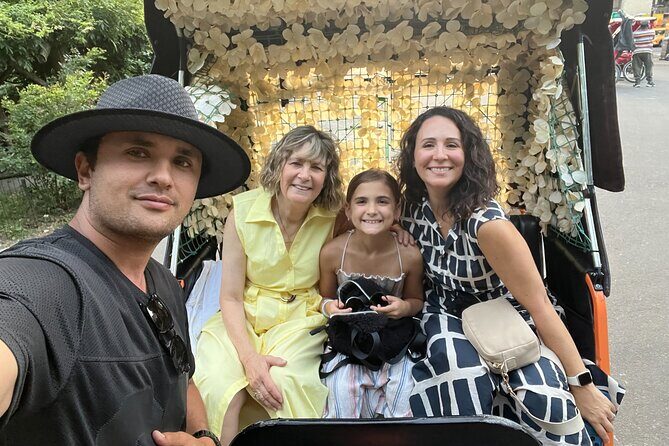
Also, the tour is built around photography. Your guide isn’t just listing stops like a slideshow. You’ll get help positioning for shots, and that small detail can make the difference between blurry “we were there” pictures and images that actually look good.
Finally: the tour is eco-friendly by design. You’re in a human-powered vehicle, not a vehicle idling in traffic. In Central Park, that feels like the right way to move—quiet and relaxed.
Getting Started at the Sherman Monument and How the Tour Ends
You meet at the General William Tecumseh Sherman Monument at 764 Doris C Freedman Pl, New York, NY 10019. Then the experience ends back at the same meeting point. No hotel pickup is included, so plan to arrive on your own using nearby public transportation.
That “back to the start” setup is handy. Central Park can be confusing at the edges, and the worst-case scenario is realizing you’re too far from where you need to be later. Here, you finish where you started, which makes it easier to stack a museum visit, a dinner reservation, or just a low-effort stroll afterward.
The tour duration runs about 1 to 3 hours, so it can fit into a busy NYC schedule. If you’re only in town for a short time—or you’re trying to see Central Park plus a few other neighborhoods—you’ll appreciate the time-boxed format.
You can also read our reviews of more guided tours in New York City



Central Park at Speed: From Olmsted’s Original Plan to Bethesda Terrace
Your ride begins with Central Park’s core story: it was planned to be a natural escape from a growing industrial city. Frederick Law Olmsted and Calvert Vaux created a space that took over 800 acres of swampy and rocky terrain and turned it into a curated mix of lakes, bridges, and winding paths.
That context pays off. When you see Bethesda Fountain later, it doesn’t feel random. It feels intentional—part of a larger design that blends architecture and nature.
Bethesda Fountain and Bethesda Terrace: the park’s cinematic centerpiece
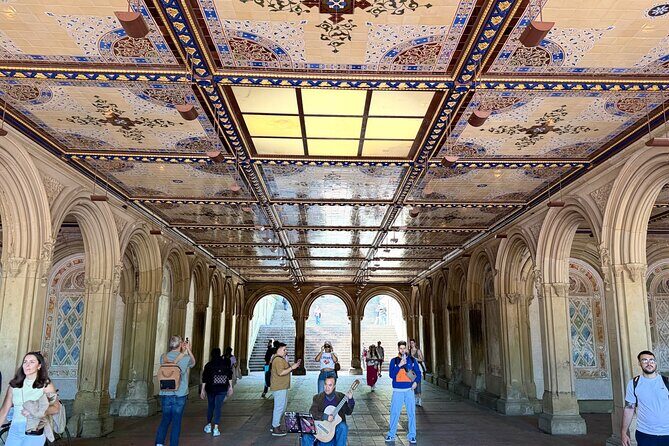
One of the first must-see stops is Bethesda Fountain, paired with Bethesda Terrace. This is the part of Central Park that looks like it belongs in a movie—grand staircases, carved stone details, and the Angel of the Waters fountain as the visual anchor.
Under the terrace, you may hear musicians using the space acoustics—so even if you’ve seen a thousand fountain photos, the sound can make the moment feel real. These are also among the most frequently filmed areas in the park, which explains why the guide pays extra attention to angles and photo timing.
Practical note: plan for a short photo wait. This area is popular, and it helps to have a guide who can spot the moment when there’s enough space for your group to get clear shots.
The quiet charm stops: Carousel, chess/checkers, and the old milk cottage
Not everything is grand and dramatic. You also get Central Park’s playful side.
- Central Park Carousel: still spinning delightfully since the 1800s. The current version dates to 1951 and features 57 hand-carved horses. It shows up in period-feeling movie scenes, but it also just works as a classic New York moment—especially with kids, but honestly, adults enjoy it too.
- Chess and checkers cottage: a stone place opened in 1952 where you can play for free. It’s calm, low-pressure, and perfect when you want a break from snapping photos.
- The visitor center and gift shop in a Victorian-style cottage: originally built in 1870 as a milk/snack spot for children, later repurposed. Even if you only pause for a minute, the building’s 19th-century vibe is worth it.
These stops are a nice reminder that Central Park isn’t only about famous bridges and statues. It’s also about everyday park life, the kind that has inspired filmmakers and locals for decades.
Umpire Rock, Wollman Rink, Gapstow Bridge: Big Views With Small Time
Then the tour shifts to short, punchy stops—places you can get photos from quickly without losing momentum.





Umpire Rock: quick climb, big outlook
Umpire Rock is a natural outcrop with sweeping views over Central Park South. It’s especially fun for families because it’s small enough to feel doable, but it still delivers that “I climbed something in NYC” satisfaction. The nickname connects to baseball-era umpires standing nearby during games.
Wollman Rink: winter energy, skyline framing
If it’s cold out—or if you’re visiting in winter—Wollman Rink is a highlight. Skaters often glide with Manhattan skyline views behind them, and it’s been used in movies like Serendipity and Love Story. Even outside peak skating season, the location feels iconic.
Gapstow Bridge: romance in cast iron
Gapstow Bridge is one of those bridges where every photo looks like it belongs in a postcard. You’ll get views toward The Pond and the skyline. In winter, it can feel extra magical—because the park and water create a softer, more dramatic look.
This is also an easy stop to enjoy with a short walk-and-look rhythm. You don’t need a long time here to get the impact.
The Park’s Characters: Balto, Literary Walk, and a Few “Pause Here” Moments
Central Park has a cast of famous objects and quiet traditions. This tour weaves those in so you’re not only moving; you’re noticing.
The zoo viewing and Balto’s statue
You’ll pass by the zoo area (no entry), but the guide gives context about its history and its pop-culture presence. Then you’ll reach the Balto statue, honoring the Siberian husky who helped deliver life-saving medicine during Alaska’s 1925 diphtheria outbreak. People love this statue because it’s both emotional and accessible—especially if you’re traveling with kids.
The Balto stop tends to be one of those moments that feels like a storybook chapter. And the guide’s tone matters here, because the details turn a statue into a moment you can remember.
Literary Walk: the straight path with the references built in
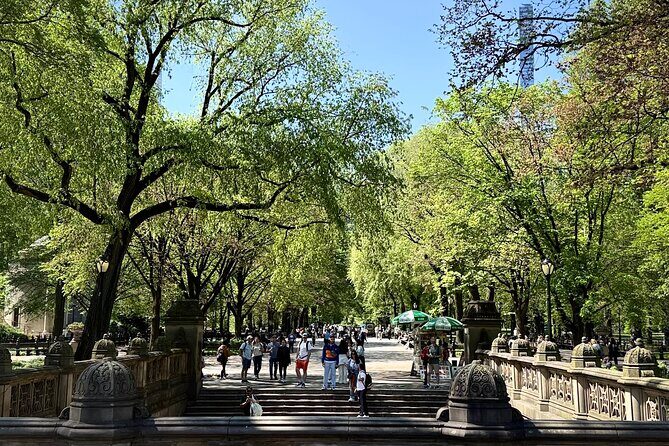
A standout stroll is Literary Walk, a tree-lined promenade that’s the only straight path in Central Park. Statues of literary figures like Shakespeare and Robert Burns line the walk, and the place shows up in films including Breakfast at Tiffany’s, Enchanted, Kramer vs. Kramer, and Maid in Manhattan.
Even if you’re not a literature person, it’s still an easy way to understand Central Park’s design—how it mixes formal structure with natural scenery.
Cherry Hill, Strawberry Fields, and Sheep Meadow: Where the Park Turns Personal
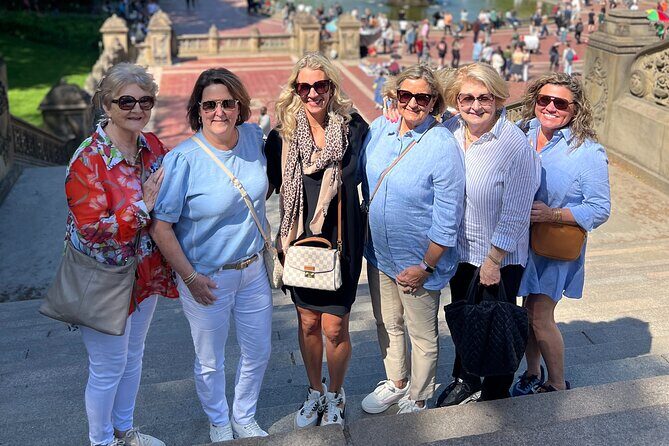
Mid-tour, Central Park becomes quieter in a different way. You’re still in the city, but these stops feel more reflective.
Cherry Hill: lake views and spring vibes
Cherry Hill is a hillside viewpoint that gives calm lake views, framed by cherry blossoms in season. It’s originally tied to a practical design (a carriage turnaround), but now it’s mostly a place to look and take photos. Movie fans will recognize the area from titles like You’ve Got Mail and 27 Dresses.
Strawberry Fields: a memorial that pulls you out of cruise mode
Strawberry Fields is the John Lennon memorial right by the Dakota area. At the center is the Imagine mosaic. Flowers, photos, and people singing Beatles songs can make it feel like a living tribute rather than a normal “sight.”
If you’re the type who likes to pause and actually feel something, this is your moment.
Sheep Meadow: picnic energy with skyline contrast
Sheep Meadow is a 15-acre lawn where you’ll see locals and visitors relaxing—picnics, reading, sunbathing, and general “slow down” park time. The view of the Manhattan skyline against the green is one of the most iconic contrasts in NYC.
This area has also appeared in films like Ghostbusters, Wall Street, and The Fisher King, which makes it one of those stops where a guide’s film knowledge turns into a fun game: can you spot the scenes in real life?
And there’s a bonus layer: nearby Tavern on the Green is tied to the park’s sheepfold past. The building reopened in 2014 after a period when it closed and was used as a visitor center/gift shop. The guide can help connect those dots so the restaurant isn’t just “a place to eat,” but part of Central Park’s evolution.
Bow Bridge and the Dakota: Romance Meets Real NYC Stories
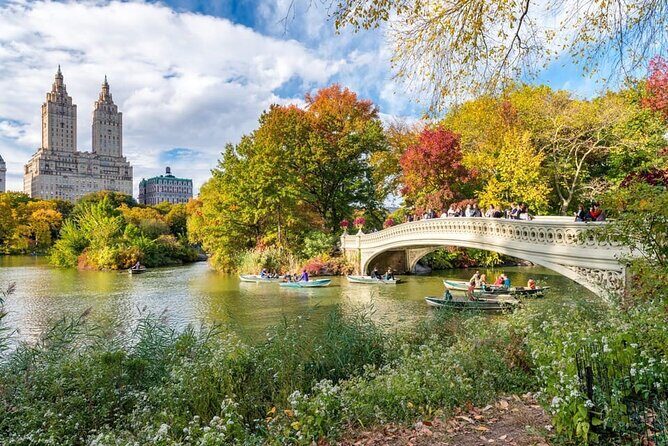
If Central Park is a character in a film, Bow Bridge is the romantic scene. It’s a cast-iron arch with views toward The Lake and the skyline, often photographed for proposals and that classic NYC “we can’t believe this is real” look.
You’ll also get why the guide treats this as a photo priority. It’s been featured in movies like Spider-Man 3 and Night at the Museum, but more importantly, it’s simply photogenic from multiple angles.
Then comes the Dakota—one of the most recognizable buildings in New York, built in 1884, famously tied to John Lennon’s residence and his death in 1980. It feels like a stop that goes beyond architecture. Even if you’re not a die-hard fan, the Dakota area brings emotion into the park’s scenery.
This part of the tour works best if you don’t rush. Give yourself a minute to look, breathe, and get a steady photo, because the building is the star.
Pinebank Arch and the Met Side: When the Tour Grows Beyond the Basics
On longer versions of the ride (the ones that stretch farther), you may include sights along Central Park’s east edge where the park meets major institutions.
Pinebank Arch: the cast-iron bridge that looks like it belongs
Pinebank Arch is a cast-iron bridge designed to blend with rocky outcrops, with delicate ironwork that looks almost lacy against the trees. It also shows up in Elf (2003), which is why many people recognize it even if they can’t place it at first glance.
It’s a great “slow down for one perfect shot” stop.
Metropolitan Museum area: art-world scale right next to the park
You may also stop in the orbit of The Metropolitan Museum of Art (The Met), a massive institution that opened its original building in 1880 along the park’s eastern edge. The point of the stop isn’t to tour the museum—it’s to understand how Central Park and New York’s cultural power sit side by side.
If you’re already planning to visit the Met, this is a smart orientation moment. You’ll spot relationships between entrances, vistas, and the park’s geometry so you feel less lost when you go later.
Cleopatra’s Needle: ancient Egypt in the middle of Manhattan
Cleopatra’s Needle is the oldest outdoor monument in New York City. It dates back over 3,500 years, was originally carved in Egypt, and eventually ended up dedicated in Central Park in 1881. The obelisk’s surface has ancient hieroglyphs, and the stop connects ancient history to modern streets in a way that feels surprisingly direct.
This is a must for history lovers, and it’s also a great stop for families because it’s visually huge and easy to frame in photos.
Belvedere Castle and the Reservoir: Views That Feel Like a Break From the City
Another longer-route highlight is Belvedere Castle, perched above Vista Rock. The structure is a decorative folly designed in 1867 by Calvert Vaux and Jacob Wrey Mould, mixing Gothic and Romanesque styles. The castle name means beautiful view, which is exactly what you get from the observation deck.
Belvedere also has a practical angle: since 1919, it’s housed Central Park’s official weather station, tied to meteorological work with the National Weather Service. So it’s not just a pretty lookout—it’s a piece of how the city watches its own weather.
Nearby you might also see the Jacqueline Kennedy Onassis Reservoir, built between 1858 and 1862. It holds more than one billion gallons of water and was once the world’s largest man-made water body. The design uses a curving footprint meant to harmonize with the park.
This part of the tour helps you understand Central Park as infrastructure, not only decoration.
What to Expect With the Guide, the Photos, and Your Comfort
Comfort is a big deal on pedicabs because you’ll be riding, then stepping out for photos. The tour includes blankets in cold weather, and it also provides cover if it rains—two details that stop the whole experience from feeling like a misery test.
You’ll also get photo help aimed at getting you looking good, not just getting you in the frame. People have called out guides being patient, funny, and great with kids—Roman is one name that comes up, and MJ shows up as a guide who happily helped with photos when someone’s phone battery ran low.
If your group includes children, that kind of patience matters. Kids don’t need lectures; they need attention, short stops, and a guide who can keep everyone warm.
Price and Value: Is $55 Worth It?
At $55 per person for a private 1–3 hour experience, the key question is what you’re buying. You’re not paying for admission tickets at the stops—you’re paying for:
- a guide who connects history, design, and film locations into something you can actually use
- frequent photo stops
- help with pictures so you don’t waste time trying to figure out angles on your own
- a comfortable pedicab format that keeps you moving efficiently
If you plan to do Central Park on your own, you’ll absolutely see some highlights—eventually. But you’ll spend time navigating. You’ll spend energy deciding which stops matter. And you’ll probably miss the design logic that makes the park feel so intentional.
This tour is a good fit if you want to get the highlights plus the stories without doing it all by foot.
Who This Tour Suits Best (and Who Might Want a Different Plan)
This is a strong match for:
- families who want easy movement and lots of photo-friendly stops
- couples who want romantic views like Bow Bridge and Gapstow Bridge
- first-time NYC visitors who want Central Park to make sense fast
- anyone who cares about film locations but also wants real park history
It might be less ideal if:
- you want long, slow walking time and don’t mind navigating on your own
- you’re okay with missing some photo coaching and focusing purely on self-guided exploring
- you need the full day in the park (this is timed, and it’s meant to be efficient)
Should You Book This Central Park Pedicab Tour?
Yes, I’d book it if your priority is getting a smart route through Central Park with photo help and a guide who adds context while you enjoy the ride. The $55 price makes sense when you factor in the private pace, the frequent stops, and the comfort extras like blankets.
If you’re coming to NYC for a short trip and you want the park highlights without turning your day into a walking marathon, this is the kind of booking that pays off fast. Just dress for the weather, bring a camera or phone with enough battery, and be ready to stop often—because that’s where the best memories are made.
FAQ
How long is the Central Park pedicab tour?
The tour lasts about 1 to 3 hours, depending on the version you choose and how much time you spend at photo stops.
What does the tour cost?
The price is $55 per person.
What language is the tour offered in?
The tour is offered in English.
Is this tour private?
Yes. It’s a private tour/activity, and only your group participates.
What’s included during the tour?
All fees and taxes are included, along with a fully guided experience, photo stops, help getting good pictures, fun facts and film locations with local stories, and blankets for cold weather and cover if it rains.
Are hotel pickup and drop-off included?
No. Hotel pickup and drop-off are not included.
Where do I meet the guide?
You meet at the General William Tecumseh Sherman Monument, 764 Doris C Freedman Pl, New York, NY 10019. The tour ends back at the meeting point.
Are there admissions or tickets for the sights?
The tour includes stops listed with admission ticket free, and the overall experience includes the tour fees and taxes.