REVIEW · NEW YORK CITY
First Class Central Park Tour – Iconic Views & VIP Photo Moments
Book on Viator →Operated by CENTRAL PARK TRAVEL ™ · Bookable on Viator
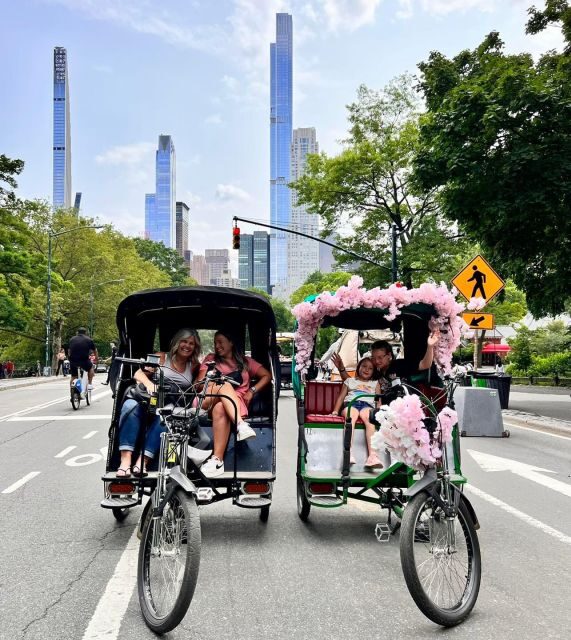
Central Park works best when you do it with a plan. This private First Class Central Park pedicab tour helps you cover major sights fast, then slows down just enough for photos and storytelling at places like Bethesda Terrace, Strawberry Fields, and Bow Bridge. Two things I really like are the VIP photo assistance (your guide helps frame the shot) and the way the ride makes the park feel manageable without turning it into a long slog.
If you go in winter or shoulder season, you also get real comfort: shade in summer, blankets in winter. The main drawback to keep in mind is that it depends on good weather. If rain and wind roll in, the experience may be changed or you’ll need another date.
In This Review
- Key things I’d pay attention to
- The pedicab advantage: faster than walking, smoother than chaos
- Private first-class comfort: the seasonal perks that matter
- How Ricky turns famous sights into real stories (and better photos)
- The Bethesda Fountain and Terrace stop: the Angel, the tiles, and the view
- Bridges for postcard-perfect photos: Gapstow Bridge and Bow Bridge
- The Mall and Cherry Hill: where the park feels like a promenade
- Strawberry Fields: calm, reflective, and loaded with meaning
- Chess, carousel, and family-friendly corners that keep kids happy
- Animals and movie spots: The Pond, the Zoo, Balto, and Conservatory Water
- Wollman Rink and The Lake: seasonal mood shifts you will actually feel
- North-and-east extension on longer options: Cleopatra’s Needle, the Met edge, and Belvedere Castle
- Price and value: $39.20 for a private photo-focused loop
- Who should book this Central Park pedicab tour
- Should you book?
- FAQ
- How long is the Central Park First Class tour?
- Is this a private tour?
- What is included in the ride?
- What is the meeting point?
- Do I need to print anything?
- Is admission included?
- What language is the tour offered in?
- Is the tour suitable for most people?
- What happens if the weather is bad?
- What is the cancellation window for a full refund?
Key things I’d pay attention to
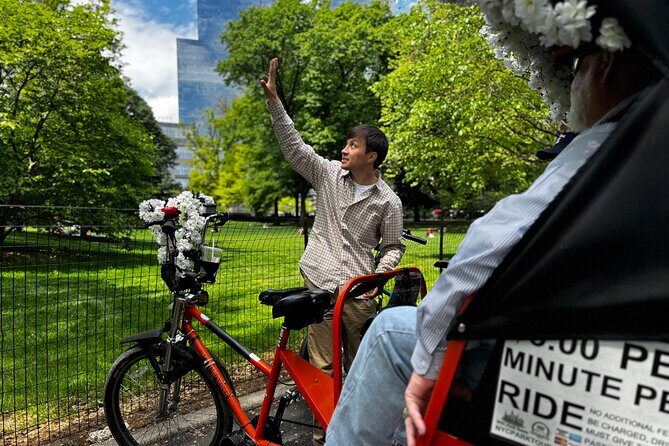
- Private pedicab for your group only, so you are not squeezed into a shared ride
- Seasonal comfort with shade in summer and blankets in winter
- Photo stops with help, not just hurried stops where you take your own chances
- A lot of landmarks in one loop, including Bethesda, Strawberry Fields, and the bridges
- Ricky-style storytelling, with park history and movie/TV connections that make stops click
- Mix of famous and calmer spots, so the tour feels like more than postcard views
The pedicab advantage: faster than walking, smoother than chaos
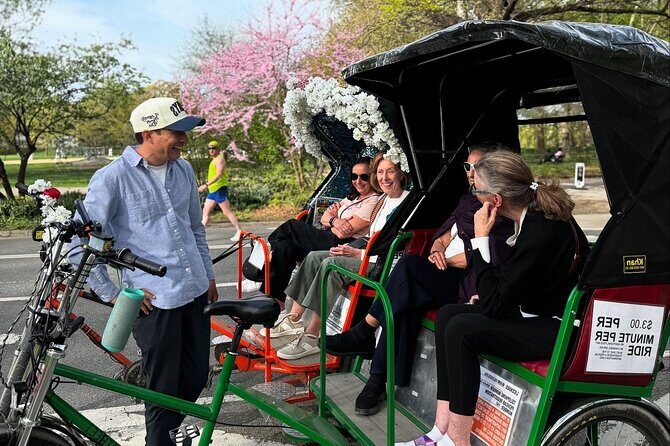
Central Park is big. Even if you are an efficient walker, you spend time crossing streets, circling around entrances, and backtracking when you realize a viewpoint is around the next bend. A pedicab ride fixes that. You get movement between areas, and the guide times short pauses so you can actually enjoy each stop instead of just collecting selfies.
This is also a practical way to do Central Park if you are traveling with kids or anyone who gets tired. You are on wheels for the in-between parts, then you step out when it matters most for photos and quick looks. The tour is private, so you can keep a steady pace without stopping for other groups.
And yes, compared with the slow drift you get on some carriage-style sightseeing, this kind of ride usually feels more action-packed. One of the best things you can do with your time is spend it seeing more of the park, not waiting for traffic or pacing with strangers.
You can also read our reviews of more tours and experiences in New York City



Private first-class comfort: the seasonal perks that matter
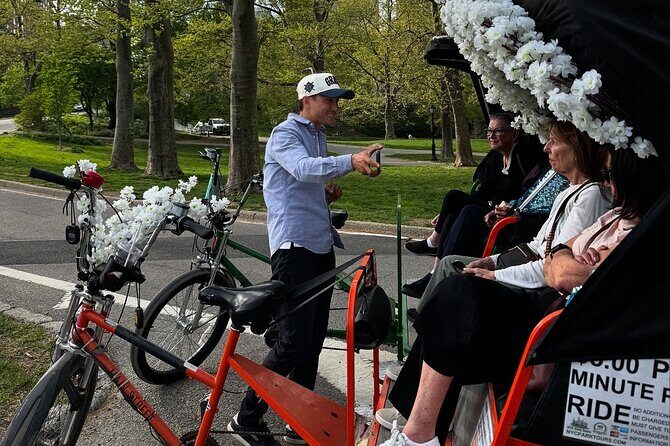
The comfort details are not fluff. Central Park weather changes fast, and shade can be a big deal in summer. In winter, blankets turn what could be a chilly photo walk into something you can actually enjoy.
Your ride is designed for your group only, and that changes the whole vibe. You do not get pulled off schedule by strangers. The guide can adjust the pace to your energy level and your photo priorities, whether you want quick snapshots at big monuments or a slower moment for a fountain view.
This tour also runs on a mobile ticket. That is one less thing to worry about when you are already carrying a day bag, water, and whatever you need to keep everyone happy.
How Ricky turns famous sights into real stories (and better photos)
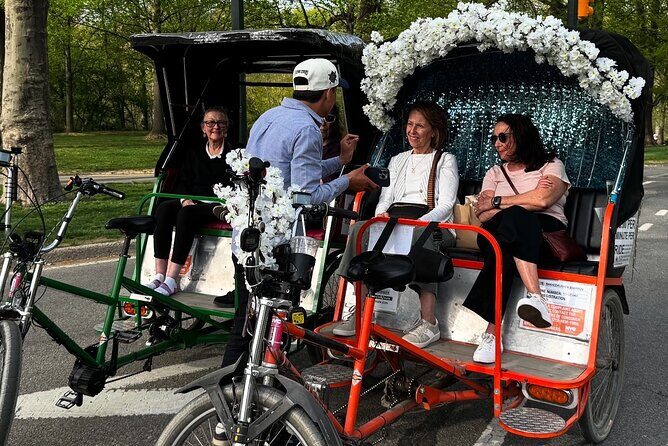
The tour guide name you will see in the feedback for this experience is Ricky. What makes a guide like Ricky work is not just facts, it is how the facts connect. You will get guided commentary about the park’s design and history, and you will hear how specific places show up in movies and TV.
That storytelling piece matters because it changes how you look at what you see. Instead of thinking, I have seen a fountain, you start noticing design choices, timelines, and symbolism. It makes your photos look more meaningful too, because you know what you are capturing.
A big practical bonus: the guide helps with photo assistance. That can be as simple as choosing the best angle or timing a stop so you get the view without the worst crowd pressure. In Central Park, timing is everything.
The Bethesda Fountain and Terrace stop: the Angel, the tiles, and the view

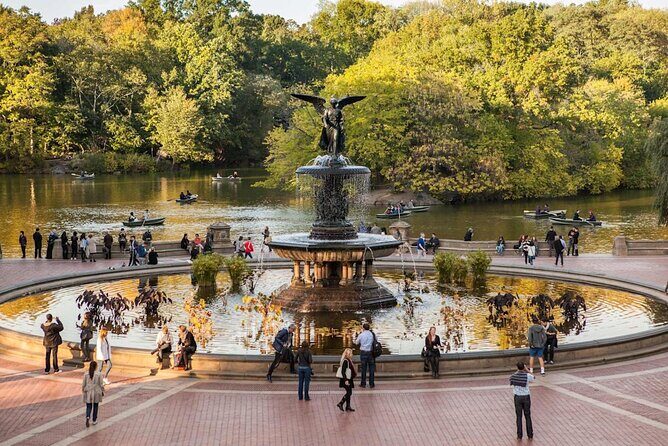
If you only picked one name-brand spot to understand Central Park, it would be Bethesda. The fountain area is one of the park’s most recognizable landmarks, centered on the statue called the Angel of the Waters by Emma Stebbins. The symbolism is a nice touch: the angel blesses the Pool of Bethesda from the Gospel of John, with themes of health and healing.
What you feel here is the scale. The fountain sits on the lower level of Bethesda Terrace, and that terrace view frames the scene the way Central Park was designed to do: a mix of architecture and nature, with a viewpoint that feels like a stage.
Then there’s the detail that many people miss. The terrace arcade ceiling has Minton encaustic tiles—about 14,000 of them. They were removed during a renovation because restoring them was too costly, then later restored with private funding and reinstalled years afterward. Standing there, you get the sense that Central Park is not frozen in time; it gets cared for and repaired, even down to tilework.
If you are traveling with someone who loves architecture or art, this stop hits several interests at once: public art, design, craftsmanship, and a famous skyline-and-green backdrop.
Bridges for postcard-perfect photos: Gapstow Bridge and Bow Bridge
Central Park’s bridges are not just crossings. They are framing tools for photos, and both Gapstow Bridge and Bow Bridge deliver that effect fast.
At Gapstow Bridge, you get the view toward the pond and the Midtown skyline. The bridge itself has stone arches and an ivy look that has made it popular with filmmakers and photographers. Nearby, you can spot park wildlife around The Pond, like ducks and turtles, which adds life to your photos when the light is right.
Bow Bridge is the romantic, curved cast-iron bridge that people picture when they think Central Park. It was completed in 1862 and later restored in 1974. Even with a temporary closure for renovation reported recently, it is still a must-do when the timing works for your visit because the style is so unmistakable.
Practical tip: for both bridges, plan for quick pauses. The best angles usually require you to stand still for a minute while you let traffic of people thin out. This is one of the spots where photo help from your guide is worth it.
You can also read our reviews of more tours and experiences in New York City

The Mall and Cherry Hill: where the park feels like a promenade
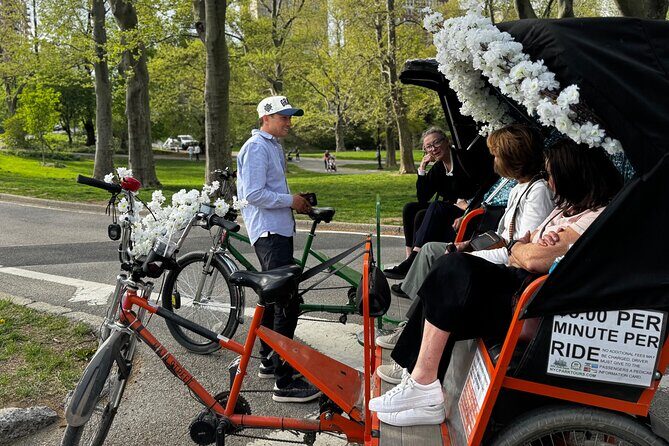
The Mall (also known as Literary Walk) is one of the most distinct parts of Central Park because it is the only intentionally straight line in the park’s winding design. It is lined with tall American elms that create a canopy effect, and it evolved into a cultural gathering space with musicians and performers over time.
You will also see the statues tied to writers, which is where the Literary Walk nickname comes from. This is a great stop for families too, because it feels like a stroll even though you are still getting landmark time.
Just to the west, Cherry Hill Fountain adds another layer. Originally designed as a watering trough for horses, it later became a photo and picnic meeting point. It has a granite dome, a bluestone basin, and details like Minton tiles and frosted lamps. In other words: it is not only pretty, it is Central Park’s 19th-century attention to function plus beauty.
Strawberry Fields: calm, reflective, and loaded with meaning
Strawberry Fields is one of those places where people slow down naturally. It is a memorial dedicated to John Lennon, created as a living tribute after his death in 1980. The centerpiece is the Imagine mosaic, a simple symbol tied to Lennon’s vision of peace.
What makes this stop valuable on a tour is that your guide connects the location to the song and its origins. Strawberry Fields takes its name from Strawberry Fields Forever, linked back to Lennon’s Liverpool connections, and the mosaic adds the international gift element.
For many first-time visitors, this is the moment the park stops feeling like scenery and starts feeling like a story you are walking through.
Chess, carousel, and family-friendly corners that keep kids happy
A Central Park tour can fail if it is only monuments and no fun. This one builds in classic family stops that break up the big landmarks.
The Central Park Carousel is an example of why. The carousel has a long lineage, and the version you will see today dates to the mid-20th century, with a wooden-animal style associated with early carousel makers. Even if you do not ride, the horses and the look of the platform are a throwback that feels right in the park.
Then there is the Chess & Checkers House, an octagonal brick structure built to support outdoor games with tables all around. It is a real community spot, and it even appears in pop culture, including scenes connected to Searching for Bobby Fischer. If you have a chess fan (or a kid who likes strategy games), this is the type of stop that creates a memory beyond photos.
Another family stop is the Dairy House, built in 1870 with Gothic cottage-style architecture. It served as a refreshment place for children and families, later fell into neglect, and then was restored and repurposed as a visitor center. This is a nice moment to grab maps and park info if you want to keep exploring on your own after the tour.
Animals and movie spots: The Pond, the Zoo, Balto, and Conservatory Water
Central Park’s wildlife and film connections are part of why it feels like more than a big city park.
The area around The Pond covers about 3.8 acres and was designed as part of the original 1858 planning. It is associated with cinematic moments too, including Home Alone 2, and it is also one of the calmer-feeling walking areas in the park.
The Central Park Zoo adds education without turning the day into a museum marathon. It started as a small menagerie in 1864 and became the first official zoo in 1934. Today, it is managed by the Wildlife Conservation Society, with exhibits designed to be closer to animals’ native habitats rather than traditional cages. If you are visiting with kids, this stop can be a palate cleanser between photo landmarks.
If you like historical legends, Balto is worth the pause. The statue honors the sled dog who led the final leg of the Serum Run to Nome in 1925, delivering diphtheria antitoxin through extreme winter conditions. It is the kind of statue that sparks quick questions from kids and adults alike.
And for a quieter scenic break, consider Conservatory Water, known for model boat sailing. The area has cherry trees and benches, plus nearby literary statues like Alice in Wonderland and Hans Christian Andersen. It is also tied to Stuart Little through the famous boat-race scene.
Wollman Rink and The Lake: seasonal mood shifts you will actually feel
If you visit in winter, Wollman Rink gives you a classic Central Park winter scene. It opened in 1950 and is named after Kate Wollman, who donated funds in honor of her family. The rink sits with a backdrop of the Manhattan skyline, which makes it one of those places that looks good in almost any weather-light situation.
If you visit outside peak winter, Wollman Rink still helps you understand the park’s seasonal identity. Central Park changes its personality across the year, and this is one of the clearest examples.
The Lake is the park’s big scenic connector. It covers about 20 acres and ties together key areas like the Ramble and Bethesda Terrace. You can stroll around it for views, and there are rowboat rentals at the Loeb Boathouse nearby. Even without getting on the water, the lakeside paths give you that Central Park feeling of escape from the city noise.
On a tour like this, The Lake stop is valuable because it gives your day a breather between dense clusters of monuments and structures.
North-and-east extension on longer options: Cleopatra’s Needle, the Met edge, and Belvedere Castle
Some Central Park highlights happen in the edges. Longer versions of this tour include stops that many first-timers miss because they seem too far to reach on foot.
You can include Cleopatra’s Needle, the oldest outdoor monument in New York City. It dates back more than 3,500 years and originally came from Egypt before being gifted to the United States in the late 19th century. It was dedicated in Central Park in 1881. The hieroglyphs give it a real sense of time depth—this is history you can stand next to.
You may also pass by the Metropolitan Museum of Art area. The original museum building opened in 1880 along the eastern edge of Central Park, and the museum grew with major expansions over time. Even if you do not step inside, the placement and the architecture make it feel like part of the Central Park experience rather than something separate from it.
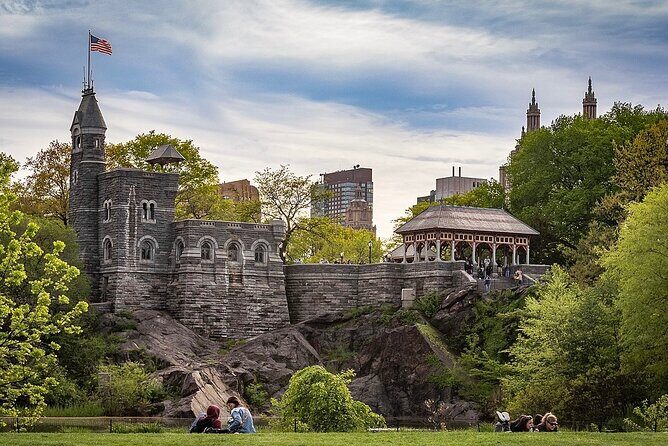
For views, Belvedere Castle is a standout. It sits atop Vista Rock, designed as a decorative folly in Gothic and Romanesque styles. You can climb toward an observation deck for panoramic views, and it has served as Central Park’s official weather station since 1919.
If your group likes viewpoints and landmarks with a clear “wow factor,” these north-and-east additions make the longer tour option feel worth it.
Price and value: $39.20 for a private photo-focused loop
At $39.20 per person, you are paying for three things at once: private transportation via pedicab, a guided route, and photo stops where someone helps you get the shot.
Yes, Central Park is free to enter. But the value here is the time you save and the number of named sights you can fit into a 1- to 3-hour window. If you tried to do this same set of stops without help, you would likely spend extra time figuring out routes, walking between distant areas, and getting tired before you reached the big photo points.
The ticket value note to keep in mind: the tour mentions an admission ticket included for the main Central Park portion, while many other stops list admission ticket free. So you are not paying extra at every stop, and you are not stuck guessing how much is included until you are already on your way.
Who should book this Central Park pedicab tour
Book it if you want a Central Park day that feels organized and photo-focused without turning into a full-day itinerary. It is especially good for:
- Families who need a ride between stops
- First-time visitors who want the biggest iconic sights plus a few quieter corners
- People who like history and pop culture connections tied to real places
- Anyone who wants a more efficient pace than slow carriage-style sightseeing
If your group loves wandering with zero structure, you might prefer to explore on your own. This tour is built to guide you through specific, recognizable locations.
Should you book?
I think you should, if your goal is to see a lot of Central Park in a limited window and still get help with photos. The private pedicab format makes it easier to manage energy, and the seasonal comfort details keep the day from feeling miserable. Add in Ricky’s storytelling style, plus the mix of fountains, bridges, family-friendly stops, and movie-linked spots, and you get a tour that feels like Central Park rather than just a checklist.
If weather is a concern for your dates, plan a backup mindset. But when the skies cooperate, this is a smart way to get the park’s highlights with less friction and better memories.
FAQ
How long is the Central Park First Class tour?
The duration is listed as about 1 to 3 hours, depending on the option you choose.
Is this a private tour?
Yes. It is a private activity for your group only.
What is included in the ride?
It includes a private pedicab experience with seasonal comforts like shade in summer and blankets in winter, plus photo assistance from your local host.
What is the meeting point?
The tour starts at 1415 6th Ave, New York, NY 10019, and it ends back at the meeting point.
Do I need to print anything?
No. You get a mobile ticket.
Is admission included?
The main Central Park portion lists an admission ticket included, while many other stops are noted as admission ticket free.
What language is the tour offered in?
It is offered in English.
Is the tour suitable for most people?
The info says most travelers can participate.
What happens if the weather is bad?
The experience requires good weather. If it is canceled due to poor weather, you will be offered a different date or a full refund.
What is the cancellation window for a full refund?
Free cancellation is offered if you cancel at least 24 hours before the experience’s start time.