REVIEW · NEW YORK CITY
New York City: The Bible at the Metropolitan Museum of Art
Book on GetYourGuide →Operated by The Bible at the Met · Bookable on GetYourGuide
Bible stories land differently at the Met.
This guided tour connects the Bible to objects you can actually see, moving through Egyptian galleries and then into the museum’s Greek and Roman world, with Bible-inspired art along the way. I especially like how it turns museum wandering into a guided story line, and how the explanations make the connections feel practical instead of academic. A key name here is Mel Lehman, whose calm, flexible style and deep links between objects and Bible passages often come up in the best feedback.
One thing to keep in mind: it’s only 2 hours, so you’ll focus on the Bible-related trail rather than trying to take in every Met room.
In This Review
- Key things to know before you go
- Finding the Bible at the Met’s Great Hall start point
- Egypt first: where Exodus meets the ancient world
- Then Greece and Rome: Bible stories in a wider frame
- Bible-inspired paintings: how artists pictured the stories
- How the 2-hour flow keeps you from museum overload
- Mel Lehman’s approach: calm, flexible, and practical
- Photography, water, and what to bring for a smooth visit
- Price and value: what $60 buys you in a Met day
- Who this tour suits best
- Should you book The Bible at the Met?
- FAQ
- How long is the tour?
- Where do I meet for the tour?
- What languages is the live tour guide available in?
- Is the tour non-sectarian?
- Does the ticket include time in the museum after the tour?
- What is included in the price?
- What is not included?
- Are photos allowed?
- What should I bring?
Key things to know before you go
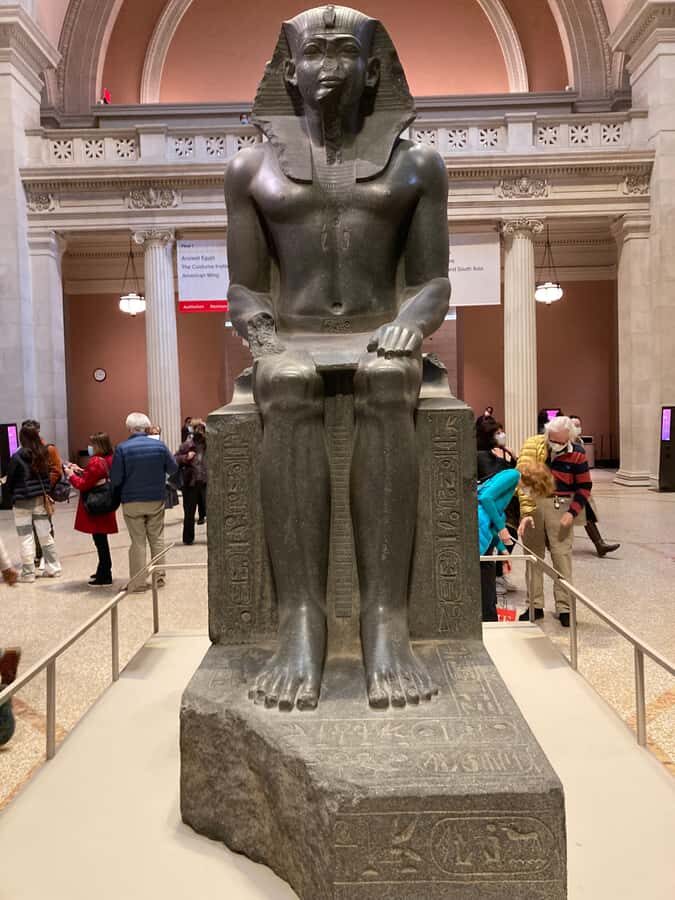
- Meet at the Statue of Pharaoh in the Met’s Great Hall entrance area to start on time
- Egypt, then Greece and Rome gives you the big time-frame the Bible touches
- Bible-inspired masterpieces help you understand how artists pictured the stories through centuries
- Mel Lehman’s method pairs artifacts with corresponding Bible passages, sometimes via a handy brochure
- You’ll move, but you can pace it with breaks that the guide can adjust to your needs
Finding the Bible at the Met’s Great Hall start point
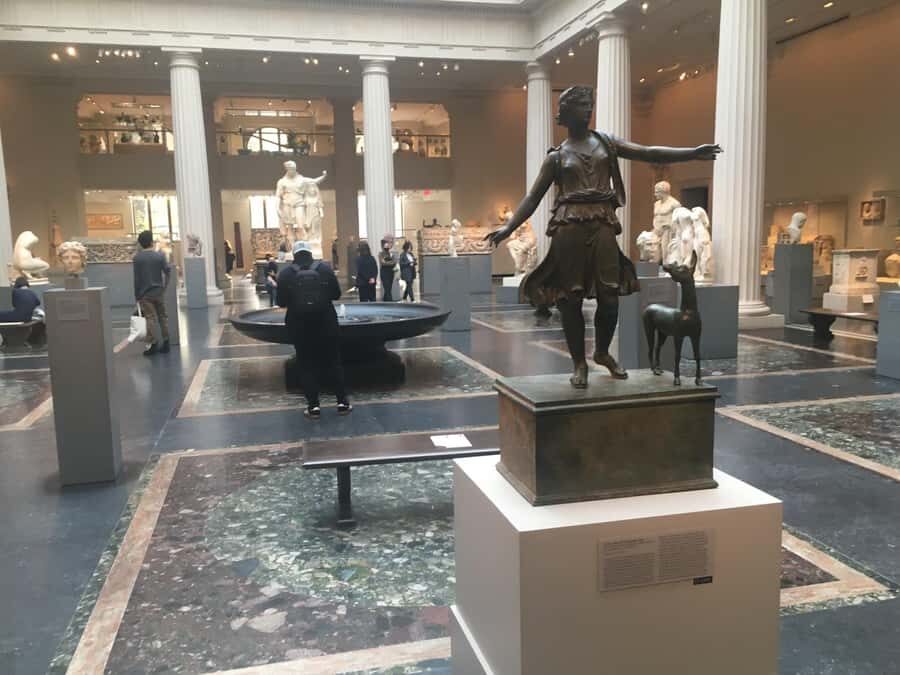
The Met is big. Even if you’ve been before, it’s easy to lose time. That’s exactly why a guided route helps.
You start at a very clear landmark: the Statue of Pharaoh at the Great Hall entrance. It’s a good cue because it instantly signals the direction of the tour. From there, you’re not just “going to look around.” You’re following a path that links biblical themes to the ancient world and to later European art that borrowed those themes.
The tone is also worth noting. This tour is non-sectarian, which matters in a museum setting. You don’t need to show up with a particular religious identity to get value. You just need curiosity and a willingness to see the Bible through both archaeology-adjacent context and the way art has interpreted it over time. The tour still assumes that some familiarity with the Bible will help you catch more of the meaning, but it isn’t preachy.
You can also read our reviews of more city tours in New York City



Egypt first: where Exodus meets the ancient world
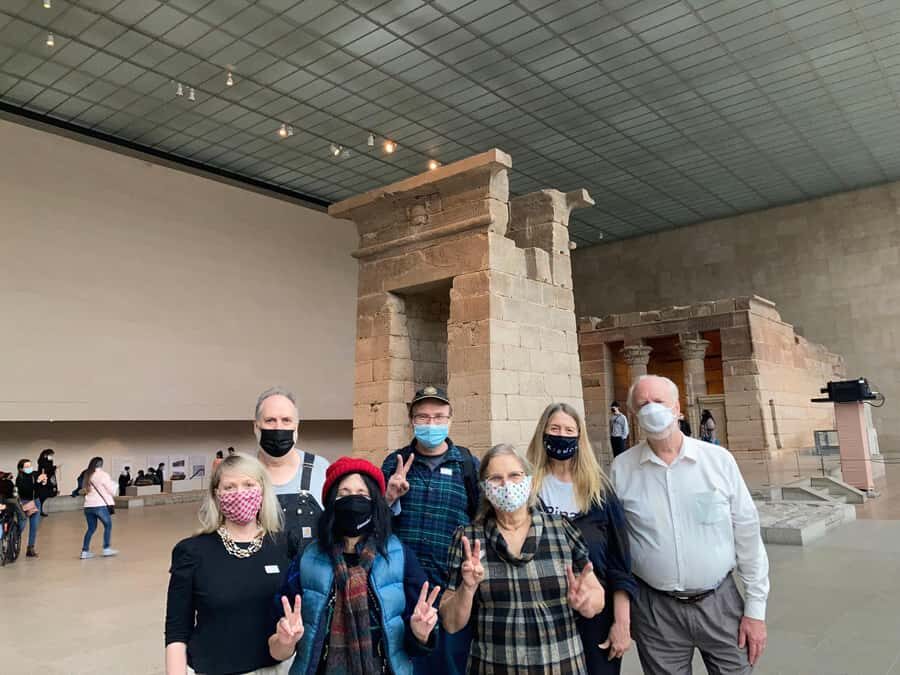
The Egyptian section is the backbone of this experience. You’ll spend time in that area because a major thread of biblical tradition connects to ancient Egypt, including the setting and themes associated with the Exodus. The point isn’t to argue one thing or another. It’s to help you recognize how “place” shapes story.
In a museum, Egypt can be both obvious and confusing. It’s impressive, and it’s also easy to treat as just “old stuff.” A guided look changes that. You’ll connect what you see—objects, styles, and cultural signals—to the kind of world the Bible describes. That makes the stories feel less like distant text and more like something that emerged inside real historical settings.
If you like that moment when your understanding clicks—when the museum suddenly stops being random browsing—this is where it happens. Egypt is the section that gives you the strongest jump from “Bible reading” to “human history.”
Practical tip: wear comfortable shoes. Egyptian galleries involve more walking than you might guess once you’re focused on details.
Then Greece and Rome: Bible stories in a wider frame
After Egypt, the tour shifts to ancient Greece and Rome, both of which show up in biblical tradition and in the broader cultural context surrounding it. Even if your interest is mainly Bible-related, this part helps you understand how stories and ideas traveled through different empires and languages and social systems.
Greece and Rome also help with perspective. They can make you realize that the Bible didn’t land in a vacuum. It interacted with the cultural world around it, and later generations read those interactions back into their own understanding of faith, community, and meaning.
For your experience, this section adds balance. You get a sense of continuity and change: how themes persist, but how the way people imagine them can shift dramatically depending on era and audience. If you like seeing how one tradition is repeatedly reframed over time, you’ll appreciate this part.
Bible-inspired paintings: how artists pictured the stories
The Met isn’t only archaeology. It’s also a museum of European art that took biblical themes and gave them faces, drama, and symbolism. This tour includes time to see art by some of the world’s greatest painters who were inspired by Bible stories.
This is one of the smartest parts of the tour for non-specialists. Bible-inspired art gives you something archaeology alone can’t: a view of interpretation. Artists weren’t just recording what happened. They were telling you what they thought mattered, what they wanted you to feel, and how to visualize the story for the people of their own time.
Even if you’re not hunting for theology, paintings are a fast way to understand cultural impact. You’ll likely notice recurring visual cues—figures, gestures, staging—that reveal how later viewers imagined earlier narratives. It’s a different kind of learning than reading dates and artifacts. It’s more human. More immediate.
How the 2-hour flow keeps you from museum overload
This is a 2-hour guided tour. That time limit is both the strength and the trade-off.
The strength: you get structure. You won’t wander for an hour trying to decide which rooms are “worth it.” The guide’s job is to connect the dots between the Bible and what the Met is showing you. You leave with takeaways that feel tied together, not scattered.
The trade-off: you’ll miss plenty of the Met. The tour is designed around a Bible-focused route, not a complete tour of the entire museum. So if your dream is to see everything the Met offers, this won’t replace that. It’s a targeted experience.
Where it gets even better is what happens after. Your ticket is good for the remaining part of the day after the tour. That means you can use the guide’s pathway as a warm-up, then shift into free exploration with clearer priorities. Once you’ve seen the “Bible at the Met” connections, you’ll be able to spot other related themes much faster on your own.
Also, this kind of pacing works well if you don’t want your day hijacked by long museum marathons. Two hours is manageable even when you’ve got other New York plans.
You can also read our reviews of more museum experiences in New York City






Mel Lehman’s approach: calm, flexible, and practical
One of the most consistently praised elements is the guide, with Mel Lehman standing out by name. In the reviews and in the way this tour is described, his style is marked by warm engagement and a strong ability to connect specific artworks and artifacts back to the Bible.
Here’s what that looks like in real life:
- He’s comfortable answering questions, even the kind you might worry are too basic
- He shares context that isn’t just printed on the wall labels
- He’s flexible about pacing, including taking breaks when needed
- He provides a brochure format that pairs artifacts with corresponding Bible passages, which helps you keep track of what you saw
That last point matters more than you’d think. In a museum, it’s easy to forget which object matched which story. A simple list you can use afterward turns your memory into something you can actually keep using.
If you like learning that feels conversational rather than like a lecture, you’ll likely enjoy Mel’s approach. And if you have questions tied to your own reading, this tour format tends to work well because the guide can bring the Bible and the objects into the same conversation.
Photography, water, and what to bring for a smooth visit
This tour supports typical museum behavior, with a couple important reminders.
Bring:
- Comfortable shoes (the Met involves real walking)
- Camera (and use it in permitted ways)
- Water (there are no water fountains you can rely on for refills)
Photo rules:
- No flash photography
- Photography without flash is allowed
No one wants to stop every few minutes because they’re thirsty or their feet hurt. Having a bottle of water ready and staying comfortable makes the tour more enjoyable, especially since it’s guided and you’re moving between sections.
Price and value: what $60 buys you in a Met day
The price is $60 per person for a 2-hour guided tour.
That might sound like a lot until you look at what you’re getting. You’re not just paying for someone to walk with you. You’re paying for a guide who connects three things that usually don’t connect neatly on your own:
1) museum objects tied to biblical-era themes
2) the Egyptian/Greek/Roman time frame that gives context
3) Bible-inspired art that shows how later artists interpreted those stories
And you’re also getting the added benefit of ticket access for the rest of your day. That pushes the value beyond the short time slot. If you were going to visit the Met anyway, this tour is a way to “buy direction” so your independent exploring has a clearer focus.
If you love museums but hate doing background research yourself, this is good money spent. If you already know every biblical reference and you plan to study art history labels for hours, you might not feel the need for a guide. For most people, though, it hits a sweet spot between effort and payoff.
Who this tour suits best
You’ll probably love The Bible at the Met if:
- you want a Bible connection without a lecture-heavy format
- you enjoy art and archaeology but want them tied together in plain language
- you’d like a guide who can answer questions and adjust pacing
- you’re the type who likes having a trail you can follow through a huge museum
It may be less satisfying if:
- you only want one type of content (for example, only paintings or only archaeology)
- you don’t want any Bible context at all, since the entire route is built around linking artifacts and art to Bible themes
- you’re hoping for a full overview of everything in the Met during one visit
Should you book The Bible at the Met?
Yes, if you’re visiting the Met and you want your time to feel organized and meaningful. This tour is a smart way to connect Egypt, the wider Mediterranean world of Greece and Rome, and later Bible-inspired art into one coherent experience.
Book it if you like the idea of walking out with practical takeaways—especially with a guide like Mel Lehman who’s known for making those connections clear and for pacing the tour with you in mind. Skip it only if you plan to spend your day treating the Met like a checklist of rooms, because this experience is focused by design.
If your goal is understanding, not just seeing, this tour is a strong fit.
FAQ
How long is the tour?
It lasts 2 hours.
Where do I meet for the tour?
Meet at the Statue of Pharaoh in the Great Hall entrance area of the Metropolitan Museum of Art.
What languages is the live tour guide available in?
The live tour guide is available in English.
Is the tour non-sectarian?
Yes. It is described as non-sectarian and appropriate for people of faith and of no faith alike.
Does the ticket include time in the museum after the tour?
Yes. Your ticket is good for the remaining part of the day after the tour.
What is included in the price?
The guided tour of the Metropolitan Museum of Art and viewing of archaeology and art related to the Bible are included.
What is not included?
Meals and beverages, transportation to and from the museum, and personal expenses are not included.
Are photos allowed?
Photography is allowed as long as you do not use flash photography.
What should I bring?
Bring comfortable shoes, a camera, and water (there are no water fountains, so a bottle helps).