REVIEW · NEW YORK CITY
Wall Street Insider Tour with a Finance Professional
Book on GetYourGuide →Operated by The Wall Street Experience · Bookable on GetYourGuide
Wall Street turns human on this walk. I like the firsthand insider stories and the street-by-street history that connect finance to the actual city. One thing to consider: it’s a short walking route with mostly photo stops outside big institutions, so it’s not the right pick if you expect long interior visits.
Guides vary, but the pattern is strong: former traders, bankers, brokers, and other Wall Street veterans bring real work experience to each corner. I also like how questions stay welcome; when groups are small, you can ask your own what-does-that-mean questions. Names you may hear from past groups include Jess, Jose, Dana, and Eric Mossman, and you’ll often get personal angles too, including SEC work stories and family connections to the stock exchange.
In This Review
- Key highlights at a glance
- Why a Wall Street insider walk beats a generic financial district stroll
- Getting Oriented at 22 Broad St and Blue Bottle Coffee
- NYSE exterior photo stop: the building as a power symbol
- Wall Street blocks: the streets where deals and reputations form
- Federal Hall: where Washington’s inauguration still lands today
- Stone Street Historic District: the immigrant story you can actually see
- Charging Bull: iconic, yes, but worth hearing as a symbol
- Trinity Church: architecture, time, and the city’s long memory
- Federal Reserve area drop-offs: finishing with the modern center of gravity
- The pace of 75 to 90 minutes: how to get the most without rushing
- Price and value: what $39 buys in a city of expensive ideas
- Who should book this Wall Street Insider Tour
- Should you book this Wall Street Insider Tour?
- FAQ
- FAQ
- Where does the tour start?
- How long is the Wall Street Insider Tour?
- How much does it cost?
- What places will we see during the tour?
- Is pickup or drop-off included?
- Is the tour accessible for wheelchairs?
- What language is the tour offered in?
- Can I cancel or change my plans?
Key highlights at a glance
- Finance insiders as guides who connect markets to the buildings and street layout
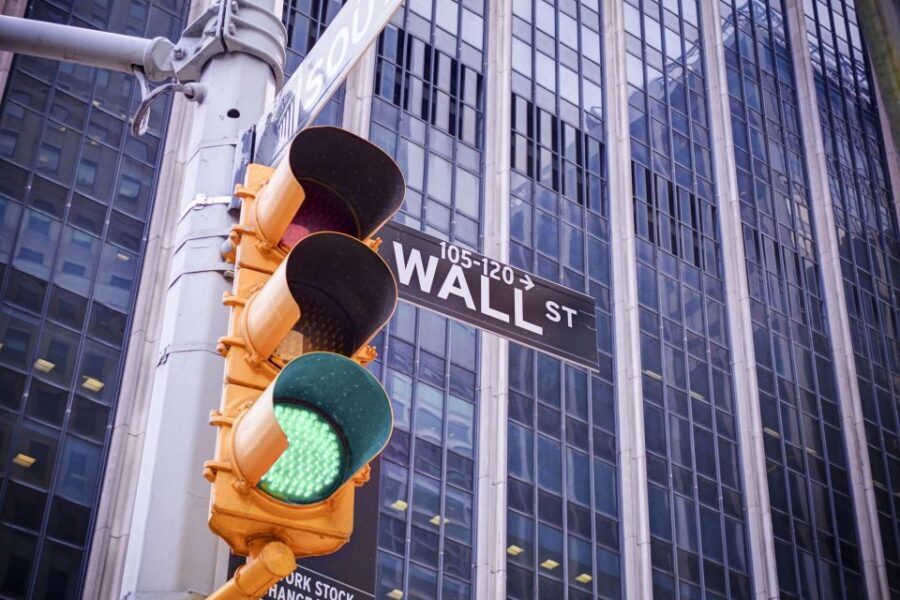
- NYSE, Federal Hall, and the Federal Reserve area on one tight walking loop
- Charging Bull + Trinity Church for quick landmarks that still fit the story
- Immigrant-driven finance history woven into the city’s early trading days
- Photo-stop pacing that keeps you moving without a marathon walk
- Small-group Q&A potential when the group size allows
Why a Wall Street insider walk beats a generic financial district stroll
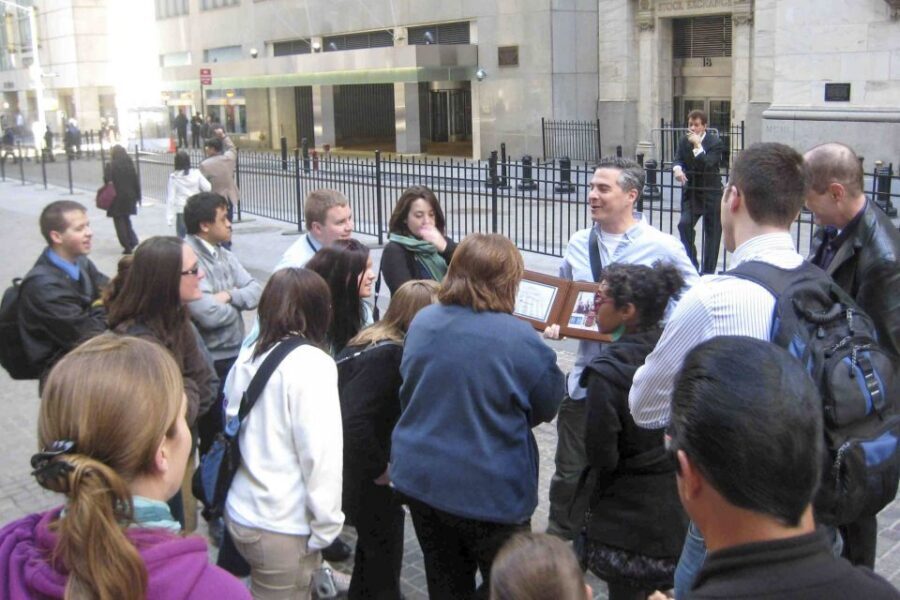
Manhattan can feel like it’s all glass towers and blur. This tour slows it down and gives you a map for the meaning behind what you’re seeing—why certain institutions ended up here, how the streets formed the money trail, and how the city’s waves of newcomers shaped financial life.
At $39 for about 75 to 90 minutes, you’re not paying for a lecture. You’re paying for a guide who has actually worked close to the systems people only read about. That’s the value: you get context fast, and it sticks because it’s tied to specific places.
You can also read our reviews of more tours and experiences in New York City.



Getting Oriented at 22 Broad St and Blue Bottle Coffee
The tour starts at 22 Broad St, and you’ll meet the guide outside Blue Bottle Coffee. This matters more than you’d think: the Financial District is dense, and a clean meeting point helps you avoid the usual first-10-min scramble in a crowded corner of the city.
Once you’re grouped up, the guide frames the route so you know what each stop is likely to teach you. You’ll hear how New York grew from early Dutch trading days into a global finance center, and you’ll get the big thread of how the neighborhood evolved over 400-plus years—not as a textbook timeline, but as a chain of decisions made by real people.
NYSE exterior photo stop: the building as a power symbol
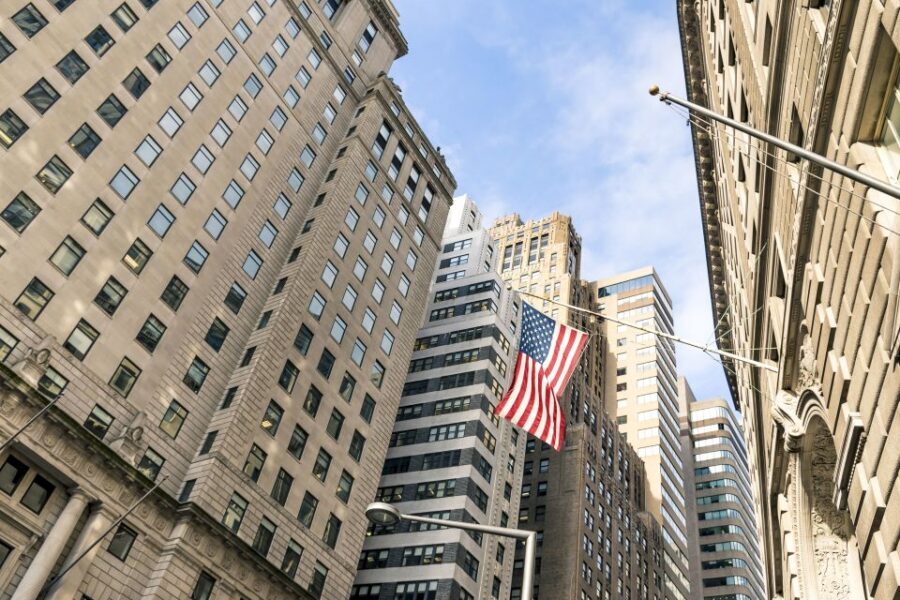
You’ll hit the New York Stock Exchange early, with a photo stop and enough guidance to make the façade feel purposeful. Even if you’ve seen pictures of the NYSE before, standing near it changes the scale. It’s not just an iconic building—it’s a signal flare that tells you where market history concentrates.
The guide’s finance background typically makes this stop more than sightseeing. You get stories about how the street-level environment shaped how deals moved, and why the NYSE became one of the places where economic mood turns into real-world pressure.
Tip for you: have your camera ready before the group bunches up. Photo stops can move quickly, and you’ll want at least one clean shot that isn’t swallowed by foot traffic.
Wall Street blocks: the streets where deals and reputations form
Next is Wall Street itself, another photo stop plus guided walking. This is where you start seeing the neighborhood as a system: narrow streets, corners that funnel crowds, and landmarks positioned for visibility and credibility.
What I like about the way this is taught is that you don’t just hear facts. You get framing—how the financial world has always depended on trust, access, and speed, not only on numbers. The guide will connect the dots between early commerce, later institutional power, and the modern reality of finance as a public performance as much as a private engine.
You’ll also hear a few surprising bits of local history. One theme that comes up is how a well-meant cleanup effort helped wrongdoing stay out of view for a long time. That kind of story gives Wall Street texture. It reminds you the city’s money history wasn’t always clean, and it didn’t always get corrected fast.
Federal Hall: where Washington’s inauguration still lands today
Federal Hall is a key stop, and it’s one of the moments where the tour earns its title: you’ll stand where Washington was inaugurated as president. It’s a “small space, big meaning” kind of stop—perfect for a short tour because it compresses national history into one location.
The guide uses this site to connect government to finance. That link matters because the Financial District grew alongside policy, not in a separate universe. You’ll hear why this area became a hub where laws, currencies, and institutional credibility overlap.
In practical terms, Federal Hall also gives you a mid-tour reset. After walking past market icons, you get to anchor the story in founding-era decisions and the early American promise that order could be built.






Stone Street Historic District: the immigrant story you can actually see
Then it’s over to the Stone Street Historic District for another photo stop and guided walk-through. This stop is where you can feel the city layering itself: older street geometry, compact facades, and the kind of streetscape that makes you understand why businesses once clustered here.
The tour also leans into the theme that immigrants shaped financial institutions. You’ll get the sense that these streets didn’t become powerful by accident. People moved here because opportunity pulled them in, and then they turned those opportunities into systems that outlasted them.
Drawback to consider: if your interest is purely modern finance mechanics—like trading strategies—you may want the guide to spend extra time on the “how money works” side. This stop can be more about roots and context than formulas.
Charging Bull: iconic, yes, but worth hearing as a symbol
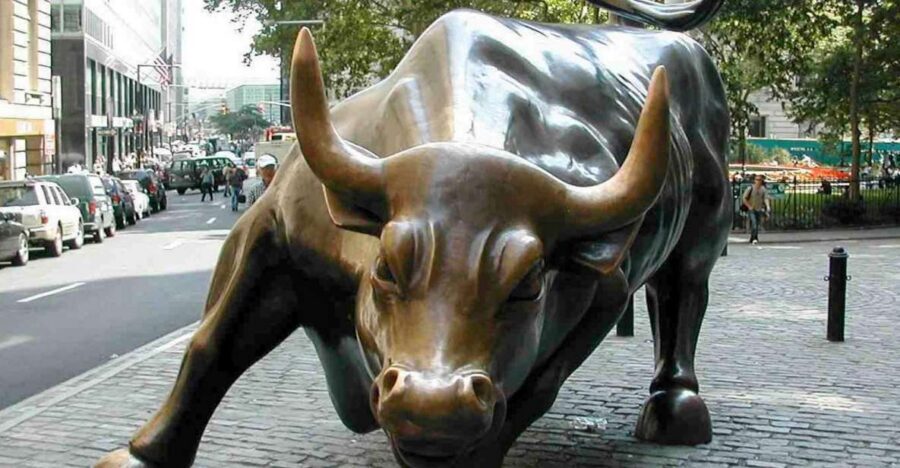
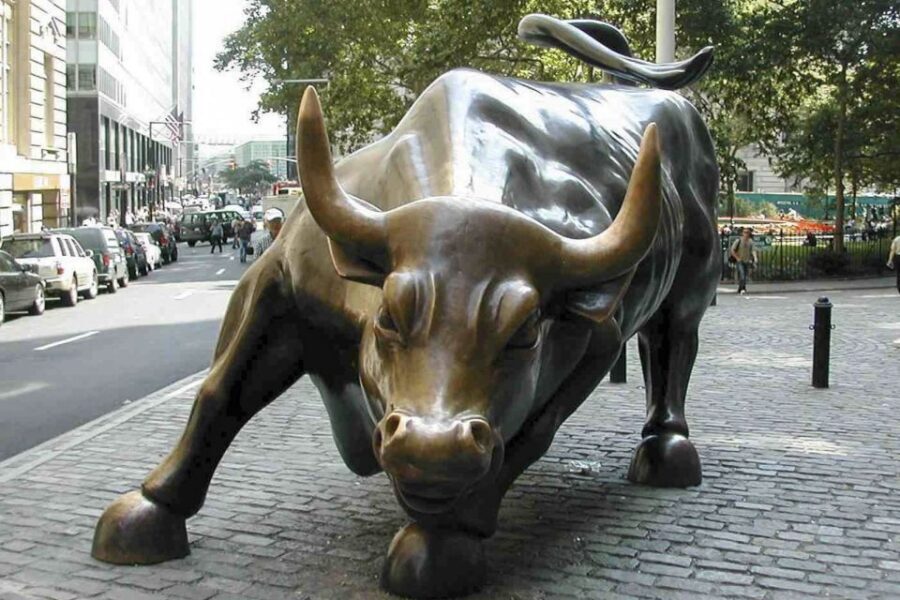
You’ll get to Charging Bull for a photo stop. It’s the kind of landmark that most visitors recognize instantly, but the guide’s job is to help you see it as more than a must-take snapshot.
In this tour, the bull becomes part of a theme: confidence, risk, and the visible language of markets. The street art crowd and the finance crowd overlap here, and hearing the story behind the symbol makes the statue feel like a shorthand for investor mood—what people hope for, and what they fear.
Go early or late in the day if you can, because foot traffic can get heavy around popular photo spots. During a tight 75–90 minute tour, it’s smart to keep one eye on the guide and one on your chance for a clear picture.
Trinity Church: architecture, time, and the city’s long memory
Next is Trinity Church for another photo stop. This is a good “breather” stop: you get a clear visual anchor, and the guide can place it in the broader story of how New York’s institutions grew with prestige and permanence.
What makes this part work is the pacing. After finance sites and symbolic street landmarks, you shift into something older and steadier. It helps you understand why Wall Street wasn’t only a place for markets—it became part of the city’s identity, and identity is built through buildings, rituals, and respected neighbors.
If the weather is rough, Trinity Church is also the kind of place where the group often benefits from staying close together and listening without losing the thread.
Federal Reserve area drop-offs: finishing with the modern center of gravity
The tour ends with two drop-off locations: the Federal Reserve Bank of New York area (Harry B Helmsley Plaza is one of the listed endpoints). This is a smart close, because you’re leaving with a “current power” reference point, not just old-school history.
You may not have time for a full independent museum-style experience afterward, but the finishing location helps you plan what comes next: a walk, a nearby coffee stop, or a quick reconnect with your wider Manhattan route.
This is also where I’d suggest you check your energy level. If you’re planning other Financial District stops the same day, build in extra time for foot traffic. You’re starting from one of the busiest areas in the city.
The pace of 75 to 90 minutes: how to get the most without rushing
This is a short tour. That’s the point. You’ll cover multiple landmarks in a compact footprint, and you’ll spend more time listening than relocating.
Several past participants noted that the duration feels well matched to the number of stops, with less wandering than you might expect from “many sights in one go.” In cold weather, one guide even planned an indoor stop so the group wasn’t stuck outside for every moment, which is exactly the kind of practical adjustment that makes a short tour feel comfortable.
Practical note for you: wear shoes you can stand in for photos and listening breaks. This is not a sit-down, headset-and-broadcast type of activity. It’s a walk where your legs are part of the experience.
Price and value: what $39 buys in a city of expensive ideas
In New York, you’ll find tours all over the map in price and quality. Here, the standout value is not a bargain price—it’s what you get for the time.
For about $39, you’re getting:
- a live English-speaking guide with real Wall Street work background
- a guided route that connects landmarks to a larger historical story
- a format built for quick context, not long lectures
If you’re visiting for the first time, this is a strong “orientation tour.” You’ll leave with names, themes, and a sense of why the Financial District feels the way it does. If you already love finance, it can also work as a fast way to add human context to famous buildings.
Who should book this Wall Street Insider Tour
This tour fits best if you:
- want a short, high-impact walk focused on Wall Street history and institutions
- like hearing real-world finance perspectives, not just city facts
- enjoy landmark stories, especially when they connect government and markets
- plan a first-day or second-day schedule in Lower Manhattan and want quick bearings
It may not fit as well if you:
- want lots of interior access or a museum-like pace
- need deep technical trading instruction or hands-on market analysis
- dislike walking in crowds, because this area can be busy
Wheelchair accessibility is listed, so you can also feel better about physical access options. Private group availability is noted too, which is worth considering if you want a calmer Q&A space.
Should you book this Wall Street Insider Tour?
Yes, if you want a smart way to see the Financial District with meaning attached. This is the type of tour that helps you stop seeing Wall Street as a skyline and start seeing it as a set of decisions made by people—some brilliant, some messy, all connected to the city.
I’d especially recommend it for first-time visitors who want a quick history-and-institutions foundation, and for finance-curious travelers who enjoy asking questions and getting direct answers from a professional background.
FAQ
FAQ
Where does the tour start?
You meet your guide outside Blue Bottle Coffee, and the starting location is listed as 22 Broad St.
How long is the Wall Street Insider Tour?
The duration is listed as 75 to 90 minutes.
How much does it cost?
The price is $39 per person.
What places will we see during the tour?
The tour includes stops for photos and sightseeing at the NYSE building, Wall Street, Federal Hall, the Stone Street Historic District, Charging Bull, and Trinity Church, plus ending drop-off locations at the Federal Reserve Bank of New York area and Harry B Helmsley Plaza.
Is pickup or drop-off included?
Pickup/drop-off is not included, but the tour does have two drop-off locations listed for where you’ll end.
Is the tour accessible for wheelchairs?
Yes, the tour is listed as wheelchair accessible.
What language is the tour offered in?
The tour is English-speaking.
Can I cancel or change my plans?
Free cancellation is available up to 24 hours in advance for a full refund, and reserve now & pay later is offered.