REVIEW · BOSTON
Boston Walking Tour of The Freedom Trail, Small Group
Book on Viator →Operated by Guided Tours Guild · Bookable on Viator
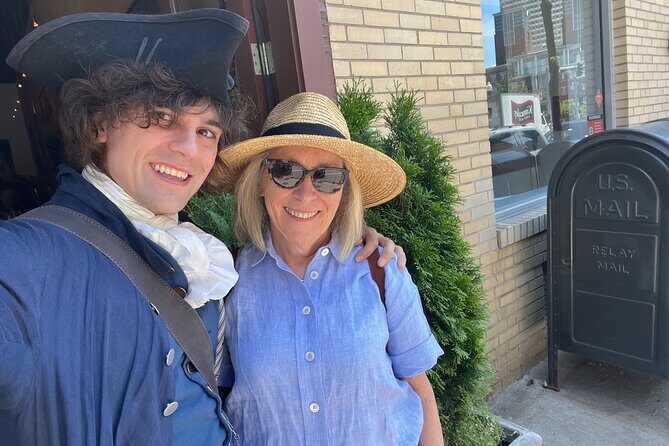
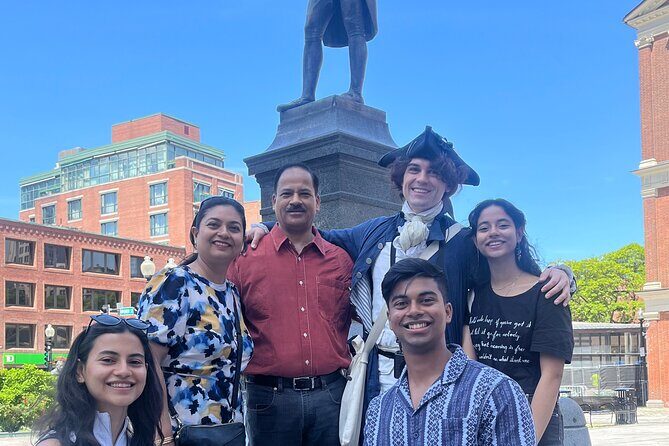
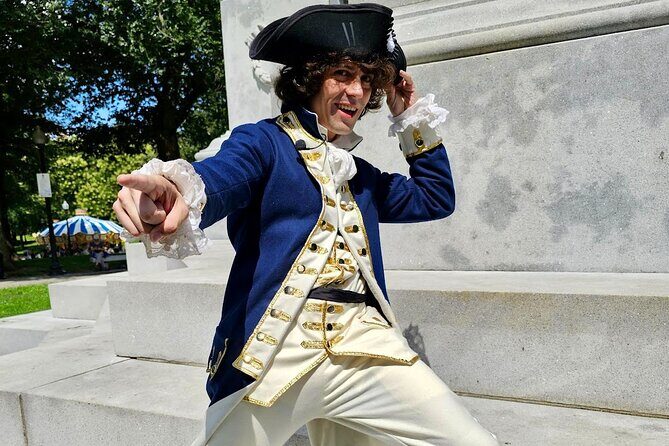
Stories make Boston click into place. On this Boston Freedom Trail walking tour, the route hits big Revolutionary-era landmarks in a clear order, and you get a microphone system so the story stays easy to follow. I also love that the guide is happy to pose for photos as you explore, which makes the whole thing feel friendly instead of stiff.
The one thing to plan for is pacing: the narration is packed with facts and stories, so if you prefer a slower, more laid-back chat, you might feel a little rushed at the busiest stops on cold or windy days.
For $32 per person and about 1 hour 15 minutes, you’re buying a focused walk with a small-group vibe (maximum 40). The tour ends at Faneuil Hall Marketplace near the Samuel Adams statue, which is handy when you want bathrooms and something to eat right away.
In This Review
- Key highlights to know before you go
- Why this Freedom Trail walk feels easier than self-guided wandering
- Price and time: what $32 really buys
- Where you start (Lafayette Mall) and how the route sets you up
- Boston Common: start where the story feels grounded
- Massachusetts State House: government power with a personal name attached
- Park Street Church: an active landmark from the 1800s
- Granary Burying Ground: where the names stop being textbook words
- Benjamin Franklin statue area and the Boston Latin school connection
- Old South Meeting House: built in 1729, famous for the Boston Tea Party lead-in
- Boston Massacre site and Old State House: from fear to fallout
- Faneuil Hall Marketplace: end with food, bathrooms, and a free museum
- What Captain Pickles’ guide style is best at
- Who this tour is for—and who might skip it
- Should you book this Freedom Trail small-group walk?
- FAQ
- FAQ
- How long is the Boston Walking Tour of the Freedom Trail?
- How much does the tour cost?
- Where does the tour start and where does it end?
- How big is the group?
- Is the tour offered in English?
- Can I use a mobile ticket?
- What if the weather is bad?
- Is free cancellation available?
Key highlights to know before you go
- Microphone audio support keeps the guide’s explanations clear outdoors
- Captain Pickles’ storytelling style blends humor with lots of Revolutionary-era detail
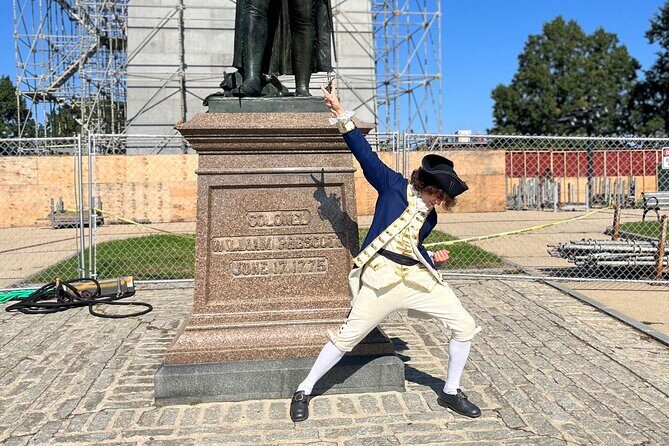
- Photo-friendly guide means you’re not just watching from the back of the group
- Tight stop sequence helps you connect places instead of seeing a pile of buildings
- Easy social feel with fellow history lovers in a small group size (up to 40)
Why this Freedom Trail walk feels easier than self-guided wandering
The Freedom Trail can be fun on your own, but it’s also easy to get lost in the middle of it. A guided walk gives you what the trail usually lacks: order, context, and the “why this place matters” thread that ties everything together.
This tour leans into that. You walk a downtown loop of classic sites, and your guide keeps talking clearly with a microphone system. Even on a chilly day, you can focus on the details instead of constantly scanning street signs and guessing what you’re looking at.
And yes, the guide is also comfortable with real interaction. The vibe is part lesson, part walking conversation, and you’ll notice people relax into group chat as you move from stop to stop.
You can also read our reviews of more walking tours in Boston



Price and time: what $32 really buys
At $32 per person for about 1 hour 15 minutes, you’re paying for three things: time efficiency, interpretation, and “someone else did the planning.” You get admission-free access at each stop along the way, so your money goes to the guide and the structure.
The schedule is tight, which is good value if you’re trying to see a lot without spending half a day on foot. It’s also worth noting that the tour is designed for most travelers, and the walking pace is described as easy in the feedback you’ll hear about Captain Pickles’ approach.
If you only have one morning or early afternoon window in Boston, this is the kind of tour that can make the Freedom Trail feel coherent instead of random.
Where you start (Lafayette Mall) and how the route sets you up
The meeting point is Lafayette Mall Monument at Boston Common. The walk then flows through key downtown sites and finishes at Faneuil Hall Marketplace by the statue of Samuel Adams.
That start matters. You begin right in the heart of the Boston Common area, which gives you a strong mental anchor for the rest of the route. By the time you reach the end, you’ve connected government buildings, meeting houses, and Revolutionary events in a way that sticks.
It also helps that the tour ends near practical stuff: Faneuil Hall Marketplace has bathrooms, local food options, and a free museum. So you’re not stuck hunting for basics after your tour is done.
Boston Common: start where the story feels grounded
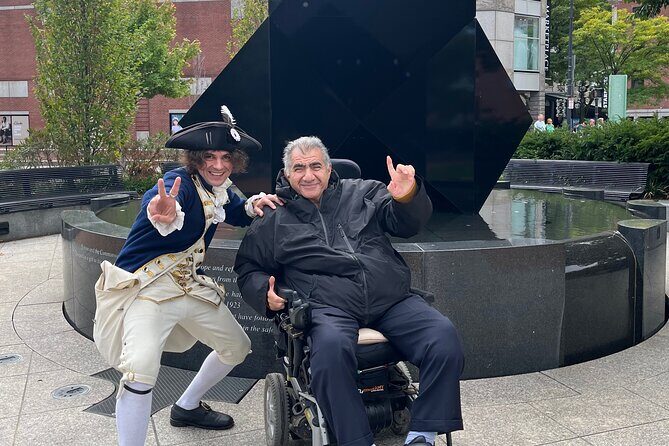
Boston Common is the first stop, and it’s not just a pretty park. It’s described as the oldest city park in the United States, and starting there gives you a baseline for how Boston grew from civic space into revolutionary political space.
Expect your guide to point out what to notice as you walk: how the city’s core helped shape public life. This is a good opener because it’s both easy to visualize and easy to photograph.
A minor drawback of starting in a public park is weather exposure. If it’s cold, windy, or snowy, you’ll feel it quickly. Still, the tour’s structure keeps things moving so you’re not stuck staring at one spot too long.
Massachusetts State House: government power with a personal name attached
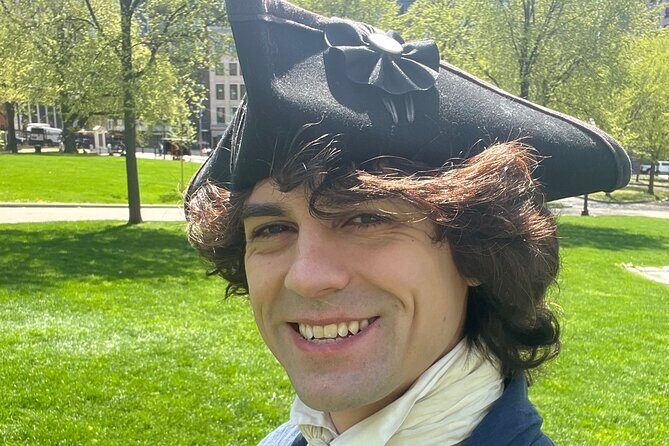
Next up is the Massachusetts State House. This is the seat of government for the Commonwealth of Massachusetts, and it’s also tied to John Hancock, since this is where he once lived.
That combination—civic authority plus a recognizable name—makes it easier to understand why Revolutionary tensions had teeth. This stop is short, but it works as a bridge from “people lived here” to “people argued here.”
One practical tip: keep your eyes open for how the guide frames the building. Even when you’re only there a few minutes, the explanation can change how you see it.





Park Street Church: an active landmark from the 1800s

Park Street Church is the next stop. The church is founded in 1809 and is described as an historic and active evangelical congregational church in Downtown Boston.
This may not be the first building you think of on the Freedom Trail, but it helps balance the tour. Not every stop is about a single dramatic event. Some places show how communities organized their public and private lives over time.
Because the stop is brief, aim for one takeaway. If your guide points out a specific detail, jot it mentally and then move on—this is one of those “quick context” moments.
Granary Burying Ground: where the names stop being textbook words
Granary Burying Ground is one of the best stretches of the tour if you like connecting places to people. You’ll stop at the final resting places of James Otis, Paul Revere, Samuel Adams, and others.
The tour also frames it as the oldest graveyard in the city and a site on the Freedom Trail. That matters because it turns memorial ground into a map. You’re not just looking at a park-like setting—you’re looking at a thread of individuals who shaped events you’ve probably heard about, but maybe never linked to a specific place.
Time here is about 15 minutes, which is long enough to slow down a bit without the tour losing momentum. The main consideration is that it can be emotionally heavy if you read the names closely. That’s also what makes it memorable.
Benjamin Franklin statue area and the Boston Latin school connection
The tour then reaches the Statue of Benjamin Franklin. This stop also ties into education in Boston: it’s described as the site of the Boston Latin school, and it notes that this is the current location of Old City Hall.
Even if you only catch a slice of the explanation, it’s a helpful reminder that the Revolution wasn’t only about battles. It was also about ideas, training, and how cities formed the next generation.
If you want photos, this is a good moment to ask your guide for a quick shot—since photo-friendly is part of what people praise about Captain Pickles’ style. Just keep an eye on where the group is headed next so you don’t fall behind during the handoff to the next stop.
Old South Meeting House: built in 1729, famous for the Boston Tea Party lead-in
Old South Meeting House is built in 1729, and this is where the tour leans hard into one of the most famous Revolutionary episodes. It’s described as gaining fame as the organizing point for the Boston Tea Party on December 16, 1773.
This is a big stop, even though the scheduled stop time stays tight. What makes it valuable is the guided framing: your guide isn’t just pointing at a building and saying “this mattered.” The explanation helps you understand what made that meeting place useful at that moment.
There’s also an extra building note along the route that connects to local everyday life and business. You’ll hear about a building that was built in 1718 as a residence and apothecary shop, and later first became a bookstore in 1828.
That kind of detour is smart if you want the Freedom Trail to feel like a living city rather than a museum path. It adds texture without stretching the schedule too much.
Boston Massacre site and Old State House: from fear to fallout
You’ll then stop at the Boston Massacre Site, located outside of the Old State House. This area is where tensions become tangible, because it’s tied to the Boston Massacre and the political power housed nearby.
Next is the Old State House itself. It’s described as a historic building built in 1713 and associated with major civic events of the time.
This pairing—massacre site outside, then the Old State House—helps you see cause and consequence. The massacre isn’t treated as a random headline. It’s positioned as part of a larger argument about authority and the way people responded.
Time here is short, so your best strategy is simple: listen for one “thread” your guide repeats. When you hear the same theme again, you’ll know what the guide wants you to carry forward.
Faneuil Hall Marketplace: end with food, bathrooms, and a free museum
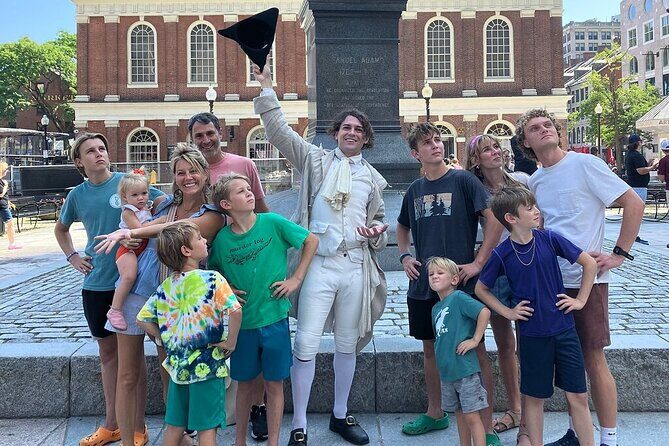
The final stop is Faneuil Hall Marketplace, near the statue of Samuel Adams. This works well because it’s not a dead-end finish. It’s a place to eat, grab a souvenir, use bathrooms, and keep the momentum going with a free museum.
That’s a real value point. A lot of history walks end far from practical needs. Here, you can keep exploring immediately after your guide steps away.
If you’re traveling with family or with people who want a break after walking, the Marketplace setting is a gentle landing. You’re already in a lively area, so the transition from “guided learning” to “free time” feels natural.
What Captain Pickles’ guide style is best at
A lot of the praise centers on Captain Pickles himself—especially his storytelling and energy. The themes that show up clearly are:
- Fun and detailed facts tied to specific buildings
- A lively, animated delivery that keeps people engaged even when it’s cold
- A guide who’s patient with group timing, even when different groups are running late
- Comfort-minded habits, like keeping an eye on shade and comfort when conditions are harsh
- A knack for clear, engaging storytelling that works for adults and kids
One practical consideration: because the information can come fast, bring the right mindset. If you like your history punchy and story-driven, you’ll love it. If you want slow pacing and lots of silence, this probably won’t feel like the right fit.
Who this tour is for—and who might skip it
This Boston Freedom Trail walk is ideal if you want:
- A small-group route that connects sites into a story
- A guide who can handle questions and keep a lively pace
- A straightforward way to see the major landmarks in a limited time window
It’s especially good for first-timers to Boston. You’ll get oriented fast, and you’ll leave with names and places linked in your head rather than scattered.
It might not be your best choice if you’re the type who hates a structured route. Each stop is short, and you’re moving constantly. The route also sounds most rewarding when the guide’s style matches your preference—some people find fast storytelling slightly harder to track.
Should you book this Freedom Trail small-group walk?
I think you should book it if you want the Freedom Trail to feel like a coherent story, not a checklist. The combination of a microphone system, a photo-friendly guide, and a packed yet manageable 1 hour 15 minutes makes it strong value for $32.
Book it especially if you’re traveling with family, or if you want your history learning to feel fun. Captain Pickles’ style gets people asking questions and staying engaged, which is exactly what you want on an outdoor walk.
Skip it only if you strongly prefer quiet, unstructured wandering or you struggle when a guide talks fast for extended stretches.
FAQ
FAQ
How long is the Boston Walking Tour of the Freedom Trail?
It’s approximately 1 hour 15 minutes.
How much does the tour cost?
The price is $32.00 per person.
Where does the tour start and where does it end?
It starts at the Lafayette Mall Monument by Boston Common and ends at Faneuil Hall Marketplace near the statue of Samuel Adams.
How big is the group?
The tour has a maximum of 40 travelers.
Is the tour offered in English?
Yes, it’s offered in English.
Can I use a mobile ticket?
Yes, it uses a mobile ticket.
What if the weather is bad?
This experience requires good weather. If it’s canceled due to poor weather, you’ll be offered a different date or a full refund.
Is free cancellation available?
Yes. You can cancel up to 24 hours in advance for a full refund.