REVIEW · NEW YORK CITY
Central Park, NY: Nature, Architecture and Movie Scenes Tour
Book on GetYourGuide →Operated by Isle Of New York Tours llc · Bookable on GetYourGuide
Central Park can feel like a movie set. On this 2-hour tour, you trade Midtown noise for pond quiet, while your guide helps you hunt down movie-and-TV scenes hidden in plain sight. I love how the walk mixes fresh-air wildlife breaks with pop-culture moments that make you look up and around, not just straight ahead.
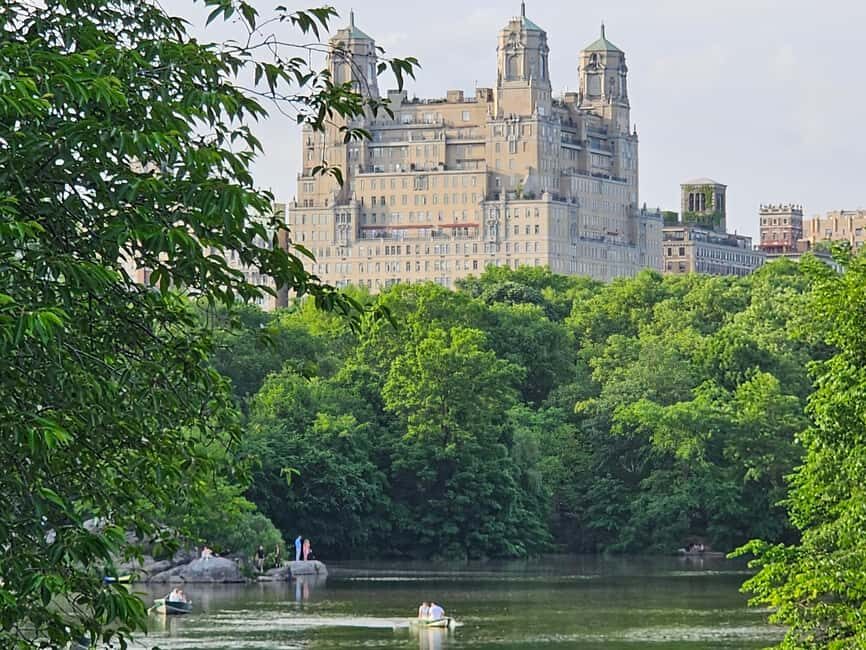
I also love the mix of Victorian architecture and famous apartment-landscape views. One minute you’re staring at carved stone and ornate iron bridges; the next you’re watching reflections of landmarks like The Dakota skim across the lake. There’s one straight path through the park, but the rest is a winding story of stairs, tunnels, and photo angles you’d miss on your own.
One drawback: it’s a two-hour walk with stairs, so you’ll want a moderate fitness level. It’s also not a fit for wheelchair users or people using mobility scooters, based on the tour rules.
In This Review
- Key highlights you’ll care about
- Starting at the Apple glass cube and finding the park’s mood shift
- Pigeons, ponds, tunnels, and a quiet Central Park moment
- Bethesda Fountain: the park’s centerpiece and its wedding-photo reality
- Bow Bridge and Central Park Lake: where apartment reflections steal the show
- Celebrity apartments meet real-world names: reflections and the Dakota
- Strawberry Fields, Lennon’s Dakota connection, and Yoko Ono’s peace garden
- Elf and Ghostbusters vibes: statuary, Tavern on the Green, and the snowball fight bridge
- Returning at Columbus Circle: park edges meet skyscrapers
- Price and value: what $40 buys in a 2-hour Central Park story
- What to bring and how to make the walk easier
- Who this tour suits best (and who should skip)
- Should you book this Central Park Nature, Architecture and Movie Scenes Tour?
- FAQ
- Where does the tour meet?
- How long is the Central Park tour?
- How much does it cost?
- Do you need to pay any admission fees?
- What language is the tour guide?
- Is the tour suitable for young children?
- Is the tour accessible for wheelchair users or mobility scooters?
- Can I cancel for a refund?
- Can I pay later?
Key highlights you’ll care about
- Movie and TV location spotting across the park, from Home Alone 2 to Ghostbusters and Elf
- Quiet nature moments in the middle of New York, with a real shot at seeing herons or egrets
- Iconic architecture and bridge views, including Bow Bridge and a cast-iron Victorian span
- John Lennon and Yoko Ono memorial stops, including Strawberry Fields and the peace garden
- Celebrity apartment reflections over Central Park Lake, including The Dakota, Langham, and San Remo
- A surprisingly “under-the-skin” walking route, with tunnels, carved stone, and an arcade of Victorian tiles
Starting at the Apple glass cube and finding the park’s mood shift
The tour begins at a glass cube with the Apple logo. It’s a very New York start point, right on the edge of Midtown energy. Then you walk off that grid and into Central Park’s calmer rhythm, where sound changes first and the scenery follows.
This is a guided, fully walking experience, built for two big things: views and interpretation. Even if you’re only half into architecture or film locations, the guide’s job is to connect details into a story you can actually remember while you’re still there.
If your guide is Stan, you’re in good shape. One review highlights that Stan was packed with information, kept the group engaged, and even tailored the tour to the group’s pace. That matters, because Central Park can be overwhelming when you’re doing it solo.
You can also read our reviews of more tours and experiences in New York City.


Pigeons, ponds, tunnels, and a quiet Central Park moment
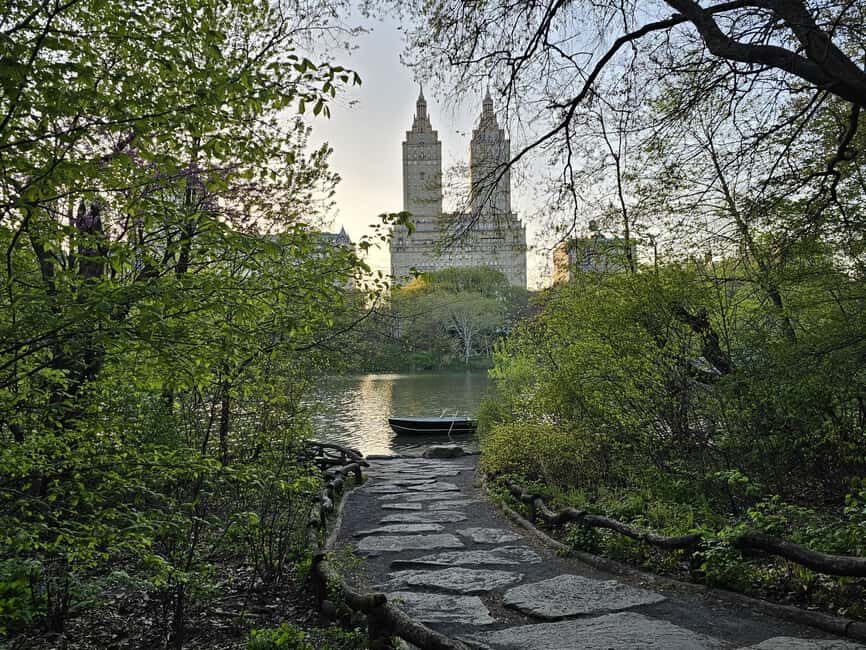
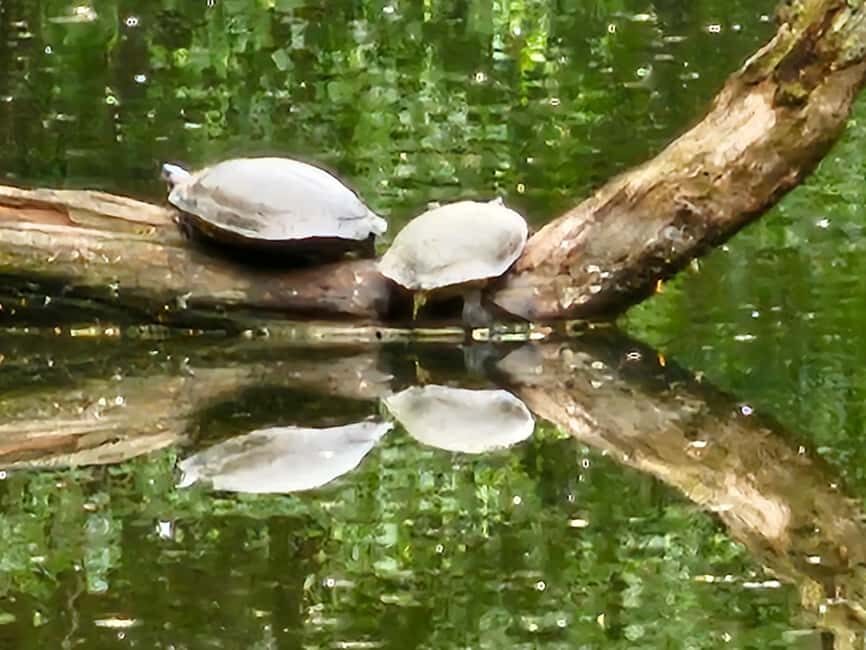
Right after the start near Grand Army Plaza and the Plaza Hotel area, the tour does a neat trick: it steps you down from the city’s noise into a pond zone. With luck, you’ll see a heron or an egret. It sounds simple, but it’s one of the best reasons to walk with a guide in the first place—you’re more likely to notice the life that’s already there.
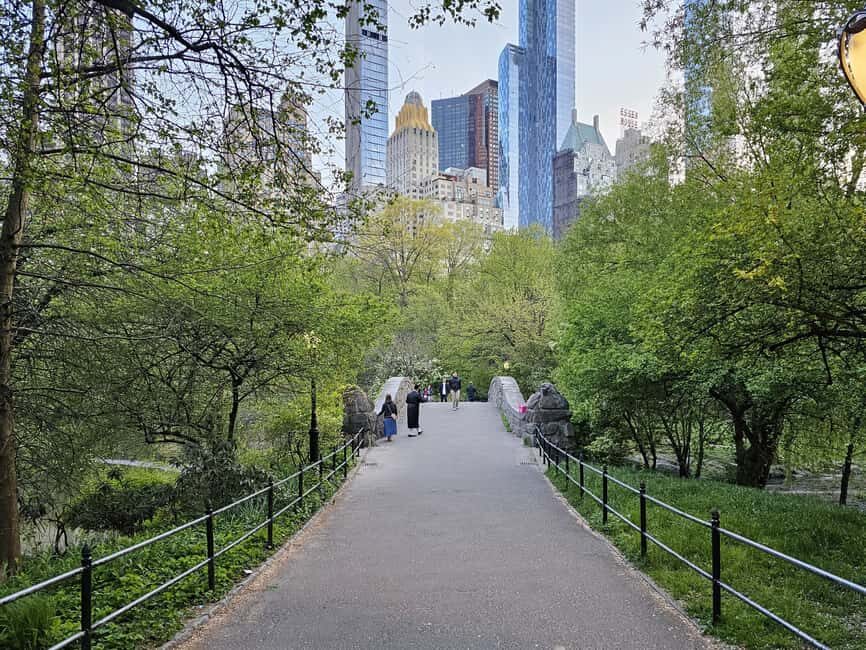
You’ll also stop to admire the pigeon lady arch from Home Alone 2. The arch is lined with Nova Scotia sandstone, which is the kind of specific detail you can’t easily guess just by looking at a structure. Then you’ll have a photo moment on a little stone bridge before the route starts curling onto winding paths.
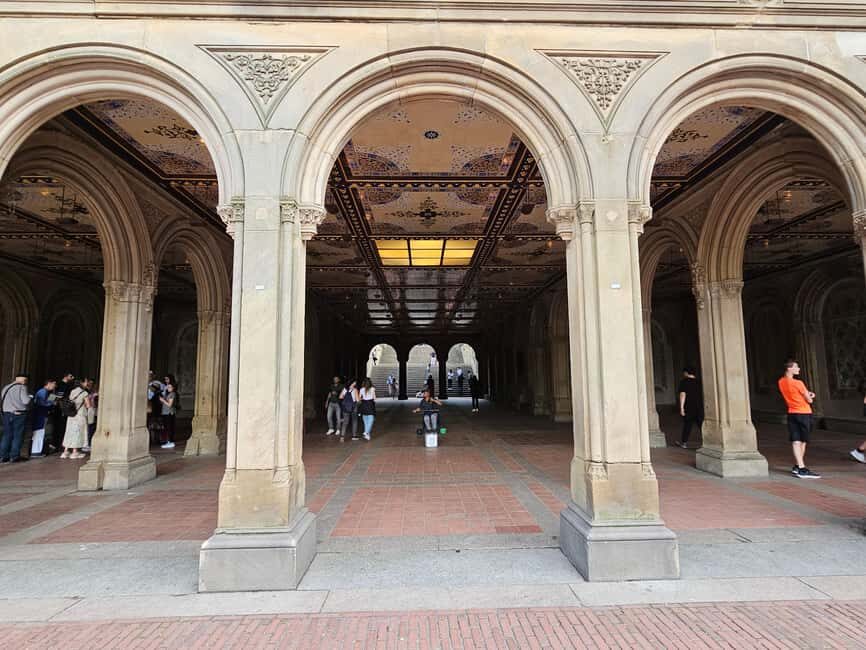
One of Central Park’s underrated thrills is moving through its built landscape, not just across it. You’ll pass up to 36 different styles of pedestrian tunnels, plus carved stone from the US and Canada. These aren’t random detours; they’re part of why Central Park feels like a designed world, not just a park with walking paths.
Bethesda Fountain: the park’s centerpiece and its wedding-photo reality
Winding paths can feel like guesswork. That’s why the tour’s mention of the park’s only straight path is such a useful mental map: you’ll find your way to Bethesda Fountain without getting lost in the curves.
Bethesda Fountain is the centerpiece you’ve probably seen in photos, but seeing it in person changes the scale. You’ll also get the sense of how people actually use the space. It’s quite possible you’ll watch couples having wedding photos taken there, and on Saturdays you might even spot more than one session.
Why this stop is worth your time: Bethesda is where Central Park’s “designed as a set” feeling clicks. You’re not just seeing a statue group. You’re seeing how architecture and crowd energy shape the mood of the park at ground level.
Bow Bridge and Central Park Lake: where apartment reflections steal the show
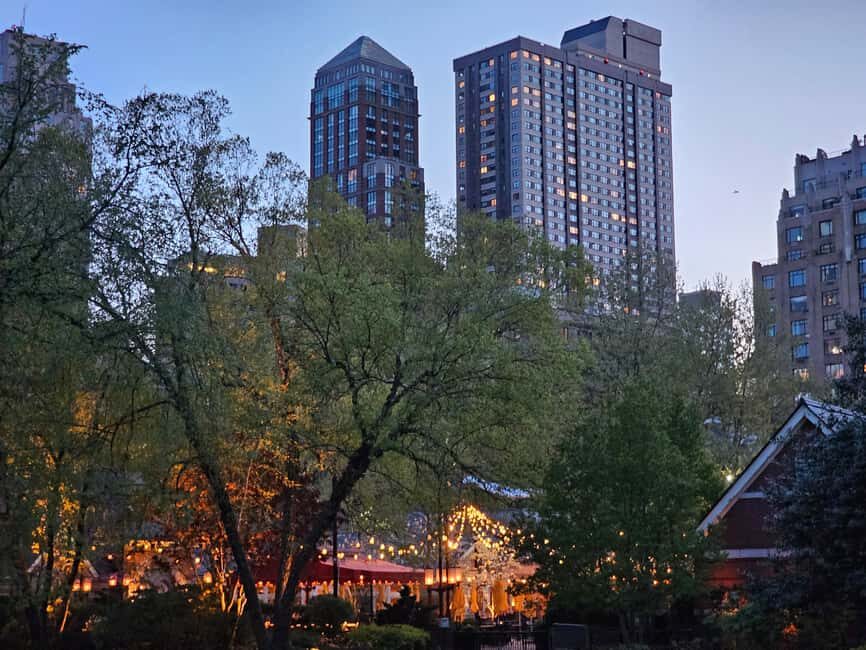
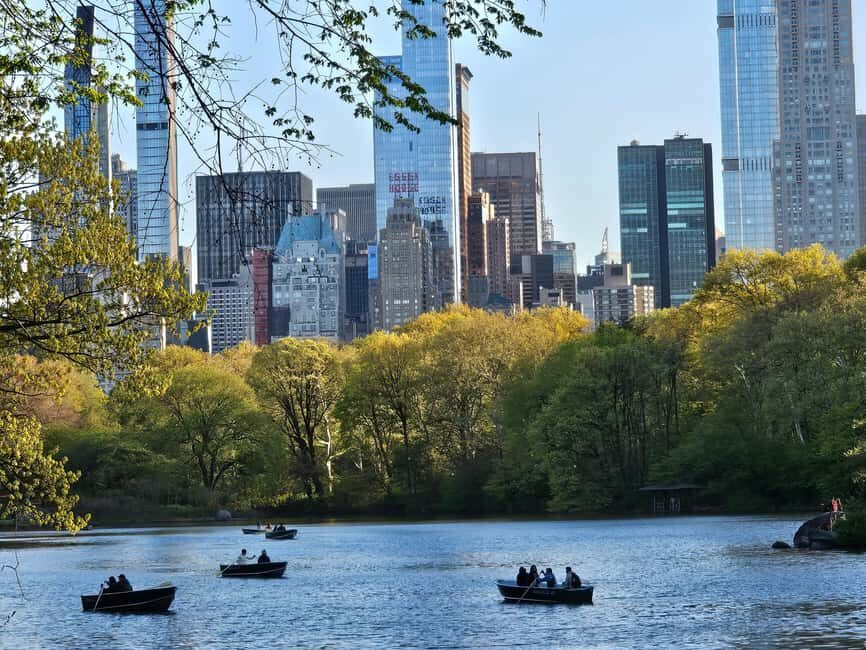
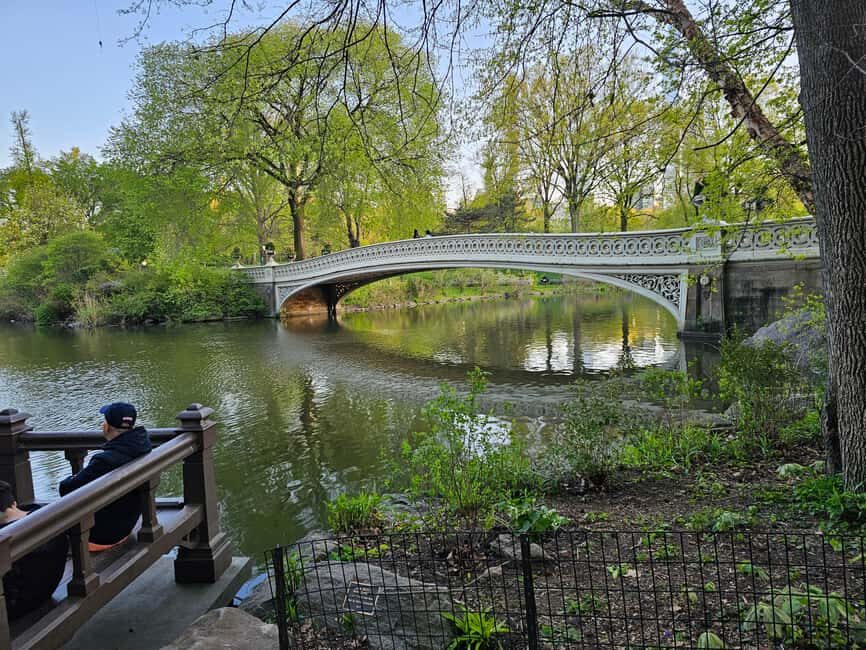
Turning west, you reach Central Park Lake, and that’s where photography gets easier. The tour includes the classic cast-iron Victorian bridge over the lake, and the big payoff is what you see reflected back in the water.
On the water, you’ll get shimmering views tied to famous apartment buildings. The tour points out names such as The Dakota, the Langham, and the San Remo—each one tied to the skyline you think you know, but in this setting it feels personal and close.
From there you’ll climb toward a 19th-century carriage turn area, a reminder that the park was built for a different kind of city life. It helps you picture not just the buildings you see, but what the park once supported.
And then comes Bow Bridge. The tour route has you at Bow Bridge, where wedding photos are taken nearly every day. Even if you’re not there for weddings, it’s one of the most practical spots for photos: ironwork detail in the frame, open sightlines, and a water backdrop that makes the background look intentional.
If you like film locations, this section also sets you up for later comparisons. You’re building a “visual vocabulary” of the park—bridges, water edges, and stone paths—so the movie spots later feel less like scavenger hunting and more like recognition.
Celebrity apartments meet real-world names: reflections and the Dakota
Central Park’s most famous apartment façades sit like characters around the park edge, but the tour helps you read them. You’re not just hearing that they exist—you’re shown viewpoints where the architecture mirrors itself.
When reflections align, the lake can look almost unreal. It’s the kind of photo you can’t fully recreate later from memory, so take a few shots even if you think you’ll remember the scene. The light can shift quickly, and the guide keeps you moving toward the best angles.
This is also where the tour brings in real people tied to the buildings. It’s not just celebrity trivia; it’s context that makes the space feel lived-in. The park becomes a place where history sits next to daily life, which is why it keeps pulling people back.





Strawberry Fields, Lennon’s Dakota connection, and Yoko Ono’s peace garden
You’ll spend time around Strawberry Fields, the memorial to John Lennon. This is one of the emotional anchors of the tour because it gives you an exact place to connect the stories to the city.
The tour notes that John Lennon and Yoko Ono lived across from the park for ten years before his murder in front of The Dakota. Yoko Ono later created a teardrop-shaped international peace garden within the park to honor him. When you stand there, the design detail matters more than the drama of the headline—it’s a crafted space for remembrance.
Why this stop lands: Strawberry Fields is both public and intimate. It’s outdoors, busy at times, and yet it still feels like a pause button. You’ll linger here for a moment, and that timing is helpful. It lets the earlier bridge-and-reflection energy reset into something calmer before the tour carries you south again.
Elf and Ghostbusters vibes: statuary, Tavern on the Green, and the snowball fight bridge
After Strawberry Fields, the route shifts south toward Midtown. Just before the grand restaurant area, Tavern On the Green, you’ll see 19th-century statuary: a US soldier and an Italian revolutionary. These figures give you another way to read the park as a curated public space, with symbols placed where people naturally walk.
Then comes Tavern on the Green. It’s a big indoor-outdoor restaurant landmark that marks the park’s edge-life. Even if you’re skipping food (you’ll buy your own), it’s a useful reference point, because it helps you feel where the park meets the city’s pace.
Across the avenue, the tour highlights the haunted apartment building from Ghostbusters. It’s also tied to Buddy’s family home in Elf. In other words, you’re not just learning locations—you’re getting a map of pop-culture geography that you can carry into your next watch session.
A few minutes ahead, you may also get to the little snowball fight bridge from Elf. That sort of stop is playful, but it’s also practical. It teaches you how filming uses real park lines, stone edges, and sightlines. Once you know what to look for, New York screens start making sense.
Returning at Columbus Circle: park edges meet skyscrapers
The tour finishes moving south toward Midtown at Columbus Circle, where the park meets the city. One of the final mood shifts is how quickly the open park air gives way to supertall skyscrapers greeting you again.
Columbus Circle is also a smart “from-here-you-can-go-anywhere” place. It has a Subway station and is walking distance to Times Square. So if you’re building the day around this tour, you can plan an easy next step right after, without needing a separate transit plan.
At only about a half-mile from where you started, it’s a compact route for a big feeling. You leave with photos that cover water, architecture, and film spots—plus a sense of why Central Park works as a world inside the world.
Price and value: what $40 buys in a 2-hour Central Park story
At $40 per person for a 2-hour walking tour, the value comes from three things you don’t get by strolling on your own:
First, you get focused interpretation. Central Park contains too many details to self-manage in a short time. A guide turns scattered sights into a connected route: tunnels, bridges, memorials, and movie locations in a logical flow.
Second, you get “photo-aware” pacing. You’re timed to viewpoints that make the lake reflections and ironwork look their best. That’s not about fancy gear. It’s about arriving at the right angles and then moving on.
Third, you’re not paying extra for entry. The tour has no areas requiring admission, and there are no additional entry fees. You’re basically paying for the guide, the route planning, and the fact that you don’t have to guess what matters.
Bottom line: if you want a guided Central Park hit that covers architecture + film locations + nature moments, $40 feels fair. If you already know the park well and you mostly want to wander without stops, you might choose a self-guided route instead.
What to bring and how to make the walk easier
This is a walking tour with stairs. You’ll want comfortable shoes and weather-appropriate clothes. If rain is likely, bring rain gear. Also plan for clothes that can get dirty, because this is outdoors and you’re covering ground.
It helps to bring the basics:
- Water for yourself (the tour rules say drinks aren’t allowed on the tour, so check what you can carry versus what you can consume; plan to follow the guide’s instructions)
- Phone/camera battery ready for bridges and reflections
- A light layer if the weather swings
One more practical thing: the tour does not allow mobility scooters, electric wheelchairs, bikes, baby carriages, or scooters. It also doesn’t allow unaccompanied minors. And red wine is not allowed, plus drinks are not allowed. So keep it simple.
Who this tour suits best (and who should skip)
This works best if you enjoy seeing big-city nature, architecture details, and recognizable screen settings in the same walk. If you’re a film fan, the Home Alone 2 pigeon lady arch, Ghostbusters apartment building, and Elf snowball fight bridge add extra motivation to keep moving.
It’s also a good match if you want the quiet side of New York without losing your bearings. One review praised the calmer park side and the guide’s friendly, informative approach. Another highlighted that the guide kept things interesting and fun while tailoring to the group.
Skip it if you need wheelchair access, mobility-scooter access, or if you have low fitness for stair-heavy walking. The tour’s own guidance points to a moderate fitness level because you’re on your feet for two hours.
Should you book this Central Park Nature, Architecture and Movie Scenes Tour?
Book it if you want Central Park in one efficient package: ponds with possible wildlife, Victorian bridges, famous apartment reflection views, and clear movie-location connections. The guide quality is a big factor here—Stan, specifically, comes up as a standout in reviews for being information-rich and still fun.
Consider skipping or swapping plans if stairs are a deal-breaker for you, or if you’d rather do a slow, unscheduled roam with no set stops. This is a route with momentum, not a “sit and linger all day” plan.
If you’re aiming to see the park’s major personalities—Bethesda Fountain, Bow Bridge, Strawberry Fields, and the edge-to-midtown handoff—this tour gives you a strong first pass.
FAQ
Where does the tour meet?
The meeting point is a glass cube bearing the Apple logo.
How long is the Central Park tour?
The duration is 2 hours.
How much does it cost?
It’s $40 per person.
Do you need to pay any admission fees?
No. The tour has no areas that require admission and there are no additional entry fees.
What language is the tour guide?
The tour guide is English.
Is the tour suitable for young children?
It is not suitable for children under 6 years.
Is the tour accessible for wheelchair users or mobility scooters?
No. The tour is not suitable for people with mobility impairments, wheelchair users, or mobility scooters (and scooters are not allowed).
Can I cancel for a refund?
Yes. You can cancel up to 24 hours in advance for a full refund.
Can I pay later?
Yes. You can reserve now and pay later.