REVIEW · NEW YORK CITY
Hamilton Live! Walking Tour in lower Manhattan
Book on Viator →Operated by Alexander Hamilton Live · Bookable on Viator
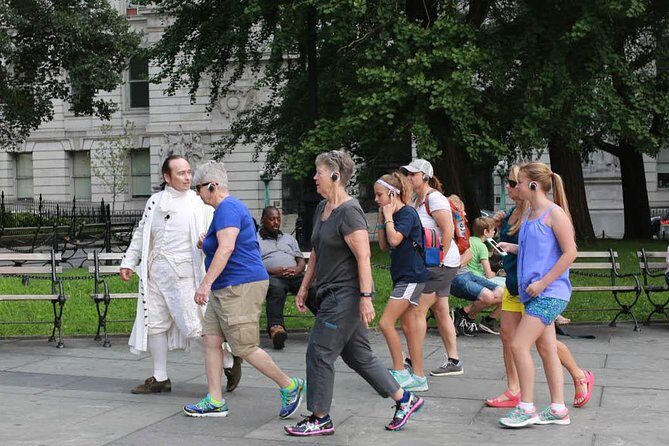
A costume changes the whole tone of a city walk. This tour sends you through Lower Manhattan with a professional colonial reenactor in character as Alexander Hamilton, and the added over-the-ear headsets mean you catch the details even in loud NYC streets. You also end with maps that tie colonial sites to Hamilton locations, so the story sticks long after the walk.
What I love most is the sheer quality of the performance and the way it stays grounded in everyday details, not just famous names. I also love that the group stays small (maximum of 4), which makes it easy to ask questions and get clear answers. If you want a tour that feels personal but still covers a lot of ground, this hits the mark.
The main drawback is simple: it’s a moderate-walking experience through the streets of Lower Manhattan, and it helps to be comfortable on your feet for about 3 hours. Also, the tour requires good weather, so you’ll want to be ready with a plan if it’s raining or feels too stormy.
In This Review
- Key highlights at a glance
- A 3-hour Lower Manhattan story with Alexander Hamilton in character
- Price and what makes it feel worth it
- Meeting at Centre Street and ending at Trinity Church
- The itinerary as a guided timeline: from colonial walls to early America
- Chambers Street and the early city wall
- City Hall Park: the common where Hamilton comes alive
- African Burial Ground National Monument: a hard but important chapter
- Broadway Theatre and the shift from street to stage
- St. Paul’s Chapel: the first war memorial site
- Federal Reserve Bank area: how politics turns into institutions
- One Chase Manhattan Plaza: Hamilton’s last townhouse address
- Museum of American Finance: a hands-on moment, but with a note
- Wall Street: Hamilton and Aaron Burr in the same orbit
- Federal Hall: the first Capitol
- New York Stock Exchange: from buttonwood tree to the modern market
- Stone Street: the first paved street and a working-life vibe
- Fraunces Tavern Museum: government life at a meal table
- United States Custom House: ornate design and pirate stories
- Bowling Green: a public place with attitude
- Trinity Church: the last chapter for Hamilton and family
- Small group pacing, headsets, and what to do on walk day
- Who this tour is best for (and who might want a different option)
- Should you book Hamilton Live! in Lower Manhattan?
- FAQ
- How long is the Hamilton Live! walking tour?
- Where does the tour start and where does it end?
- What’s included with the tour price?
- Is there an extra admission cost at any stops?
- Is this a small-group tour?
- Does the tour require good weather?
Key highlights at a glance
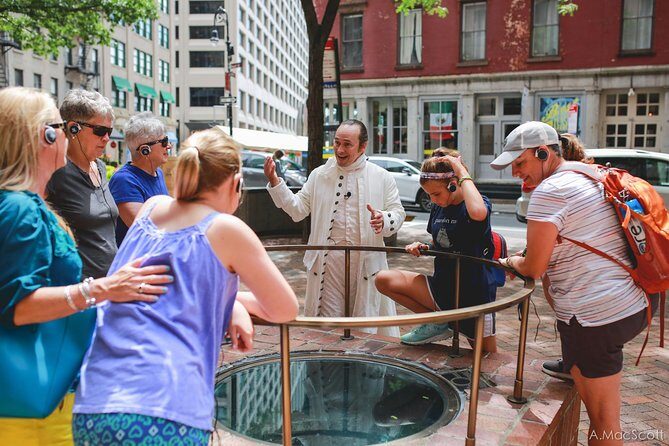
- Alexander Hamilton stays in character for a continuous, story-driven walk
- Wireless headsets + receiver help you hear every word in city noise
- Small group size (up to 4 travelers) keeps the pace calm and interactive
- Colonial New York to financial power through landmark after landmark
- Souvenir maps connect colonial sites and Hamilton musical locations
- Ends at Trinity Church where Hamilton, Eliza, and Philip are laid to rest
A 3-hour Lower Manhattan story with Alexander Hamilton in character
This is not a quick photo tour. You meet your guide near City Hall and then spend roughly 3 hours walking the same spine of Lower Manhattan that shaped Hamilton’s life and the early republic that followed. The magic here is that your guide stays in character throughout, so each stop feels like part of one continuous timeline rather than a list of disconnected landmarks.
You’ll also be walking with a “hearing advantage.” The tour provides over-the-ear headsets, plus a wireless receiver to pick up your guide’s voice. That matters in New York. Even when you’re standing right next to someone, traffic, crowds, and street sounds can swallow conversation. With the setup, you can listen without constantly leaning or turning your head.
And yes, if you love Hamilton the musical, this is built to reward that curiosity. The tour includes a free souvenir map tying musical locations to real streets and buildings, so you can connect the scenes you know with the physical places you’re seeing.
You can also read our reviews of more walking tours in New York City



Price and what makes it feel worth it
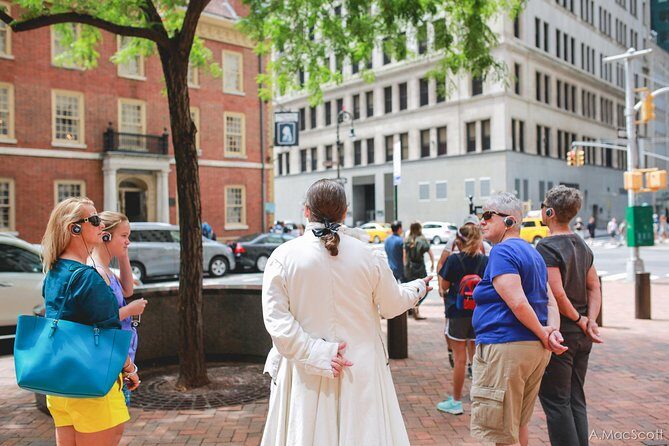
At $199 per person for about 3 hours, you’re paying for three things: a professional licensed NYC guide/actor/historian, a guided route heavy on major landmarks, and the audio system that keeps the experience understandable.
Is it a bargain? Not really. But it is value if you care about hearing every word and you want a focused, story-led route in a small group. Many tours either stay generic or rely on guessing you can hear well enough. This one gives you the gear and the guide skill set to make the time count.
Two practical value points:
- You get free souvenir maps, including one specifically connecting colonial New York sites and Hamilton-related locations.
- The tour claims over 70 sites, even though you’re visiting named stops along the way. That usually means you’re getting context and sightline references beyond the single address where you pause.
Meeting at Centre Street and ending at Trinity Church
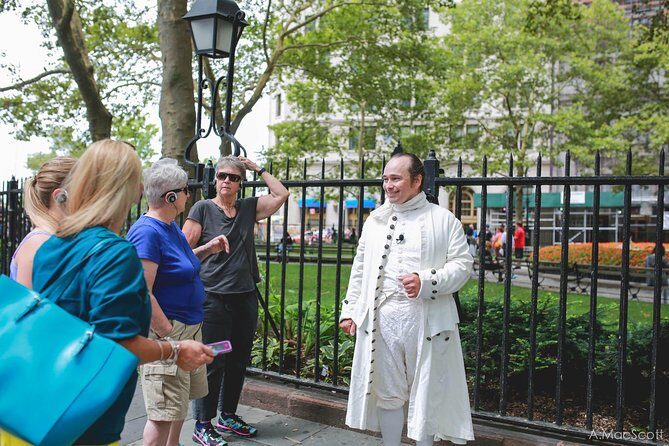
The walk starts at 10 Centre St, New York, NY 10007, and it ends at Trinity Church (89 Broadway, New York, NY 10006). Your start point is convenient to reach via public transportation, which helps in a city where subway-to-street walking is often the real time cost.
Ending at Trinity Church is a strong finish. It gives the tour a true narrative landing: you close with Hamilton’s final resting place along with his wife, Eliza, and their son, Philip. It’s a fitting last stop because so much of what you’ve heard ties back to politics, public buildings, and the decisions that shaped early America.
One more note from the practical side: you’re handed equipment (headsets and a receiver). The receivers are collected at the end, and you’re responsible for returning them in working order. Also, if damage happens due to abuse or negligence, there’s a listed replacement fee—so treat the gear like museum equipment, not like a toy.
The itinerary as a guided timeline: from colonial walls to early America
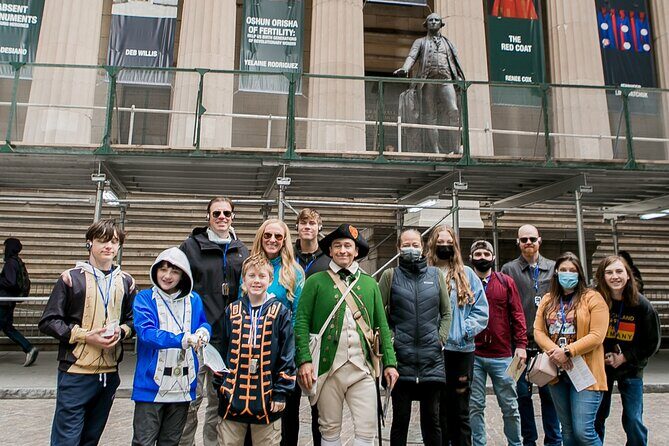
The route takes you through places that overlap three big themes: colonial New York’s structure, Hamilton’s role in public life, and the financial institutions that grew from the same streets.
You’ll feel this progression as the walk moves from early civic space into the money district, and then toward the church and memorial space where the story lands.
Chambers Street and the early city wall
You begin in Lower Manhattan in the area that functioned as colonial New York, when the city wall was located by Chambers Street. It’s a good start because it frames the physical reality: early New York wasn’t a single open grid—it had boundaries and defensive thinking.
Even if you’ve visited Manhattan before, it helps to hear how the city’s layout shaped movement, trade, and daily life. This is one of those moments where you start to see why so many later institutions would cluster in the same tight area.






City Hall Park: the common where Hamilton comes alive
Next, you’ll be at City Hall Park, described as the center of colonial New York, with Hamilton becoming an orator and soldier on the town Common. This part works best if you enjoy connecting biography to place.
Then you move into the broader City Hall area. Your tour includes New York City Hall and references all three City Halls of New York City on the route, including how the common turned into a park through tree planting and how the City Hall construction changed the look and function of the space. If you like seeing how a neighborhood evolves, this section is satisfying.
African Burial Ground National Monument: a hard but important chapter
You stop at the African Burial Ground National Monument, and the framing here isn’t decorative. It’s about the reality that people could have ended up buried there, and that other paths led to founding the New York Manumission Society.
This stop deserves your full attention. It’s one of the few points on the walk that can feel emotionally weighty, and the tour’s value comes from treating it as a real part of the city’s story rather than a quick photo stop.
Broadway Theatre and the shift from street to stage
Broadway shows up as the main thoroughfare. It’s short, but it’s a useful reminder that Lower Manhattan isn’t only about government buildings and banks. It’s also where entertainment, crowds, and commerce collide.
In a Hamilton-focused tour, this stop adds texture. The musical ties you to show business and spectacle; the real Broadway setting helps you remember how streets become stages over time.
St. Paul’s Chapel: the first war memorial site
At St. Paul’s Chapel, you hear about it as the site of America’s first war memorial. This is the kind of place where the architecture can look quiet, but the meaning is serious.
If you’re the type who likes learning how memory gets built into public space, you’ll appreciate this pause. It also helps balance out the heavy politics and money theme from other stops later.
Federal Reserve Bank area: how politics turns into institutions
You’ll reference the Federal Reserve Bank of New York area, including a Hamilton-style dinner line involving Thomas Jefferson and James Madison, and how the precursor to the Federal Reserve Bank connects back to Hamilton’s work.
This is a moment for understanding the long chain. You’re not just being told Hamilton did something important—you’re shown how early government thinking can echo into modern systems. If you enjoy political history explained through institutions, you’ll like this.
One Chase Manhattan Plaza: Hamilton’s last townhouse address
At One Chase Manhattan Plaza, you learn that Hamilton’s last townhouse was located here and that it was his city address when he died. This is a strong personal-history stop because it turns a huge historical figure into a neighbor-level detail: where he lived, not just what he built.
Museum of American Finance: a hands-on moment, but with a note
You visit the Museum of American Finance, with a highlight about touching the stone at the cornerstone of your creation and the American financial system. Admission is noted as not included.
That doesn’t mean the stop is a waste—it can still be valuable for exterior context and quick orientation. But if you want to go inside for deeper exhibits, check on-site options so you’re not surprised about extra costs.
Wall Street: Hamilton and Aaron Burr in the same orbit
At Wall Street, the tour connects Hamilton living and working there with Aaron Burr. This stop works because it compresses a lot of drama into a few blocks.
It’s also where you can feel why an audio guide helps. The street is noisy and busy, but the story gives it focus. You can look up at the buildings and the street canyon and understand why so many big decisions got made here.
Federal Hall: the first Capitol
Next is Federal Hall, described as the first Capitol of the United States. This is one of the most consequential stops on the route because it sits right at the moment when the United States was defining itself.
If you like “place history,” this is a must-pay-attention stop. Federal Hall is the kind of location that changes how you picture the early republic, because it ties political language to real space.
New York Stock Exchange: from buttonwood tree to the modern market
You’ll visit the New York Stock Exchange area and hear how stockjobbers meeting under a buttonwood tree expanded under Hamilton’s guidance as Secretary of the Treasury. This part is great if you want to understand that finance has origins, not just headlines.
If you’re a fan of economic history, you’ll enjoy hearing how Hamilton’s early financial work connects to what became the NYSE. If you’re not, the storytelling is still useful because it explains the why behind the buildings and street-level legacy.
Stone Street: the first paved street and a working-life vibe
At Stone Street, you learn it was formally Brewer Street and renamed when it was the first paved street in NYC. You also hear it includes a former law office of Alexander Hamilton and is still serving brews.
This is one of those stops where the physical details and the present-day usage overlap. Even if you don’t stop for a drink, you’ll likely enjoy the sense of continuity—history that still functions as a street, not just a monument.
Fraunces Tavern Museum: government life at a meal table
At Fraunces Tavern Museum, you get a picture of drinks, meals, newspapers, lodging, and the idea that this was a center of government and everyday coordination. For many people, this is the most entertaining stop because it makes politics feel human and routine.
If you’re trying to understand the daily mechanics of early America, this works. It’s harder to picture diplomacy and debate happening over food—but the tour frames it in a way that makes sense.
United States Custom House: ornate design and pirate stories
You’ll then stand at the United States Custom House and learn why it’s so ornate, including a story that pirates made it so. This is where the tour shows you that government buildings weren’t always cold and sterile.
Be ready to listen closely here. The building’s design can look like pure decoration if you don’t connect it to the economic reality around it—trade, enforcement, and the drama of the time.
Bowling Green: a public place with attitude
You stop at Bowling Green, framed as a place where you can feel the wrath of rebellious forefathers. It’s short, but it’s effective because it turns a small open area into a political stage.
This is a good reminder: early public spaces were where tensions played out in plain sight.
Trinity Church: the last chapter for Hamilton and family
Finally, you end at Trinity Church, described as the resting place of Alexander Hamilton, Eliza, and Philip. This ending is satisfying because the emotional weight matches the storytelling you’ve heard along the way.
You’ll likely finish with a clearer sense of the man’s life arc: ambition, public service, conflict, and legacy.
Small group pacing, headsets, and what to do on walk day
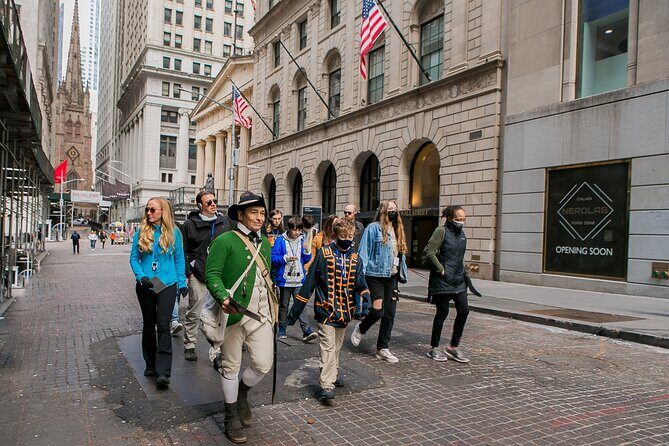
This is designed for a small group, with a maximum of 4 travelers, and the route is spread over about 3 hours. That means you’re less likely to be rushed through stops compared with big group tours, and you’ll get more chances for clarification when you ask questions.
Here’s how I’d set yourself up for a smooth walk:
- Wear comfortable walking shoes you can trust for a few hours on pavement.
- Bring water, especially on warm days.
- On sunny days, plan for shade needs and bring a hat.
- If rain is in the forecast, bring your own umbrella since weather can affect whether the tour runs.
Also, be kind to the headset gear. Treat it like you would a guided audio system at a museum.
One more practical thought: there’s an outlier complaint in the provided info about a guide not showing up. I can’t predict that will happen to you, but it’s smart to keep your confirmation handy and contact the tour provider quickly if there’s any confusion day-of.
Who this tour is best for (and who might want a different option)
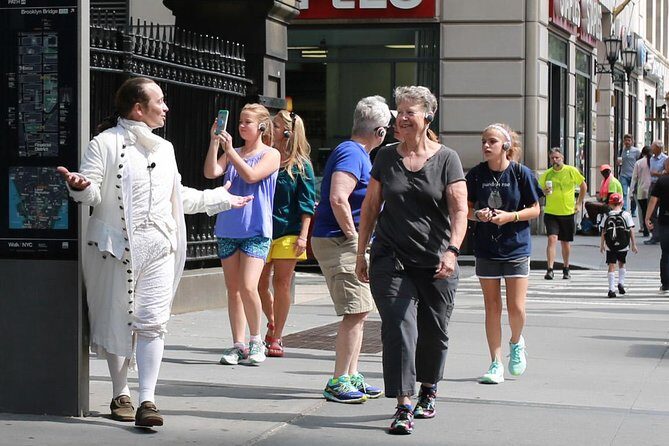
You should seriously consider this walk if you:
- love the Hamilton musical and want the real-world places behind it
- enjoy history that connects biography to real streets and buildings
- value clear audio and dislike straining to hear in city crowds
- want a guided experience that feels personal with a small group size
You might consider another option if:
- walking for about 3 hours in Lower Manhattan streets is hard for you
- you’re sensitive to weather changes, since the tour requires good weather
- you expect a purely museum-style experience with lots of indoor time, since this is a walking tour
Should you book Hamilton Live! in Lower Manhattan?
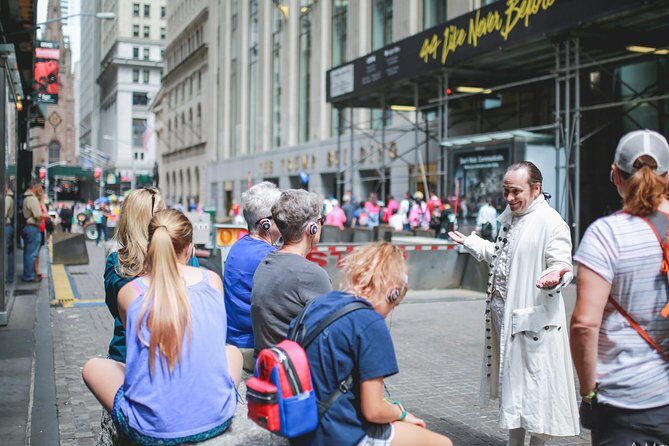
If you want your Manhattan history to feel like a story you can follow, this is an excellent choice. The standout value is the combo of Hamilton-in-character storytelling, wireless headsets that keep it understandable, and a route that moves through colonial civic life into the financial era, then ends at Trinity Church with real closure.
Book it if you’re a Hamilton fan, a history lover, or just someone who likes seeing how one neighborhood can carry centuries at street level. Skip it only if walking time, weather dependence, or your comfort with outdoor city noise are deal-breakers for you.
FAQ
How long is the Hamilton Live! walking tour?
It runs for approximately 3 hours.
Where does the tour start and where does it end?
The tour starts near 10 Centre St, New York, NY 10007 (at 12:00 pm) and ends outside Trinity Church at 89 Broadway, New York, NY 10006.
What’s included with the tour price?
You receive over-the-ear headsets and a wireless receiver, a licensed master NYC tour guide/actor/historian, and souvenir maps. Admission notes vary by stop, but the tour also includes the headsets and receiver as part of the experience.
Is there an extra admission cost at any stops?
Yes. St. Paul’s Chapel and Federal Hall include admission, while the Museum of American Finance admission is noted as not included.
Is this a small-group tour?
Yes. The tour has a maximum of 4 travelers.
Does the tour require good weather?
Yes. The experience requires good weather, and if it’s canceled due to poor weather, you’ll be offered another date or a full refund.