REVIEW · PHILADELPHIA
Philadelphia: The Franklin Institute Entry Ticket
Book on GetYourGuide →Operated by The Franklin Institute · Bookable on GetYourGuide
A day at the Franklin Institute feels like science class with power.
With your $29 general admission, you get access to three floors of hands-on exhibits, daily shows and demonstrations, and planetarium programming at the Fels Planetarium. The museum’s whole vibe is built around curiosity, tied to its Benjamin Franklin roots, so the exhibits aren’t just displays. They push you to ask questions and try things.
Two things I really like here: the multi-sensory Wondrous Space experience and the way the museum mixes big ideas with interactive formats (not just watching from a distance). The live science lineup also makes the day feel event-like, with demonstrations tied to liquid nitrogen, combustion, and electricity. One drawback to keep in mind: special exhibits are not included in this ticket, so you may need to choose what you care about most once you see what’s running that day.
In This Review
- Key takeaways before you go
- Ticket value: what $29 really buys at the Franklin Institute
- Your day plan: from QR wristband to three floors of hands-on exhibits
- Wondrous Space and the cosmos: multi-sensory astronomy that grabs attention fast
- Live science shows: liquid nitrogen, combustion, and electricity
- SportsZone: where science shows up on the playing field
- Don’t skip the dissections for hands-on learning
- Fels Planetarium: pick a show and let the sky do the talking
- What to pack (and what to leave behind) for an easy visit
- Who this ticket fits best in Philly
- Should you book this Franklin Institute ticket?
- FAQ
- What does the Franklin Institute ticket include?
- Do I need a separate ticket for special exhibits?
- How long is the ticket valid?
- Where do I check in, and how do I enter?
- Can I leave and re-enter during the same day?
- Are large bags allowed inside?
Key takeaways before you go

- Wondrous Space gives you a multi-sensory take on the cosmos, not just a standard astronomy exhibit.
- Daily live demonstrations cover real-world science themes like combustion and electricity.
- SportsZone links play and movement to science concepts you can test right there.
- Fels Planetarium adds scheduled night-sky shows to your museum day.
- Dissections are a standout learning moment and worth planning your route around.
Ticket value: what $29 really buys at the Franklin Institute
At $29 per person, this ticket is basically your pass to a full science day at one of Philadelphia’s best-known education-and-research spaces. You’re not paying for one room or one “main attraction.” You’re buying admission to three floors of interactive exhibits, plus daily shows and planetarium programming included with general entry.
That matters, because you can shape the day to your interests. If you’re into astronomy, you can prioritize Wondrous Space and the Fels Planetarium. If you prefer real-time experiments, you can build around the daily live demonstrations. And if you want something more physical, SportsZone is the move.
One more value note: this is timed to a specific date. Your ticket works for your booked day, and you’ll want to check what shows are scheduled before you arrive, so you don’t miss the moments that match your energy level.
You can also read our reviews of more tours and experiences in Philadelphia


Your day plan: from QR wristband to three floors of hands-on exhibits

Getting in is straightforward. At the entrance, scan your QR code to receive your wristband. That wristband is your key for the day, since you can leave and re-enter the museum using it.
Once you’re inside, think in zones, not in a straight-line tour. You’ll get the best experience by choosing at least one “anchor” attraction in each category:
- a big-world science moment (like Wondrous Space),
- a live event (the daily demonstrations and dissections),
- and a seated show (a Planetarium presentation).
Then fill in with whatever you find along the way across the three floors. The museum’s strength is that it rewards wandering. Interactive areas work better when you slow down and try the prompts rather than rushing to “check boxes.”
Also plan for this reality: some exhibits are older, and you may notice things that need fixing. That doesn’t ruin the day, but it’s smart to stay flexible and keep your expectations grounded in the experience of learning through play.
Wondrous Space and the cosmos: multi-sensory astronomy that grabs attention fast

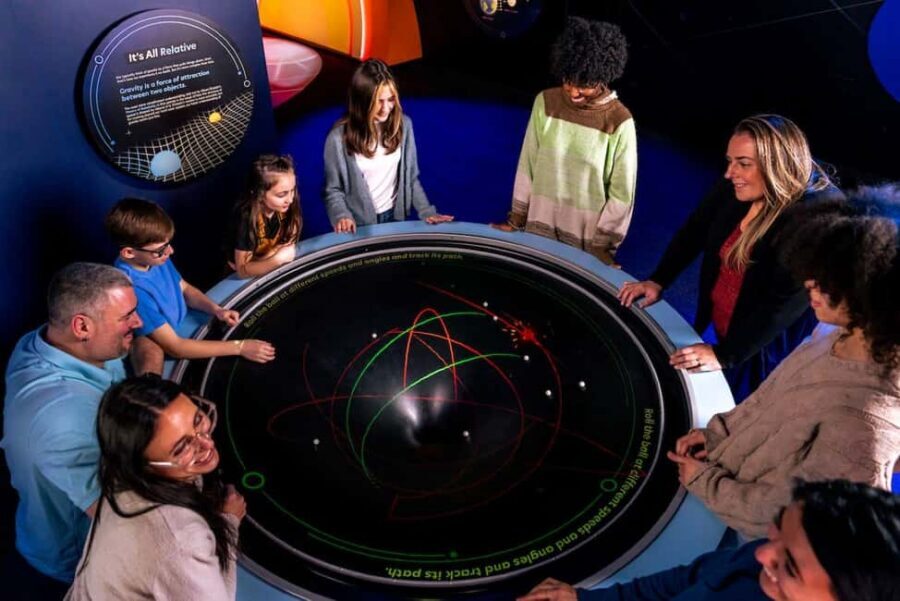
The Wondrous Space exhibit is one of the day’s easiest “start here” choices. It’s designed to take you into the universe through a multi-sensory approach, so it’s not just reading facts. You experience astronomy in a more physical way, which is exactly what makes it a great family-friendly science stop and a good entry point for adults who just want that wow factor.
Here’s the practical way to use it: give yourself enough time to experience it fully, then use it as your mental warm-up for the planetarium. When your head is already in “space mode,” the planetarium shows feel less like one more stop and more like the same story continuing.
If you’re visiting on a day when you’re choosing just one sky-related thing, this is the one to place near the top of your list.
Live science shows: liquid nitrogen, combustion, and electricity
This ticket includes daily live science shows and dissections, and the live demos are a big reason this museum feels alive. You’ll see experiments connected to liquid nitrogen, combustion, and electricity. Those topics are perfect for a museum because they’re dramatic in the moment, but also teachable in the explanations.
How to get the most from the shows:
- Arrive a little early so you’re not stuck at the edge.
- Treat each demo like a mini lesson. Watch for what they highlight about cause and effect, not just the visual spectacle.
- If you’re traveling with kids, this is usually where their attention stays locked in.
There’s also an educational payoff for adults. These topics show you how science connects to everyday life—heat, energy transfer, and reactions you’ve seen but maybe never had explained in a hands-on way.
SportsZone: where science shows up on the playing field
SportsZone is the “science you can feel” area. It links sports and movement to the science behind performance and physics. Even if you’re not a sports person, you’ll likely enjoy it more than you expect because it’s designed to be interactive and experiment-based rather than lecture-based.
It’s also a great mid-day pivot. After you’ve spent time in exhibits and seated shows, SportsZone gives you a change of pace. If you’re choosing a second anchor besides the planetarium, pick SportsZone if you want energy and participation.
The best approach is to treat it like stations rather than a single attraction. Spend time on what looks fun, then move on when you’ve tested it enough to understand the concept.






Don’t skip the dissections for hands-on learning
One of the strongest signals from the experience is simple: don’t miss the dissections. They’re included and offered daily, and they’re described as educational and hands-on.
It’s also worth being honest about the nature of this part of the day. Dissections can be intense. If your group is sensitive, you’ll want to judge how comfortable you all are with that kind of learning. But if you’re looking for a science moment that goes beyond screen-based content, this is the type of exhibit that sticks with people.
In practical terms, build your schedule around it. If you try to fit it in last-minute, you risk arriving when you’re tired or missing the session you wanted. If you care about it, make it one of your first commitments.
Fels Planetarium: pick a show and let the sky do the talking

The Fels Planetarium is included with general admission, with planetarium shows as part of your day. This is where the museum shifts from hands-on exhibits to a more focused, presentation-style experience.
How I’d plan it: check the daily schedule and select a planetarium slot that won’t clash with live shows you’re also prioritizing. Since your ticket covers planetarium presentations, it’s smart to see it as your sit-down reset. After you walk around, you’ll likely enjoy settling in with a night-sky presentation that feels like a reward.
From the overall experience, people tend to enjoy the planetarium as a straightforward “cool factor” stop. It’s also a good match for adults who want an astronomy experience without needing specialized knowledge. The point is wonder, guided by science education.
What to pack (and what to leave behind) for an easy visit

The museum restricts luggage or large bags, so travel light. If you’re carrying multiple items, consider how you’ll manage them once you’re inside, because the ticket rules don’t promise storage options here.
A practical strategy:
- Keep essentials small and easy to carry.
- Bring what you need for comfort, but avoid bulky bags.
- If you plan multiple stops, keep your “must-grabs” accessible so you aren’t searching mid-visit.
Also note that your wristband allows re-entry, so if you need a quick break outside, you can step out and come back without losing your place.
Who this ticket fits best in Philly

This ticket works especially well if you want variety in one day. It’s not just astronomy, and it’s not just science demos. You get interactive exhibits across three floors, live shows, SportsZone, dissections, and planetarium programming.
It’s a strong choice for:
- families who like hands-on learning and a mix of energy levels,
- science-curious adults who want both experiments and big concepts,
- anyone visiting Philadelphia who wants a high-value, educational activity that doesn’t feel like a lecture.
If your group only wants calm, quiet museum time, you might find the live demonstrations and interactive stations more active than you expect. But if you like a museum where you can participate, this is a great match.
Should you book this Franklin Institute ticket?
If you want a full day of interactive science with multiple “wow” moments built in, I’d book it. For $29, you’re getting real schedule-based value: daily live science shows, included planetarium programming, and hands-on exhibits across three floors. Add Wondrous Space and SportsZone, and you’ve got coverage for both big-picture wonder and active participation.
I’d skip or rethink if you already know you only care about a specific special exhibit, because special exhibits are not included in this ticket. Otherwise, this is a solid way to spend a day in Philadelphia with learning that feels practical and fun.
And based on the strong overall rating (4.8 from 17 reviews), the most-praised parts line up with what this ticket is designed to deliver: live learning, planetarium awe, and hands-on experiences like the dissections.
FAQ
What does the Franklin Institute ticket include?
Your general admission ticket includes access to 3 floors of interactive science exhibits, daily live science shows and dissections, and Fels Planetarium access with planetarium shows.
Do I need a separate ticket for special exhibits?
Yes. Special exhibits are not included with this general admission ticket, so you’d need an additional ticket if you want those.
How long is the ticket valid?
The ticket is valid for 1 day, and it’s tied to the date you book. Check availability for the starting times.
Where do I check in, and how do I enter?
At the entrance, scan your QR code to receive your wristband. You’ll use the wristband to enter the museum.
Can I leave and re-enter during the same day?
Yes. You can leave and re-enter using the wristband provided upon check-in.
Are large bags allowed inside?
No. Luggage or large bags are not allowed. Plan to travel light.