REVIEW · PHILADELPHIA
Walking Tour of Historic Philadelphia
Book on Viator →Operated by Tours By TR · Bookable on Viator
History in Philly starts on Market Street. This 90-minute, outside-only walk led in English by guides like Tom and Joe takes you from the Independence Visitor Center across the founding-era core, with a mobile ticket and plenty of room for questions.
The first thing I love is the way the guide turns famous names into real people. You get storytelling with humor at each stop, and the pace stays friendly even when people are slower.
The second: at $25 per person, it is one of the better-value ways to build context fast. The main catch is simple: you do not enter the historic sites, so some ticketed museums are for after the walk if you want more. outside-only
In This Review
- Key things to know before you go
- Where the tour begins (and why that matters for your day)
- Price and pace: what you’re really paying for
- Independence National Historical Park and Independence Hall: the founding core
- Liberty Bell Center details you will not get from a quick photo
- Declaration House (Graff House) and Congress Hall: the politics behind the paperwork
- Carpenters’ Hall and Franklin Court: where ideas turned into action
- Christ Church and Elfreth’s Alley: seeing the city’s layers in plain sight
- Betsy Ross House, the Federal Reserve, and what happens after the revolution
- African American Museum and scholarly Philly: seeing education as nation-building
- Banks, military, and the Mint: systems that still work today
- Ending at the National Constitution Center: your next ticket choice
- Practical tips for an easier, better tour
- Should you book this Historic Philadelphia walking tour?
- FAQ
- How long is the Walking Tour of Historic Philadelphia?
- What does the $25.00 price include?
- Do you enter Independence Hall, the Liberty Bell Center, or other historic sites?
- Which attractions have extra admission if I want to go inside later?
- Is the tour offered in languages other than English?
- How large is the group?
- What happens if weather is bad or I need to cancel?
Key things to know before you go
- Mobile ticket + max group size of 20 keeps the vibe personal
- Question-friendly pacing makes it more than a lecture
- Liberty Bell stop explains the crack and why it no longer rings
- Founders-focused stories go beyond the basic plaques
- Street-level “walk through history” moments at places like Elfreth’s Alley
- You can choose later what to enter at ticketed museums and landmarks
Where the tour begins (and why that matters for your day)
The tour meets at the Liberty View at the Independence Visitor Center, 599 Market St. This is a smart start point because you’re already in the busiest, most logical area for early Philly exploring. You also end back at the same meeting spot, so you’re not hunting down a new destination with tired feet.
Expect an easy-to-follow flow. It’s designed as an overview, with short stops and clear explanations you can actually remember later when you revisit the sites on your own.
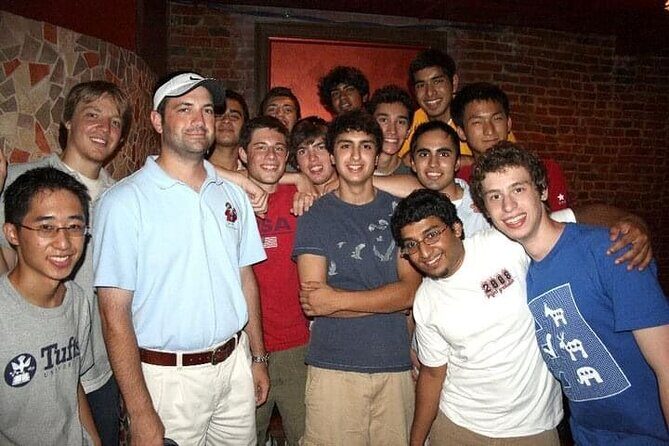
This is an English-language tour, and it runs with a maximum of 20 people. Some days it will feel small and relaxed, and you may even get a near-private feel.
Also, service animals are allowed, and the meeting area is near public transportation. So it’s a practical first activity, even if you’re not staying in walking distance.
You can also read our reviews of more walking tours in Philadelphia


Price and pace: what you’re really paying for
At $25 per person for about 1 hour 30 minutes, you’re buying two things: guided context and time savings. Walking Philadelphia on your own can be fun, but it’s easy to miss the “why it mattered” parts that make the buildings and monuments stick in your head.
The tour is outside-only, and that shapes the whole value. You won’t spend time waiting for entry lines or getting absorbed in exhibits. Instead, you get quick, story-driven orientation across multiple historic sites, then you decide what to go deeper on afterward.
Plan on a meaningful walk. One review noted about 3,500 steps, which is totally doable, but you should still wear comfortable shoes. If it’s cold, dress for wind off the river and for standing at street corners while your guide explains what you’re looking at.
The group stays moving. Guides keep the tour flowing and readable, and you’ll have multiple chances to ask questions as you walk.
Independence National Historical Park and Independence Hall: the founding core
Stop 1 is Independence National Historical Park, where your guide frames why this area is often called America’s Most Historic Square Mile. This is where you get the big picture first, so later landmarks make more sense. It’s also a welcome moment where the guide sets expectations for where you’ll go and what you’ll learn.
Stop 2 is Independence Hall. You’ll focus on the significance of the Declaration of Independence being signed here, plus the way certain founding figures had memorable moments within these walls. Even from the outside, the explanation helps you connect the building to the people and the political pressure behind the scenes.
You’ll likely notice how the guide uses contrasts. For example, they’ll explain what was happening during key revolutionary-era decisions, then point out how the architecture and layout supported the politics of the moment.
This is a great segment if you’re a first-timer. You’ll leave with a clear “who did what, when, and why it matters” mental timeline.
Liberty Bell Center details you will not get from a quick photo
Stop 3 is the Liberty Bell Center. Here the guide goes after the misconceptions you see on mugs and souvenirs. You’ll learn the significance and history of the Liberty Bell, including how it earned its name and why it no longer rings.
The key detail is the crack itself. You’ll hear why the crack you see isn’t simply the cause you might assume. That explanation turns the bell from a symbol into a real object with a real story.
Why this stop is worth your time: the Liberty Bell is one of those things people think they already understand. A good guide makes it feel new again, and the added context helps you interpret the crack, the name, and the meaning in one connected story.
Declaration House (Graff House) and Congress Hall: the politics behind the paperwork
Stop 4 is the Declaration House, also known as the Graff House. The name tells you something was written here, but the guide adds the missing layers: why this particular house was chosen and who helped Thomas Jefferson with his writing.
That’s a small stop on the map, but it’s the kind that makes the tour feel smarter than the usual highlights. You get the sense of how drafting and decision-making worked in real rooms, not just in history books.
Stop 5 is Congress Hall. From the outside, you’ll hear what it meant for the union and where the two houses met. The guide also shares why the building’s most significant achievement can’t be seen with the naked eye—an angle that encourages you to think about governance as systems, not just events.
Stop 6 is Old City Hall. The guide explains that it was more than just an older city hall. It also included a Supreme Court, but not in the way you’re used to today.
This stretch helps you understand that Philadelphia’s founding story wasn’t only grand speeches. It was also legal structure, meeting rooms, and the grinding process of building a government.
You can also read our reviews of more historical tours in Philadelphia




Carpenters’ Hall and Franklin Court: where ideas turned into action
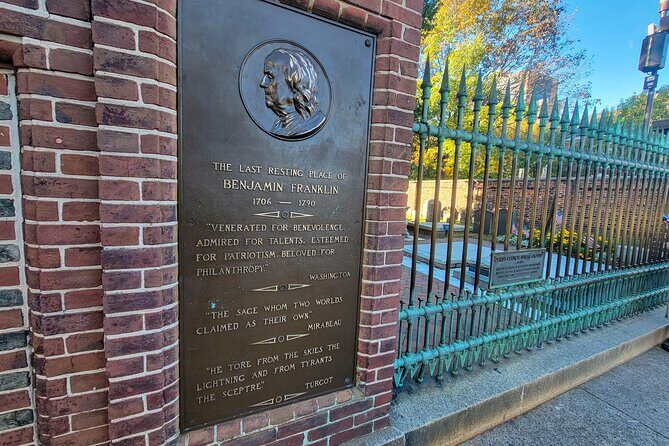
Stop 7 is Carpenters’ Hall, described as a place where America’s independence movement started for practical purposes. You’ll hear about famous words spoken there and by whom, plus a fascinating note about a conspiracy that took place on the second floor.
Stop 8 is Franklin Court, tied to Ben Franklin’s home and workshops. You’ll learn why his house no longer stands, and you’ll also hear why the post office at the end of the court is special in American history even today.
This is one of the best “story density” areas on the walk. You go from revolutionary organizing to practical innovation, which makes Philadelphia feel less like a museum town and more like a place where people built tools for new problems.
The Franklin segment is also a good break from purely political landmarks. It adds the human scale: thinkers, work, and daily problem-solving.
Christ Church and Elfreth’s Alley: seeing the city’s layers in plain sight
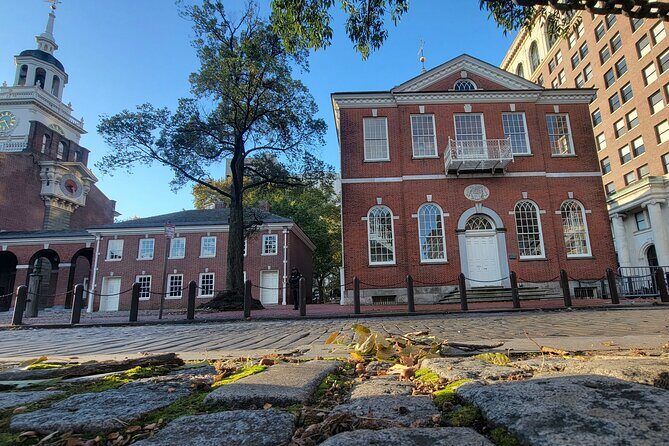
Stop 9 is Christ Church. It’s more than a church in this story. You’ll hear how it was once the tallest building in America, and that it includes a museum. The guide also points out an item that’s easy to overlook, which is a classic sign of a great guide: they know what most people miss.
Admission is not included if you choose to enter later, but the tour explains enough that you can decide if you want the extra ticket time.
Stop 10 is Elfreth’s Alley, often described as the oldest continually lived on street in America. The guide explains how it got its name and walks you through history in a very literal way—showing subtle home details that people tend to miss.
This is where the tour becomes visual and tactile. You’re not just hearing facts; you’re looking at street-level evidence of everyday life.
If you’re traveling with teens, this is often the stop where the questions start. People begin comparing what they see to how modern neighborhoods work.
Betsy Ross House, the Federal Reserve, and what happens after the revolution
Stop 11 is the Betsy Ross House. The guide shares her surprising legacy and addresses the big question: did she really sew the first flag? The answer might not match the version you grew up with, which is the point.
Stop 12 is the Federal Reserve Bank of Philadelphia, nicknamed the Bank of Banks. It’s a short stop, but the message lands: the tour doesn’t freeze Philadelphia in the 1770s. It connects founding-era thinking to how the country’s systems function now.
From a value perspective, this combo works well. After learning about independence and government formation, you see how financial institutions became another pillar of national life.
African American Museum and scholarly Philly: seeing education as nation-building
Stop 13 is the African American Museum in Philadelphia. The guide emphasizes that it was the first museum of its kind in America, and that it has led research and education since its founding in 1976. You’ll get a sense of the building’s scale and that it holds thousands of exhibits.
Stop 14 is the American Philosophical Society Museum. Here the focus shifts to scholars gathering to make the world better. The guide notes that rare antiquities in America are housed here, which makes the stop feel more like a living research story than a dusty artifact display.
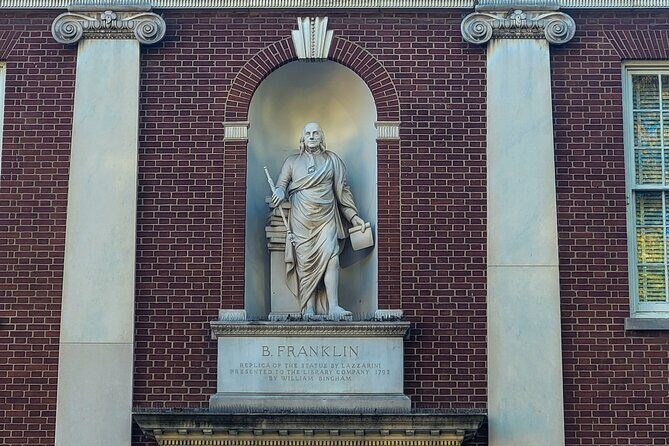
Stop 15 is Library Hall. You’ll learn what’s inside and who studied there for an important journey. You’ll also hear about the person who founded the building and how an accident (in the best historical sense) made the world smarter.
These stops add depth to the idea of nation-building. You’re not only learning about political declarations. You’re learning about institutions that shaped knowledge, research, and education.
Banks, military, and the Mint: systems that still work today
Stop 16 is the Second Bank of the United States. You’ll hear why there was a second bank, why the first needed to be replaced, and the point that it wasn’t just a bank. The guide also shares that the building had more than one important role in America.
Stop 17 is the New Hall Military Museum. The guide calls it a colonial version of the Pentagon, and you’ll hear about military attractions from the 18th and 19th centuries. This is one of those stops that sounds niche until you hear the connection the guide makes.
Stop 18 is Arch Street Meeting House. It looks plain, but the guide explains why its plain appearance is unique for a house of worship. That kind of detail is exactly what makes an outside-only tour still rewarding.
Stop 19 is the United States Mint. You’ll learn that almost half the coins in your pocket are made here, and you’ll hear that the building makes famous and valued items in history.
This final stretch gives the tour a satisfying arc. You move from founding government and ideas into practical national machinery—finance, defense, civic life, and everyday coins.
Ending at the National Constitution Center: your next ticket choice
Stop 20 is the National Constitution Center. The guide explains that it’s the only museum in the country dedicated solely to the constitution. You’ll also hear about interactive ideas like taking an oath there and seeing how tall or short some founders were.
Admission is not included, so you’re not stuck in a ticketed loop. But the outside explanation helps you decide if you want to spend extra time inside after the walk.
Practical tips for an easier, better tour
Bring layers and pay attention to wind. Reviews mention very cold weather, and you’ll often be standing still for short explanations. Comfortable shoes matter because you’ll cover ground.
Keep your phone charged. Even though the stops are short, you’ll want to save notes or photos of the details your guide calls out, especially at places like Elfreth’s Alley.
Ask questions early. Good guides like Tom and Joe actively welcome them, and the format gives you multiple chances as you move.
If you want to go inside later, prioritize what fits your interests. This tour is great for overview, so choose one or two ticketed sites with the strongest payoff for you, like Christ Church, the African American Museum, or the National Constitution Center.
One more tip: if you’re traveling with kids or teens, this is usually a strong length. The tour is about 90 minutes and designed to keep momentum without turning into a marathon lecture.
Should you book this Historic Philadelphia walking tour?
Book it if you want a fast, structured orientation to Philadelphia’s founding core and the institutions that grew out of it. At $25 for about 90 minutes, it’s strong value, especially if you like story-driven history and you’re happy to learn from the street view first.
Skip it if you mainly want to spend hours inside big-ticket museums or if you dislike walking between multiple stops. Since it’s an outside-only overview, you’ll need separate admissions later for ticketed sites.
I’d also book it when you want a guide who handles the tricky parts—like Liberty Bell crack myths and the real “how this actually worked” details behind the founding documents.
FAQ
How long is the Walking Tour of Historic Philadelphia?
It runs about 1 hour 30 minutes (approximately).
What does the $25.00 price include?
You get the guided walking experience with an included mobile ticket. It’s an overview tour, and the stops are experienced from the outside.
Do you enter Independence Hall, the Liberty Bell Center, or other historic sites?
No. The tour does not enter any historic sites. Admission tickets are not included for the places where entry is ticketed.
Which attractions have extra admission if I want to go inside later?
Some stops list ticketed entry options, including Christ Church, Elfreth’s Alley, Betsy Ross House, the African American Museum in Philadelphia, and the National Constitution Center.
Is the tour offered in languages other than English?
The tour is offered in English. Foreign language tours (Spanish, French, Italian) require advanced notice.
How large is the group?
The maximum is 20 travelers.
What happens if weather is bad or I need to cancel?
This experience requires good weather. If it’s canceled due to poor weather, you’ll be offered a different date or a full refund. You can cancel for a full refund up to 24 hours in advance.