REVIEW · PHILADELPHIA
Philadelphia: Valley Forge National Historical Park Tour
Book on GetYourGuide →Operated by WeVenture · Bookable on GetYourGuide
Valley Forge hits different after a guided day. This tour is built around the winter encampment turning point of the American Revolution, with small-group time at the places you’ll actually remember. I love that you get roundtrip transport without the stress of parking or hopping between sites, and I love the way the guide’s stories connect what you see to why it mattered. One consideration: you won’t stop for food, so plan ahead with snacks before you go.
You’ll spend the day in the Philadelphia countryside, moving at a pace that leaves room for questions and short moments to take it in. Washington’s Headquarters, the Visitor Center, recreated soldier cabins, and the National Memorial Arch give you a clear route through the story—without needing to be a history person before you arrive.
At 270 minutes (a little over four hours), this is a focused half-day, not an all-day wandering day. Also, because it runs rain or shine, dress for weather and expect walking on park grounds and uneven surfaces.
In This Review
- Key moments that make this tour worth it
- From City Streets to Washington’s Winter Camp
- Valley Forge National Historical Park: seeing the encampment as a turning point
- Visitor Center first: historic objects that give the day meaning
- Washington Memorial Chapel: a reflective pause in the middle of the story
- Washington’s Headquarters along the Schuylkill River
- General Wayne Statue and the power of the named figures
- Philander Chase Knox Estate and the idea of the place itself
- Recreated huts, guard huts, and Varnum’s Quarters
- Muhlenberg Brigade and Artillery Park: quick passes with big-picture payoff
- Price and what you actually get for $115
- Rain or shine: practical comfort tips for a winter-hardened story
- Who this tour suits best (and who should consider something else)
- Final call: book it if you want a focused Valley Forge day
- FAQ
- How long is the Philadelphia to Valley Forge tour?
- What is the price per person?
- What’s included in the ticket price?
- Are food and drinks included?
- Where do I meet the tour?
- Does the tour run in bad weather?
- How big is the group?
- Is the tour wheelchair accessible?
Key moments that make this tour worth it
- Small-group format (up to 14 people) keeps the experience personal and question-friendly
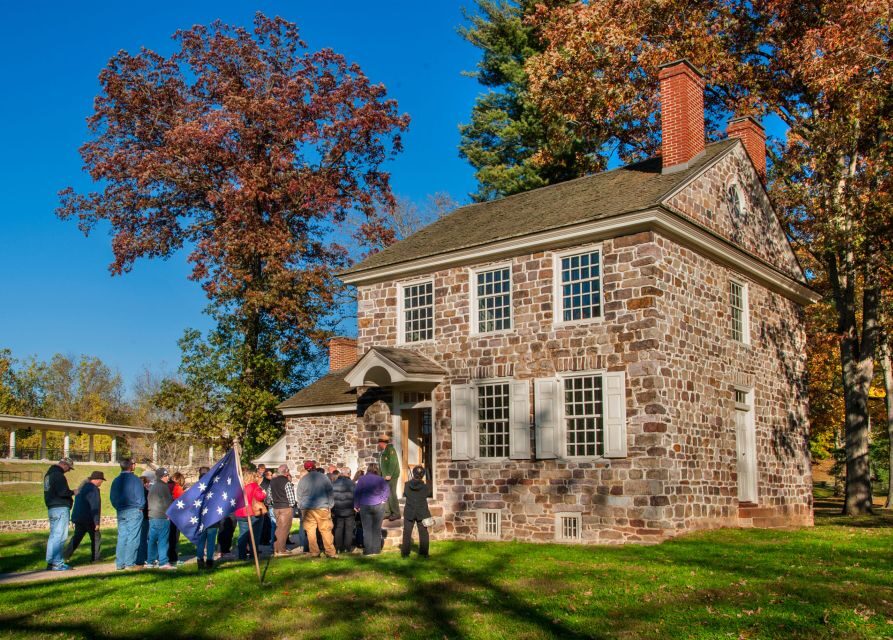
- Washington’s Headquarters is part of the route, and the building is open to the public
- Valley Forge Visitor Center sets context with historic objects and artifacts
- Recreated soldiers’ huts/cabins help you picture winter conditions, not just memorize dates
- Memorial sites and statues (like the General Wayne statue) spotlight the people behind the campaign
From City Streets to Washington’s Winter Camp
The day starts with a straightforward goal: get you from central Philadelphia to Valley Forge with minimal friction. You meet at the SW corner of 12th and Arch Streets, looking for the WeVenture Tours sign. The tour then departs from 48 N 12th St, so you’ll be boarding right near the downtown transit grid.
What I like here is that you’re not spending your time negotiating trains, ride-shares, or getting lost in the suburbs. You also get that “on the road” time, which matters for this topic. The guide uses the ride out to talk through the early years of the war and the lead-up to the winter encampment, so the park doesn’t feel like a random set of buildings. It becomes a story with cause and effect.
This is also where the guide quality shows up. Multiple guides have been described as teacher-types who make history feel like a conversation, not a lecture. If you’re the type who likes to ask why something happened, or how Washington’s army held together, you’ll probably appreciate that tone.
You can also read our reviews of more historical tours in Philadelphia

Valley Forge National Historical Park: seeing the encampment as a turning point
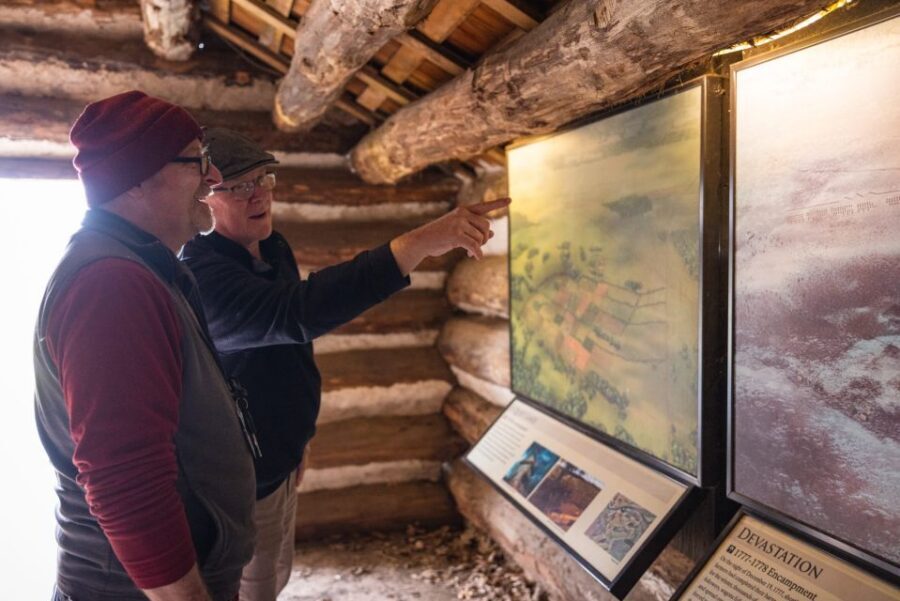
Once you arrive, the tour begins with a guided walk through Valley Forge National Historical Park. This is the core of the experience: the park that once hosted the encampment of George Washington’s Army during the Revolution’s harsh winter season.
The big idea you’ll come away with is that Valley Forge wasn’t just a miserable chapter—it became an important turning point. The tour keeps returning to that theme: extreme hardships, survival, and the way the army eventually became more lethal. The recreated spaces help you connect the emotional weight of the winter to the strategic payoff that followed.
One practical note: even though this is a “half-day,” you are still doing a park visit. Expect some standing, walking, and moving between key points, especially around outdoor features and reconstructed areas. If you want a slower pace, it helps that the group is limited to 14, so the guide can adjust without feeling like everyone is sprinting for photos.
Visitor Center first: historic objects that give the day meaning
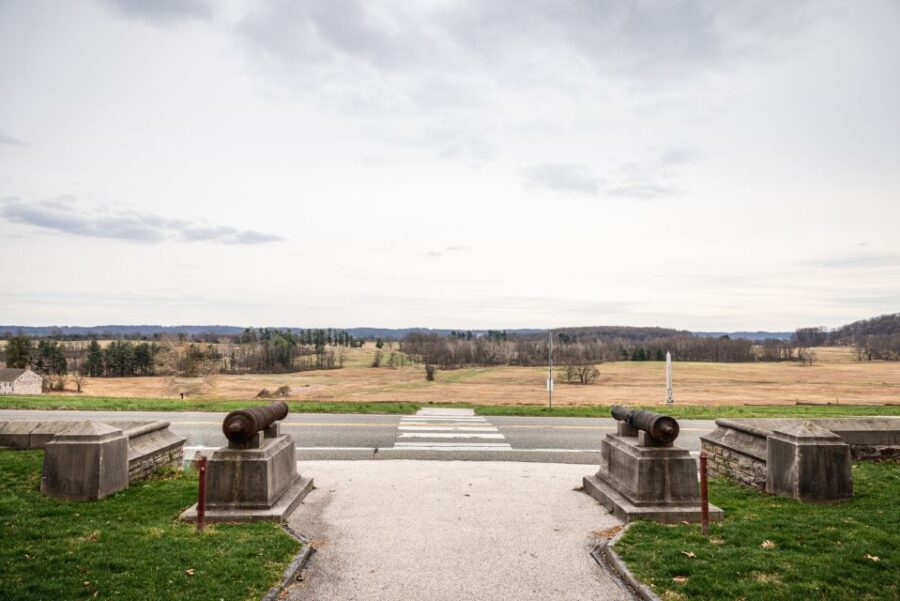
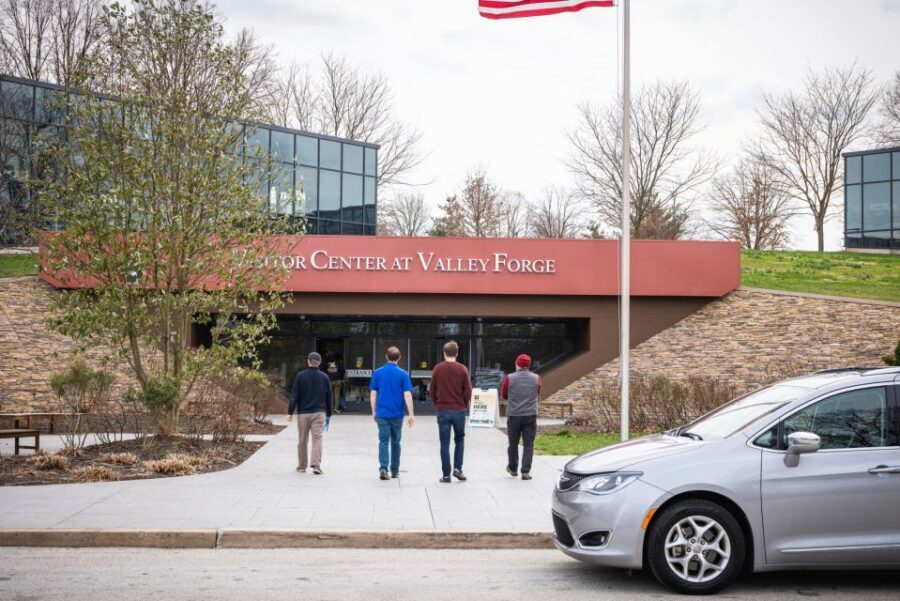
Your next stop is the Valley Forge Visitor Center, with a guided tour there. This is smart sequencing, because you’re not thrown into the woods without context. The center displays historic objects and artifacts, and the guide uses those items to explain what life could have been like and what the encampment changed.
Think of this stop as your mental “map legend.” When you later see recreated cabins and the Washington-related structures, you’ll understand what you’re looking for. You won’t just recognize the idea of hardship—you’ll have a framework for why the hardships mattered.
If you like asking questions, this is usually a strong place to do it. Guides in this kind of format often have the best flow here, since they’re surrounded by material proof, not just outdoor monuments.
Washington Memorial Chapel: a reflective pause in the middle of the story
From the Visitor Center, the tour continues to the Washington Memorial Chapel. This is one of the more quietly memorable stops on the route, and it helps balance the day’s heavier themes with a calmer sense of place.
Even without needing extra background, a chapel stop works well on this tour because you’re still building the same storyline: leadership, endurance, and the consequences of that winter. A guided visit also keeps the timing tight, so you don’t lose momentum while searching for meaning on your own.
If your group likes photos, you’ll likely get some of the best “pause and look” moments here. If your group is more hands-on, the guide’s narration should give you enough to focus on what the site represents within the broader campaign.
Washington’s Headquarters along the Schuylkill River
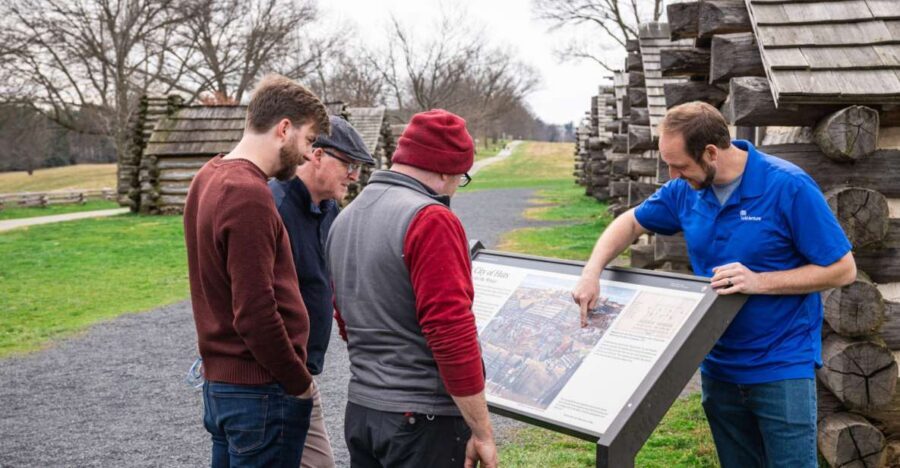
Next comes Washington’s Headquarters, which still stands along the Schuylkill River and is open to the public. This is a must-see stop in any Valley Forge day, and this tour gives it the time a key location deserves.
The guide role matters most here. The narration ties the headquarters back to what you learned on the ride out: the lead-up to the encampment, the hardships of winter, and the ways Washington’s leadership kept the army functioning. When you’re standing in a real surviving structure, those connections can make the space feel less like a set piece and more like a working command center.
There’s also a major monument feature on the route: you’ll gaze upon the massive National Memorial Arch that commemorates Washington and his army. Big monuments can be hit-or-miss for some people, but when your guide explains the why behind the symbolism, it becomes more than a photo op. It becomes a visual cue for the campaign’s legacy.



General Wayne Statue and the power of the named figures
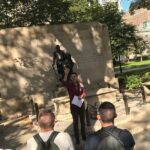
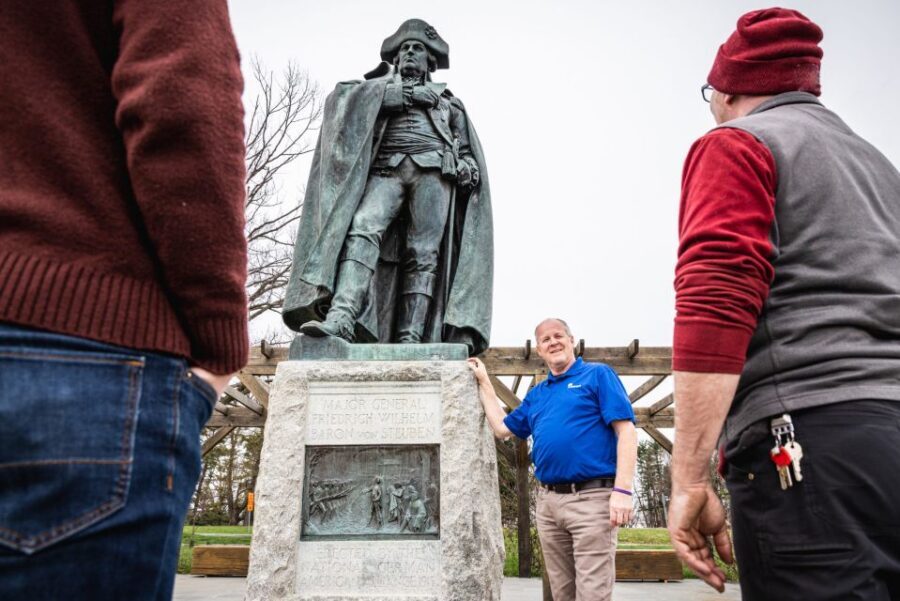
The tour includes a stop at the General Wayne Statue. It also promises stories of iconic figures who fought in the American Revolution. That matters because it keeps you from thinking of the war as only Washington plus dates.
When a guide brings a named figure into the narrative, your brain starts filing information in a more human way: who these people were, what roles they played, and how their choices shaped the army’s survival. In the provided guide feedback, people praised guides for sharing anecdotes and answering questions, which is exactly what you want at a statue stop—context turns stone into a person.
If you’re visiting with kids or first-time history learners, this is one of the best “brain hooks” on the schedule. Names make the story less abstract.
Philander Chase Knox Estate and the idea of the place itself
The route also includes the Philander Chase Knox Estate. Even if you don’t arrive with deep background on the estate, guided context can help you understand why it belongs in this particular Valley Forge story.
I like this kind of stop because it reminds you that the encampment didn’t happen in a museum bubble. These were real people, real property, and real geography. You’re seeing the park and its surroundings as a lived environment, not just an isolated Revolutionary War stage.
This stop can work especially well if your interest goes beyond tactics and into how communities and locations overlap with major historic events. The tour’s guide-driven storytelling is the difference-maker—without it, you’d just be walking past a site with a name.
Recreated huts, guard huts, and Varnum’s Quarters
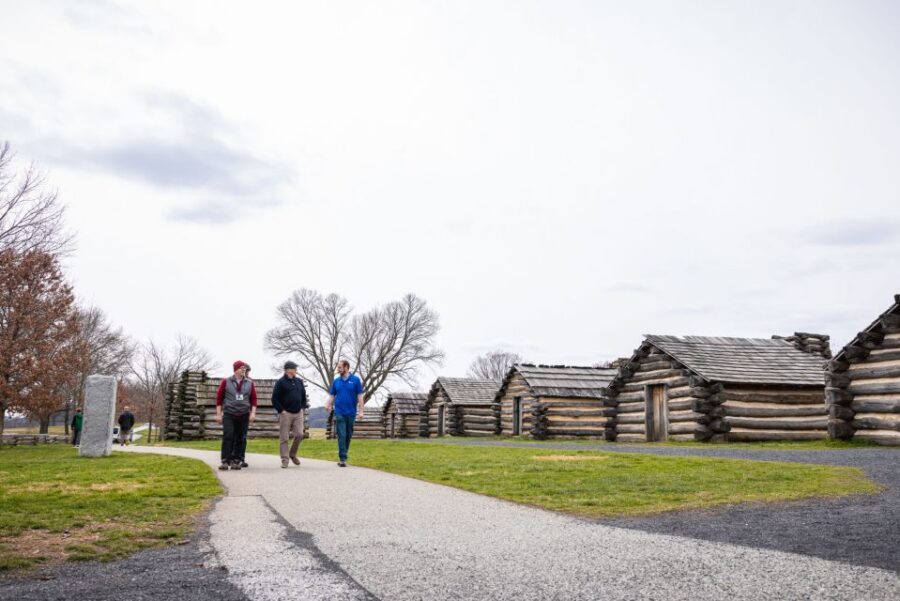
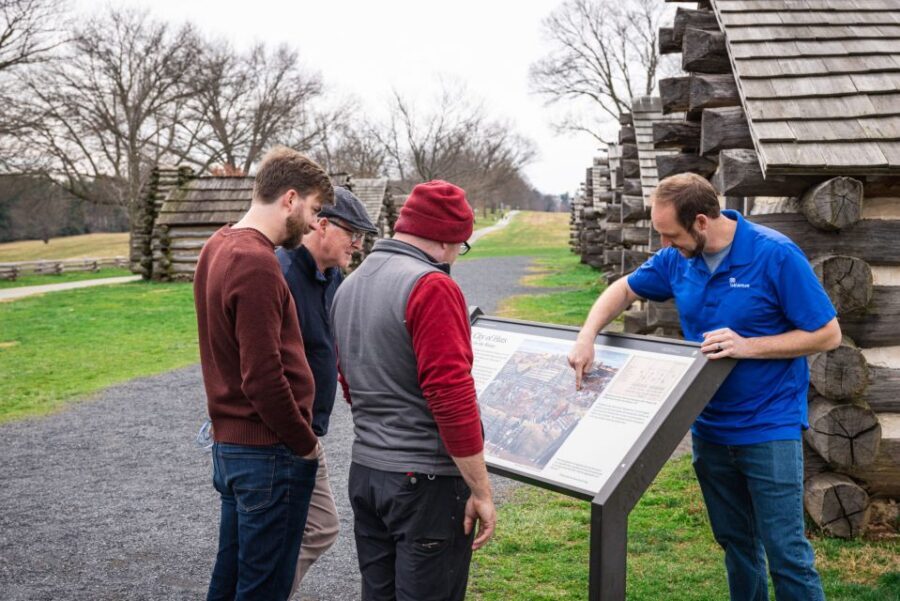
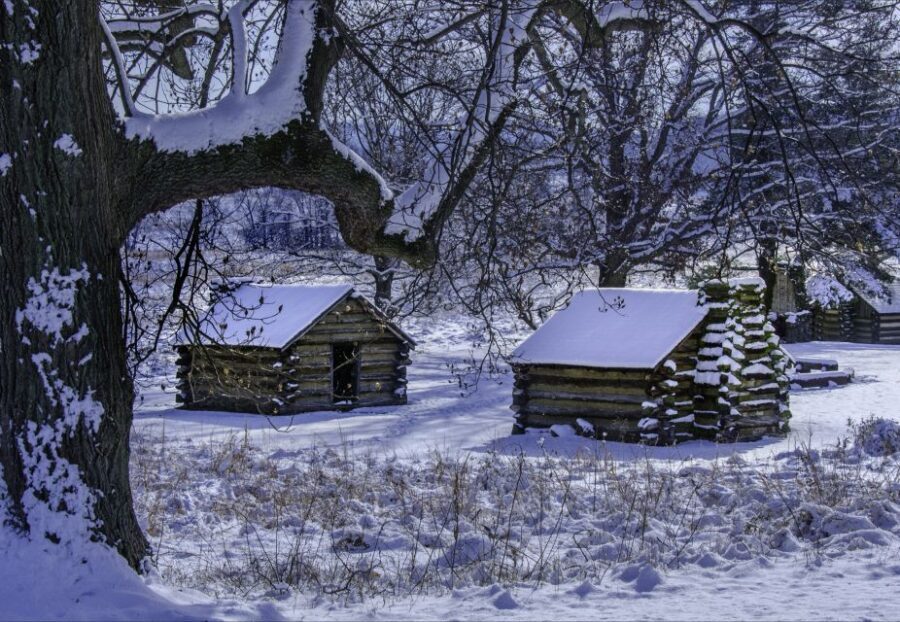
One of the most valuable parts of this tour is that you don’t only see memorial structures. You also get to explore recreated soldier cabins and huts—places that help you visualize the day-to-day reality of encampment.
The route includes Varnum’s Quarters within the park, plus the Commander in Chief’s Guard Huts. These stops are where the theme of extreme hardship becomes more than a concept. You’re using your eyes and imagination to understand how people lived, guarded, and organized themselves in a winter setting.
Recreated spaces can be debated in terms of accuracy, but on a guided tour like this, they do a practical job: they create a scale and a feeling. Your guide also frames what you see around survival and the army’s transformation into a more effective fighting force. That’s how you get meaning out of a reconstruction, instead of just taking it as scenery.
Muhlenberg Brigade and Artillery Park: quick passes with big-picture payoff
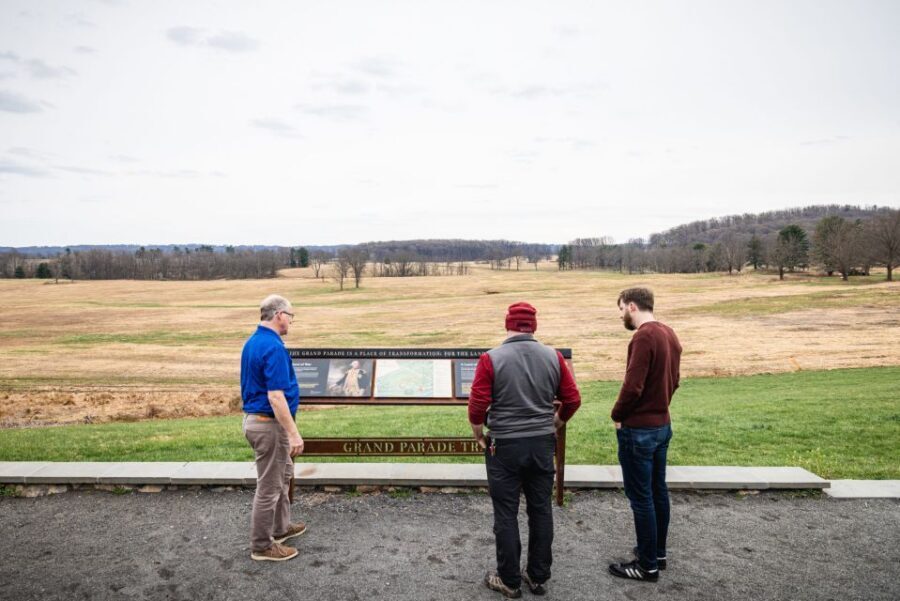
Near the end of the tour, you’ll pass by the Muhlenberg Brigade and Artillery Park. You’re not stuck in a long stop here, but you’ll still get the sense of how the encampment functioned as a military system—units, training, and the presence of artillery.
When a tour includes pass-by stops, it’s usually doing one of two things: either it keeps the pacing tight, or it offers a quick visual reference that you can anchor to what you’ve already learned. In this case, those pass-by moments help you round out the day so you don’t leave with only headquarters and cabins in your memory.
If you’re the type who loves specific units, you might want to use the guide time to ask questions like how these elements fit into the army’s winter changes. Since this tour is small group and guide-led, you’re more likely to get a real answer than a hurried “next stop” response.
Price and what you actually get for $115
At $115 per person for about 270 minutes, you’re paying for more than entry to a national park. The included value is pretty clear:
- Roundtrip transportation from Philadelphia
- A tour guide
- A donation to Valley Forge National Park
Food and drinks aren’t included, which is normal for this style of half-day tour, but it’s worth planning. You don’t want to be stuck deciding what to eat while your guide is still leading you through key sites.
The best way to think about the price is this: you’re buying time and clarity. You’re not driving yourself, and you’re not trying to connect the sites with only a guidebook. This day is arranged so the ride, the Visitor Center, the headquarters, and the recreated quarters all reinforce the same story of hardship and change.
And the small-group limit—14 participants—helps the experience feel less rushed. You get the practical benefit of a guide who can answer questions without turning the whole day into a slide show.
Rain or shine: practical comfort tips for a winter-hardened story
This tour runs rain or shine, so plan like it’s a park walk day, not a museum hop. Wear layers. Bring a light rain layer if the forecast looks uncertain.
Also, remember the day is short. That’s good—no marathon—but it means your comfort choices matter more. If you’re sensitive to outdoor walking, pack accordingly: supportive shoes, a jacket you can move in, and a small bag for weather basics.
If you’re thinking of pairing this with other Philadelphia stops, ask your guide what to do next. One guide suggestion that came up: the Museum of the American Revolution, which includes Washington’s tent and is described as amazing. It’s a strong follow-up if you want to keep building context after the park.
Who this tour suits best (and who should consider something else)
This is a great fit if you:
- want the Valley Forge story in a guided, question-friendly format
- like seeing real surviving structures like Washington’s Headquarters, plus recreated cabins
- prefer a half-day plan with easy logistics from downtown
It may be less ideal if you:
- want long free time to wander on your own without stops
- need a full day for a deeper museum-style visit and lots of unscheduled breaks
- are counting on food stops during the tour (there aren’t any listed)
Final call: book it if you want a focused Valley Forge day
I’d recommend this tour if you want Valley Forge to feel understandable quickly. The route is built to give you both context (Visitor Center) and place-based meaning (headquarters, huts, and memorial features), all tied together by a guide who encourages questions. Guides like Marty, Dale, Adam, Tom, James, and Owen have been praised for clear explanations and for making the day feel personal, not robotic.
If your schedule can handle a half-day and you’re the kind of person who enjoys stories with locations, you’ll likely feel satisfied when you head back downtown. Just pack snacks, dress for weather, and show up ready to ask why this winter encampment mattered so much.
FAQ
How long is the Philadelphia to Valley Forge tour?
The tour duration is 270 minutes, which is a little over four hours.
What is the price per person?
The price is $115 per person.
What’s included in the ticket price?
It includes roundtrip transportation from Philadelphia, a tour guide, and a donation to Valley Forge National Park.
Are food and drinks included?
No. Food and drinks are not included.
Where do I meet the tour?
Meet at the SW corner of 12th and Arch Streets. Look for the WeVenture Tours sign.
Does the tour run in bad weather?
Yes. The tour runs rain or shine.
How big is the group?
The group is limited to 14 participants.
Is the tour wheelchair accessible?
Yes. The tour is wheelchair accessible.