REVIEW · PHILADELPHIA
Philadelphia: History, Highlights & Revolution Walking Tour
Book on GetYourGuide →Operated by WeVenture · Bookable on GetYourGuide
Old City Philadelphia turns into a real timeline when you walk with a live guide. This 150-minute history tour strings together the sites you’ve seen in textbooks with the street-level context that makes them click, from Independence Hall to Elfreth’s Alley. I especially like how you get both big-moment icons and smaller, human details, and how guides such as John or Adam tend to answer follow-up questions without rushing.
Two things I’d call out right away: the stop lineup hits the core landmarks people come for, and the Museum of the American Revolution presentation gives you a hands-on moment rather than only photos. One possible drawback: you’re walking a lot in a compact area, and a couple stops involve stairs, so it helps to wear comfortable shoes and be ready for short climbs.
In This Review
- Key takeaways before you go
- Meeting at Signer’s Garden and Getting Oriented in Old City
- Independence Hall and the Liberty Bell: The Moment the Story Becomes Real
- Congress Hall and Carpenters’ Hall: Decisions That Happened in Rooms Like This
- Museum of the American Revolution: The Live Tent Demonstration and Your Discounted Admission
- Elfreth’s Alley to Betsy Ross House: Revolution Living Next Door
- Benjamin Franklin’s Grave and the US Mint: Founders as People, Not Icons
- The President’s House Re-Creation: A Different Kind of Stop
- Finishing in Old City: Why This Tour Works for a Short Philly Window
- Price and Value: Is $45 Worth It?
- Should You Book This Philly Revolution Walking Tour?
- FAQ
- Where is the tour meeting point?
- How long is the Philadelphia History, Highlights & Revolution Walking Tour?
- What does the tour cost?
- What major museum experience is included?
- Which historical stops are included in the walking route?
- Is the tour in English?
- What if I’m driving to Old City?
Key takeaways before you go
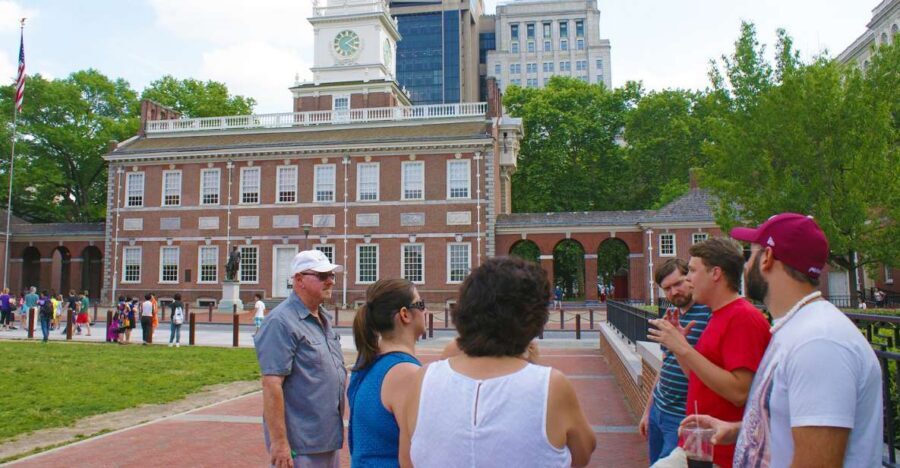
- Independence Hall and the Liberty Bell are presented as a story arc, not just a checklist of famous buildings
- Museum of the American Revolution live demonstration includes a George Washington tent moment, plus discounted museum admission after
- Elfreth’s Alley and Betsy Ross House show how the Revolution lived alongside everyday neighborhood life
- Carpenters’ Hall and Congress Hall connect the meeting rooms to the decisions that shaped the new country
- Photo stops at the Liberty Bell and Benjamin Franklin’s grave keep the pace moving while still giving you time for pictures
Meeting at Signer’s Garden and Getting Oriented in Old City
You start at the Signer Statue in Signer’s Garden, which is a smart place to begin. It gets you oriented fast, because Old City can feel like a maze of streets once you’re on foot, and this tour builds a line you can follow.
If you’re driving, plan for extra time. There are parking lots and decks throughout Old City, but street or metered parking isn’t ideal since the maximum time is only 2 hours, which is shorter than the tour itself. I’d also suggest setting your expectations: this is a walking-focused experience, so being close to the meeting area helps.
One more practical point: the tour is wheelchair accessible, so you can expect route choices that work for mobility needs, including a manageable flow through the neighborhood. And since the tour runs in English with a live guide, you’ll get the kind of narration that’s made for people who want context, not just dates.
You can also read our reviews of more walking tours in Philadelphia


Independence Hall and the Liberty Bell: The Moment the Story Becomes Real
Independence National Historical Park is where the tour starts to earn its keep. You move through the area as a guided walkthrough, and the narration connects the buildings and the meaning behind them. This matters because Independence Hall and the surrounding landmarks can feel intimidating if you only know them from school slides.
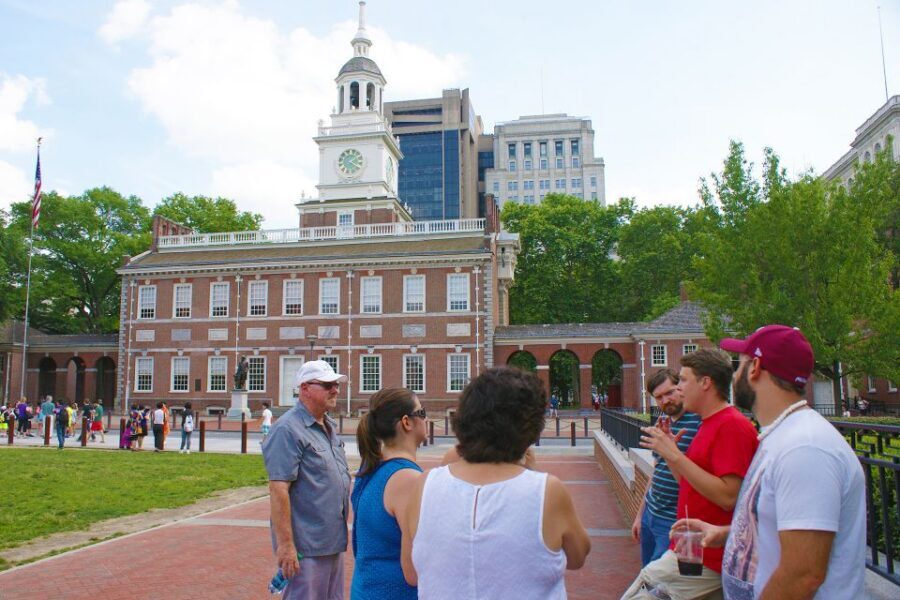
The big draw is Independence Hall, the site tied to the creation of the Declaration of Independence and the U.S. Constitution. The guide’s job here is to make those documents feel like decisions made by real people, in real time—not museum words sealed behind glass.
Then the iconic Liberty Bell comes next, with a photo stop. That bell is one of those landmarks that always looks familiar, even when it’s the first time you’re seeing it in person. What you’re actually chasing on this stop is the meaning: the Liberty Bell works as a symbol of American freedom, and the guide ties it back to the revolutionary struggle and public messages of the era.
If you want maximum value at this stage, keep one mindset: don’t just look at the sights. Listen for the cause-and-effect thread. When the guide explains what leaders were trying to do and why the symbolism mattered, the stops stop feeling repetitive—even if you’ve already read about them.
Congress Hall and Carpenters’ Hall: Decisions That Happened in Rooms Like This
After Independence Hall, the tour shifts from the most famous stage to the surrounding places where the new nation was debated, organized, and argued into existence. You’ll pass Congress Hall, and it’s a reminder that government isn’t only about one building or one ceremony. It’s about meetings, procedures, and the people who showed up to do the work.
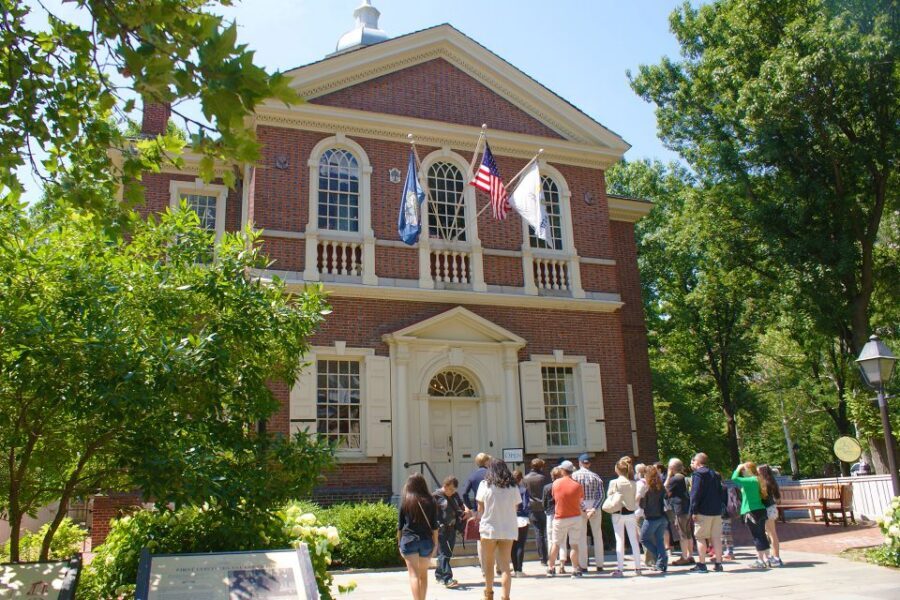
Carpenters’ Hall is another key stop that helps you understand how networks formed. The Revolutionary era wasn’t only generals and speeches—it also involved committees, gatherings, and planning in spaces built for civic conversation. When your guide connects those details to what you’ve already seen at Independence Hall, it turns the neighborhood into a functional map of how decisions moved.
What I like here is the pacing logic. You’re not sprinting from one landmark to another like a drive-by. You’re getting a clear sequence: the story grows step by step, and the tour gives you enough time at each place to grasp what kind of place it was.
Museum of the American Revolution: The Live Tent Demonstration and Your Discounted Admission
The Museum of the American Revolution is where the tour adds a different kind of learning. Instead of staying outside and talking only through architecture, you get a special presentation that includes a live demonstration. One of the standout moments is the tent George Washington lived in during the war.
That matters for two reasons. First, it turns what can be an abstract war story into something physical—fabric, space, and the reality of living in camp conditions. Second, it gives you an internal “hook” for the rest of the museum if you choose to return later.
The tour also includes discounted admission into the museum that you can redeem after the tour. So you’re not forced into spending more time in a timed rush during the walking sequence. Instead, you get a preview moment during the guided portion, then you can decide later how deep you want to go with your own pace.
If you’re the type who likes your history with a hands-on angle—models, demonstrations, and that sense of being in the period—this stop is the one that tends to make the whole afternoon feel more memorable.
Elfreth’s Alley to Betsy Ross House: Revolution Living Next Door
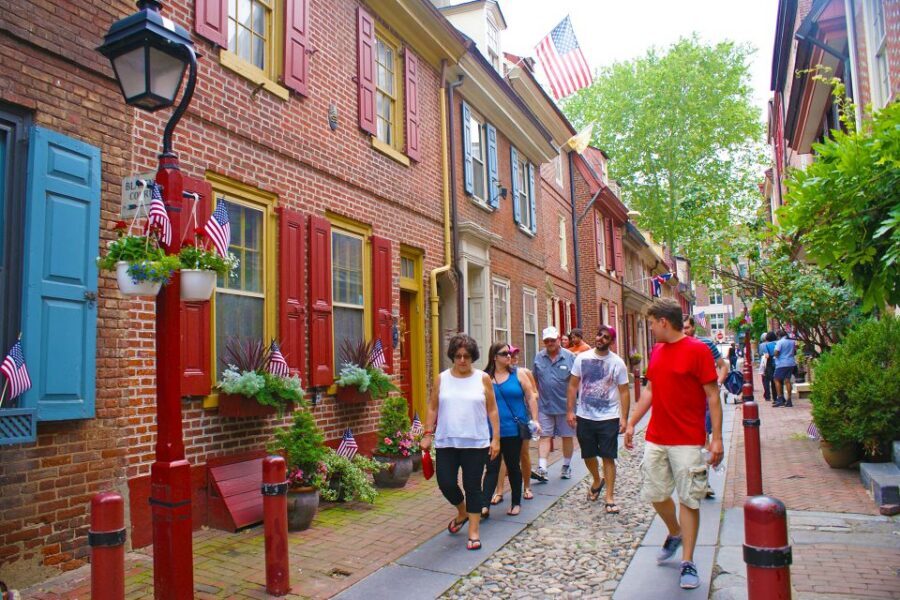
Then comes one of the best parts of any Old City walk: the shift from grand government buildings to residential streets. You’ll stroll down Elfreth’s Alley, described as the nation’s oldest continuously inhabited residential street. Even without extra context, this feels like a time machine moment because the street layout and the neighborhood scale are so close to what people lived with then.
The tour uses this stop to connect the Revolution to daily life. It’s one thing to learn about independence from a distance. It’s another thing to imagine those events while standing on a street where habitation has continued for generations.
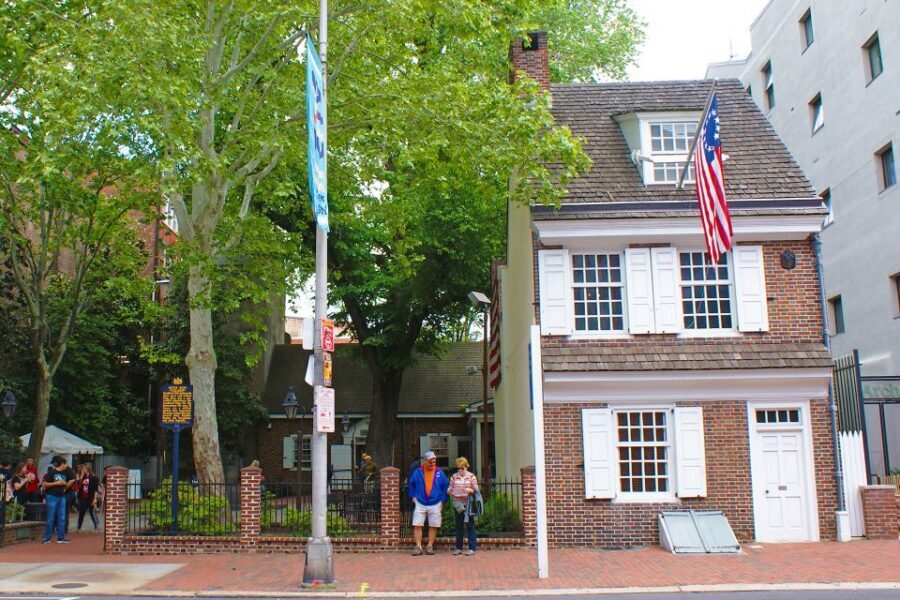
Next is the Betsy Ross House. You get a guided look here, plus a picture stop at the home connected with Betsy Ross, credited with creating the first American flag. This is a spot where stories can easily become oversimplified, so the value comes from how your guide frames Betsy Ross as a person in the era, not just a name on a symbol.
If you want a simple rule for this section: slow down just a bit. Let the street scene do some of the work. When you see how narrow and human-scaled the neighborhood is, the Revolution stops feeling like a distant event and starts feeling like something that unfolded beside real homes.
You can also read our reviews of more historical tours in Philadelphia




Benjamin Franklin’s Grave and the US Mint: Founders as People, Not Icons
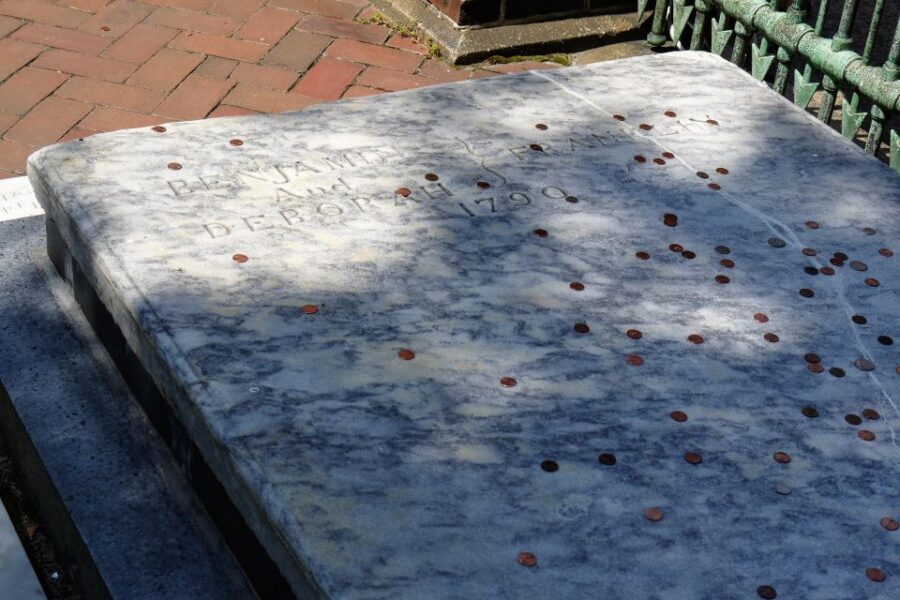
You’ll pass by Benjamin Franklin’s burial site, with a photo stop. Franklin is one of those figures who can turn into a caricature—smart, productive, everywhere. On this tour, the narration brings him back to Earth by tying his presence to the city and the era.
Then you’ll see the U.S. Mint as part of the Old City walk. This is a clever inclusion because it broadens the Revolution beyond speeches and battles. Currency, production, and national systems were part of building the new country. When the tour places the Mint in your route, it adds a practical layer to the story: revolution also means creating the infrastructure a nation needs to function.
This is also where the tour’s “big picture” benefit shows. You’re not only visiting sites tied to independence; you’re getting a sense of what the new United States had to build right away.
The President’s House Re-Creation: A Different Kind of Stop
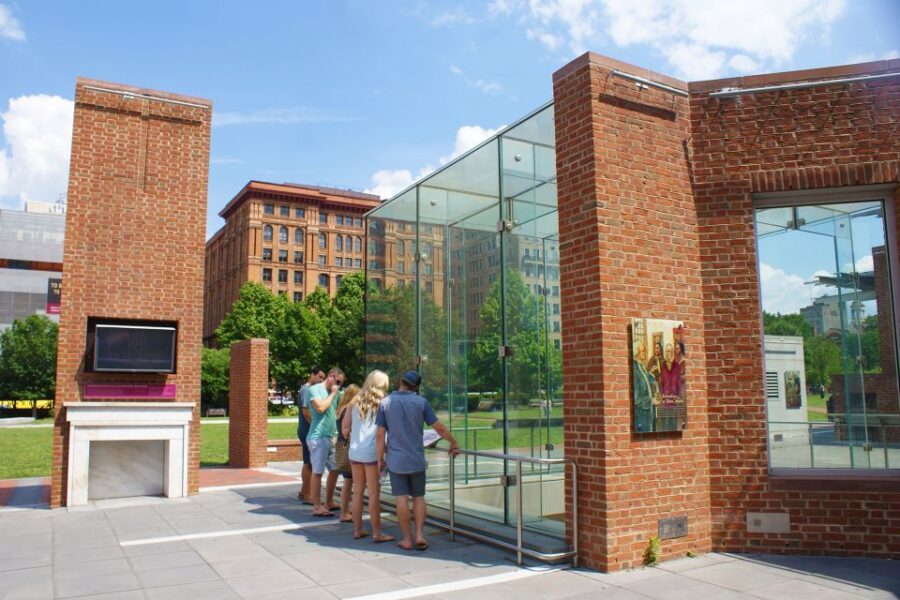
One of the tour’s most interesting interpretive elements is the walkthrough up to the President’s House area, described as a recreated site. You’ll go up the steps and into the recreated space, where the guide explains the lives of the leaders who lived there, plus stories of other individuals who played key roles.
This stop works well because it addresses a common gap in how history is taught. It’s easy to talk only about top names. The President’s House re-creation is designed to make space for the broader cast involved in the functioning of leadership and daily operations.
Be ready for stairs here. The tour includes that physical movement as part of the experience, so quick snack breaks won’t replace the need for comfortable shoes and a steady pace.
Finishing in Old City: Why This Tour Works for a Short Philly Window
You end back in Old City, which is useful because the area has plenty of food and walkable follow-on options afterward. The tour itself is 150 minutes, so it hits a sweet spot if you’re short on time but want more than a quick glance at famous places.
This is also a tour for people who want the fundamentals. If you’re new to American history, the guide helps you connect the dots without drowning you in details. If you’re a history lover, the tour still gives you enough narrative depth—many guides on this route have a way of answering questions on the spot and pushing past surface-level facts.
If you’re traveling with kids or teens, it tends to work well because it blends recognizable landmarks with human-scale street scenes. A street like Elfreth’s Alley and a symbol like the Liberty Bell give everyone something to latch onto, and the guide can steer the story to match the group’s curiosity.
Price and Value: Is $45 Worth It?
At $45 per person for 150 minutes, the value comes from what you’re actually buying: a local guide, a guided sequence across multiple major sites, and an included presentation at a major museum.
Here’s what makes that price feel fair:
- You’re getting narration at each stop, which is where tours earn their money
- The Museum of the American Revolution live demonstration adds real learning time, not just sightseeing
- You also get discounted museum admission after the tour, so you can extend the experience if you want
- The price includes a National park service fee and a donation to a local community organization, which helps keep the experience tied to the community rather than feeling like a purely commercial checklist
The only cost you’re really adding is what you choose to do next—like whether you redeem that discounted museum admission. If you’re willing to spend a couple hours learning and then keep going on your own after, this price is easier to justify.
Should You Book This Philly Revolution Walking Tour?
I’d book it if you want a fast, well-structured way to see the independence-area highlights without feeling lost. This tour is especially strong for first-timers who want the famous landmarks—Independence Hall, Liberty Bell, Betsy Ross House—and also want the “why” behind them.
I’d think twice if you hate walking or you struggle with stairs, since the route includes stepping up into the President’s House re-creation and a lot of time on your feet. Also, if you already know everything about this period and you’re only chasing deep museum artifacts, you might get more value from a longer museum day.
If you fall in the middle—curious, short on time, and ready to turn landmarks into a story—this is a smart buy.
FAQ
Where is the tour meeting point?
Meet your guide at the Signer Statue in Signer’s Garden.
How long is the Philadelphia History, Highlights & Revolution Walking Tour?
The tour runs for 150 minutes.
What does the tour cost?
It costs $45 per person.
What major museum experience is included?
You’ll get a special presentation at the Museum of the American Revolution that includes a live demonstration, and you receive discounted admission into the museum you can redeem after the tour.
Which historical stops are included in the walking route?
You’ll see iconic Independence National Historical Park sites, Independence Hall, Congress Hall, the Liberty Bell (photo stop), Carpenters’ Hall, Elfreth’s Alley, the Betsy Ross House, Benjamin Franklin’s grave (photo stop), and you’ll also pass by the U.S. Mint.
Is the tour in English?
Yes, the live tour guide provides the experience in English.
What if I’m driving to Old City?
If you’re driving, allow extra time to find parking. Street or metered parking isn’t recommended because the maximum time allowed is 2 hours, which is less than the tour duration.