REVIEW · NEW YORK CITY
Official Central Park Walking Tour
Book on Viator →Operated by Central Park Conservancy · Bookable on Viator
Central Park, sorted into highlights. This 90-minute Conservancy walk strings together the Park’s most memorable sights, so you get the big “wow” moments plus the story of how the designers reshaped the land. I especially like the focus on iconic photo stops and the design history that makes the scenery make sense.
I also like the pace for a first visit. With a maximum of 25 people, it stays manageable, and you’ll likely hear thoughtful commentary at each bridge, meadow, and terrace. One consideration: it’s a single weather-dependent walking block, so if you’re hoping for lots of free roaming, you may want to add extra time on your own.
In This Review
- Key highlights you’ll notice right away
- Start at Columbus Circle: get your bearings fast
- Greyshot Arch: one of the Park’s many “quiet wow” structures
- Pinebank Arch: cast-iron elegance in the south end
- Heckscher Ballfields: where active play has long roots
- Sheep Meadow skyline views: the Manhattan postcard moment
- American elms and the Mall: a corridor of light and rhythm
- Bethesda Terrace: the movie-perfect finale with fountain and Lake outlook
- Price and value: why $33 makes sense for a first visit
- Who should book this Central Park Highlights walk
- Weather and comfort: plan for a walk, not a museum
- Should you book the Official Central Park Walking Tour?
- FAQ
- How much does the Official Central Park Walking Tour cost?
- How long is the tour?
- Where do I meet the guide?
- Where does the tour end?
- Is there an admission fee for the stops?
- How big is the group?
- Is the ticket mobile?
- What happens if the weather is bad?
Key highlights you’ll notice right away
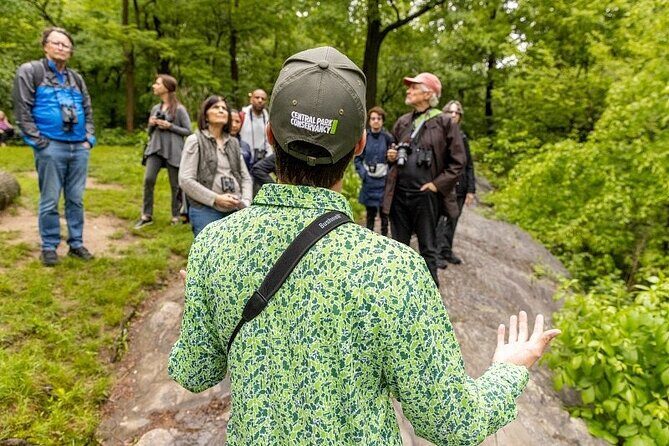
- A tight 1.5-hour route from Columbus Circle to Bethesda Terrace, with no stop requiring extra paid admission
- Bridge-and-arch scenery at Greyshot Arch and Pinebank Arch, plus the cast-iron look and details you’d miss solo
- The American elms and Mall vibe that turn Central Park’s center into a visual corridor
- Sheep Meadow skyline views that feel instantly classic, with the city backdrop doing the heavy lifting
- A grand finish at Bethesda Terrace with the fountain and outlook toward the Lake and boathouse
Start at Columbus Circle: get your bearings fast
You begin at Maine Monument on the west side of the Park, just off Central Park South, near the end of the avenue grid where Manhattan’s energy pushes right up to the greenery. Columbus Circle is a good starting point because it anchors the whole experience: you’re standing at the boundary between city and escape, then moving deeper into the “designed” world of Central Park.
This first stretch is less about one single attraction and more about orientation. Your guide sets up what you’re about to see—arches, open lawn, and the famous terrace—so when you turn a corner, the Park’s layout feels logical instead of random.
Practical tip: the meeting spot matters. It’s easy to drift toward the closest entrance without realizing you’re a few steps off. Give yourself a little buffer, especially if you’re using transit and don’t want to stress about being late.
You can also read our reviews of more walking tours in New York City


Greyshot Arch: one of the Park’s many “quiet wow” structures
Next comes Greyshot Arch, one of the many arches and bridges that stitch Central Park together. From the outside, an arch can look like just another piece of decor. On this walk, you learn how these crossings play a bigger role: they help manage movement through the Park while also creating that charming “mini perspective” effect where a view suddenly frames itself.
This stop is short (around 10 minutes), which is good news if you’re sightseeing efficiently. You get just enough time to look closely at what you’re seeing—shape, materials, and how it fits into the path system—without losing your momentum for the rest of the route.
A possible drawback: if you’re the type who loves lingering at one spot for ages, the highlights format might feel a little brisk. But that briskness is part of the value. You’re collecting multiple signature scenes in one guided loop.
Pinebank Arch: cast-iron elegance in the south end
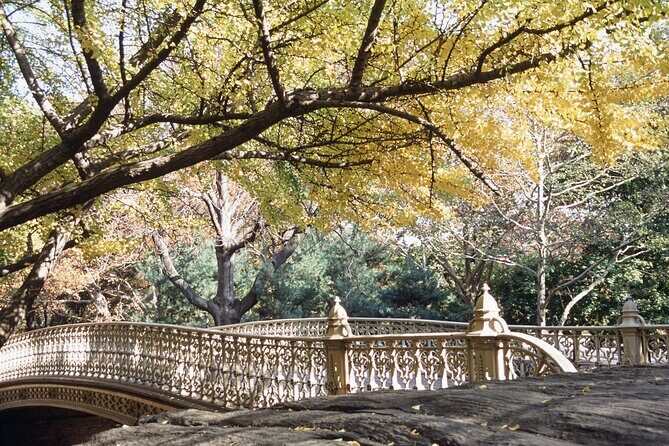
Then you move to Pinebank Arch, described as an elegant cast-iron bridge and one of the most distinctive ornamental elements in the south end of Central Park. This is where the Park’s “engineered prettiness” really hits. Central Park isn’t only about open spaces—it’s also about details that make the walking route feel curated.
A 10-minute pause here works well because you can do two things: check out the structure itself, then look at how the surrounding paths and sightlines guide you onward. That second part is key. Without a guide, it’s easy to admire one object and miss how Central Park’s designers used structure to control your experience.
If you’re photographing, bring a steady habit. Stand where you can capture both the arch elements and the way they lead your eye forward. It’s one of those places where the best picture isn’t always the closest one—it’s the one that shows the framing.
Heckscher Ballfields: where active play has long roots
Next is Heckscher Ballfields, an area reserved for playing field games since the Park’s creation. This stop adds a side of Central Park that surprises a lot of first-timers. It’s easy to assume Central Park is all strolling paths and quiet views. Here, you see that the Park has always been designed for active use too.
At about 10 minutes, the focus stays on context rather than downtime. You’ll hear how spaces inside the Park were planned to serve different needs—from recreation to scenic beauty—so the Park can work for everyday life, not just postcards.
This is also a helpful moment to reset your attention. After arches, open spaces start to feel more “intentional.” You’re building a mental map of what the Park values: movement, play, and sweeping views.
Sheep Meadow skyline views: the Manhattan postcard moment
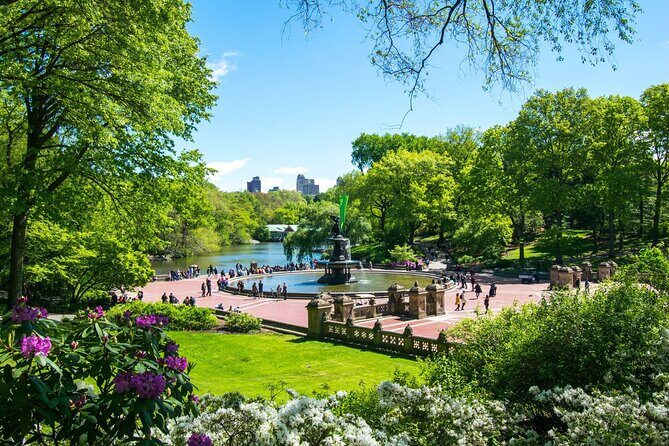
After that, you reach Sheep Meadow, where the payoff is immediate: a view of the Manhattan skyline. This is the kind of view that feels iconic because it’s so simple. A wide lawn + a city backdrop + your position in the Park. The skyline becomes part of the design.
Your time here is about 10 minutes, which usually feels just right. You can take photos, look around, and absorb the scale of the open lawn without turning the walk into a long picnic session.
One small consideration: Sheep Meadow is popular. If you’re visiting at a busy hour, you may need to be patient for clear sightlines. Your best photos often come from walking a few steps along the edge rather than waiting in one place.






American elms and the Mall: a corridor of light and rhythm
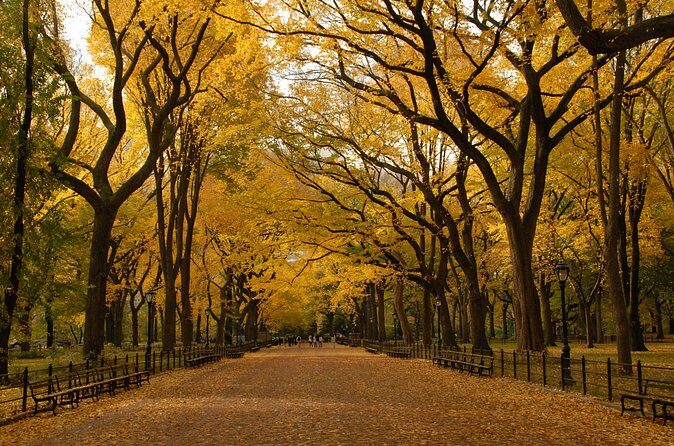
Along the way, you also pass through the feel of the Mall lined with American elms. Even if you only notice it lightly, this section changes the mood of the walk. The trees create a rhythm, and the path corridor effect helps you understand how Central Park moves people through different “rooms” of scenery.
This part matters because it bridges the highlights. If you only focus on Bethesda Terrace as the end goal, you might miss how the Park’s central sections were built for dramatic pacing—where the view opens, narrows, and then opens again.
If you’re sensitive to heat or sun, this is where you’ll be grateful for tree shade on brighter days. On cold days, the same corridor can feel windy, so dress accordingly.
Bethesda Terrace: the movie-perfect finale with fountain and Lake outlook

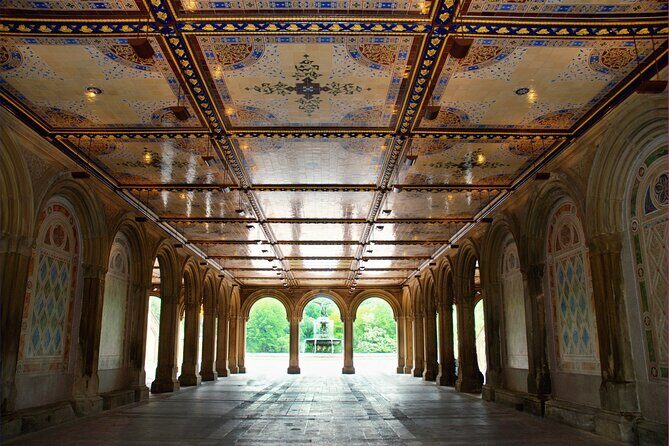
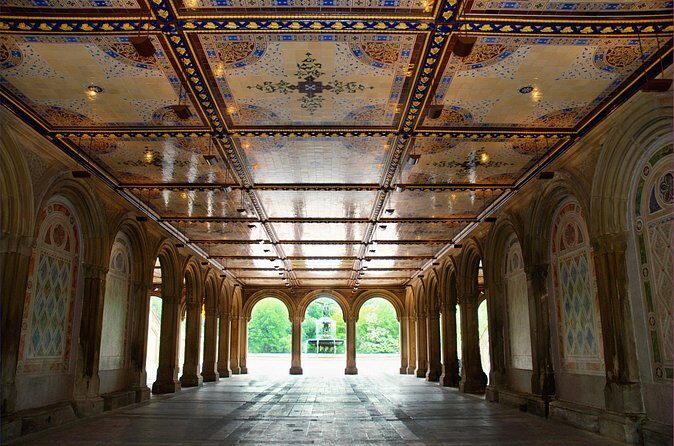
The tour ends at Bethesda Terrace, mid-Park at 72nd Street, with its famous fountain and views toward the Lake and the boathouse. If you’ve seen Bethesda Terrace in movies, magazine photos, or posters, this is where those images stop being abstract. The scale is real, the details become visible, and the whole scene feels staged in the best way.
You also learn why this spot lands so hard. Bethesda Terrace works because it combines elevation, water, and a dramatic architectural frame. It’s a “finish line” that makes the earlier stops feel like part of one story instead of disconnected attractions.
This stop is about 10 minutes in length, so it’s a short wrap-up rather than a full wander. If you want a longer linger for photos or just watching people move through the terrace, plan to extend your time after the guide ends.
Price and value: why $33 makes sense for a first visit
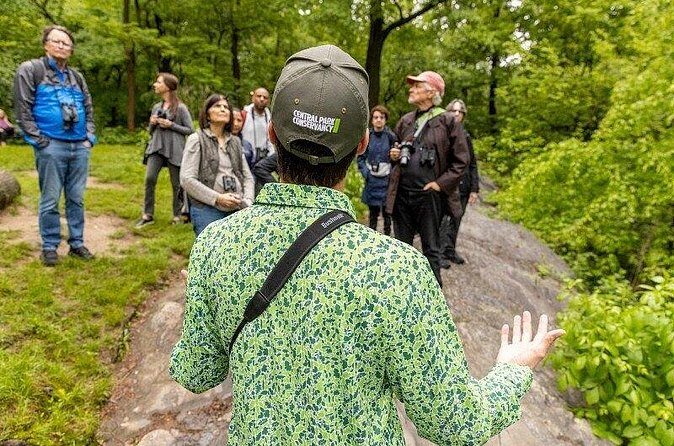
At $33 per person for roughly 1 hour 30 minutes, the value is in efficiency. You’re paying for a guided thread through key scenes—plus the design and architectural context that helps you see what you’re looking at. For a first-time visitor, that’s the difference between wandering and understanding.
The route is also structured to avoid “hidden costs.” Stops are listed as admission ticket free, so you’re not hit with extra entry fees for the sights along the way. The mobile ticket format also reduces hassle once you’re there.
Group size matters too. With a maximum of 25 travelers, this isn’t a massive crowd shuffle. In the best cases, the group can be small enough for more back-and-forth questions. You might hear guides like Carla, Jose, Ryan Schmidt, or Juan bring an energetic, clear explanation style to the route, which is exactly what makes $33 feel fair.
Who should book this Central Park Highlights walk
This tour is made for you if:
- You’re visiting Central Park for the first time and want the “must-see” core without planning a whole route
- You like parks when they come with context—how designers shaped the land, not just where to stand for a photo
- You prefer a guided pace that hits several signature areas in under two hours
It may not be ideal if you want a long, slow nature walk. This walk is about landmarks and design storytelling, and it moves through multiple stops quickly enough that you won’t get hours of unstructured roaming.
If you’re traveling as a couple, this is a solid pick because it naturally gives you shared moments—skyline views, arch framing, and that Bethesda Terrace end scene—without you needing to split up to figure out directions.
Weather and comfort: plan for a walk, not a museum
This experience is weather dependent. If conditions are poor, the provider can cancel and offer either a different date or a full refund. That’s a meaningful detail because Central Park walking is at the mercy of rain, wind, and ground conditions.
For comfort, aim to dress for walking first and sightseeing second. Central Park is large enough that even a short schedule can feel like real time on your feet. And since it runs from one central zone to Bethesda Terrace, think about how you’ll return afterward.
Should you book the Official Central Park Walking Tour?
Yes, if your goal is to see Central Park’s biggest sights with a guide who connects the dots. For the money and time, you get a smart lineup: arches, ballfields, Sheep Meadow skyline, and a classic finish at Bethesda Terrace with Lake and boathouse views. The guided design context is what makes the whole walk feel more satisfying than a solo stroll.
Book it especially if you want to start exploring with a clearer mental map. After you’ve seen the highlights and heard how the Park’s designers transformed rocky and swampy land into something people love, the rest of Central Park stops looking random and starts looking intentional.
FAQ
How much does the Official Central Park Walking Tour cost?
It costs $33.00 per person.
How long is the tour?
It runs about 1 hour 30 minutes.
Where do I meet the guide?
The start point is at the Maine Monument on the west side at Central Park South (Central Park S, New York, NY 10019).
Where does the tour end?
The tour ends at Bethesda Terrace in mid-Park at 72nd Street (New York, NY 10024).
Is there an admission fee for the stops?
The stops listed are shown as admission ticket free.
How big is the group?
The tour has a maximum of 25 travelers.
Is the ticket mobile?
Yes. The tour uses a mobile ticket.
What happens if the weather is bad?
This experience requires good weather. If it’s canceled due to poor weather, you’ll be offered a different date or a full refund. Also note that the experience is non-refundable and cannot be changed for any reason.