REVIEW · BOSTON
Rebels and Red Coats; Tales of the Revolution
Book on Viator →Operated by Wicked Good Boston Tours · Bookable on Viator
Revolutionary Boston, told with energy. This one-hour walk strings together big moments from the American Revolution and makes them feel close and human, not dusty. I like how the guides bring the story to life with acting and humor, including a scavenger-hunt style game that helps kids pay attention. You also get Freedom Trail landmarks in a tight route, starting at Faneuil Hall and ending at Granary Burying Ground, with guides like Kate (yes, the 13-year-old) helping keep the energy high.
The main drawback is that it moves at a walking pace on uneven terrain and hills, and it stays mostly outside. There’s also no museum or building entry, so if you’re hoping for indoor exhibits, you’ll want to plan those separately.
In This Review
- Key points to know before you go
- Getting Started at Faneuil Hall: Fast, Focused, and Family-Proof
- Faneuil Hall Marketplace: Where Revolution Politics Meets Real Life
- What you’ll learn around Faneuil Hall
- Potential downside at this stop
- The Boston Massacre Area: Understanding the Spark, Not Just the Event
- King’s Chapel Burying Ground: Puritan Silence and Colonial Roots
- What you should expect
- A practical note
- Granary Burying Ground: Revolutionary Heroes and Literary Favorites
- Why this ending stop feels satisfying
- The Acting Guides: How You Learn Faster Without Feeling Like Studying
- Price and Value: $20 for a Tight Route You Can Actually Finish
- Who This Tour Suits Best in Your Boston Plan
- Should You Book Rebels and Red Coats?
- FAQ
- How long is the Rebels and Red Coats tour?
- Where does the tour start and end?
- Is there museum or building access included?
- Are cemetery stops included?
- Is the tour a large group?
- What happens if the weather is bad or I need to cancel?
Key points to know before you go
- Faneuil Hall as your launch point: start at the place tied to the Revolution’s early political sparks.
- Three story-heavy stops, not a long hike: you hit the Boston Massacre site area and multiple pre-Revolution meeting points around Faneuil Hall.
- Two cemetery stops with real voices: Puritan-era names at King’s Chapel Burying Ground, then Revolutionary heroes and literary figures at Granary.
- Acting + humor that works for kids: the guides use performance to keep attention, not just dates and facts.
- Small group size: maximum 15 travelers, which helps the pace feel manageable.
Getting Started at Faneuil Hall: Fast, Focused, and Family-Proof

The tour meets at 1 P Faneuil Hall Marketplace in Boston and starts at 10:00 am. You’ll end at Granary Burying Ground on Tremont St, which is convenient because it keeps you in the heart of the Freedom Trail area without forcing you to backtrack far.
This is the kind of tour that makes sense when you want history, but not a lecture. The format is built around short segments and quick turns in the story. That matters because Boston’s downtown sidewalks can be busy, and a one-hour time box leaves less room for wandering.
I also like that it’s small. A max group of 15 means you’re more likely to hear the guide clearly and keep up with the pace. And because it’s offered in English with a mobile ticket, it’s usually easy to check in and get moving without fuss.
You can also read our reviews of more tours and experiences in Boston.



Faneuil Hall Marketplace: Where Revolution Politics Meets Real Life
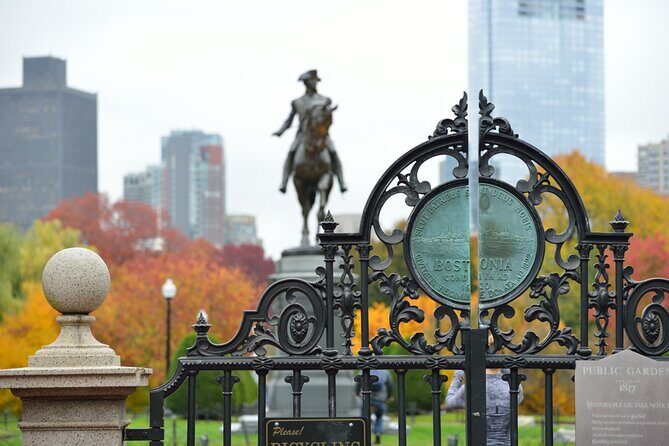
You start at Faneuil Hall Marketplace, often described as a birthplace of the American Revolution. Even if you’ve walked by the building before, this stop works better with a guide because you’re not just staring at an impressive façade—you’re hearing how this place functioned as a hub for public debate.
One thing I really like is that you’re not only given patriotic talking points. You also hear about a troubling backstory tied to the site, which keeps the experience honest. History is rarely neat, and the guide’s framing helps you hold two truths at once: the Revolution’s ideas were powerful, and the world around it was complicated.
What you’ll learn around Faneuil Hall
Around this area, the tour covers several tightly connected story beats:
- The site associated with the Boston Massacre, helping you understand the tension that built before open rebellion.
- Where discussions and meetings took place for key events leading up to the Revolution, including the Boston Tea Party.
- How the site includes the oldest commercial building in downtown Boston, with a long line of uses that go beyond one famous era.
- The reference to the first public school in America… for boys, because yes, the tour will gently point out the limits of who got education at the time.
That last detail is a great example of why this tour feels like more than a recap of headlines. You get a reminder that systems—who gets included, who gets excluded—shaped daily life as much as big speeches did.
Potential downside at this stop
Because so much is packed into one area, the tour can feel fast if you like to linger. If you’re the type who wants to take lots of photos and read every plaque, you might feel a little rushed here. The flip side is that the one-hour structure helps most people get a satisfying overview without burning a whole day.
The Boston Massacre Area: Understanding the Spark, Not Just the Event
The Boston Massacre is one of those moments people recognize by name. The useful part of this tour is that it aims to show you why that confrontation mattered—how it fit into the buildup of distrust and conflict between colonists and British forces.
You’re not going inside a museum. Instead, you’re getting orientation on the ground: where the story happened in the city’s layout, and how public emotion turned into political momentum. That street-level context is often what makes history stick in your head.
If you’re traveling with kids, this stop tends to work because it gives a clear cause-and-effect story. And if you’re an adult who usually skips history tours, it still helps because the guide’s humor and acting keep the mood from becoming heavy and one-note.





King’s Chapel Burying Ground: Puritan Silence and Colonial Roots

After Faneuil Hall, you shift to King’s Chapel Burying Ground. This is a Puritan-era cemetery with the final resting place of some of Boston’s first colonial residents. The pace usually changes here. You’re trading the political-energy of the meeting halls for the quieter weight of names in the ground.
This is also the kind of stop that gives you a different angle on the Revolution era. The Revolution wasn’t only shouted in meeting spaces. It also grew out of a society with deep roots—religious communities, early settlements, and families who shaped the colony’s culture.
What you should expect
- It’s a short stop, but it’s meaningful.
- You’ll hear the cemetery connected back to the bigger story of early Boston, not treated as a random detour.
A practical note
Cemeteries have uneven patches and you’ll be standing and listening for brief moments. If you’re wearing slippery shoes or you’re sensitive to long standing on uneven ground, plan accordingly. This tour isn’t designed for a slow, wheelchair-friendly crawl; it’s built for walking and keeping pace.
Granary Burying Ground: Revolutionary Heroes and Literary Favorites

Granary Burying Ground is where the tour lands. It’s the third oldest burying ground in Boston and is known for Revolutionary heroes plus literary favorites. That mix matters because it turns the Revolution into more than battlefield strategy. It’s also about writing, ideas, and cultural memory—how people put words to the world after history happened.
If you’re trying to connect dots between the Revolution and the Boston you see today, this stop helps. The guide’s framing tends to link famous figures to the places you walked earlier, so you leave with a cleaner picture of how the city held its own stories over time.
Why this ending stop feels satisfying
Ending at a cemetery can sound odd at first, but it works well here for two reasons:
- The tour has built story momentum, so the names in Granary become a kind of closing chapter.
- You get a last chance to slow down and absorb something human—people remembered not just for what they did, but also for who they were.
And because it ends near Tremont St, you can also keep exploring afterward without needing to take a long ride to reconnect with the rest of your day.
The Acting Guides: How You Learn Faster Without Feeling Like Studying
One of the biggest reasons this tour scores well is the way the guides teach. Instead of dropping facts in a monotone, they use acting, back-and-forth energy, and humor to make the Revolution feel like a living conversation.
I especially like the idea of the mother-and-daughter guide team described by guests. That kind of dynamic tends to help, because it breaks the usual rhythm of a solo guide giving all the dialogue. You also get a sense that the story has multiple sides—serious ideas, tricky motivations, and very human reactions.
Kate, the 13-year-old guide, comes up as a standout in the experience. That’s a good sign if you’re traveling with kids, because kids often respond to peers more than to traditional lecturing. But adults benefit too. When the guide uses performance to explain the same point in two ways, the material gets easier to grasp—even if you grew up in the Boston area and think you already know it.
You’ll also see the scavenger-hunt style game referenced in feedback. That’s not just a gimmick. For kids, it creates a reason to look up, point out details, and stay engaged during transitions. For adults, it gives the tour structure so you’re not drifting while still learning the core story.
Price and Value: $20 for a Tight Route You Can Actually Finish
At $20 per person for about an hour, this is priced like a solid half-day add-on rather than a major splurge. The biggest value driver is that you’re getting multiple big-ticket Freedom Trail highlights in a single session, plus free access to cemetery spaces as available.
You’re not paying extra for museum tickets because the tour doesn’t rely on indoor exhibits. That keeps the focus on the city itself, which usually works well in Boston where streets and landmarks are where the story comes alive.
Is it perfect value for everyone? If you love deep, exhibit-style history, you may find it too short and too outdoor-focused. But if you want a high-impact intro that’s engaging—especially for families—$20 feels fair for what you cover and how you’re taught.
Also, with a small group size, you’re not stuck in a giant crowd. That matters for a walking tour, because the difference between a “crowded march” and a “guided walk” is whether you can actually hear and follow what’s going on.
Who This Tour Suits Best in Your Boston Plan
This is best for people who want the Freedom Trail story without spending a whole day stitching together stops on their own. You’ll get a guided path through key Revolution sites, plus two cemetery visits that add context and texture.
It’s especially strong if:
- You’re traveling with kids and want them to stay engaged.
- You prefer learning through story and performance rather than long explanations.
- You like a tight plan that ends at a logical place for the next activity.
It’s less ideal if:
- You have mobility concerns. The tour notes uneven terrain and hills, and it’s not recommended for mobility limitations.
- You want indoor museum access or building entry. This experience is focused on walking and stopping outside.
If you’re pairing it with other Boston sightseeing, I’d treat it like a foundation layer. You’ll understand what you’re seeing on later walks around the area.
Should You Book Rebels and Red Coats?

Book it if you want a fun, focused Revolution intro that works for both kids and adults. The acting, humor, and scavenger-hunt style engagement are a real advantage, and the route hits multiple Freedom Trail touchpoints without dragging on past the one-hour mark.
I’d skip it if you need a slower pace, require lots of indoor time, or rely on barrier-free walking. This one is about stepping out and keeping moving.
One more practical tip before you commit: since it requires good weather, check the forecast and plan for outdoor comfort. When Boston skies cooperate, this tour tends to deliver exactly the kind of memorable storytelling you hoped for—without eating your whole schedule.
FAQ
How long is the Rebels and Red Coats tour?
It’s about 1 hour long.
Where does the tour start and end?
It starts at 1P Faneuil Hall Marketplace, Boston, and ends at Granary Burying Ground on Tremont St, Boston.
Is there museum or building access included?
No. The tour does not include museum or building access.
Are cemetery stops included?
Yes. You get access to King’s Chapel Burying Ground and Granary Burying Ground as available.
Is the tour a large group?
No. The tour has a maximum of 15 travelers.
What happens if the weather is bad or I need to cancel?
The tour requires good weather. If it’s canceled due to poor weather, you’ll be offered a different date or a full refund. You can cancel for a full refund up to 24 hours before the experience starts.