REVIEW · BOSTON
The Freedom Trail and a whole lot more 3 hour Boston walking tour
Book on Viator →Operated by Boston Sightseeing Tours · Bookable on Viator
Brick-and-breath history is your morning plan. This 3-hour Freedom Trail and more walking tour strings together the big Revolutionary sights and then keeps going—covering 16 Freedom Trail sites from Boston Common all the way to Copp’s Hill, plus extra stops like the Old State House area and the North End. I especially like how the guide-led storytelling keeps it fun without costumes or a lecture vibe, and how the group stays cared for with frequent check-ins so you don’t feel lost.
Second, I like the tour’s “more than expected” feel: instead of only skimming part of the trail, you get the whole through-line and a few side stories that explain why Boston matters beyond the museum walls. The one thing to plan for: it runs as a good-weather walk, so bring comfortable shoes and be ready for a steady stretch of pavement.
In This Review
- Key highlights you’ll feel right away
- Getting oriented: Tremont start, North End finish near the water
- Why this Freedom Trail walk feels different from the usual 1.5-hour version
- From The Embrace to Boston Common: where Boston’s bigger story starts
- What to watch for at these early stops
- Granary Burying Ground and Copp’s Hill: the cemeteries that explain the people
- A practical tip for cemetery stops
- Revolution stops in walking distance: tea, laws, and the Boston Massacre site
- Meeting places that sparked action: Faneuil Hall to the North End churches
- If you like a walk that turns into neighborhood time
- More than the Revolution: MLK, Black Civil War remembrance, Irish famine, and Holocaust hope
- Views that make the ending feel worthwhile: Bunker Hill and USS Constitution
- Price and value: what $39.95 buys you in real terms
- Who should book this Freedom Trail and a whole lot more tour
- Should you book this tour?
- FAQ
- How long is the Freedom Trail and a whole lot more walking tour?
- What does it cost?
- Where does the tour start and end?
- What time does the tour begin?
- Does the tour focus only on the Freedom Trail?
- Are there restroom and snack breaks included?
- Do the guides wear costumes?
- Is the ticket mobile?
- Is service available for people with service animals?
- What happens if the weather is poor?
Key highlights you’ll feel right away
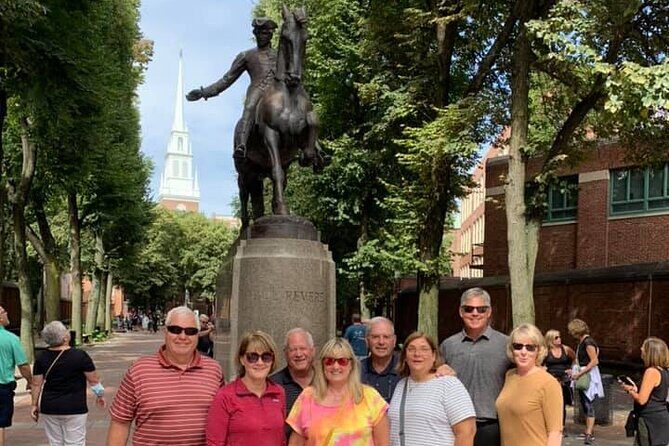
- Full Freedom Trail coverage (16 sites) in about 3 hours, not a half-day skim
- Boston Common to Copp’s Hill with viewpoints and the water nearby at the end
- Stops that add context beyond the Revolution, including MLK and Holocaust remembrance
- Restroom and snack break included, so you’re not rationing energy
- A group size capped at 35 people, which helps with flow and pacing
- A local focus on how Boston changed, then kept changing
Getting oriented: Tremont start, North End finish near the water
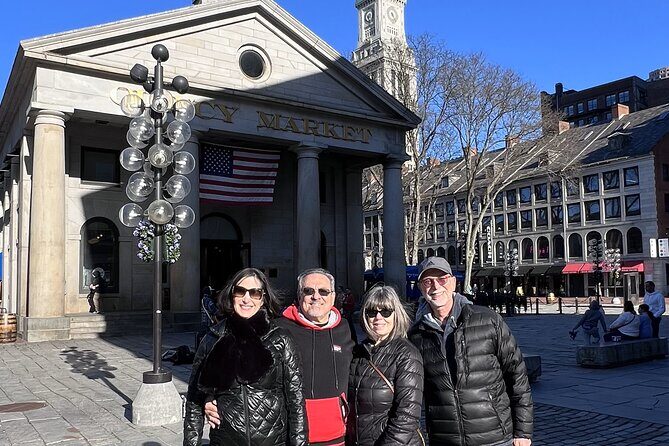
The tour starts at 139 Tremont St, Boston at 10:15 am. It ends around 1:15 pm near Copp’s Hill Terrace (520 Commercial St) in the historic North End, where you get a short walk toward views of the water and key sights like USS Constitution and the Bunker Hill area.
The format is classic walking-tour style: you’ll move from stop to stop with your guide leading the way, and you’ll get a mobile ticket you can use on your phone. Group size is kept to a maximum of 35, and it’s near public transportation, which is handy if you’re stitching Boston together with other plans.
If you’re thinking about pacing, this is a “mostly steady walk with stop-and-look moments” kind of tour. Most people can do it, and service animals are allowed.
You can also read our reviews of more walking tours in Boston


Why this Freedom Trail walk feels different from the usual 1.5-hour version
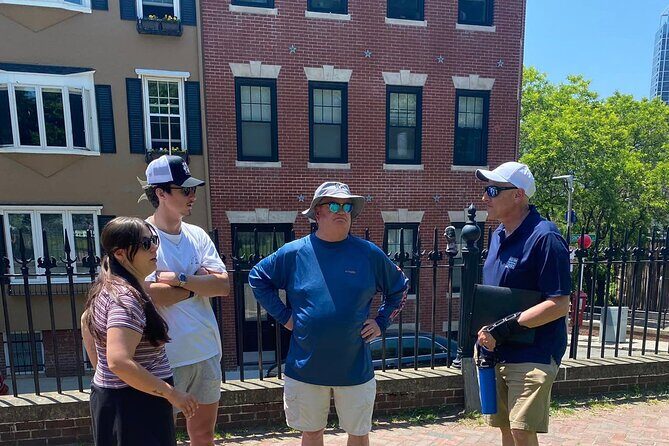
Lots of Freedom Trail tours give you the highlights and call it a day. This one leans the other way: it’s built to show you the trail’s full story arc and then widen the frame with extra stops that connect people, politics, and pain in Boston.
A few choices matter. First, the guides don’t use costumes, which keeps the experience grounded and easier to follow. Second, the tour includes a restroom and snack break, which honestly makes a big difference when you’re covering a lot of ground in a short time.
Most stops you’ll see are free to access, and you’ll be standing close to the actual places where the stories happened—cemeteries, meeting halls, historic storefronts, and church buildings that still shape the neighborhoods today.
From The Embrace to Boston Common: where Boston’s bigger story starts
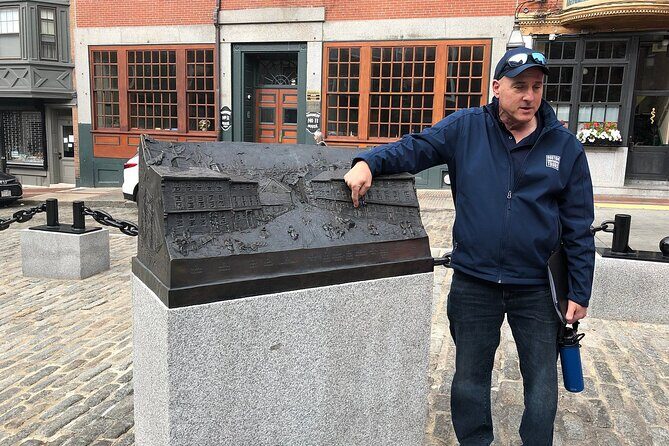
You begin at The Embrace, a memorial honoring Rev. Dr. Martin Luther King, Jr. and Coretta Scott King. It sets the tone quickly: the tour isn’t only about 1770s arguments—it’s also about how Boston remembers people who pushed for change.
Next up is Boston Common, founded in 1634. It’s the oldest public park in the United States, and that “oldest” fact is more than trivia here—you can feel how it became a stage for public life: gatherings, decisions, and conflict. The park also has a major practical tie-in: it’s near an oldest subway station detail tied to the area’s layers of history.
Then you shift to the political engine room: the Massachusetts State House. The current building sits on Beacon Hill and has served as the seat of Massachusetts government since it opened in 1798, designed by Charles Bulfinch. If you like your history with architecture, this stop helps you see how “government” becomes a visible thing, not a concept.
What to watch for at these early stops
- Spend a few seconds looking around before you listen—Boston’s buildings are part of the lesson.
- If you tend to wander, this early stretch helps you get your bearings fast.
Granary Burying Ground and Copp’s Hill: the cemeteries that explain the people
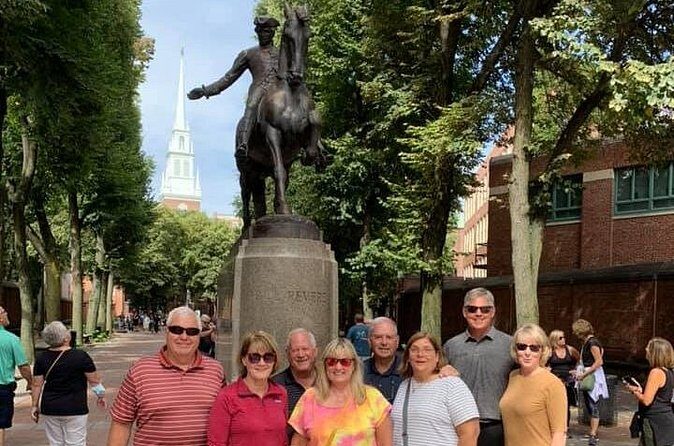
One of my favorite ways to learn a city is through where it buries its important dead. This tour uses two cemetery stops as anchors.
At Granary Burying Ground, you’re at a site founded in 1660—Boston’s third-oldest cemetery. It’s packed with Revolutionary-era patriots, including Paul Revere. The way the guide links these names to what they did makes it easier to remember facts because the people feel specific, not just “figures in a textbook.”
Later, you reach Copp’s Hill Burying Ground (dating back to 1659), Boston’s second-oldest burial ground. This one adds a slightly different texture: it’s the final resting place of merchants, artisans, and craftspeople from the North End. That shift matters. Boston’s story isn’t only the leaders—it’s also the working community that built and supplied the city.





A practical tip for cemetery stops
Bring your eyes and patience. Cemeteries are quieter than storefronts and meeting halls, so the good part is that you can actually focus.
Revolution stops in walking distance: tea, laws, and the Boston Massacre site
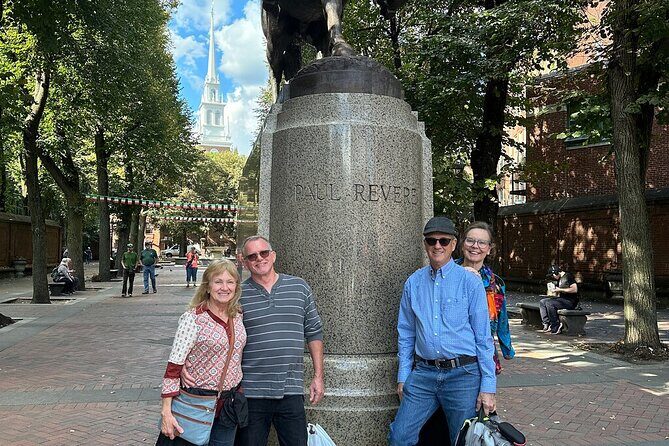
After the State House, you head into the chain of Revolutionary moments that shaped the way Americans later told their own story.
You’ll get to Granary-area Revolutionary commemoration, and the route also includes the hall where the Boston Tea Party began. The tour frames the room as more than a “tea moment”—it connects the setting to the tension of sermons, public meetings, and the tea tax debates. That context helps you understand why the Tea Party wasn’t only about tea. It was about authority.
Then comes Old Corner Bookstore—built in 1718. This is downtown Boston’s oldest commercial building, and it’s tied to publishers like Ticknor and Fields, known for publishing major American titles. If you ever wonder why ideas spread, bookstore history is a very real answer.
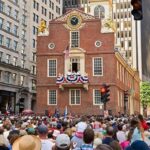
You also pass by the Old State House area, built in 1713. It served as the seat of the Massachusetts General Court until 1798 and is tied to the Boston Massacre. The tour’s treatment of this area makes the timeline easier to see: the same kind of political space where laws got made also became where conflict erupted.
Finally, you stop at the Boston Massacre Site. You’ll hear what happened on March 5, 1770, when tensions tied to occupation and taxation turned into a clash between Bostonians and Redcoats. The result was five civilians killed by gunfire, including Crispus Attucks.
Meeting places that sparked action: Faneuil Hall to the North End churches
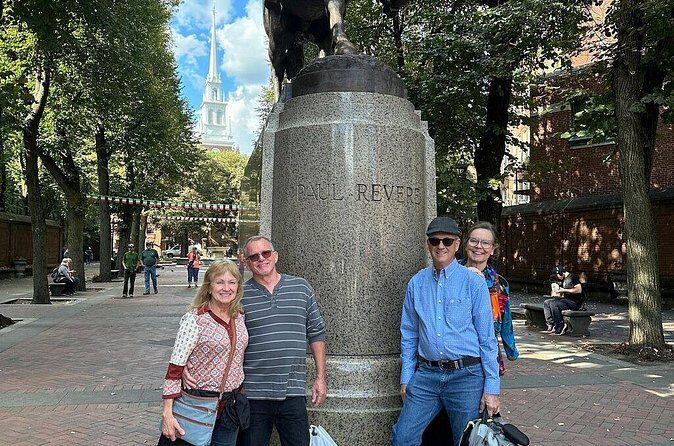
Revolutions need rooms. Boston’s big meeting sites show up on this walk.
Faneuil Hall Marketplace is next, and the guide doesn’t treat it like a postcard stop. It’s a meeting space with 275 years of protests, debates, celebrations, and public decisions. The tour keeps the focus on why this place mattered in the Revolutionary period, when arguments weren’t private—they were performed in public.
Then you move into the North End, often called Boston’s Little Italy, where the streets feel like a maze and the buildings keep the neighborhood’s older character close. Along the way, you’ll see historic trail-linked sites such as the Paul Revere House (built around 1680) and the Old North Church area.
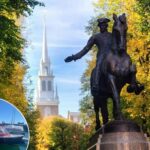
The Old North Church & Historic Site, founded in 1723, is the oldest standing church in the city. It’s another place where the guide connects local geography to national storytelling—why this church, why this moment, and how communications and networks mattered.
If you like a walk that turns into neighborhood time
The North End finish point helps. When you reach the end near Copp’s Hill Terrace, you’re in the part of town where it’s easy to keep going on your own without losing your momentum.
More than the Revolution: MLK, Black Civil War remembrance, Irish famine, and Holocaust hope
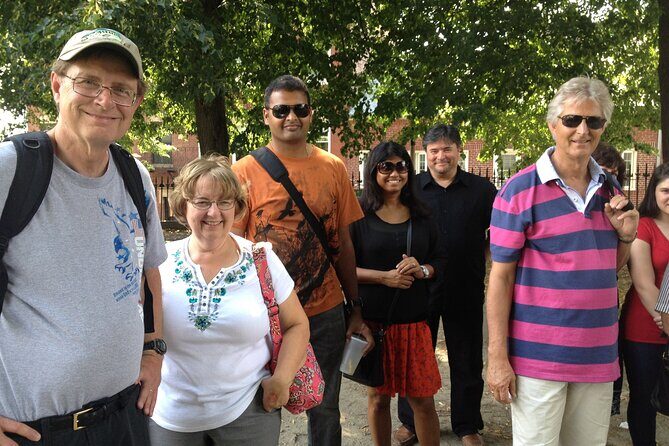
This tour earns its “and more” by widening the frame with memorial stops that don’t feel random.
You start with The Embrace for MLK and Coretta Scott King. Midway, you’ll also encounter the Robert Gould Shaw and Massachusetts 54th Regiment Memorial, honoring one of the first Black regiments of the American Civil War. That stop helps you connect Boston’s role in later struggles, not just its Revolutionary-era identity.
There’s also an Irish famine sculpture featuring two Irish families—one starving and emaciated while combating famine in Ireland, and another well-nourished Irish family who found prosperity in the United States. Even if you’ve read about the famine before, seeing this kind of paired contrast in a public space gives the story a human angle.
Another standout moment is the Holocaust remembrance site created by Stephan Ross (a Holocaust survivor). The memorial is designed for remembrance and reflection, using luminous spires that point toward hope and a fight against darkness.
And then you get Haymarket, described as one of America’s oldest open-air markets. It’s there to ground the tour in daily life and food culture, not just monuments and speeches.
Views that make the ending feel worthwhile: Bunker Hill and USS Constitution
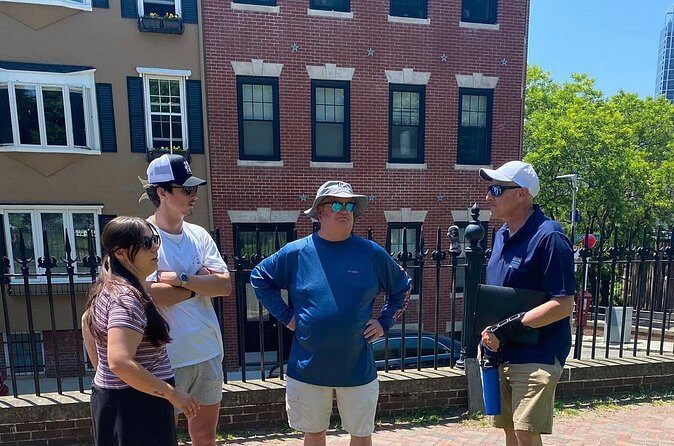
As you wrap up near Copp’s Hill Terrace, you get payoff views across the water.
The tour includes a viewpoint of the Bunker Hill Monument, built to commemorate the Battle of Bunker Hill—one of the early major battles between British and Patriot forces. If you’re standing in the right place, you’ll get that “oh, the fighting happened right across here” feeling.
You also look toward USS Constitution, nicknamed Old Ironsides. It’s a wooden-hulled, three-masted heavy frigate and is described as the world’s oldest commissioned naval vessel still in service. The guide’s framing helps this stop land as more than a photo op.
Price and value: what $39.95 buys you in real terms
At $39.95 per person for around 3 hours, this tour’s value comes from volume and placement.
You’re getting:
- A full run through 16 Freedom Trail sites instead of a half-trail sampler
- Additional stops that broaden the story (cemeteries, memorials, markets, and book history)
- Restroom and snack break included, which reduces the stress of a short morning
- A group cap of 35, which helps keep the walk from turning into a slow parade
- Many stops that are free to access, meaning you’re mostly paying for interpretation and guiding, not site entry fees
For the price, the biggest win is time. If you only had a day or only wanted one “big walking hit” of Boston’s historic core, this format saves you from hopping between separate sites with your own guesswork.
Who should book this Freedom Trail and a whole lot more tour
This is a great fit if you want a guided Freedom Trail experience that doesn’t cut off early. It’s also ideal if you like your history explained through public spaces—parks, courthouses, meeting halls, churches, bookstores, and cemeteries.
It works well for:
- First-timers who want structure and a route that makes sense
- People who prefer stories over costumes
- Families and mixed ages (the tour is described as fun and suitable for all ages)
- Anyone who wants Revolutionary history but also wants the later threads—civil rights-era remembrance, Civil War Black history, immigration hardship, and Holocaust memorialization
If you hate walking or you want a slower “museum-first” day, you might prefer a different pace. This one is built around movement and short stop durations.
Should you book this tour?
Yes—if you want one guided morning that covers the Freedom Trail in full, with smart additions that explain more than dates. This tour’s mix of Revolutionary sites plus memorials and local food-market flavor makes it feel like Boston, not just a checklist.
Book it especially if your schedule is tight and you’d rather follow a route with a guide than try to stitch it together on your own. Bring good shoes, plan for the weather, and you’ll leave with a map in your head and a better sense of how Boston’s arguments, identities, and communities changed over centuries.
FAQ
How long is the Freedom Trail and a whole lot more walking tour?
It runs for about 3 hours.
What does it cost?
The price is $39.95 per person.
Where does the tour start and end?
It starts at 139 Tremont St, Boston, MA 02111, and ends around 1:15 pm at Copp’s Hill Terrace, 520 Commercial St, Boston, MA 02109.
What time does the tour begin?
Start time is 10:15 am.
Does the tour focus only on the Freedom Trail?
No. It covers Freedom Trail sites, including 16 listed sites, and it also includes additional stops and stories beyond the trail.
Are there restroom and snack breaks included?
Yes. A restroom and snack break is included.
Do the guides wear costumes?
No costumes are used. The guides lead the tour with stories and explanations.
Is the ticket mobile?
Yes, the tour uses a mobile ticket.
Is service available for people with service animals?
Yes, service animals are allowed.
What happens if the weather is poor?
The tour requires good weather. If it’s canceled due to poor weather, you’ll be offered a different date or a full refund.