REVIEW · NEW YORK CITY
Chelsea and the High Line NYC Architecture Walking Tour
Book on Viator →Operated by Build Tours · Bookable on Viator
High Line views can feel magical, even on a normal day. This small-group walk turns Manhattan’s Chelsea makeover into something you can actually understand, from the elevated park to the bold shapes taking over the Hudson River edge. You’ll cover the High Line and key architecture stops with personal headsets so the guide’s explanations stay clear, not lost in city noise.
I especially like the small-group format (up to 15), which keeps the pacing comfortable and makes it easier to hear details. I also really value the guide’s architecture focus—Ivan Shumkov doesn’t just point at buildings; he explains the thinking behind them, including how air rights helped shape the High Line era and why the whole area looks the way it does.
One thing to plan for: this is an on-your-feet, good-weather experience. If weather is rough, the tour may be adjusted or rescheduled, and you’ll still be walking through a series of short, design-focused stops where you’ll need to be ready to move.
In This Review
- Key things to know before you go
- Chelsea to Hudson Yards: why this walk feels like two cities
- Ivan Shumkov and the headset setup: how you actually hear the details
- Price, timing, and small-group size: value in a tight 2 hours
- Stop-by-stop along the High Line: the hour that sets the theme
- Whitney Museum area, The Standard, and Little Island: culture meets the river edge
- Jean Nouvel and Zaha Hadid Architects: seeing big names up close
- The Shed and The Vessel: public performance architecture, explained
- Hudson Yards, 15 Hudson Yards, and BIG’s Spiral: the new New York
- What to look for: a quick checklist you can use during the walk
- Who this tour suits best (and who might not love it)
- Should you book this Chelsea and High Line architecture tour?
- FAQ
- How long is the Chelsea and High Line NYC architecture walking tour?
- How much does it cost?
- Where do I meet the tour, and where does it end?
- What time does the tour start?
- Is this a small-group tour?
- What’s included in the ticket price?
- What is not included?
- Is admission included for the places you see?
- What happens if the weather is bad?
- Can I cancel for a refund?
- Is the tour accessible and are service animals allowed?
Key things to know before you go
- Headsets for every guest so you get the story, not just the scenery
- Ivan Shumkov’s building-by-building clarity, including how the High Line got funded through air rights
- A tight 2-hour route that strings together the High Line, Hudson Yards, and landmark designs without dragging
- Marked free-admission stops for the sites you see along the way (you’re paying for the guide focus)
- Up to 15 people, which helps the group stay together while you’re photographing and walking
- A design sampler across styles, from Zaha Hadid to Jean Nouvel to BIG
Chelsea to Hudson Yards: why this walk feels like two cities
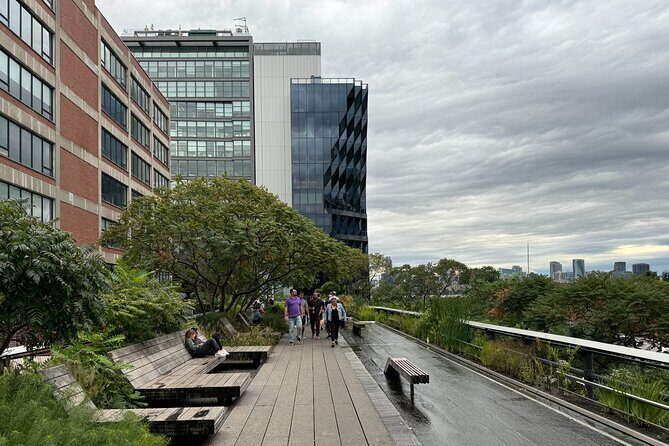
Chelsea has always been a little “in-between” in New York—creative, slightly gritty, and always changing. The High Line is the most famous example of that transformation, turning an old rail corridor into a public park that makes people slow down and look closer. This tour keeps that theme front and center: how urban design changes neighborhoods, and how architecture turns ideas into real spaces you can walk through.
What I like is that you’re not just touring one famous thing. You move from the High Line into the cluster of projects connected to Hudson Yards, which is where the city’s new scale shows up fast. Along the way, you’ll also pass art and culture anchors like the Whitney Museum area, plus major architectural names that most people only see from afar.
The route is short enough to fit around other plans, but it’s packed with enough stops that you’ll feel like you learned a map of the area, not just took pictures.
You can also read our reviews of more walking tours in New York City


Ivan Shumkov and the headset setup: how you actually hear the details
In a city like New York, “walking tours” can turn into a guessing game when the group is spread out and the guide is speaking over traffic. This one solves that with professional individual headsets for each guest. That means you can stay in your own spot—good for photos, good for listening, and good for not having to crane your neck the whole time.
The other big win is the guide’s style. Ivan Shumkov’s explanations are known for being specific: he doesn’t float on generalities. He’s talked about the High Line’s history and the way the air-rights model helped fund the kind of project that would be hard to imagine without creative financing. He also describes the architectural visions behind the buildings you pass, and he’s able to connect them back to the public-space idea that runs through the High Line story.
That matters for you because it changes how you see what’s in front of you. Instead of asking, What building is that? you start asking, Why does it look like this, and what problem is it solving?
Price, timing, and small-group size: value in a tight 2 hours
At $49 per person, this tour is priced like a serious neighborhood orientation, not a budget shuffle. The value comes from two things you don’t get on casual self-guided walks: a guide who can connect the dots across multiple landmarks, and the headsets that keep the experience actually informative.
You’re looking at about 2 hours total, with the day’s anchor being a full hour on the High Line. Other stops are short—often 5 minutes—so the tour is built to keep momentum. That can be great if your schedule is tight, but it also means you should come prepared to absorb details quickly.
The group max is 15 travelers, which keeps the whole walk from feeling like a parade. It also helps with navigation through busy corridors near popular sights.
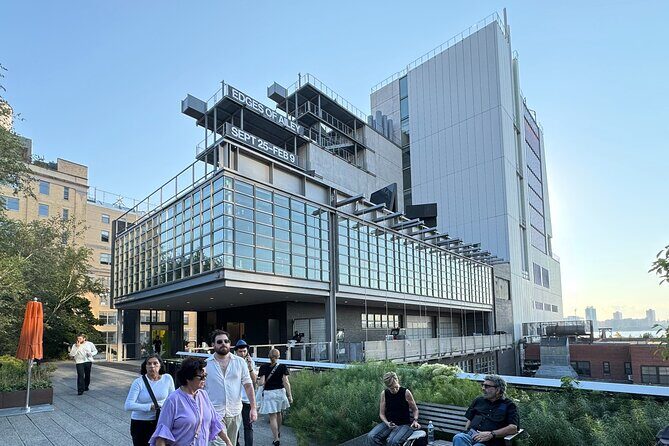
One practical note: the start time is 2:00 pm, and the meeting point is right by the Whitney Museum of American Art (99 Gansevoort St). The tour ends at 20 Hudson Yards. If you’re pairing it with dinner or a show, plan to be near the Hudson Yards side afterward.
Stop-by-stop along the High Line: the hour that sets the theme
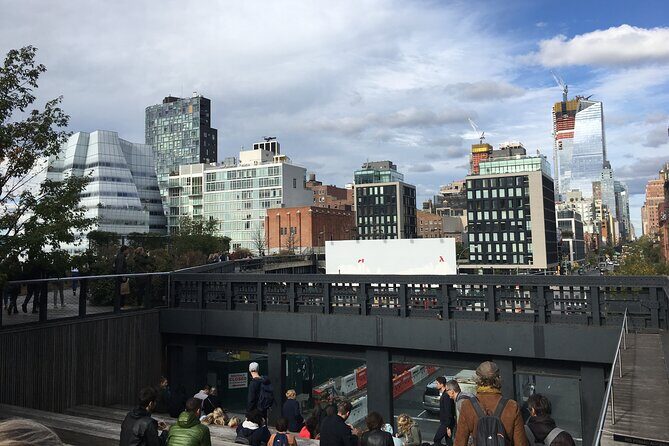
This is where the tour wins or loses the feel. With 1 hour at the High Line, you get enough time to actually understand the park as a design project, not just a photo stop.
As you walk, the High Line is a lesson in how cities can reuse infrastructure. It’s elevated, but it isn’t just a viewpoint. It’s a system of changing perspectives—angles on the street, glimpses of the Hudson River side, and framed views of neighboring architecture. The best part of having a guide here is that you learn what to notice: not only the plantings and paths, but the big idea behind transforming an old structure into something people want to return to.
The pacing also matters. One full hour means you don’t have to rush through the most memorable section while trying to catch up with the group.
A small consideration: the High Line can be busy. Even with a small group, you may need to pause at popular sightlines and accept that you’ll share space with other pedestrians.
Whitney Museum area, The Standard, and Little Island: culture meets the river edge
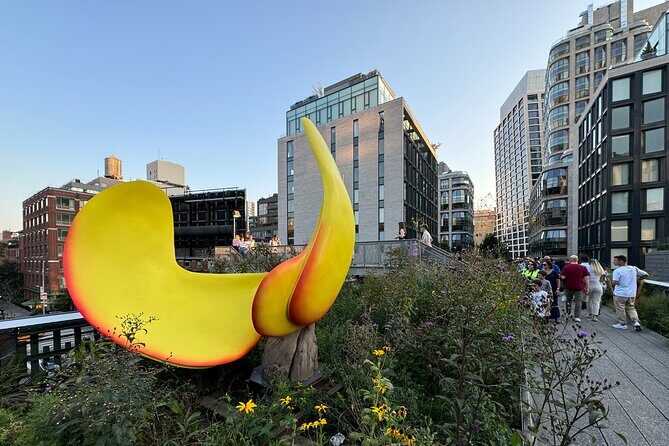
After the High Line, you shift into a stretch where the neighborhood’s creative identity shows up quickly.
You’ll pause near the Whitney Museum of American Art. Even if you don’t go inside, the museum’s location anchors the whole Chelsea-to-Hudson Yards story: art institutions helping shape what people expect from the area. You’ll also have a brief stop to see the Standard, High Line, which is tied to the hospitality side of the transformation—how a neighborhood’s new identity becomes a brand people can book into.
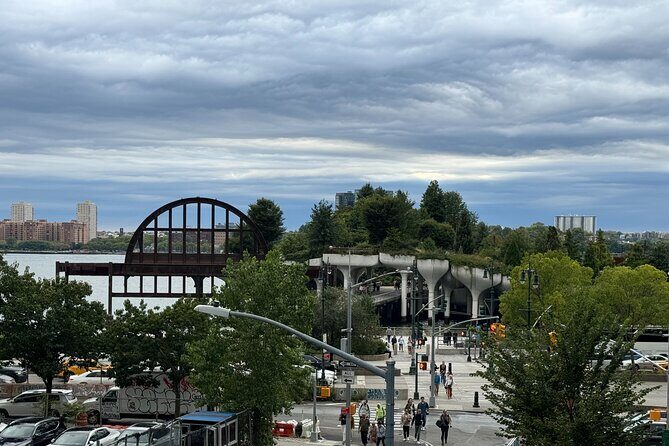
Then comes a stop for Little Island Park in the Hudson River. This is the kind of place where architecture thinking becomes public play. A quick stop is enough to spot why it drew attention: it uses the river-edge idea in a different way than a classic pier or promenade.
Because these are short pauses, treat them like “look and learn” moments. You won’t have long to wander, but you will leave with a clearer sense of how the river edge is being reimagined in layers.






Jean Nouvel and Zaha Hadid Architects: seeing big names up close
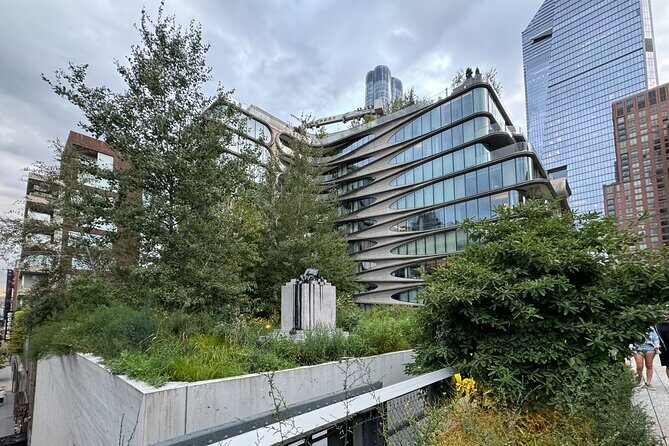
Next, the tour becomes a design-driven checklist of landmark architecture. You’ll pass 100 11th Avenue by Jean Nouvel and 520 West 28th Street by Zaha Hadid Architects.
These are the kinds of buildings that can be hard to read at a distance. Up close, you start noticing the surfaces, the shapes, and the way the structures create identity at street level. The benefit of being on a guided walk is context. You’re not just recognizing famous names—you’re learning what the design language is trying to do in the urban environment.
A practical consideration: these quick stops can mean you don’t get long to walk around a building. You’ll likely be absorbing the design from the curb and nearby angles. If you love architecture photos from multiple viewpoints, you may want a little extra time afterward to circle back on your own.
The Shed and The Vessel: public performance architecture, explained
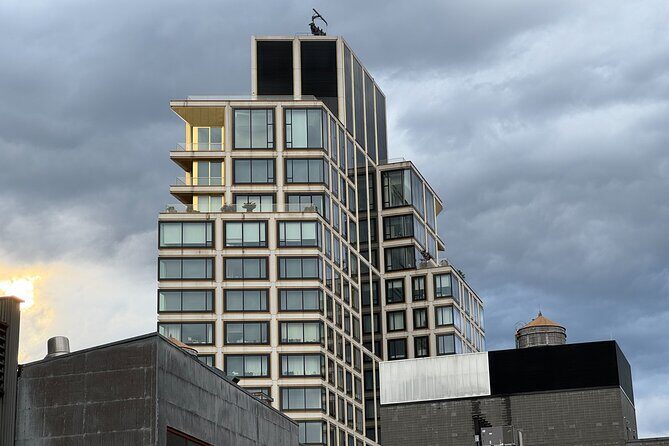
Two stops here are about more than looks. The tour includes the Shed and the Vessel.
The Shed is a strong example of architecture that’s meant to adapt to cultural use. Even during a brief pause, you can think about how a building’s form supports programs that change over time. That makes it a good bridge between the High Line’s public-space philosophy and Hudson Yards’ newer institutional energy.
Then you get The Vessel, the vertical structure people photograph from every angle. It’s also a study in movement—an architectural object you experience by walking through it. Even with only a short stop, this is one of those sights where your brain clicks: this isn’t only architecture you look at; it’s architecture that organizes how you move.
If you’re visiting when it’s crowded, plan for the possibility that lines or pedestrian flow can limit your ability to linger.
Hudson Yards, 15 Hudson Yards, and BIG’s Spiral: the new New York
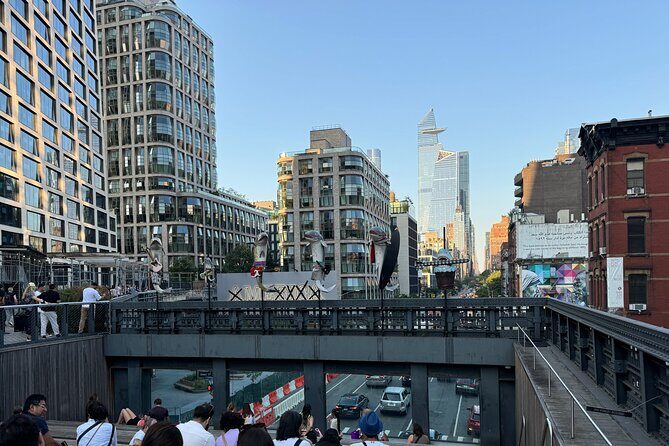
Now you reach the big show: Hudson Yards.
You’ll spend time at the complex and also get quick looks at 15 Hudson Yards by Diller Scofidio + Renfro and The Spiral by BIG (Bjarke Ingels Group) from 2021. These stops work best when you let the scale sink in. Hudson Yards is about density, planning, and big architectural statements that reshape how a part of Manhattan functions.
15 Hudson Yards is another example of how modern design gets translated into everyday movement: entrances, edges, and the way the building interface reads from street and plaza space. The Spiral adds a different flavor—an idea that turns a structure into a visual rhythm you can recognize from afar.
You only get minutes at each of these points, so think of them as wayfinding moments. You’re learning the names, locating the landmarks, and understanding the design intent enough to enjoy a longer independent visit later.
The tour ends in the Hudson Yards area at 20 Hudson Yards, which is convenient if you plan to grab a meal or keep exploring on your own afterward.
What to look for: a quick checklist you can use during the walk
If you want your photos to match what you learn, use this quick mental checklist:
- Ask what problem the design solves: Is it improving public flow, repurposing space, or creating a new kind of gathering?
- Track the materials and edges: modern buildings often signal function through skin, not just shape.
- Notice the shift from park to district: the High Line teaches a slow pace; Hudson Yards is about scale and speed.
- Look for repeat motifs: many designs borrow patterns from older urban forms, then remix them.
With headsets, you don’t need to keep guessing while you’re looking. You can focus on where your eyes want to go and still catch the explanation.
Who this tour suits best (and who might not love it)
This experience is a strong fit if you care about architecture and design and you want a fast, organized way to see the High Line plus multiple Hudson Yards landmarks in one go.
It’s also good for people who like walking tours but don’t want a half-day. The 2-hour timing helps you keep the rest of your day open.
You might hesitate if you prefer long stops, deep time in a single area, or lots of inside-the-building moments. This is about seeing and understanding from the street and park viewpoints, with short pauses at each landmark.
Should you book this Chelsea and High Line architecture tour?
Book it if you want a focused, design-forward walk with a guide who can connect the story across neighborhoods. The combination of individual headsets, a small group, and Ivan Shumkov’s detailed explanations—especially the High Line’s history and air-rights angle—makes the tour feel purposeful, not random.
Skip it or think twice if you’re the type who needs a long linger at each stop. The route moves quickly after the High Line, and you’ll want to be comfortable with short photo pauses and moving with the group.
If your goal is to leave Chelsea and Hudson Yards with a clearer sense of how New York builds and re-builds public space, this is a solid use of your afternoon.
FAQ
How long is the Chelsea and High Line NYC architecture walking tour?
It runs for about 2 hours.
How much does it cost?
The price is $49.00 per person.
Where do I meet the tour, and where does it end?
You meet at Whitney Museum of American Art, 99 Gansevoort St, New York, NY 10014. The tour ends at 20 Hudson Yards, New York, NY 10001.
What time does the tour start?
The start time is 2:00 pm.
Is this a small-group tour?
Yes. It has a maximum of 15 travelers.
What’s included in the ticket price?
Included are all fees and taxes, the guide, and professional individual headsets for each guest.
What is not included?
Tips are not included.
Is admission included for the places you see?
The listed stops show admission ticket free for the sights included in the tour.
What happens if the weather is bad?
This experience requires good weather. If it’s canceled due to poor weather, you’ll be offered a different date or a full refund.
Can I cancel for a refund?
Yes. You can cancel up to 24 hours in advance for a full refund. If you cancel less than 24 hours before, the amount paid won’t be refunded.
Is the tour accessible and are service animals allowed?
Most travelers can participate. Service animals are allowed, and the meeting area is near public transportation.