REVIEW · BOSTON
Freedom Trail: Boston Common, Old State House, Faneuil Hall
Book on GetYourGuide →Operated by Tours by Foot · Bookable on GetYourGuide
Two hours can feel like a revolution. This Freedom Trail highlights walk strings together Boston’s key turning points, from the Boston Common start through Old State House and ending at Faneuil Hall. I love how the guide connects the big moments to street-level details, so you’re not just memorizing dates. I also like the tight format, because you cover the must-sees fast without turning the whole day into a museum sprint.
There is one catch: it’s a walking highlights tour, so you won’t linger long at every stop. If you want slow, deep reading time at cemeteries or churches, you’ll have to plan extra solo time afterward, and bring comfortable shoes.
In This Review
- Key Highlights You’ll Feel on This Freedom Trail Walk
- Starting at Park Street: Boston Common as your living history map
- Boston Common to the revolutionary streets: how the story stays connected
- Old State House and the balcony moment for liberty
- Granary Burying Ground: revolutionaries, and one name you can’t forget
- Boston Massacre site: where conflict escalated in 1770
- Old South Meeting House and the Boston Tea Party planning spark
- Churches and community hubs: Park Street Church, King’s Chapel, Old Corner Bookstore
- Massachusetts State House: the golden dome after the Revolution
- Faneuil Hall: speeches, debates, and the Cradle of Liberty effect
- Price and pacing: is $39 worth it for a 2-hour Freedom Trail walk?
- Who this Freedom Trail walk is best for
- Practical tips to get more from the walk
- Should you book this Freedom Trail highlights tour?
- FAQ
- Where does the Freedom Trail tour start?
- Where does the tour end?
- How long is the tour?
- How much does it cost?
- Is the tour guided?
- What are the main sites included?
- Is the tour wheelchair accessible?
- Is hotel pickup included?
- Are food and drinks included?
- What are the cancellation and pay-later options?
Key Highlights You’ll Feel on This Freedom Trail Walk
- Boston Common gets you started in 1634 so you understand why this green space mattered long before the Revolution.
- Granary Burying Ground brings names to the rebellion with Paul Revere, Samuel Adams, John Hancock, and Crispus Attucks.
- Old State House connects to the Declaration’s moment with the reading from the balcony and the spark for liberty.
- Old South Meeting House shows where Tea Party planning kicked off in a building tied to colonial decision-making.
- Boston Massacre site turns tension into a story you can stand inside on the exact ground where violence escalated.
- Faneuil Hall earns its Cradle of Liberty nickname through speeches, debates, and meeting after meeting since 1742.
Starting at Park Street: Boston Common as your living history map
The tour starts outside Park Street T Station on the eastern edge of Boston Common. That’s smart, because Boston Common is a natural “first page” for the whole trail. Founded in 1634, it’s America’s oldest public park, and it gives you a calm baseline before the drama of the 1700s.
I like that Boston Common isn’t treated like a postcard stop. It’s a place that has hosted British troop encampments during the Revolutionary War and later civil rights rallies in the 20th century. So even before you hit the Revolution sites, you’re learning how this area kept shaping public life over centuries.
The pace is designed for a short window—about 2 hours total—so you’ll keep moving. Plan to walk steadily, take photos when you can, and accept that the best value here is seeing the key beats in one go, not soaking in every detail like you would on a self-guided day.
You can also read our reviews of more tours and experiences in Boston.



Boston Common to the revolutionary streets: how the story stays connected
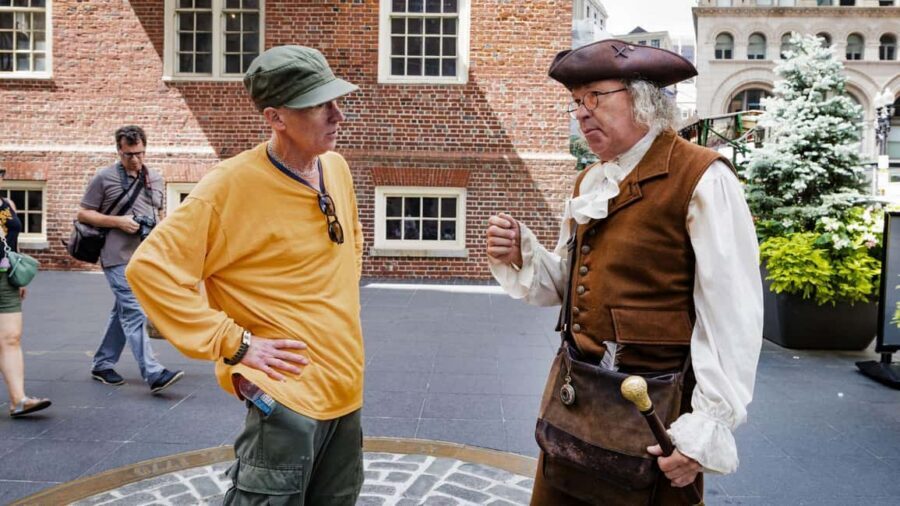
Once you leave the Common, you’re not just hopping between buildings. You’re walking along the spine of Boston’s colonial center, where Puritan exclusiveness gave way to a more inclusive modern city. The guide’s job is to keep those “then and now” links clear, so the streets feel like a timeline you can follow.
You’ll also pass historic cemeteries and colonial stone houses along the way. Those smaller details matter because they explain why ideas spread through meeting places, local politics, and public spaces instead of happening in isolation.
If you like history that explains cause and effect, this format works well. You’ll hear how tensions escalated, how plans were made, and how people used public forums to argue for independence.
Old State House and the balcony moment for liberty
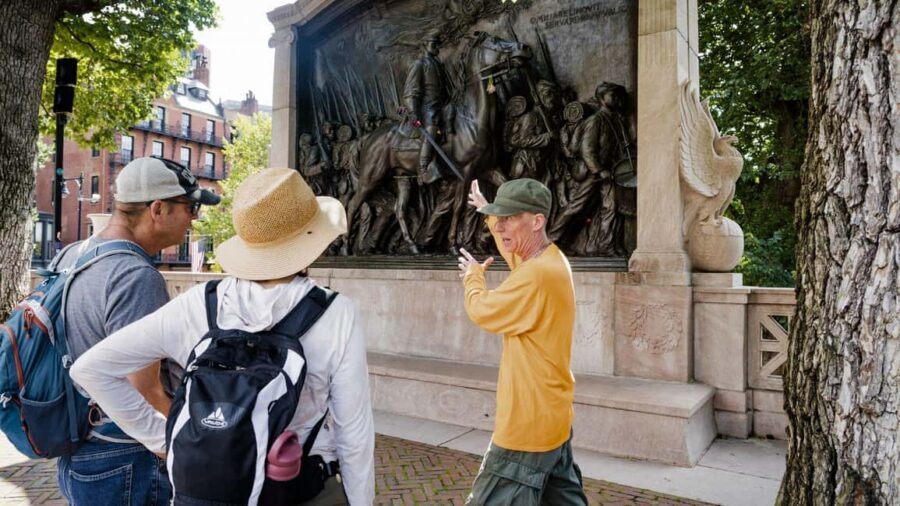
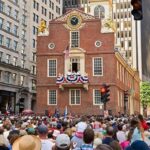
Old State House dates to 1713, and it’s one of the most important stops on this walk for a simple reason: it was the seat of colonial government. That means this wasn’t just a fancy building where people passed time. It was where authority was exercised and challenged.
One of the most memorable pieces you’ll hear is that the Declaration of Independence was read from the balcony. That detail turns a dated document into something physical and immediate—like a turning point you’re standing near.
The building’s role as a stage for key moments leading to the Revolution is also why this stop hits hard. You’re connecting government to public persuasion, and you’re seeing that independence wasn’t only a battlefield story. It was a political and public story too.
Time note: because the whole tour is only around 2 hours, you’ll get highlights at Old State House rather than a long sit-down. If you want to linger, do it after the tour and return at your own pace.
Granary Burying Ground: revolutionaries, and one name you can’t forget
Granary Burying Ground is one of Boston’s oldest cemeteries, and it changes how you experience the Freedom Trail. Instead of treating the Revolution like a script with heroes up front, this place reminds you of the costs.
This is where you’ll hear names tied closely to the founding era—Paul Revere, Samuel Adams, and John Hancock. You’ll also have a moment to pay respects at the grave of Crispus Attucks, described here as the first casualty of the Boston Massacre and a symbol of the fight for freedom.
I like how that shift works. The guide isn’t just listing founders; you’re getting a human scale to the story. And because you’re in an actual cemetery, the tone tends to slow down naturally, even with a group pace.
One practical consideration: cemeteries can be emotionally heavy. If your group includes kids, it helps to prepare them that this part isn’t “scary” or spooky on purpose. It’s meant to honor real people and understand real consequences.
Boston Massacre site: where conflict escalated in 1770
The Boston Massacre site marks where tensions between colonists and British soldiers escalated into violence in 1770. It’s a reminder that independence didn’t start as a neat plan with consensus. It started with friction, fear, anger, and public confrontation.
This stop is powerful because it’s a specific ground point in the story. Once you’ve visited it, the rest of the Revolution narrative feels less abstract, more like a chain reaction.
You’ll likely connect what you learn here back to Crispus Attucks through the Granary context earlier. That link matters, because it gives you a clearer sense of who was caught in the crisis and why the events mattered long after the smoke cleared.





Old South Meeting House and the Boston Tea Party planning spark
Old South Meeting House is built in 1729, and it’s tied directly to the Boston Tea Party’s buildup. Here, you’ll learn where plans for the Tea Party were set into motion—a key step for understanding how rebellion organized itself in public.
This is one of the stops where the guide’s storytelling really helps. Meeting houses weren’t just religious venues. They were where political arguments happened, where communities gathered, and where decisions could become action.
If you want a clearer picture of how people coordinated, this is the place to pay attention. The Revolution story can sound like a series of dramatic events, but this stop shows the quieter work that came first.
Quick realism check: you won’t get to explore every corner of the area the way you could with a long museum visit. But you will leave with a strong sense of why this building mattered.
Churches and community hubs: Park Street Church, King’s Chapel, Old Corner Bookstore
Not every Freedom Trail stop is about rebellion alone. Some are about what kind of society Boston was trying to become.
Park Street Church was erected in 1809 and is described as being at the heart of significant events, including the first public anti-slavery address in the U.S. That’s an important angle if you think the fight for liberty only means independence from Britain. Here, liberty also has a moral and social dimension.
King’s Chapel, built in 1754, offers another twist. You’ll hear about its Georgian architecture and that it had ties to loyalist congregants during the Revolution. It’s a reminder that Boston wasn’t split into one simple team versus the other.
Then there’s Old Corner Bookstore, once a hub for the literary elite in the 19th century. This is where the story widens beyond meetings and militias. Publishing and ideas spread through print, and bookstores fed that engine.
If you love “the why behind the buildings,” these stops add variety. They also help keep the 2-hour pace from feeling repetitive, because the themes shift from government to justice to ideas.
Massachusetts State House: the golden dome after the Revolution
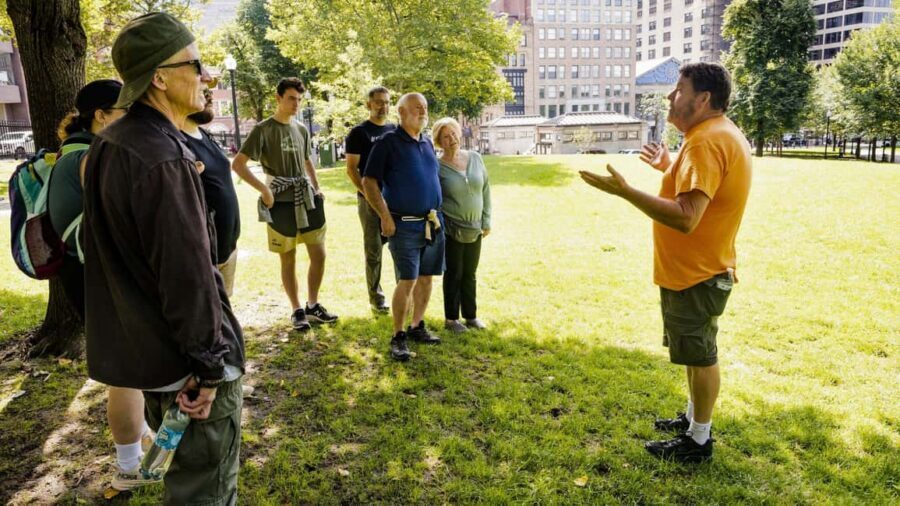
The Massachusetts State House was completed in 1798, and it’s a symbol of Massachusetts government. The iconic golden dome is the visual anchor you’ll remember, but the meaning is the point: after the Revolution, people needed a functioning system, not just a victorious moment.
This stop helps you connect independence to governance. It’s one thing to rebel. It’s another thing to build.
Even within a highlights walk, it’s a useful shift because it keeps you from thinking the story ends in 1776. The Freedom Trail is really about continuity: ideas that start in the 1700s shape how institutions work later.
Faneuil Hall: speeches, debates, and the Cradle of Liberty effect
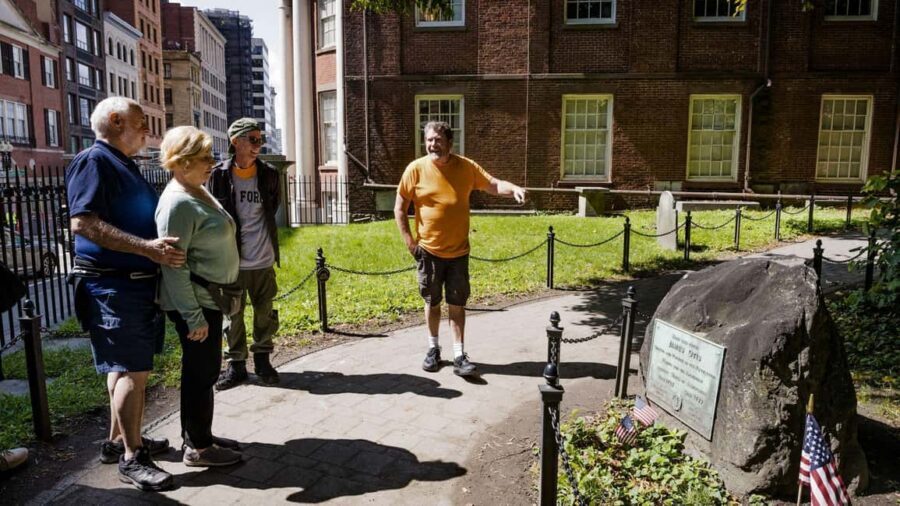
The tour ends at Faneuil Hall, widely known as the Cradle of Liberty. It’s been a marketplace and meeting hall since 1742, which makes it feel less like a monument and more like a place that hosted everyday public life.
You’ll hear that fiery debates and speeches advocating for independence took place here. That matters because it turns “freedom” into something people argued for out loud, not something only leaders decided behind closed doors.
I like the way ending at Faneuil Hall brings the whole walk together. Earlier stops show where conflict and planning happened. Faneuil Hall shows how public discussion translated into momentum.
Also, practical win: since the tour ends there, you can keep going nearby. If you want food or a longer rest, Faneuil Hall’s area is one of the easiest places to transition from walking to downtime.
Price and pacing: is $39 worth it for a 2-hour Freedom Trail walk?
At $39 per person for a 2-hour guided highlights experience, you’re paying for three things: expert interpretation, a tight route, and a time-saving way to hit the biggest Freedom Trail markers.
If you’re short on time—like you have a half-day in Boston—this format makes sense. You get the headline locations that people usually want (Boston Common, Old State House, the Boston Massacre site, and Faneuil Hall), plus supporting stops that round out the story (churches, a meeting house, a historic bookstore, and a key cemetery).
The value improves if you like to understand what you’re looking at. A self-guided walk can work, but the guide helps you place each stop in a chain of events. That’s the difference between seeing buildings and understanding why those buildings mattered.
One pacing note: it’s a highlights tour, not a slow-study lecture. If you crave lots of quiet time at each location, you may need to add extra time on your own.
Who this Freedom Trail walk is best for
This is a strong match for:
- First-timers who want a fast, clear hit of the most important Boston Revolutionary sites
- Families with kids who still want real history but benefit from storytelling and a steady pace
- Anyone who prefers walking with a guide over reading in the cold, trying to connect the dots alone
It may be less ideal if you want deep detail at one location, like the kind of focused time you’d spend on a full museum day. In that case, treat this as your orientation visit.
Practical tips to get more from the walk
- Wear shoes you don’t mind breaking in. Boston cobblestones and sidewalks can feel sharper when you’ve been walking for 2 hours.
- Bring a small water bottle if your schedule allows it. Food and drinks aren’t included, so plan your refresh breaks outside the tour.
- Have your phone camera ready, but don’t let photos steal your attention. The guide’s best storytelling moments often land right before you move on.
- If you’re traveling with kids, listen for the guide’s humor and quick explanations. The tone is meant to keep everyone engaged without turning the sites into a game.
Should you book this Freedom Trail highlights tour?
I’d book it if you want a short, guided way to connect Boston Common, Old State House, and Faneuil Hall to the Boston Tea Party, the Boston Massacre, and the Declaration’s ripple effects. At $39 and two hours, it’s a practical use of time, especially if this is your only serious history block in the city.
I wouldn’t book it as your only plan if you’re a detail person who needs long readings and quiet time at cemeteries and churches. In that case, use this tour for orientation, then return later on your own to the stops that hit you the hardest.
Either way, you’ll come away with a street-level understanding of how rebellion, politics, and public discussion helped build the idea of liberty.
FAQ
Where does the Freedom Trail tour start?
It starts outside the Park St. T Station on the eastern edge of Boston Common.
Where does the tour end?
The tour ends at Faneuil Hall.
How long is the tour?
The duration is 2 hours.
How much does it cost?
The price is $39 per person.
Is the tour guided?
Yes. It’s a guided highlights tour with an expert licensed guide, and the tour is live in English.
What are the main sites included?
You’ll cover Freedom Trail highlights including Boston Common, Old State House, and Faneuil Hall, along with other major stops such as Granary Burying Ground, Park Street Church, King’s Chapel, Old South Meeting House, Old Corner Bookstore, the Massachusetts State House, and the Boston Massacre site.
Is the tour wheelchair accessible?
Yes, it’s listed as wheelchair accessible.
Is hotel pickup included?
No. Hotel pickup and drop-off are not included.
Are food and drinks included?
No. Food and drinks are not included.
What are the cancellation and pay-later options?
You get free cancellation up to 24 hours in advance for a full refund, and there’s a reserve now & pay later option described as book your spot and pay nothing today.