REVIEW · NEW YORK CITY
Alexander Hamilton Musical Walking Tour
Book on Viator →Operated by New York Broadway Tours · Bookable on Viator
Hamilton feels real on these streets.
This walking tour turns the show into walkable story beats, and I love that it links song-level moments to specific landmarks across Lower Manhattan. You also get a lot of the backstage meaning behind the musical, with stops tied to the people, places, and power struggles that shaped Hamilton’s era. One possible drawback: it’s a full 2 hours on foot, and if you’re not close to the guide, you may struggle to hear every detail.
You’ll get a professional local guide and a mobile ticket, and the pace stays friendly for most people since the group is capped at 20. The tour is offered in English, runs about 2 hours, and starts at 11:00 am at Park Row (listed as 41 Park Row / 38 Park Row). If the weather is poor, the operator may switch dates or offer a refund, so keep an eye on forecasts.
In This Review
- Key highlights worth your attention
- From Nassau Street theatre to Mind At Work locations
- Federal Reserve Bank exterior: Hamilton meets the banking idea
- Seaport trading and the hum of vendors
- Stone Street: where Hamilton and Eliza stories come alive
- Fraunces Tavern Museum: the Washington headquarters connection
- Wall Street basics: the Dutch wall and the market’s pulse
- The Bill of Rights story at the National Monument
- Trinity Church NYC: the oldest part of the story
- Price and pace: is $50 worth it?
- Who should book this Hamilton Musical walking tour?
- Should you book it?
- FAQ
- How much does the Alexander Hamilton Musical Walking Tour cost?
- How long is the tour?
- Where does the tour start?
- What time does the tour begin?
- Is the tour offered in English?
- How large is the group?
- Is a mobile ticket included?
- Are there any admissions included for stops?
Key highlights worth your attention
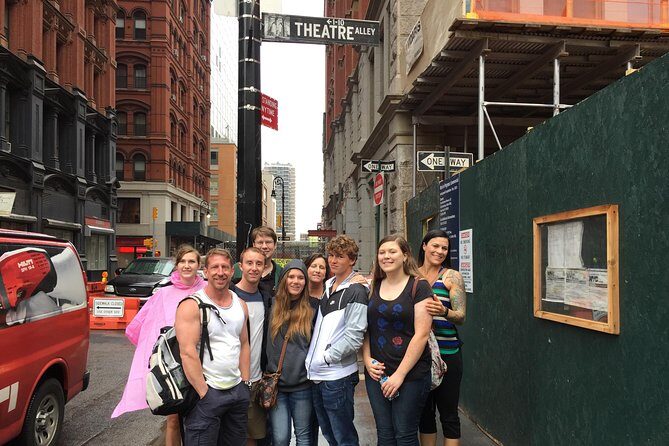
- Hamilton plot points tied to real addresses, like the Nassau Street theatre tied to early Manhattan stage life
- Federal Reserve Bank viewing from the outside, right by the story of Jefferson’s former address
- Stone Street and Fraunces Tavern Museum moments, including where Hamilton and Burr first met
- Wall Street context before you look at the view, including the Dutch-era wall that shaped the street’s line
- Trinity Church as the emotional close, where the tour ends with a stop linked to Hamilton
From Nassau Street theatre to Mind At Work locations
The tour kicks off around Park Row, then quickly shifts into that fun, connect-the-dots feeling you get with a great historical story. One early stop focuses on Nassau Street and the theatre scene the musical references in spirit—especially the moment around Skyler sisters’ look for Mind At Work—and then grounds it in an actual early Manhattan venue.
You’ll learn about the Theatre on Nassau Street, also known as The New Theatre. It opened on December 11, 1732, with a performance of The Recruiting Officer. The site was a two-story wooden structure at 64–66 Nassau Street (between John Street and Maiden Lane), and it was owned by Rip Van Dam, a merchant and former governor. If you’re the kind of person who likes the how-and-where behind a story, this is a satisfying start because it shows how public stages worked in 1700s New York—not just what happens in the show.
You should know this kind of stop is less about buying tickets and more about using the street itself as your classroom. Expect short moments of standing, looking, and listening, then moving on.
You can also read our reviews of more walking tours in New York City



Federal Reserve Bank exterior: Hamilton meets the banking idea
Next comes one of the most eye-catching stops on the walk: the Federal Reserve Bank of New York. Even though the exterior is what you’re seeing here, it’s still a big deal because it puts modern banking in the same frame as the founding-era ideas Hamilton argued for.
The tour lines this stop up with a story reference to The Room Where It Happened and ties it to Thomas Jefferson’s previous address nearby. That pairing helps you understand why Hamilton’s push for a financial system mattered—not as a vague concept, but as a practical plan for a new country trying to pay bills, manage risk, and build confidence.
A quick “why this is worth it” note: Hamilton’s fame often gets reduced to dramatic speeches and personal rivalries. This stop nudges you toward the quieter stakes—credit, currency, and institutions—which are the real engine room of power.
Seaport trading and the hum of vendors

Then the tour swings toward the seaport side of Lower Manhattan, with a stop built around New York’s hustling vendors and the way trade shaped daily life. This is one of those segments that works well even if you don’t know the musical inside and out, because it explains how people actually lived and worked in Hamilton’s city.
The Seaport theme is useful because it adds a human layer to the “big political” stops. You start seeing the city as a network: merchants, traders, and customers moving goods and money, day after day. That makes the later financial-and-governance stories click faster.
Time here tends to be brief, so I’d treat this as a listening stop more than a photo-stop. If you’re someone who likes to pause and read every sign, you might feel a little rushed, but it does keep the tour’s momentum.
Stone Street: where Hamilton and Eliza stories come alive
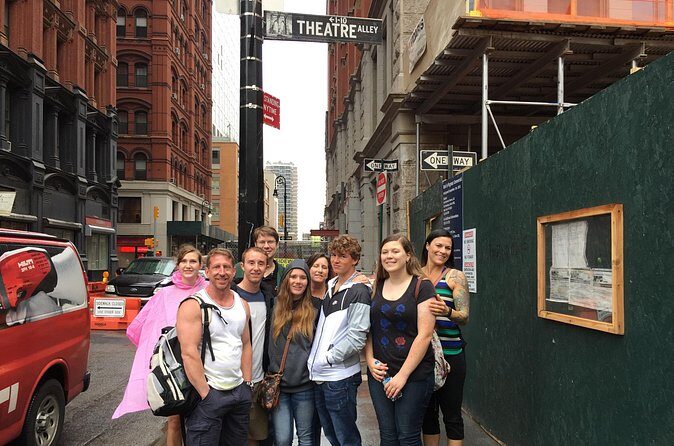
Stone Street is a key stop for the musical fan brain—and for the history fan brain, too. You’ll be shown the idea of where Hamilton and Eliza lived, and you’ll also see the setup for the Burr next-door thread: Burr working next door to Hamilton.
This kind of stop matters because it changes how you picture the show. Instead of Hamilton as a character in a vacuum, you start picturing him as a neighbor, a worker, a man in a specific block of the city with specific walls and doors. Locations like this are why walking tours work so well: your feet help your mind place people in real space.
One practical note: if you want photos, aim to do it fast. Stone Street is short time plus lots of movement, and the tour keeps you moving to the next story beats.
Fraunces Tavern Museum: the Washington headquarters connection

After Stone Street, the tour heads to Fraunces Tavern Museum for the Raise a glass moment. The focus here is on what the tavern preserved: George Washington’s 1st headquarters. It’s also framed as the place where Hamilton and Burr first met, which is the kind of story turn that makes a musical fan sit up.
Even if you don’t go deep inside (the stop is timed and brief), you still get the context. You’re standing near a site tied to the Revolutionary era’s leadership and learning how public spaces like taverns acted as meeting points, rumor hubs, and decision-stage areas.
This is also a stop where hearing clearly matters. A short museum-town stop can be crowded, and if the guide is addressing everyone at once, you’ll want to position yourself so you’re facing the guide. If you’ve got hearing sensitivity, it’s smart to bring what you need (like your phone’s hearing support settings, if you use them). It’s a small thing that can make a big difference on a walking tour.






Wall Street basics: the Dutch wall and the market’s pulse
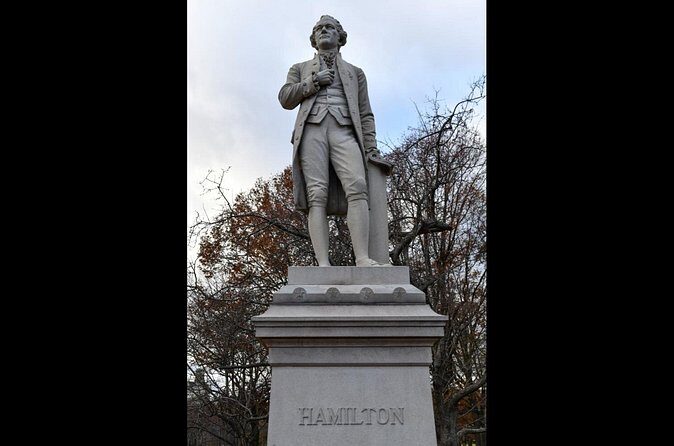
From tavern story energy, the walk shifts into finance mode. You’ll get a picture with the Bull on Wall Street, and you’ll learn about what Wall Street marks beneath the modern skyline.
One of the most useful bits is the Dutch wall story. The tour explains that the Dutch built a wall as part of their 1624 settlement. Today’s Wall Street follows where that wall once stood. That detail makes the street feel older than the buildings around it. You’re not just looking at a financial district—you’re tracing a line back to the city’s earliest defensive and commercial layout.
You’ll also take photos with an iconic statue connected to a pop-up art installation across from the Wall Street Bull. Now the figure stands guard, looking over the New York Stock Exchange. That kind of art-meets-landmark moment is good for two reasons: it gives you a recognizable photo target, and it also helps you spot the relationship between the city’s storytelling and its real-world institutions.
If you’re coming from Hamilton the musical, this segment can feel like a second act with a different plot: less about letters and duels, more about systems and the daily rhythm of economic power.
The Bill of Rights story at the National Monument

Next is a stop tied to George Washington’s inauguration, and then to the messy, human work of figuring out the Bill of Rights. Here you’ll also see a beautifully domed National Monument that later served as a customs house and became part of the Treasury Department in the 19th century.
This stop is valuable because it connects two ideas that many people keep separate. Most folks learn the Bill of Rights as a textbook concept. But this tour frames it as part of a living political bargain, followed by physical government infrastructure that still echoes in the city.
You’ll also get a stronger sense of how Hamilton’s era treated paperwork and policy as real-world forces. The tour doesn’t ask you to memorize dates; it helps you see the built environment as a record of decisions.
Trinity Church NYC: the oldest part of the story

The final major landmark on the walk is Trinity Church NYC. You’ll drop by the oldest church in New York and get a look at its magnificent exterior. The tour frames it with a clear timeline—from the 1690s to the present day—so you can understand it as part of the city’s long continuity, not just a pretty building.
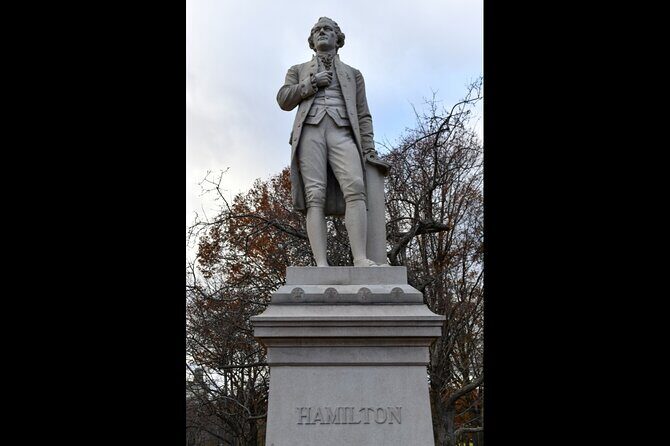
This is also the emotional close. The tour ends with a stop where you pay respects to Alexander Hamilton. After walking through banking, trade, and congressional compromise, ending at a church makes thematic sense. Hamilton’s life story in the musical is intense. Ending somewhere grounded in centuries of city life gives the whole thing a quieter, reflective landing.
If you want good photos, this is where you’ll usually have the most patience for images, since the exterior is the focus and people naturally gather around the architecture. Still, keep an eye on the group’s timing so you don’t hold everyone back.
Price and pace: is $50 worth it?
At $50 per person for about 2 hours, this tour sits in the value zone for a guided Lower Manhattan experience—especially because the stops are largely free to view from the outside. The tour includes a professional local guide and uses a mobile ticket, so you’re paying for the story and guidance more than for admission.
Here’s how I’d think about value before you book:
- If you’re a Hamilton fan, this tour is great because it maps show moments onto real places you can point at. That alone makes it feel like more than a lecture.
- If you love early New York and want a tight overview, the stops cover theatre history, finance, trading, tavern life, founding-era governance, and Trinity Church—within one walk.
- If you want lots of time inside museums or buildings, this may not satisfy you, since the tour is structured around short, move-on moments.
Pace is the tradeoff. You’ll be walking a lot for the time length, and you’re dealing with street-level noise. If clear audio is a must for you, try to stay close to the guide and avoid drifting to the back.
Who should book this Hamilton Musical walking tour?
I’d put this tour at the top of your list if you fit one of these profiles:
- You’re a Hamilton fan who wants real-world anchors for the show.
- You like history that connects to everyday places—streets, corners, and institutions you can still see.
- You want a compact Lower Manhattan tour with big-ticket landmarks like Trinity Church and Wall Street in the same timeline.
It may be less ideal if:
- You dislike walking or you need long stops to linger.
- You want deep interior museum time at each stop.
- You struggle to hear guides in outdoor settings without audio support.
Should you book it?
Yes, if you want a focused Lower Manhattan walk that ties Alexander Hamilton’s story to the city’s actual geography. It’s especially strong for musical fans because it doesn’t treat the show as separate entertainment—it treats it as a doorway into the real people and places behind it.
Book it with one realistic expectation: you’re trading time inside for time outside. You’ll get the highlights fast, learn how they connect, and leave with a much clearer map of Lower Manhattan in your head.
If you want maximum enjoyment, wear comfortable shoes, arrive ready for quick photo moments, and position yourself where you can hear. Do that, and the tour’s best feature will land hard: the sense that Hamilton isn’t only a story you watch—he’s a thread you can trace across a walkable city.
FAQ
How much does the Alexander Hamilton Musical Walking Tour cost?
It costs $50.00 per person.
How long is the tour?
The tour runs for about 2 hours.
Where does the tour start?
It starts at 41 Park Row (listed also as 38 Park Row), New York, NY 10038. The tour ends back at the meeting point.
What time does the tour begin?
The listed start time is 11:00 am.
Is the tour offered in English?
Yes, the tour is offered in English.
How large is the group?
The tour has a maximum of 20 travelers.
Is a mobile ticket included?
Yes, you get a mobile ticket.
Are there any admissions included for stops?
The itinerary notes admission ticket free for multiple stops, so you generally aren’t paying separate admission costs for those listed stops. Souvenir photos are not included.