REVIEW · NEW YORK CITY
Secrets of Hudson Yards and the Edge: A walking tour
Book on GetYourGuide →Operated by Skyscrapers and Stories · Bookable on GetYourGuide
Hudson Yards looks shiny. But the stories aren’t. This walking tour takes you past New York’s newest big-ticket neighborhood with a focus on the stuff people usually skip: the mix of ambition and controversy behind the towers. I especially like how you go beyond photos and into the human-scale details, like what the development is really about and why it was built in the first place.
Two standouts for me: you get guided context for both The Vessel and The Edge (including what floor The Edge is really on), and you end in a real neighborhood food spot at Mercado Little Spain. One drawback: it’s tightly scheduled, so it can feel short—about an hour to a bit more—and you won’t have time for long lingering.
In This Review
- Key things to know before you go
- Starting at 30 Hudson Yards: why your first steps matter
- Hudson Yards in bite-size chunks: the gleam and the shadow
- The secret stop rhythm: viewpoints that make the skyline click
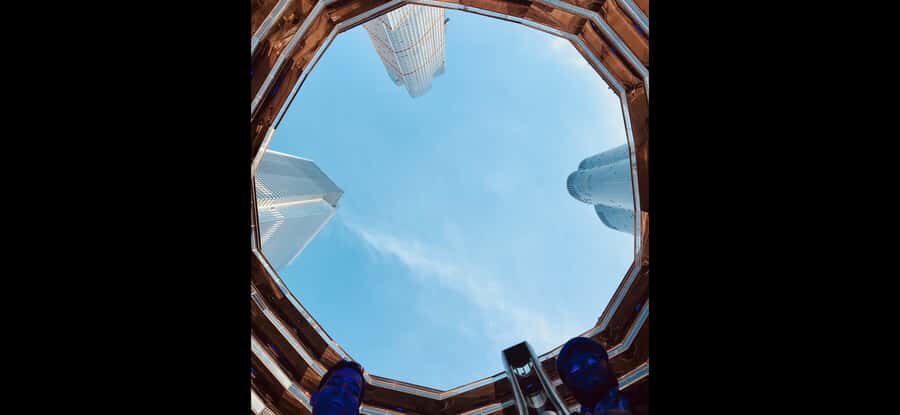
- The Vessel: more than a photo object
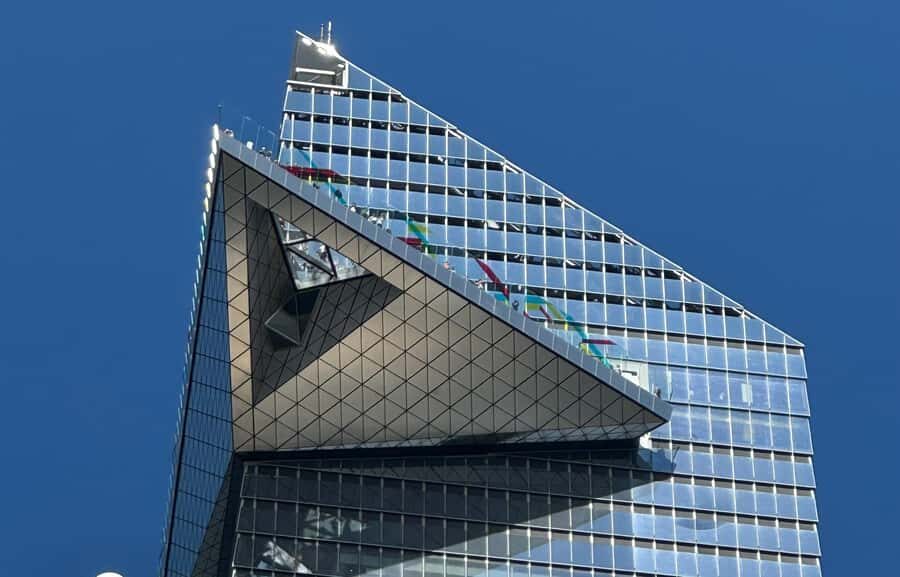
- The Edge: the real floor and the point of an observation deck
- Money, power, and the Las Vegas of Manhattan idea
- Feminists, public art, and the point of neighborhood naming
- Ending at Mercado Little Spain: food with a humanitarian thread
- How this tour fits your time (and your interests)
- Should you book this Hudson Yards and The Edge walking tour?
Key things to know before you go
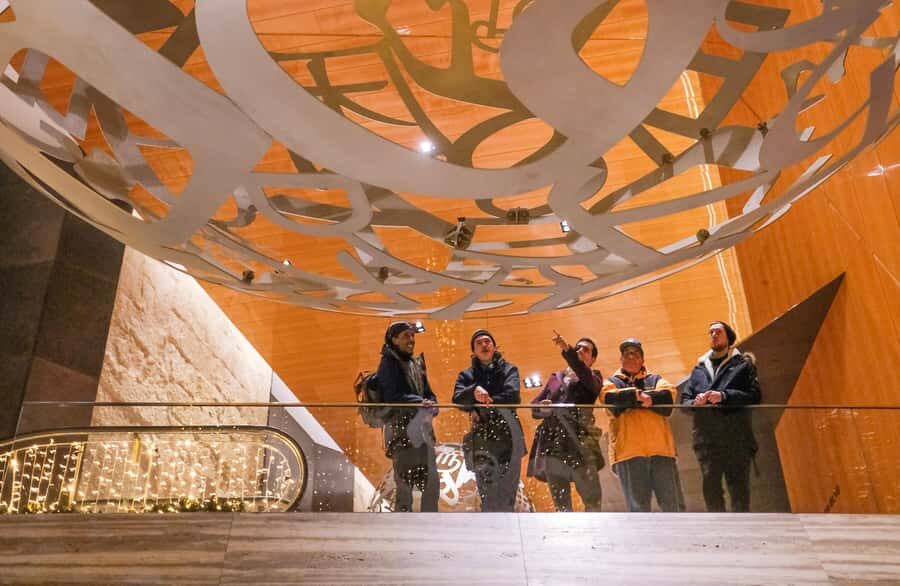
- Stories over selfies: the emphasis is on deception, disappointment, and death behind the gleam
- The Vessel + The Edge, explained: you’ll hear the real story and get straight answers like the floor of The Edge
- Secret stops and viewpoints: quick “pop out” moments to connect street-level design to bigger plans
- Technology and engineering talk: you’ll hear how architects and engineers used cutting-edge tech to make it happen
- Mercado Little Spain finish: you wrap the day with Jose Andres–linked dining and the humanitarian angle
Starting at 30 Hudson Yards: why your first steps matter

You meet at 30 Hudson Yards, right at the corner of W 33rd Street and Hudson Blvd E, in front of the office entrance. That’s a smart place to start because it puts you immediately in the middle of the development—rather than somewhere nearby where you’d have to “figure it out” on your own.
This is a walking tour, so the early minutes are all about getting your bearings. You’ll get an overview of what Hudson Yards is trying to be, and how the design language—big, polished, future-minded—can also hide some uncomfortable truths. The guide frames the area as a place where glitz meets power, and where the public story isn’t the whole story.
If you like architecture, you’ll enjoy the way your guide points out the features you can see from the sidewalk. If you prefer history and politics, you’ll like that the tour treats Hudson Yards like a case study, not just a photo stop.
You can also read our reviews of more walking tours in New York City



Hudson Yards in bite-size chunks: the gleam and the shadow

The first guided stretch is short—about ten minutes—but it sets the tone. You’ll hear the neighborhood’s “new” branding, then the tougher add-ons: deception, disappointment, and death behind the gleaming towers. That contrast is the whole point. Hudson Yards can look like a perfect brochure; your guide keeps pulling you back to the messy parts that got covered up.
You’ll also get a tour version of the place’s biggest design ideas:
- “Secret passageways,” mentioned as you move through quick hidden-feeling stops
- Towers described as dancing skyscrapers, where the view changes with your angle
- A “giant performance space on massive wheels,” which you’ll be guided toward from street level
The plant-covered tower described as having a 1,000-foot-tall vine is also part of the story package. Even if you’re not sure what’s literal and what’s poetic from the street, you’ll leave with a clearer understanding of how the neighborhood sells itself: futuristic, green, and a bit theatrical.
Practical tip: wear comfortable shoes. Hudson Yards is designed for scale, not for foot-tiring wandering. You’ll cover ground, but it’s not a long day—more like a fast, story-heavy walk.
The secret stop rhythm: viewpoints that make the skyline click
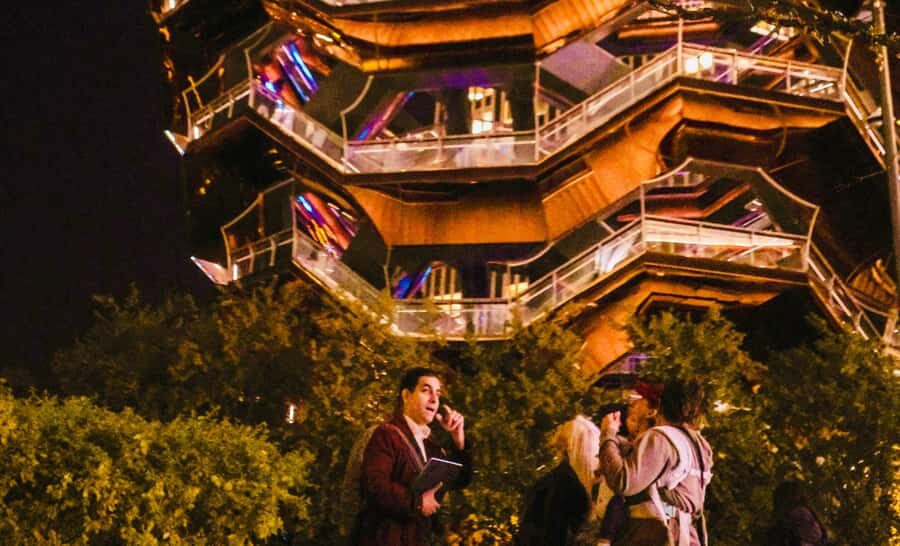
A big part of what you do here is the quick pattern: a secret stop, then a viewpoint, then another small guided moment. Those short breaks are more than filler. They’re timed to help you see how the neighborhood works from different angles.
At a viewpoint, your guide ties the skyline look to the story. You’ll get context for what you’re seeing and why it’s arranged the way it is. These moments are especially helpful if you’re the kind of person who wonders:
- Why is that tower there?
- Why does the public space feel staged?
- Why does it feel like a whole different city inside one development?
The “secret” stops are usually brief—around five minutes each—and that’s good news if you’re visiting with limited time. The tradeoff is that you’ll want to mentally tag what you liked most, because you won’t get a long explanation at every single spot.
Consider this drawback: if you’re hoping for a slow, deep neighborhood walk with long side streets and lots of unscripted wandering, this won’t be that. It’s structured. You’re meant to learn the big ideas quickly, not get lost on your own.
The Vessel: more than a photo object

The tour’s best-known landmarks come next with The Vessel. You’ll spend about ten minutes sightseeing there, which is short, but enough time to understand why people stop dead in their tracks.
What I like about including The Vessel is that it isn’t treated like a one-minute Instagram prop. Your guide explains the real story behind the work of art, so the structure feels intentional instead of random.
Here’s what helps you get more out of those ten minutes:
- Focus on the shape and how it guides your line of sight.
- Let the guide’s story reframe the space before you try to climb, walk around, or just take pictures (depending on what’s possible during your visit).
One note: even when you don’t climb or linger, the Vessel’s design reads differently from different sides. Because your tour timing is tight, I’d plan to take your photos fast, then listen, then take a second pass only if the angle is better.
The Edge: the real floor and the point of an observation deck

After The Vessel, the tour shifts into the Hudson Yards tech-and-brand story, then keeps feeding you the details around The Edge—including the key question: what floor the observation deck is really on.
This is the kind of detail that sounds small until you’re actually there. Observation decks are all about expectation-management. If you’ve seen ads or online talk, it’s easy to walk in with the wrong mental model. Your guide corrects that and gives you the proper context so your visit feels clean and factual.
You also get the “bigger meaning” of these landmarks, not just their measurements. The tour frames The Edge as part of Hudson Yards’ larger strategy: create a destination that justifies the money, and sell it as the future of city living.
If you’re the type who enjoys “wait, I thought it was X” moments, you’ll appreciate this. If you’re not into observation-deck trivia, the tour still uses The Edge as a story anchor, connecting design, branding, and the neighborhood’s future.






Money, power, and the Las Vegas of Manhattan idea

Hudson Yards isn’t only about architecture. It’s about who funds what, and what the finished product is supposed to become. Mid-tour, you’ll learn about where the money for Hudson Yards came from and hear about plans for the area’s future—specifically, the idea of making it the Las Vegas of Manhattan.
That comparison matters because it explains the vibe. Hudson Yards is built to attract attention. It’s meant to draw crowds, sell experiences, and keep the money moving through attractions, retail, and food.
Your guide also connects those plans to the people behind the scenes: architects and engineers working at the cutting edge of technology who helped bring Hudson Yards to life. Even if you’re not an engineering nerd, you’ll probably enjoy the practical angle—how a massive project gets pulled together in layers, and how technology becomes part of the marketing story.
Balanced takeaway: Hudson Yards can feel like the future. But the tour keeps reminding you that “future” often comes with compromises. You see both the engineering confidence and the human cost embedded in the development narrative.
Feminists, public art, and the point of neighborhood naming
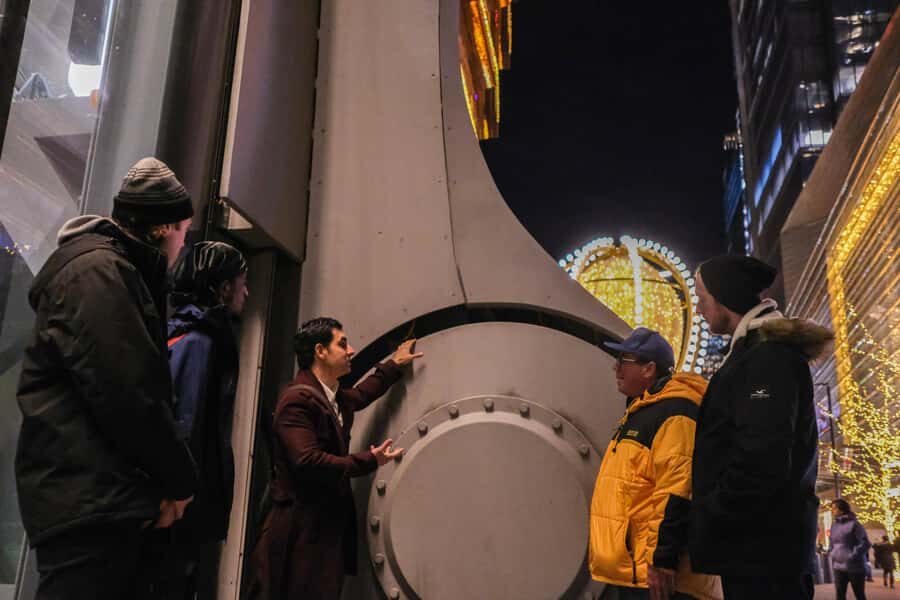
One of the more interesting stops is the one tied to a fierce feminist who fought for the poor of America, with a Hudson Yards park named after her. The tour uses that as a bridge: it shows how civic values can get printed into street-level space, even inside a corporate mega-project.
This isn’t just trivia. It gives you a way to read the neighborhood beyond its skyline. You start noticing that Hudson Yards isn’t one thing—it’s a mix of private development, public gestures, and selective storytelling. The park name becomes a signal that somebody wanted a certain message carried forward.
You’ll also hear about public art designed by some of the most famous, revolutionary artists in the world. Again, this helps you interpret what you see. Public art can be distraction, or it can be a statement—your guide’s framing helps you decide which is happening here and why it matters.
Ending at Mercado Little Spain: food with a humanitarian thread
The tour finishes at Mercado Little Spain, which is a smart move. You’re not only done with walking—you’re done with the abstract part. Now you can actually sit down, eat, and process.
This stop comes with two major highlights:
- The restaurants inside are founded by Spanish chefs José Andrés, Ferran Adría, and Albert Adría.
- You’ll hear how José Andrés provides fresh meals during humanitarian crises around the world.
That humanitarian connection is the value here. It ties a sleek, high-profile neighborhood to a very grounded real-world mission. Even if you just want a casual bite after the tour, the point is that you’re leaving with a story that doesn’t stay trapped in the Hudson Yards bubble.
Practical advice: If you’re hungry, this is the moment to be decisive. The tour is structured around learning and landmark sighting, not around meal timing. Mercado Little Spain is where you can turn the day into something satisfying instead of just educational.
How this tour fits your time (and your interests)
This is a one-day activity with English-speaking live guidance, and it’s wheelchair accessible. The walking itself is paced in short segments, with multiple brief stops. Based on the schedule of guided segments and sight time, the walk is roughly around an hour-plus rather than a full half-day neighborhood roam.
Who it’s for:
- You want Hudson Yards beyond the postcard.
- You like architecture stories that include controversy, not only design praise.
- You want The Vessel and The Edge treated as context pieces, not just photo ops.
- You’re curious about money, future plans, and what the branding is trying to do.
Who might want a different approach:
- You want a slow walk with tons of unplanned time.
- You’re mainly chasing the biggest landmark views and don’t care about the behind-the-scenes narrative.
- You dislike short tours that feel like a sprint.
Also, a small note on guide style: the tour is run by Skyscrapers and Stories. One named guide you might encounter is Matthew, who’s described as extremely knowledgeable about New York and its history, with lots of unanswered questions cleared up by the time you’re done walking.
Should you book this Hudson Yards and The Edge walking tour?
Yes—if you want a compact, high-impact Hudson Yards experience that mixes skyline landmarks with story. For about $40, you’re paying for interpretation: the “what’s really going on here” layer, plus direct answers like what floor The Edge is really on and the real story behind The Vessel.
I’d skip it only if you hate tight timing and want long free exploration instead. Otherwise, this is the kind of tour that leaves you walking around Hudson Yards later and understanding what you’re seeing—without needing to Google your way through it.